Anteprima in scala reale
 Condividi
 Condividi
 Dettagli
 Guida stampabile

 Scarica
 Articoli simili
 Radiografia
 Slideshow
 Statistiche
Shipwreck
 Acrylic On Canvas
- WallArt
- Rococo
 1759
1759- Late Medieval
 96.0 x 134.0 cm
 Groeningemuseum
 Leggi tutto
Riproduzione a olio fatta a mano
Olio su tela dipinto a mano nelle tue dimensioni e con la tua cornice, realizzato su ordinazione dai nostri artisti. ( Passa alle stampe Passa all'immagine digitale)




P118B €10

P118H €10

P118W €10

P438Z €10

P508JH €12

P508YH €12

P805H €10

P805Z €10

P919BZ €10

P919G €10

P919XJ €10

P959ZH €10

P968JZ €12

W106C €8

W218G €10

W218JH €8

W218Y €10

W307PJ €10

W316G €10

W316PJ €8

W316Y €10

W398PJ €8

W4111J €10

W500HY €15

W500JH €15

W692G €12

W849H €8

W940BG €15

W953PJ €8




Scegli tra le nostre dimensioni predefinite, che rispettano le proporzioni originali dell'opera d'arte.

Inserisci la larghezza e l'altezza di cui hai bisogno, per adattarle alla tua cornice o alla tua parete. Trattandosi di un'opera dipinta a mano, in caso di dimensioni con una forma differente, l'artista può dipingere un po' più oltre i bordi dell'immagine o ritagliare leggermente — la scelta spetta a te. Ti invieremo un mockup digitale da approvare prima che la pittura abbia inizio. L'immagine mostrata in questa pagina non rappresenta il risultato reale — solo il mockup lo fa.
Dopo l'ordine, il team di OriginalUniqueArt.com contatterà il cliente via e-mail per ricevere le istruzioni e fornirà un'anteprima del mockup
Consegna in tutto il mondo () in 3/4 settimane anziché nelle normali 5 settimane. (23 Ottobre). Nessun compromesso sulla qualità.

Spedizione espressa gratuita in tutto il mondo

Tela in lino di alta qualità

Assicurazione completa sulla spedizione

Garanzia di rimborso dei dazi doganali

Garanzia di perfetta fedeltà cromatica

Politica di reso entro 100 giorni (solo per difetti di fabbricazione)

Garanzia di rimborso al 100%

Sconto per acquisti multipli
 L'opzione vetro è disponibile solo per dimensioni inferiori a 110 cm

Shipwreck
Tecnica di riproduzione
Dimensioni della riproduzione
-


Prezzo totale
€ 263
A Tempestuous Vision: The Shipwreck by Claude-Joseph Vernet
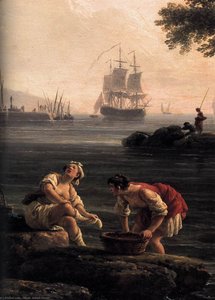
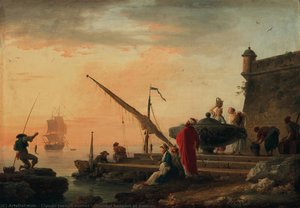
Claude-Joseph Vernet’s “Shipwreck” (1759) isn't merely a depiction of maritime disaster; it’s a visceral plunge into the heart of the sublime – that potent blend of terror, awe, and exhilaration evoked by confronting the raw power of nature. Painted during the height of the Rococo period in France, yet imbued with a dramatic intensity that anticipates Romanticism, this work transcends its subject matter to become a meditation on human vulnerability against an indifferent universe. The painting immediately commands attention with its dynamic composition, a swirling vortex of turbulent sea and bruised sky, pulling the viewer into the chaotic drama unfolding before them.
Vernet masterfully employs the techniques characteristic of his era – a meticulous attention to detail combined with a loose, expressive brushstroke. Notice how he renders the churning waves, not as smooth forms but as frothing crests and shadowed troughs, conveying an almost palpable sense of movement. The light is equally crucial; it’s fractured and diffused by the storm clouds, casting dramatic highlights on the wreckage and creating pools of deep shadow that heighten the feeling of unease. The artist's use of chiaroscuro – the stark contrast between light and dark – isn’t simply for aesthetic effect but serves to amplify the drama and underscore the precariousness of the scene.
Echoes of the Sublime: Rococo Meets Romanticism
“Shipwreck” occupies a fascinating space within art history. While firmly rooted in the decorative elegance of the Rococo style – evidenced by the vibrant palette, the intricate details of the ship’s rigging (though rendered with a slightly more rugged quality than typical for the period), and the overall sense of theatricality – it also foreshadows the Romantic movement's fascination with untamed nature. Vernet was deeply influenced by the philosophical ideas of Jean-Jacques Rousseau, who championed the beauty and power of the natural world as a counterpoint to the artificiality of courtly life. This painting embodies that sentiment, presenting a storm at sea not as a destructive force but as an overwhelming spectacle of sublime grandeur.
The historical context is equally important. Vernet’s work reflects the growing European interest in maritime exploration and trade during the 18th century. Shipwrecks were frequent occurrences, often resulting in significant loss of life and cargo – events that captured the public imagination. Vernet's painting taps into this collective anxiety about the perils of the sea while simultaneously celebrating its breathtaking beauty. It’s a reminder of humanity’s smallness within the vastness of the ocean.
Figures Amidst Ruin: Symbolism and Human Drama
Scattered along the rocky shoreline are several figures, rendered in stark silhouette against the brightly lit background. These aren't heroic rescuers; they are ordinary people – men and women – overwhelmed by the scale of the disaster. Their postures suggest a mixture of despair, frantic activity, and perhaps even a desperate hope for survival. Vernet doesn’t offer easy answers or moral judgments; he simply presents these individuals as witnesses to an event beyond their control. The inclusion of these human figures elevates the painting from a purely landscape study to a poignant meditation on mortality and resilience.
In the background, a partially obscured castle-like structure – likely a coastal fortress or lighthouse – adds another layer of symbolism. It represents both protection and vulnerability, suggesting that even the most formidable structures are ultimately subject to the forces of nature. The presence of this architectural element anchors the scene within a specific geographical context while simultaneously emphasizing the insignificance of human endeavors in the face of overwhelming natural power.
A Legacy of Dramatic Seascapes
Signed “C. J. Vernet” in the lower right corner, "Shipwreck" stands as a testament to Claude-Joseph Vernet’s mastery of marine painting. It's a work that continues to resonate with viewers today, not only for its technical brilliance but also for its profound exploration of human emotion and the sublime power of nature. Reproductions of this iconic image offer a captivating glimpse into a pivotal moment in art history – a moment when the Rococo’s decorative elegance yielded to the Romantic spirit's embrace of untamed beauty and dramatic intensity.
Domande e risposte
A quale stile appartiene "Shipwreck"?
Il movimento associato a "Shipwreck" di Claude-Joseph Vernet è Rococo. Questa classificazione colloca l'opera tra artisti e opere d'arte correlati.
In che modo "Shipwreck" bilancia luci e ombre?
I valori rilevati per "Shipwreck" di Claude-Joseph Vernet sono: luminosità shadow, luminanza Soft Shadow.
"Shipwreck" è un'opera famosa del Rococo?
All'interno del movimento Rococo, "Shipwreck" ha un livello di popolarità Recognized.
Biografia dell'artista
La Vita e la Formazione di Claude-Joseph Vernet
Claude-Joseph Vernet, pittore francese rinomato, nacque il 14 agosto 1714 a Bordeaux, in Francia. Fin dalla tenera età di cinque anni, dimostrò una straordinaria passione per il disegno equestre, che sarebbe diventata un tratto distintivo della sua carriera artistica. Vernet ricevette la formazione accademica tradizionale come allievo del padre e di Nicolas-Bernard Lépicié, affinando ulteriormente le sue abilità.Realizzazioni Significative
* Nel 1782, Vernet ottenne il prestigioso Prix de Rome, una testimonianza della sua eccellenza artistica. * Suo figlio, Antoine Charles Horace Vernet, seguì le orme del padre come pittore.Opere Iconiche
* Intérieur du port de Marseille (1754) – Un capolavoro che mostra l'abilità di Vernet nel catturare l'essenza delle scene marittime. * Une vue du port de Naples avec le Vésuve en arrière-plan (1774) – Un esempio sorprendente della sua capacità di bilanciare paesaggio e architettura.Stile Artistico ed Eredità
Lo stile di Vernet è caratterizzato da un'eleganza equestre, che riflette la sua profonda comprensione dei cavalli. Le sue opere sono notevoli per l'atmosfera vibrante e il senso del movimento. Vernet fu influenzato dalle opere di Claude Lorrain e Salvator Rosa, combinando la loro maestria con le sue osservazioni dirette della natura. Il suo contributo all'arte francese è innegabile, con un'eredità che continua a ispirare artisti ancora oggi.- Esplora altre opere di Claude-Joseph Vernet su OriginalUniqueArt.
- Scopri il Musée des Beaux-Arts de Bordeaux, dove sono conservate alcune delle opere più significative di Vernet, e scopri la sua ricca storia sulla pagina del Musée Thomas-Henry di OriginalUniqueArt.
- Leggi informazioni sul Prix de Rome e sulla sua importanza nel mondo dell'arte su Wikipedia.
Conclusione
Il viaggio artistico di Claude-Joseph Vernet, segnato dalla sua passione per l'arte equestre, ha lasciato un segno indelebile nel mondo della pittura francese. Attraverso le sue opere, disponibili su OriginalUniqueArt, e la sua eredità, Vernet continua a ispirare generazioni di appassionati d'arte e professionisti. Letture consigliate: * Claude-Joseph Vernet’s A Landscape at Sunset – Un approfondimento su una delle sue opere più note su OriginalUniqueArt. * Il porto di Bordeaux di Édouard Manet – Esplora l'opera di un altro artista francese su OriginalUniqueArt.
Claude-Joseph Vernet
1714 - 1789 , Francia
Informazioni rapide
- Artistic Movement Or Style: Paesaggismo, Marinismo
- Artists Who Influenced This Artist:
- Claude Lorrain
- Adrien Manglard
- Date Of Birth: 14 agosto 1714
- Date Of Death: 3 dicembre 1789
- Full Name: Claude-Joseph Vernet
- Nationality: Francese
- Notable Artworks:
- Intérieur du port de Marseille
- Porto di Napoli con Vesuvio
- Place Of Birth (City And Country): Bordeaux, Francia
Articoli correlati

I 10 Capolavori Rococò che Hanno Definito un'Epoca | Arte e Decorazioni di Lusso
Esplora i 10 capolavori del Rococò con ! Scopri Fragonard, Boucher e Tiepolo e lasciati ispirare da colori pastello e decorazioni di lusso. Quadri antichi e riproduzioni d'arte per interni eleganti. Esplora la collezione online!
James E. Buttersworth: Navigating the Seas of Victorian Marine Painting
Explore the captivating world of James Edward Buttersworth, a foremost Victorian marine painter. Discover his meticulous ship portraits, America's Cup chronicles & enduring legacy in museums worldwide. Learn about his technique and style.

Spedizioni e Resi
APS offre spedizioni d'arte internazionali esperte con cura di livello museale, tracciamento completo e una garanzia di rimborso entro 100 giorni. Dal supporto doganale a Priority Production, fidati di un servizio trasparente, imballaggi sicuri e consegna affidabile per collezionisti, designer e gallerie.

The Rococo Aesthetic: Opulence, Rebellion & the Pursuit of Pleasure in 18th-Century Art
Explore the opulent world of Rococo art! Discover its origins, key artists like Watteau & Boucher, and lasting influence on design. Expert insights for collectors & enthusiasts.
Navigating the Depths of Representation: A Historical Exploration of Marine Painting
Explore the rich history of marine painting with OriginalUniqueArt. Discover Dutch Masters, Romantic seascapes & renowned artists like Wyllie and Harris. Expert guidance for collectors & custom reproductions.