Anteprima in scala reale
 Invia
Invia Condividi
 Dettagli opera
 Guida
Guida

 Scarica
 Simili
 Radiografia
 Slideshow
 Statistiche
Still-life
 Oil On Canvas
- WallArt
- Dutch Golden Age
 1611
1611- Renaissance
 52.0 x 73.0 cm
 Museo del Prado
 Espandi i dettagli
Giclée / Stampe d'arte
Stampa giclée o su tela di qualità museale, con produzione rapida e diverse opzioni di finitura. ( Acquista il dipinto realizzato a mano Passa all'immagine digitale)




P118B €10

P118H €10

P118W €10

P438Z €10

P508JH €12

P508YH €12

P805H €10

P805Z €10

P919BZ €10

P919G €10

P919XJ €10

P959ZH €10

P968JZ €12

W106C €8

W218G €10

W218JH €8

W218Y €10

W307PJ €10

W316G €10

W316PJ €8

W316Y €10

W398PJ €8

W4111J €10

W500HY €15

W500JH €15

W692G €12

W849H €8

W940BG €15

W953PJ €8




Scegli tra le nostre dimensioni predefinite, che rispettano le proporzioni originali dell'opera d'arte.

Inserisci la larghezza e l'altezza desiderate, per adattarle alla tua cornice o alla tua parete. Una stampa può essere solo ritagliata, mai resa più grande dell'immagine originale; pertanto, un formato con una forma differente comporterà la perdita di una parte dell'opera. Ti invieremo un mockup digitale da approvare prima di procedere con la stampa. L'immagine mostrata in questa pagina non rappresenta il ritaglio reale — solo il mockup lo mostra.
Consegna in tutto il mondo () in 2 settimane invece delle normali 4/5 settimane. (26 Ottobre)

Spedizione espressa gratuita in tutto il mondo

Tela in lino di alta qualità

Assicurazione completa sulla spedizione

Garanzia di rimborso dei dazi doganali

Garanzia di fedeltà cromatica assoluta

Politica di reso entro 100 giorni (solo per difetti di fabbricazione)

Garanzia di rimborso al 100%

Offerta per acquisti multipli
 L'opzione vetro è disponibile solo per dimensioni inferiori a 110 cm

Still-life
Giclée / Stampe d'arte
Dimensioni riproduzione
-


Prezzo finale calcolato
€ 70
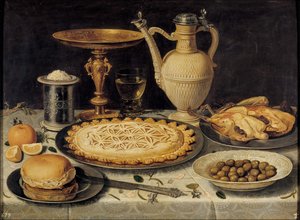
A Glimpse of Opulence: Still Life by Clara Peeters
The year is 1611. Within the dimly lit interiors of a wealthy Flemish household, a tableau vivant unfolds – a still life painting by the remarkably talented Clara Peeters. This isn’t merely a depiction of objects; it's an invitation into a world of abundance, carefully constructed to evoke both pleasure and contemplation. The artwork, measuring 52 x 73 cm, immediately captivates with its meticulous detail and dramatic interplay of light and shadow, hallmarks of the Dutch Golden Age masters. Peeters’ skill lies not just in her technical prowess but also in her ability to imbue a simple arrangement of food, drink, and decorative objects with profound symbolic weight.
At the heart of this composition sits a magnificent silver bowl overflowing with glistening cherries – a potent symbol of fertility, prosperity, and even mortality. The vibrant orange of the roses, juxtaposed against the delicate green foliage, creates a visual feast for the eye, while the yellow daffodils add bursts of cheerful color. A small, ornate fountain beside the bowl hints at the pleasures of leisure and the flow of life itself. But it’s not just about beauty; Peeters masterfully employs perspective to create an illusion of depth, drawing the viewer into this meticulously rendered world. The flattened perspective, a common technique of the era, doesn't diminish the richness but rather enhances the sense of layering and complexity.
The Painter and Her Time
Clara Peeters (1594-after 1657) stands as an extraordinary figure in seventeenth-century Flemish art – one of the earliest recognized female painters operating within the burgeoning Dutch Golden Age. Despite the significant societal barriers faced by women at the time, she persevered to establish a remarkable career, leaving behind an oeuvre characterized by unparalleled detail, innovative compositional strategies, and a deep fascination with capturing the textures and nuances of everyday life, particularly the delights of food and drink. Her work reflects a period of immense wealth and artistic innovation in the Netherlands, where still-life painting was rapidly gaining prominence as a genre.
Born in Antwerp around 1587 (the exact date remains debated), Peeters’ training is shrouded in some mystery. Unlike many male artists who benefited from guild membership and formal apprenticeships, her path to artistic mastery appears less documented. Some scholars believe she may have been the daughter of a painter, possibly Hans van Essen or Jan van der Beeck, receiving her skills through familial influence rather than traditional channels. Regardless of her precise training, Peeters quickly established herself as a skilled practitioner, producing a significant body of work that continues to fascinate and inspire.
Symbolism and Technique
Peeters’ still lifes are far more than simple arrangements; they are carefully constructed narratives laden with symbolism. The inclusion of objects like the snake coiled around a plate – a recurring motif in Dutch art – often represents mortality and the transience of earthly pleasures. The glass goblet, the pipe, and the scattered jewels all contribute to this complex tapestry of meaning, suggesting both indulgence and the fleeting nature of wealth. Her mastery of technique is equally remarkable. Peeters employed meticulous brushwork and glazing techniques, layering thin washes of oil paint to create a rich, textured surface. The sharp lines defining shapes – predominantly organic forms like flowers and fruits alongside geometric elements such as bowls and goblets – demonstrate her keen eye for detail and control.
The use of light is particularly striking. Directional lighting casts strong shadows that emphasize the textures of velvet, jewels, and petals, lending a dramatic intensity to the scene. This careful manipulation of light and shadow not only enhances the visual appeal but also contributes to the overall sense of depth and realism. The materials appear convincingly rendered – the sheen of the silver, the delicate texture of the rose petals, the smooth surface of the fruit – all testament to Peeters’ exceptional skill and attention to detail.
A Legacy of Innovation
Clara Peeters' work represents a pivotal moment in art history. She was one of the first women to achieve significant recognition as a professional still-life painter during the Dutch Golden Age, challenging societal norms and establishing herself as a skilled and innovative artist. Her legacy continues to be studied and celebrated today, offering valuable insights into the artistic practices and cultural values of seventeenth-century Flanders. Reproductions of her works, such as this stunning 1611 still life, provide a tangible connection to this remarkable period of artistic achievement.
Domande e risposte
Quale origine nazionale si cela dietro il Dutch Golden Age di "Still-life"?
"Still-life" è stata creata da Clara Peeters, nato in Belgio, nell'ambito del movimento Dutch Golden Age. L'origine dell'artista lega l'opera al Dutch Golden Age così come praticato dagli artisti di Belgio.
L'opera "Still-life" si trova nel paese del suo creatore?
No - l'opera si trova all'estero. Il paese di nascita di Clara Peeters è Belgio, mentre il museo che custodisce l'originale di "Still-life" si trova in Spain.
Che tipo di opera è "Still-life"?
"Still-life" è un'opera in WallArt.
Biografia dell'artista
Clara Peeters: Pioniera della Natura Morta Olandese
Clara Peeters (1594-dopo il 1657) si staglia come una figura singolare nell'arte fiamminga del XVII secolo, essendo una delle prime pittrici riconosciute ad operare nel fervore del Secolo d'Oro olandese. Nonostante le costrizioni sociali che limitavano severamente l'accesso delle donne alla formazione artistica e all'iscrizione nelle gilde, Peeters riuscì a forgiare una carriera straordinaria, lasciando un'opera caratterizzata da un dettaglio meticoloso, strategie compositive innovative e una profonda fascinazione nel catturare le texture e le sfumature della vita quotidiana, con particolare attenzione al cibo. La sua eredità continua a ispirare studiosi e artisti, mentre si interrogano sulle questionီ relative alla sua identità, alla sua formazione e alla natura elusiva della sua produzione artistica.- Giovinezza e Famiglia
- Formazione e Stile Artistico
- Opere Notevoli e Dimensione dell'Opera
- Influenza ed Eredità
- Dibattito in Corso: Attribuzione e Autenticità
Giovinezza e Famiglia
Nata ad Anversa intorno al 1587 — data esatta che resta oggetto di dibattito tra gli storici — Clara Peeters discendeva da una famiglia profondamente immersa nella tradizione artistica. I documenti indicano che suo padre, Jean Peeters, era egli stesso un pittore, suggerendo un ambiente ideale per coltivare aspirazioni creative. I registri battesimali confermano la sua nascita presso la Chiesa di San Walburga ad Anversa, consolidando il suo legame con la vibrante comunità artistica della città. Ulteriori documenti rivelano il suo matrimonio con Henricus Joosen nel 1639, sempre presso San Walburga, segnando l'inizio di una vita domestica accanto al marito e contribuendo alla crescita della stirpe dei Peeters.Formazione e Stile Artistico
Le precise circostanze che circondano l'educazione artistica di Peeters rimangono avvolte nel mistero, in gran parte a causa delle limitazioni imposte alle donne durante questo periodo. A differenza di molti artisti maschi che beneficiavano dei formalizzati apprendistati nelle gilde — pilastro dello sviluppo artistico fiammingo — il nome di Peeters non compare nei registri delle corporazioni, alimentando le speculazioni sul fatto che possa aver ricevuto un'istruzione privata o da un mentore familiare. Tuttavia, il suo stile distintivo, caratterizzato da un eccezionale virtuosismo tecnico e una sofisticata maestria compositiva, suggerisce fortemente una formazione all'interno della tradizione di Anversa, dove gli artisti privilegiavano il dettaglio minuzioso e una finitura accuratissima. Gli studiosi ritengono che Peeters sia stata probabilmente influenzata da Osias Beert, un altro pittore di Anversa che fu pioniere nelle tecniche della natura morta durante il suo apprendistato.Opere Notevoli e Dimensione dell'Opera
La produzione artistica di Peeters è straordinariamente concentrata nel periodo compreso tra il 1607 e il 1621, un arco temporale in cui realizzò ben diciotto dipinti prima del suo diciottesimo compleanno. Queste opere giovanili esemplificano la sua padronanza tecnica e dimostrano una profonda comprensione della rappresentazione visiva, catturando scene di cibo — in particolare formaggi — con un realismo senza pari. Oltre a questi pezzi seminali, le stime suggeriscono che l'opera di Peeters comprenda circa altre settantasei tele, sebbene l'attribuzione definitiva rimanga complessa a causa della diffusione di copie firmate con il suo nome da diverse mani. La sua predilezione per la raffigurazione di opulenti banchetti e oggetti meticolosamente resi — inclusi coltelli decorativi ornati con figure nude — l'ha consacrata come figura chiave nel plasmare le tradizioni delle "nature morte da colazione" (*ontbijtjes*) e delle "nature morte da banchetto" (*banketje*) olandesi.Influenza ed Eredità
Il contributo di Clara Peeters alla storia dell'arte va ben oltre i suoi singoli dipinti. Ella rappresenta una pietra miliare fondamentale nel riconoscimento delle capacità artistiche femminili durante il Secolo d'Oro olandese, essendo la prima pittrice significativa di quest'epoca. Il suo lavoro sfidò le norme sociali prevalenti e aprì la strada alle generazioni future di artiste. Inoltre, le innovazioni stilistiche di Peeters — in particolare la sua attenzione nel catturare texture e sottigliezze — influenzarono i pittori successivi, consolidando la sua posizione di pioniera nel genere della natura morta.Dibattito in Corso: Attribuzione e Autenticità
Nonostante l'indiscutibile qualità delle opere superstiti di Peeters — datate principalmente tra il 1607 e il 1621 — il dibattito accademico sulla loro paternità persiste. Due dipinti recanti la firma "CP" — considerati anonimi dal RKD — sono stati sottoposti a un intenso scrutinio, sollevando dubbi sul fatto che rappresentino realmente la mano di Peeters. Inoltre, la perdita di un dipinto presuntamente attribuito alla pittrice nel 1657 aggiunge un ulteriore livello di complessità alla discussione sulla sua produzione artistica. La presenza pervasiva di copie create da artisti non identificati sottolinea la difficoltà nel definire con certezza l'estensione del catalogo di Peeters e nel cementare definitivamente il suo posto nella storia dell'arte.
Clara Peeters
1594 - 1657 , Belgio
Dettagli rapidi
- Artistic Movement Or Style: Dutch Golden Age
- Artists Who Influenced This Artist: ['Osias Beert']
- Date Of Birth: Antwerp, Belgium (1594)
- Date Of Death: after 1657
- Full Name: Clara Peeters
- Nationality: Flemish
- Notable Artworks:
- Still Life with Fish, Sea Food and Flowers
- Still Life with Cheeses, Artichoke, and Cherries
- Place Of Birth: Antwerp
Articoli correlati

Golden Age Reflections: Dutch Baroque Painting & Cultural Innovation
Explore the Dutch Golden Age of painting! Discover key artists like Vermeer & ter Borch, their innovative techniques, and the rich cultural context behind these Baroque masterpieces. Learn about collecting & appreciating this iconic art period.

Illuminating Innovation: Exploring the Dutch Golden Age of Painting
Explore the Dutch Golden Age of painting with OriginalUniqueArt. Discover Rembrandt, Vermeer & other Masters. Learn about key characteristics, iconic artworks, and lasting influence. Expert insights for collectors & enthusiasts.

Jan Jansz Wijnants: A Study in Dutch Golden Age Still Life & Floral Transience
Explore the captivating world of Jan Wijnants and Dutch Golden Age still life painting. Discover symbolism, masterful techniques & lasting influence on floral art history. Learn more!

I 10 Capolavori dell'Età d'Oro Olandese: Arte, Storia e Stile per la Tua Casa
Esplora i 10 capolavori dell'Età d'Oro Olandese con ! Rembrandt, Vermeer e altri maestri rivivono in dipinti iconici. Scopri storia, tecnica e colori di opere senza tempo per arredare la tua casa con arte di qualità museale. Esplora la collezione online!

Golden Light & Dutch Skies: The Timeless Magic of Dutch Golden Age Landscapes
Discover the breathtaking beauty of Dutch Golden Age landscapes. Explore the mastery of light, chiaroscuro, and 17th-century realism through an expert art history lens, celebrating the enduring legacy of the Dutch Masters for discerning collectors and art lovers.