 Anteprima in scala reale
 Condividi
 Condividi
 Dettagli

 Scarica
 Articoli simili
 Radiografia
 Slideshow
 Statistiche
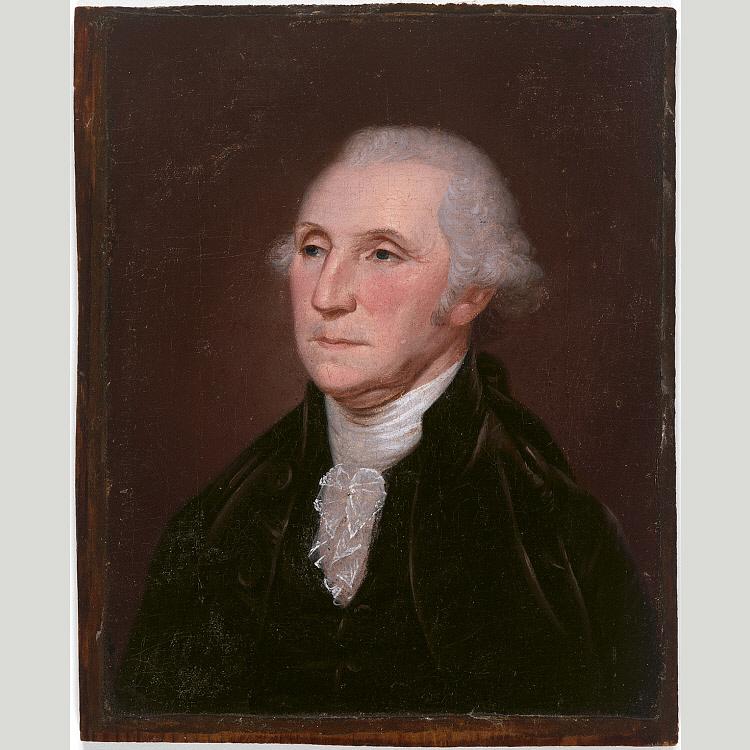
George Washington (Last Bust Portrait type)
 Oil On Canvas
- WallArt
- Neoclassicism
 1795
1795- Early Modern
 30.0 x 22.0 cm
 Leggi tutto
Riproduzione a olio fatta a mano
Olio su tela dipinto a mano nelle tue dimensioni e con la tua cornice, realizzato su ordinazione dai nostri artisti. ( Passa alle stampe Passa all'immagine digitale)




P118B $10

P118H $10

P118W $10

P438Z $10

P508JH $12

P508YH $12

P805H $10

P805Z $10

P919BZ $10

P919G $10

P919XJ $10

P959ZH $10

P968JZ $12

W106C $8

W218G $10

W218JH $8

W218Y $10

W307PJ $10

W316G $10

W316PJ $8

W316Y $10

W398PJ $8

W4111J $10

W500HY $15

W500JH $15

W692G $12

W849H $8

W940BG $15

W953PJ $8




Scegli tra le nostre dimensioni predefinite, che rispettano le proporzioni originali dell'opera d'arte.

È possibile inserire dimensioni personalizzate per adattare l'opera a una cornice o a uno spazio specifico. Se la dimensione selezionata non corrisponde alle proporzioni dell'immagine originale, provvederemo a ritagliare l'opera o a estendere il dipinto con elementi aggiuntivi dipinti a mano. Un mockup digitale ti sarà inviato per approvazione prima dell'inizio della produzione.
Si prega di notare che l'anteprima a schermo non riflette il ritaglio o l'estensione effettivi. Solo il mockup mostrerà accuratamente la composizione finale.
Sebbene siano disponibili dimensioni personalizzate, consigliamo di selezionare una dimensione dall'elenco predefinito per preservare le proporzioni originali.
Dopo l'ordine, il team di OriginalUniqueArt.com contatterà il cliente via e-mail per ricevere le istruzioni e fornirà un'anteprima del mockup
Consegna in tutto il mondo () in 3/4 settimane anziché nelle normali 5 settimane. (12 Settembre). Nessun compromesso sulla qualità.

Spedizione espressa gratuita in tutto il mondo

Tela in lino di alta qualità

Assicurazione completa sulla spedizione

Garanzia di rimborso dei dazi doganali

Garanzia di perfetta fedeltà cromatica

Politica di reso entro 100 giorni (solo per difetti di fabbricazione)

Garanzia di rimborso al 100%

Sconto per acquisti multipli
 L'opzione vetro è disponibile solo per dimensioni inferiori a 110 cm

George Washington (Last Bust Portrait type)
Tecnica di riproduzione
Dimensioni della riproduzione
-


Prezzo totale
$ 300
The Soul of a Nascent Republic
In the quiet, commanding presence of Charles Willson Peale’s 1795 portrait, George Washington, one finds far more than a mere likeness of a man; one encounters the very soul of a nascent republic. This particular rendition, belonging to the "Last Bust Portrait" type, captures the first President of the United States with a profound sense of Neoclassical grace. The composition is masterfully centered, focusing our gaze upon Washington’s head and shoulders, creating an intimate yet monumental encounter. Through soft, diffused lighting, Peale breathes life into the subtle contours of the face, allowing shadows to dance gently across the features, lending a weight of wisdom and gravity to the subject. It is a piece that does not merely depict a historical figure but invites the viewer into a moment of silent, dignified reflection.
Beyond its aesthetic brilliance, the painting serves as a vital historical document, capturing the essence of an era defined by revolution and the birth of American identity. As a master of his craft, Peale utilized his deep connection to the figures of the American Revolution to create works that are both personal and political. In this portrait, the subject is rendered with a resolute expression in his eyes, suggesting a leader who has weathered the storms of war and is now anchored by the heavy responsibility of peace. For the discerning collector, owning such a piece is akin to holding a fragment of history, a window into the foundational spirit of a nation.
Technical Mastery and Neoclassical Elegance
The technical mastery displayed in this oil on canvas is nothing short of breathtaking, making it an exquisite choice for those who appreciate the meticulous traditions of classical painting. Peale utilizes a sophisticated layering of colors to achieve a lifelike texture, where the smoothness of skin contrasts beautifully with the structured folds of period clothing. The palette is intentionally restrained, dominated by deep, somber tones of brown and black that evoke a sense of timelessness and authority. These dark hues are punctuated by delicate highlights of grey and white, which catch the light to define the fine details of Washington’s hair and the dignified structure of his features.
The style leans heavily towards Neoclassicism, characterized by realistic representation and an emphasis on order and balance. The lines are predominantly smooth and controlled, defining the contours of the face and clothing with surgical precision. This sense of stability is further reinforced by a deep, muted brown background, which provides a neutral anchor for the figure. Such a composition allows the portrait to command attention in any sophisticated setting without overwhelming the surrounding decor, making it an ideal centerpiece for a study, library, or formal living space.
A Timeless Addition to the Sophisticated Interior
For the interior designer or art enthusiast, this portrait offers a unique opportunity to introduce a sense of heritage and gravitas into a room. The neutral, muted tones of the work allow it to integrate seamlessly into various design aesthetics, from traditional colonial styles to modern minimalist environments. Because the painting relies on subtle tonal shifts rather than jarring colors, it provides a calming, intellectual energy to a space.
When considering a high-quality reproduction of this masterpiece, one is not just selecting a decoration, but an atmospheric element that can transform a room's character. It serves as:
- A Focal Point: The centered, monumental composition naturally draws the eye, creating a sense of importance within a gallery wall or standalone placement.
- An Anchor of Sophistication: The dark, classical palette provides a grounding effect that complements rich woods, leather, and metallic accents.
- A Conversation Piece: The historical significance of Peale’s depiction of Washington offers endless depth for storytelling and intellectual engagement with guests.
Ultimately, this portrait is an invitation to contemplate the virtues of leadership, resilience, and dignity. It remains a breathtaking testament to the power of portraiture to transcend time, offering a lasting legacy of beauty and strength to any collection.
Biografia dell'artista
Charles Willson Peale: Una Vita tra Arte, Scienza e Patriotismo
- Nato: 15 aprile 1741, Chester, Queen Anne's County, Maryland
- Morto: 22 febbraio 1827, Philadelphia, Pennsylvania
Primi Anni di Vita e Formazione Artistica
- La prima parte della vita di Peale fu segnata da difficoltà finanziarie a seguito della morte del padre. Fece apprendistato come sellaio prima di scoprire la sua passione per l'arte.
- Ricevette una formazione iniziale da John Hesselius e studiò brevemente con John Singleton Copley, dimostrando un’attitudine precoce al ritratto.
- Un periodo cruciale nel suo sviluppo fu il tempo trascorso a studiare sotto Benjamin West a Londra (1767-1770). Questa esposizione alle tendenze artistiche europee influenzò significativamente il suo stile.
Carriera Artistica e Opere Principali
- Ritratto: Peale è noto soprattutto per i suoi ritratti di figure importanti della Rivoluzione Americana, tra cui numerose raffigurazioni di George Washington (quasi sessanta in totale). Questi ritratti sono documenti storici preziosi oltre che risultati artistici.
- Stile: Il suo stile si evolse nel tempo, inizialmente influenzato dall'approccio neoclassico di West, ma successivamente incorporando elementi di realismo e un desiderio di catturare accuratamente la somiglianza.
- Opere Notabili:
- George Washington (1772): Segnò l’inizio della sua lunga associazione con Washington.
- The Staircase Group (c. 1795): Un esempio sorprendente di trompe-l'oeil, che raffigura i suoi figli Raphael e Titian come se fossero parte dell'ambientazione architettonica.
Impegno Scientifico e il Museo Americano di Peale
- Peale era un appassionato naturalista e scienziato, organizzando spedizioni per studiare la storia naturale.
- Fondò il Museo Americano di Peale a Philadelphia (1784), uno dei primi musei negli Stati Uniti. Ospitava esemplari botanici, biologici e archeologici.
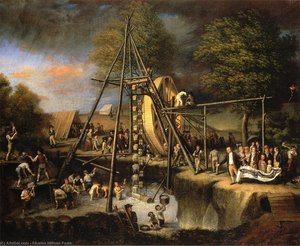
- Il museo svolse un ruolo significativo nella divulgazione della scienza e dell'istruzione in America. Era particolarmente noto per le sue esposizioni di ossa di mastodonte, acquisite attraverso una spedizione nel 1801.
- Apprese da autodidatta la tassidermia per preservare gli esemplari per il museo, dimostrando le sue diverse capacità.
Eredità e Significato Storico
- Il lavoro di Peale colma il divario tra arte e scienza, riflettendo gli ideali dell'Illuminismo del suo tempo.
- I suoi ritratti forniscono preziose testimonianze visive delle figure chiave della storia americana.
- La fondazione del Museo Americano di Peale fu un’iniziativa pionieristica che contribuì a stabilire il museo come istituzione importante per l'istruzione e l'esplorazione scientifica.
- Influenzò le generazioni successive di artisti e scienziati, contribuendo in modo significativo allo sviluppo della cultura americana.
- La sua eredità familiare continuò attraverso i suoi figli, tra cui James Peale e Rubens Peale, che divennero anch'essi artisti affermati e contribuirono alla collezione del museo.

Charles Willson Peale
1741 - 1827 , Regno Unito
Informazioni rapide
- Artisti Che Hanno Influenzato Questo Artista:
- John Hesselius
- John Singleton Copley
- Benjamin West
- Data Di Morte: 22 febbraio 1827
- Data Di Nascita: 15 aprile 1741
- Luogo Di Nascita: Chester, Regno Unito
- Movimento Artistico O Stile: Neoclassico
- Nazionalità: Americano
- Nome Completo: Charles Willson Peale
- Opere Notevoli:
- Staircase Group
- George Washington
Articoli correlati

Georges Seurat: I 25 Capolavori che Rivoluzionarono la Pittura | OriginalUniqueArt
Esplora i 25 capolavori di Georges Seurat, il maestro del Pointillismo. Scopri la storia, le tecniche e l'emozione dietro dipinti iconici come 'Un dimanche à la Grande Jatte'. Trova riproduzioni d'arte di alta qualità per decorare casa tua su OriginalUniqueArt.com.

Georges Braque: I 25 Capolavori che Hanno Rivoluzionato l'Arte Moderna | OriginalUniqueArt
Esplora i 25 capolavori di Georges Braque, pioniere del Cubismo. Scopri la storia, le tecniche e l'impatto di opere iconiche come 'The Patience'. Trova riproduzioni d'arte di alta qualità per decorare casa tua su OriginalUniqueArt.com.

Neoclassical Portraiture: The Timeless Elegance of Order, Grace, and Academic Mastery
Explore the refined world of Neoclassical portraiture. Discover the mastery of line, light, and order through an expert exploration of academic art history, from Jacques-Louis David to Jean-Antoine Houdon. Immerse yourself in the timeless elegance of classical realism.
Titian Ramsay Peale: Precisione Botanica e Innovazione Artistica nell'America del XIX Secolo
Scopri la vita e l'opera di Titian Ramsay Peale, pioniere della pittura botanica americana e naturalista del XIX secolo. Esplora le sue illustrazioni scientifiche innovative e il suo contributo all'arte e alla scienza.

Charles Willson Peale: Ritrattistica, Ideali Illuministici e la Formazione dell'Identità Americana
Esplora la vita e l'opera di Charles Willson Peale, pittore simbolo dell'Illuminismo americano. Analisi approfondita della sua ritrattistica, del realismo scientifico e del ruolo nella formazione dell'identità americana.