

 Anteprima in scala reale
 Condividi
 Condividi
 Dettagli
 Guida stampabile

 Scarica
 Articoli simili
 Radiografia
 Slideshow
 Statistiche
Still Life with Spoon


 Leggi tutto
Giclée / Stampe d'arte
Stampa giclée o su tela di qualità museale, con produzione rapida e diverse opzioni di finitura. ( Ordina la riproduzione dipinta a mano Passa all'immagine digitale)




P118B €10

P118H €10

P118W €10

P438Z €10

P508JH €12

P508YH €12

P805H €10

P805Z €10

P919BZ €10

P919G €10

P919XJ €10

P959ZH €10

P968JZ €12

W106C €8

W218G €10

W218JH €8

W218Y €10

W307PJ €10

W316G €10

W316PJ €8

W316Y €10

W398PJ €8

W4111J €10

W500HY €15

W500JH €15

W692G €12

W849H €8

W940BG €15

W953PJ €8




Scegli tra le nostre dimensioni predefinite, che rispettano le proporzioni originali dell'opera d'arte.

Inserisci la larghezza e l'altezza desiderate, per adattarle alla tua cornice o alla tua parete. Una stampa può essere solo ritagliata, mai resa più grande dell'immagine originale; pertanto, un formato con una forma differente comporterà la perdita di una parte dell'opera. Ti invieremo un mockup digitale da approvare prima di procedere con la stampa. L'immagine mostrata in questa pagina non rappresenta il ritaglio reale — solo il mockup lo mostra.
Consegna in tutto il mondo () in 2 settimane invece delle normali 4/5 settimane. (22 Ottobre)

Spedizione espressa gratuita in tutto il mondo

Tela in lino di alta qualità

Assicurazione completa sulla spedizione

Garanzia di rimborso dei dazi doganali

Garanzia di perfetta fedeltà cromatica

Politica di reso entro 100 giorni (solo per difetti di fabbricazione)

Garanzia di rimborso al 100%

Sconto per acquisti multipli
 L'opzione vetro è disponibile solo per dimensioni inferiori a 110 cm

Still Life with Spoon
Giclée / Stampe d'arte
Dimensioni della riproduzione
-


Prezzo totale
€ 70
Still Life with Spoon – A Precisionist Reflection on Domestic Abundance
Charles Demuth’s “Still Life with Spoon,” painted in 1927, stands as a quintessential example of American Precisionism—a movement that sought to capture the essence of industrial life and everyday objects with meticulous detail and unwavering clarity. This oval canvas depicts a deceptively simple arrangement: a bowl brimming with grapes alongside a pear and plums, resting upon a dark red cup and draped white cloth.
- Composition & Form: The painting’s dense composition immediately draws the eye, emphasizing the abundance of fruit—a visual metaphor for prosperity—and highlighting the tactile qualities of domesticity. Soft, blended brushstrokes contribute to a smooth surface texture, prioritizing form over elaborate ornamentation. Geometric shapes dominate – rounded fruits and curved edges of the cup – reflecting the influence of Cubism while maintaining a grounded realism.
- Color Palette & Lighting: Warm reds and pinks permeate the color scheme, creating an atmosphere that is both rich and subtly muted. Diffused lighting casts gentle shadows, defining shapes without resorting to dramatic contrasts, furthering the painting’s contemplative mood.
- Technique & Materials: Primarily executed in oil paints on canvas, Demuth employed a technique characterized by meticulous brushwork—a hallmark of Precisionism—to achieve subtle tonal variations and seamless blending. This careful layering ensures that every element contributes to the overall visual harmony.
Historical Context – The Rise of Industrial Modernity
Painted during the Jazz Age, “Still Life with Spoon” reflects the broader cultural shift towards embracing industrial progress and simplifying aesthetic sensibilities. Precisionism emerged as a reaction against Impressionism’s focus on fleeting impressions of light and color, advocating instead for an objective depiction of reality—often capturing scenes from factories or urban landscapes—albeit imbued with artistic vision.
Symbolism – Beyond the Fruits
While seemingly straightforward, “Still Life with Spoon” carries symbolic weight. The fruit itself represents abundance and indulgence, yet its careful arrangement suggests a deliberate consideration of form and balance. The dark red cup symbolizes warmth and comfort, while the draped white cloth evokes purity and stillness—elements that coalesce to convey a sense of serene contemplation.
Emotional Impact – Quiet Elegance
Demuth’s masterful handling of color and texture creates an emotionally resonant experience for the viewer. The painting's understated beauty speaks to a deeper appreciation for craftsmanship and observation, inviting contemplation on themes of domestic tranquility and artistic precision. It exemplifies the enduring power of still life as a genre—a testament to its ability to capture both visual splendor and profound psychological nuance.
Domande e risposte
Quale uso e quale spazio si consigliano per "Still Life with Spoon" di Charles Demuth?
L'uso (Accent) e lo spazio (Living Room) sono le due raccomandazioni indicate per "Still Life with Spoon" di Charles Demuth.
Che livello di saturazione e intensità presenta "Still Life with Spoon" di Charles Demuth?
"Still Life with Spoon" di Charles Demuth è caratterizzato da una saturazione di Balanced Soft e un'intensità di Balanced.
Qual è la dimensione di stampa consigliata per "Still Life with Spoon"?
Per "Still Life with Spoon" di Charles Demuth, si consiglia una riproduzione di Large. Le dimensioni possono essere modificate mantenendo invariate le proporzioni.
Biografia dell'artista
Early Life and Artistic Beginnings
Charles Henry Buckius Demuth, born on November 8, 1883, in Lancaster, Pennsylvania, was a figure deeply intertwined with the spirit of his hometown. His early life unfolded within the historic brick row house at 120 East King Street, a building that had served as a tavern during its colonial days and remained the family’s home for generations. This unique setting—a blend of history and everyday life—would profoundly shape Demuth's artistic vision. He received his initial education at Franklin & Marshall Academy before pursuing further studies at Drexel University and, crucially, the Pennsylvania Academy of Fine Arts in Philadelphia. It was during his time at PAFA that he encountered William Carlos Williams, a poet whose work would become a significant source of inspiration for Demuth’s art. Their friendship fostered a shared appreciation for observation, detail, and the beauty found in the ordinary—a foundation upon which Demuth's distinctive style would be built. The challenges of his physical health, including a childhood illness and later diabetes, subtly influenced his artistic choices, leading him to focus on subjects that could be rendered with meticulous precision and emotional depth.The Rise of Precisionism
Demuth’s artistic journey truly took shape after his return from Paris, where he immersed himself in the vibrant avant-garde art scene. He studied at Académie Colarossi and Académie Julian, absorbing the innovative techniques and philosophies of European modernism. However, it was upon returning to America that Demuth developed his own unique style—Precisionism. This movement, emerging in the early 20th century, sought to capture the essence of American industrial life with a remarkable clarity and objectivity. Unlike Impressionism’s focus on fleeting moments of light and color, Precisionism employed sharp lines, flat planes of color, and a deliberate lack of figures to depict urban and rural landscapes—bridges, factories, grain elevators, and other symbols of America's burgeoning industry. Demuth’s work became synonymous with this style, reflecting his deep connection to Lancaster and its industrial heritage. His paintings weren’t merely representations of these structures; they were meditations on their form, texture, and the energy they embodied.Notable Works and Artistic Themes
Among Demuth's most celebrated works is *The Figure Five in Gold*, a painting inspired by William Carlos Williams’ poem of the same name. This iconic piece exemplifies Precisionism’s distinctive aesthetic—a carefully constructed composition of geometric shapes and bold colors that evoke a sense of both order and dynamism. Other notable paintings include *Tree Forms 1916*, which captures the intricate details of a tree trunk, and a series of “Poster Portraits” dedicated to prominent writers and artists of his time. These portraits weren’t simply likenesses; they were symbolic representations, imbued with layers of meaning and reflecting Demuth's personal relationships and artistic philosophies. His work frequently explored themes of industrialization, urban life, and the relationship between humanity and nature—often juxtaposing the stark geometry of factories with the organic forms of trees and flowers. The use of color was particularly significant, with Demuth employing a limited palette of muted tones to create a sense of quiet intensity and understated beauty.Legacy and Enduring Influence
Charles Demuth’s contributions to American art are undeniable. He played a pivotal role in introducing European modernism to the United States, shaping the course of 20th-century painting. His meticulous attention to detail, his innovative use of color, and his unique perspective on industrial landscapes have left an enduring legacy. The Demuth Museum, located in his childhood home in Lancaster, Pennsylvania, serves as a testament to his life’s work and continues to inspire visitors with its collection of paintings, drawings, and photographs. His influence can be seen in the works of subsequent generations of American artists, who continue to explore themes of industrialization, urbanity, and the beauty found in everyday objects. Demuth's art remains a powerful reminder of the transformative potential of observation, precision, and artistic vision—a legacy that continues to resonate today.
Charles Demuth
1883 - 1935 , Stati Uniti d'America
Informazioni rapide
- Artisti Influenti:
- William Carlos Williams
- Pablo Picasso
- Georges Braque
- Artisti Influenzati:
- Francis Criss
- Thomas Pollock Anshutz
- Data Di Morte: 23 ottobre 1935
- Data Di Nascita: 8 novembre 1883
- Luogo Di Nascita: Lancaster, Stati Uniti
- Movimento Artistico: Precisionismo
- Nazionalità: Americana
- Nome Completo: Charles Demuth
- Opere Notevoli:
- The Figure Five in Gold
- My Egypt
- Poster Portraits
Articoli correlati

Charles Willson Peale: Ritrattistica, Ideali Illuministici e la Formazione dell'Identità Americana
Esplora la vita e l'opera di Charles Willson Peale, pittore simbolo dell'Illuminismo americano. Analisi approfondita della sua ritrattistica, del realismo scientifico e del ruolo nella formazione dell'identità americana.
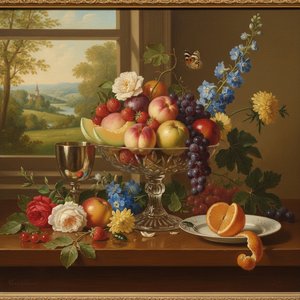
Severin Roesen: Evoking National Identity Through American Still Life Painting
Explore the captivating world of Severin Roesen, a major American still life painter influenced by Dutch masters. Discover his lush compositions and the symbolism within his art – a window into 19th-century America.

La Precisione della Visione: Charles Demuth e la Rielaborazione Modernista dell'Industria Americana
Esplora il Precisionismo americano con Charles Demuth: biografia, opere iconiche e l'influenza del modernismo sull'arte industriale. Analisi approfondita e contesto storico.

The Bountiful Still Life: Symbolism & Artistic Representation of Fruit Across Art History
Explore the rich history of still life painting & the symbolism of fruit across art movements. Discover masterpieces from Caravaggio to Cézanne with OriginalUniqueArt – expert guidance & museum-quality reproductions.

Grant Wood e il Regionalismo Americano: Identità, Mito e Paesaggio Rurale
Esplora il Regionalismo Americano con Grant Wood e i suoi capolavori. Analisi approfondita di 'American Gothic', contesto storico, influenze artistiche e l'eredità di questo movimento iconico. Scopri la vera essenza dell'arte rurale americana.

