

 Anteprima in scala reale
 Condividi
 Condividi
 Dettagli
 Guida stampabile

 Scarica
 Articoli simili
 Radiografia
 Slideshow
 Statistiche
Nude con la schiena rivolta


 Leggi tutto
Giclée / Stampe d'arte
Stampa giclée o su tela di qualità museale, con produzione rapida e diverse opzioni di finitura. ( Ordina la riproduzione dipinta a mano Passa all'immagine digitale)




P118B $10

P118H $10

P118W $10

P438Z $10

P508JH $12

P508YH $12

P805H $10

P805Z $10

P919BZ $10

P919G $10

P919XJ $10

P959ZH $10

P968JZ $12

W106C $8

W218G $10

W218JH $8

W218Y $10

W307PJ $10

W316G $10

W316PJ $8

W316Y $10

W398PJ $8

W4111J $10

W500HY $15

W500JH $15

W692G $12

W849H $8

W940BG $15

W953PJ $8




Scegli tra le nostre dimensioni predefinite, che rispettano le proporzioni originali dell'opera d'arte.

È possibile inserire dimensioni personalizzate per adattare l'opera a una cornice o a uno spazio specifico. Se la dimensione selezionata non corrisponde alle proporzioni dell'immagine originale, procederemo al ritaglio dell'opera o all'estensione dell'immagine con un bordo specchiato o a tinta unita. Un mockup digitale ti verrà inviato per approvazione prima dell'inizio della produzione.
Si prega di notare che l'anteprima a schermo non riflette il ritaglio o l'estensione effettivi. Solo il mockup mostrerà accuratamente la composizione finale.
Sebbene siano disponibili dimensioni personalizzate, si raccomanda di selezionare una dimensione dall'elenco predefinito per preservare le proporzioni originali.
Consegna in tutto il mondo () in 2 settimane invece delle normali 4/5 settimane. (25 Settembre)

Spedizione espressa gratuita in tutto il mondo

Tela in lino di alta qualità

Assicurazione completa sulla spedizione

Garanzia di rimborso dei dazi doganali

Garanzia di perfetta fedeltà cromatica

Politica di reso entro 100 giorni (solo per difetti di fabbricazione)

Garanzia di rimborso al 100%

Sconto per acquisti multipli
 L'opzione vetro è disponibile solo per dimensioni inferiori a 110 cm

Nude con la schiena rivolta
Giclée / Stampe d'arte
Dimensioni della riproduzione
-


Prezzo totale
$ 80
Charles Demuth: A Pioneer of Precisionism
Charles Henry Buckius Demuth (November 8, 1883 – October 23, 1935) stands as a cornerstone of American Modernist art. Born in Lancaster, Pennsylvania, he embarked on an artistic journey marked by unwavering dedication to observation and innovation—a path that ultimately cemented his place among the most influential painters of his era.
The Essence of Precisionism
Demuth’s distinctive style, known as Precisionism, emerged during a period of profound societal transformation. Rejecting Impressionistic subjectivity, he championed an approach rooted in meticulous detail and geometric abstraction—a reaction against the ornate excesses of Art Nouveau and Victorian aesthetics.
A Singular Vision: Boca Raton's Artistic Treasure
The painting "Nude with Back Turned," currently housed at the Boca Raton Museum of Art, exemplifies Demuth’s artistic philosophy. Executed in 1913, it captures a moment of quiet contemplation—a nude male figure positioned against a textured wall surface, bathed in subtle shades of red.
Technical Mastery: Watercolor and Geometric Forms
Demuth skillfully employed watercolor techniques to achieve remarkable luminosity and textural depth. His compositions prioritize geometric forms—sharp lines and planes—reflecting the influence of Cubism and mirroring the burgeoning fascination with industrial landscapes prevalent in the early 20th century.
Symbolic Resonance: Beyond Mere Representation
More than just a depiction of human anatomy, “Nude with Back Turned” speaks to themes of stillness, vulnerability, and introspection. Demuth’s deliberate use of color—primarily red—adds an emotional dimension, conveying both warmth and subtle tension.
Influences and Legacy
Demuth's artistic trajectory was profoundly shaped by collaborations with fellow artists like William Carlos Williams and fostered a deep appreciation for the beauty inherent in everyday subjects. His legacy continues to inspire contemporary painters and collectors alike—a testament to his unwavering commitment to artistic integrity and innovation.
Biografia dell'artista
Early Life and Artistic Beginnings
Charles Henry Buckius Demuth, born on November 8, 1883, in Lancaster, Pennsylvania, was a figure deeply intertwined with the spirit of his hometown. His early life unfolded within the historic brick row house at 120 East King Street, a building that had served as a tavern during its colonial days and remained the family’s home for generations. This unique setting—a blend of history and everyday life—would profoundly shape Demuth's artistic vision. He received his initial education at Franklin & Marshall Academy before pursuing further studies at Drexel University and, crucially, the Pennsylvania Academy of Fine Arts in Philadelphia. It was during his time at PAFA that he encountered William Carlos Williams, a poet whose work would become a significant source of inspiration for Demuth’s art. Their friendship fostered a shared appreciation for observation, detail, and the beauty found in the ordinary—a foundation upon which Demuth's distinctive style would be built. The challenges of his physical health, including a childhood illness and later diabetes, subtly influenced his artistic choices, leading him to focus on subjects that could be rendered with meticulous precision and emotional depth.The Rise of Precisionism
Demuth’s artistic journey truly took shape after his return from Paris, where he immersed himself in the vibrant avant-garde art scene. He studied at Académie Colarossi and Académie Julian, absorbing the innovative techniques and philosophies of European modernism. However, it was upon returning to America that Demuth developed his own unique style—Precisionism. This movement, emerging in the early 20th century, sought to capture the essence of American industrial life with a remarkable clarity and objectivity. Unlike Impressionism’s focus on fleeting moments of light and color, Precisionism employed sharp lines, flat planes of color, and a deliberate lack of figures to depict urban and rural landscapes—bridges, factories, grain elevators, and other symbols of America's burgeoning industry. Demuth’s work became synonymous with this style, reflecting his deep connection to Lancaster and its industrial heritage. His paintings weren’t merely representations of these structures; they were meditations on their form, texture, and the energy they embodied.Notable Works and Artistic Themes
Among Demuth's most celebrated works is *The Figure Five in Gold*, a painting inspired by William Carlos Williams’ poem of the same name. This iconic piece exemplifies Precisionism’s distinctive aesthetic—a carefully constructed composition of geometric shapes and bold colors that evoke a sense of both order and dynamism. Other notable paintings include *Tree Forms 1916*, which captures the intricate details of a tree trunk, and a series of “Poster Portraits” dedicated to prominent writers and artists of his time. These portraits weren’t simply likenesses; they were symbolic representations, imbued with layers of meaning and reflecting Demuth's personal relationships and artistic philosophies. His work frequently explored themes of industrialization, urban life, and the relationship between humanity and nature—often juxtaposing the stark geometry of factories with the organic forms of trees and flowers. The use of color was particularly significant, with Demuth employing a limited palette of muted tones to create a sense of quiet intensity and understated beauty.Legacy and Enduring Influence
Charles Demuth’s contributions to American art are undeniable. He played a pivotal role in introducing European modernism to the United States, shaping the course of 20th-century painting. His meticulous attention to detail, his innovative use of color, and his unique perspective on industrial landscapes have left an enduring legacy. The Demuth Museum, located in his childhood home in Lancaster, Pennsylvania, serves as a testament to his life’s work and continues to inspire visitors with its collection of paintings, drawings, and photographs. His influence can be seen in the works of subsequent generations of American artists, who continue to explore themes of industrialization, urbanity, and the beauty found in everyday objects. Demuth's art remains a powerful reminder of the transformative potential of observation, precision, and artistic vision—a legacy that continues to resonate today.
Charles Demuth
1883 - 1935 , Stati Uniti d'America
Informazioni rapide
- Artisti Influenti:
- William Carlos Williams
- Pablo Picasso
- Georges Braque
- Artisti Influenzati:
- Francis Criss
- Thomas Pollock Anshutz
- Data Di Morte: 23 ottobre 1935
- Data Di Nascita: 8 novembre 1883
- Luogo Di Nascita: Lancaster, Stati Uniti
- Movimento Artistico: Precisionismo
- Nazionalità: Americana
- Nome Completo: Charles Demuth
- Opere Notevoli:
- The Figure Five in Gold
- My Egypt
- Poster Portraits
Articoli correlati

La Precisione della Visione: Charles Demuth e la Rielaborazione Modernista dell'Industria Americana
Esplora il Precisionismo americano con Charles Demuth: biografia, opere iconiche e l'influenza del modernismo sull'arte industriale. Analisi approfondita e contesto storico.
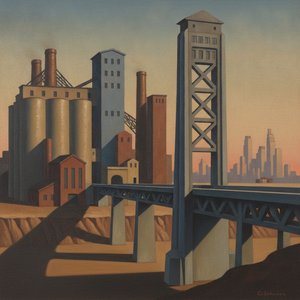
Precisionism: The Sharp Lines and Industrial Soul of American Modernism
Explore the sharp geometry and industrial soul of Precisionism. Discover how American Modernists like Charles Sheeler captured the Machine Age through Cubist-inspired landscapes and architectural precision in this definitive art history guide.

I 10 Capolavori dell'Acquerello che Hanno Rivoluzionato l'Arte | OriginalUniqueArt
Esplora i 10 capolavori dell'acquerello che hanno cambiato la storia dell'arte! Da Turner a Monet, scopri le storie e le tecniche di questi artisti iconici. Trova riproduzioni di alta qualità e idee per decorare casa con OriginalUniqueArt.com.

Ephemeral Visions: Exploring the History & Emotional Resonance of Watercolor Painting
Explore the captivating history of watercolor painting, from ancient techniques to modern masters like Kandinsky & Blake. Discover essential artists, collecting tips & the emotional power of this luminous medium. Expert insights for art enthusiasts.

Ephemeral Visions: Exploring the Artistic Legacy & Contemporary Practice of Watercolor Painting
Explore the captivating world of watercolor painting! Discover its rich history, essential techniques, influential artists & collecting tips. A comprehensive guide for art enthusiasts from OriginalUniqueArt.

