Anteprima in scala reale
 Condividi
 Condividi
 Dettagli
 Guida stampabile

 Scarica
 Articoli simili
 Radiografia
 Slideshow
 Statistiche
Maria Immaculata
 Oil On Canvas
- WallArt
- Baroque Classicizing Style
 1688
1688 181.0 x 128.0 cm
 Galleria d'Arte Sanssouci
 Leggi tutto
Giclée / Stampe d'arte
Stampa giclée o su tela di qualità museale, con produzione rapida e diverse opzioni di finitura. ( Ordina la riproduzione dipinta a mano Passa all'immagine digitale)




P118B €10

P118H €10

P118W €10

P438Z €10

P508JH €12

P508YH €12

P805H €10

P805Z €10

P919BZ €10

P919G €10

P919XJ €10

P959ZH €10

P968JZ €12

W106C €8

W218G €10

W218JH €8

W218Y €10

W307PJ €10

W316G €10

W316PJ €8

W316Y €10

W398PJ €8

W4111J €10

W500HY €15

W500JH €15

W692G €12

W849H €8

W940BG €15

W953PJ €8




Scegli tra le nostre dimensioni predefinite, che rispettano le proporzioni originali dell'opera d'arte.

Inserisci la larghezza e l'altezza desiderate, per adattarle alla tua cornice o alla tua parete. Una stampa può essere solo ritagliata, mai resa più grande dell'immagine originale; pertanto, un formato con una forma differente comporterà la perdita di una parte dell'opera. Ti invieremo un mockup digitale da approvare prima di procedere con la stampa. L'immagine mostrata in questa pagina non rappresenta il ritaglio reale — solo il mockup lo mostra.
Consegna in tutto il mondo () in 2 settimane invece delle normali 4/5 settimane. (23 Ottobre)

Spedizione espressa gratuita in tutto il mondo

Tela in lino di alta qualità

Assicurazione completa sulla spedizione

Garanzia di rimborso dei dazi doganali

Garanzia di perfetta fedeltà cromatica

Politica di reso entro 100 giorni (solo per difetti di fabbricazione)

Garanzia di rimborso al 100%

Sconto per acquisti multipli
 L'opzione vetro è disponibile solo per dimensioni inferiori a 110 cm

Maria Immaculata
Giclée / Stampe d'arte
Dimensioni della riproduzione
-


Prezzo totale
€ 70
A Divine Embrace: Exploring the Baroque Majesty of Maria Immaculata
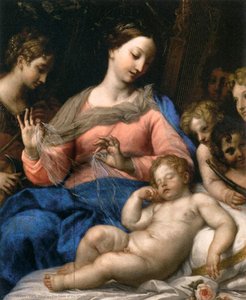
Carlo Maratta’s “Maria Immaculata,” painted in 1688, isn't merely a depiction of the Virgin Mary; it’s a carefully constructed tableau of faith, grace, and the burgeoning classical ideals of the late Baroque period. The painting immediately draws the viewer into a scene brimming with serene beauty – a testament to Maratta’s mastery of light, composition, and his deep understanding of religious iconography. The work transcends simple portraiture, offering a glimpse into a world where divine presence is palpable, inviting contemplation on themes of motherhood, purity, and spiritual devotion.
Maratta, a pivotal figure in Roman art after the Mannerist style, skillfully blended the emotional intensity of the Baroque with a newfound emphasis on clarity and balance. He was deeply influenced by Andrea Sacchi, his mentor, who instilled within him a reverence for classical forms and a restraint that tempered the dramatic flourishes characteristic of earlier Baroque painters. This influence is evident in “Maria Immaculata” – the figures are rendered with elegant poise, their gestures refined and harmonious, creating an atmosphere of dignified serenity. The color palette is rich yet controlled, dominated by deep blues and golds, evoking a sense of majesty and spiritual depth.
- Subject & Composition: At the heart of the painting stands Mary, presented as a figure of profound grace and maternal tenderness. She cradles the infant Jesus, his face radiating an innocent beauty. Surrounding them are a host of angels – one hovering above her head, another descending from the heavens, and two more positioned on either side, acting as silent witnesses to this sacred moment. The composition is meticulously balanced, drawing the eye towards Mary’s central position while subtly guiding it through the intricate arrangement of figures and architectural elements.
- Technique & Style: Maratta's brushwork is remarkably smooth and polished, indicative of his meticulous attention to detail. He employs sfumato – a technique borrowed from Leonardo da Vinci – to soften edges and create an ethereal quality, particularly around Mary’s face and the infant Jesus. The use of gold leaf adds a luminous sheen to the garments and halos, further enhancing the painting's sense of grandeur.
- Historical Context: Painted in 1688, “Maria Immaculata” reflects the Counter-Reformation’s emphasis on religious art as a tool for spiritual instruction and inspiration. The Catholic Church actively commissioned artworks that reinforced its doctrines and promoted piety among the faithful. The depiction of Mary as Immaculate – signifying her sinless conception – was a key theological concept during this period, emphasizing her unique role in salvation history.
Symbolism Woven into Sacred Space
Beyond its immediate beauty, “Maria Immaculata” is laden with symbolic meaning. The angels themselves represent divine messengers and protectors, embodying the grace and guidance offered by God’s presence. Mary's pose – her hand gently shielding the infant Jesus – symbolizes protection, nurturing, and the safeguarding of faith. The architectural setting, though somewhat simplified, evokes a sense of heavenly space, suggesting the sacredness of this encounter. The inclusion of light is particularly significant; it emanates from Mary and the Christ Child, illuminating the scene and symbolizing divine grace.
Notably, the painting’s composition echoes classical ideals of harmony and proportion, reflecting Maratta's commitment to a refined aesthetic rooted in antiquity. The arrangement of figures creates a pyramidal structure, a compositional device frequently employed by Renaissance artists to convey stability and balance.A Legacy of Baroque Elegance
Carlo Maratta’s “Maria Immaculata” stands as a remarkable example of the Roman Baroque at its most refined. It showcases his ability to seamlessly blend technical mastery with profound spiritual insight, creating an artwork that continues to resonate with viewers centuries later. The painting's enduring appeal lies not only in its aesthetic beauty but also in its capacity to evoke feelings of reverence, peace, and a deep connection to the timeless themes of faith and motherhood. Reproductions of this masterpiece offer a chance to bring this serene vision into any space, fostering contemplation and reminding us of the profound beauty found within religious art.
Further Research: For more information about Carlo Maratta and “Maria Immaculata,” explore resources such as the OriginalUniqueArt website (https://OriginalUniqueArt.com/carlo-maratta-maria-immaculata) and Wikipedia’s entry on Carlo Maratta (https://en.wikipedia.org/wiki/Carlo_Maratta).
Domande e risposte
A quale fase della carriera di Carlo Maratta appartiene "Maria Immaculata" (1688)?
La data del 1688 colloca "Maria Immaculata" nel Late Baroque dello sviluppo di Carlo Maratta.
Che atmosfera trasmette "Maria Immaculata"?
L'atmosfera generale di "Maria Immaculata" di Carlo Maratta è Calm. Il tono descrive l'atmosfera complessiva dell'opera.
In quale stanza si consiglia di collocare "Maria Immaculata" di Carlo Maratta, considerando i suoi colori?
Considerando i suoi colori Earthy, si consiglia di inserire "Maria Immaculata" in un/una Living Room.
Biografia dell'artista
La Vita e la Formazione di Carlo Maratta
Carlo Maratta, un pittore italiano di spicco, nacque il 15 maggio 1625 a Camerano, negli Stati Pontifici (oggi Italia). All'età di undici anni, si trasferì a Roma, dove divenne apprendista nello studio di Andrea Sacchi. Questo segnò l'inizio del suo percorso artistico, che lo avrebbe portato a diventare una figura guida nella scuola romana della pittura.Stile Artistico e Influenze
Le opere di Maratta sono caratterizzate dal loro stile classicizzante, eseguito in un tardo barocco classico. Sebbene facesse parte della tradizione classica derivata da Raffaello, non fu esente dall'influenza della pittura barocca, in particolare nell'uso del colore. Il suo contemporaneo e amico, Giovanni Bellori, scrisse una biografia precoce su Maratta, evidenziando il suo approccio artistico unico.Opere Notabili e Commissioni
Tra le opere più notevoli di Maratta si annoverano:- La Visitazione (1656) per Santa Maria della Pace, che mostra la sua maestria nella luce e nel movimento.
- Il Mistero della Trinità Rivelato a Sant'Agostino (c. 1655), dimostrando la sua capacità di bilanciare l'idealismo classico con elementi barocchi.
- L'Apparizione della Vergine a San Filippo Neri (c. 1675), ora nel Palazzo Pitti in Firenze, che esemplifica la sua interpretazione dotata del tema.
Evoluzione Artistica e Riconoscimenti
La carriera artistica di Maratta si estese per oltre sei decenni, durante i quali ricevette numerose commissioni da importanti mecenati, tra cui sei papi. Fu nominato Surintendent des chambres du Vatican da Innocenzo XI e fu incaricato di riparare gli affreschi di Raffaello in Vaticano nel 1702-1703. Maratta dimostrò una notevole versatilità, spaziando dalla pittura religiosa alla ritrattistica, sempre mantenendo un'aderenza ai canoni classici reinterpretati attraverso la lente del tardo barocco. La sua capacità di fondere l’eleganza formale rinascimentale con il dinamismo e la teatralità barocca lo rese una figura chiave nel panorama artistico romano del suo tempo.L'Eredità di Maratta
L'eredità di Maratta come maestro della maniera classica tardo-barocca continua a essere celebrata attraverso le sue opere, che possono essere ammirate in vari musei, tra cui quelli presenti su OriginalUniqueArt.com. La sua influenza si estese anche alle generazioni successive di artisti, contribuendo a plasmare il gusto artistico del XVIII secolo. Il suo approccio equilibrato e la sua maestria tecnica lo rendono ancora oggi un punto di riferimento per gli appassionati d'arte e gli studiosi.
Carlo Maratta
1625 - 1713 , Italia
Informazioni rapide
- Artistic Movement Or Style: Barocco Classico
- Artists Or Movements Influenced By This Artist: ['Giovanni Bellori']
- Artists Who Influenced This Artist:
- Andrea Sacchi
- Raffaello
- Date Of Birth: 15 maggio 1625
- Date Of Death: 15 dicembre 1713
- Full Name: Carlo Maratta
- Nationality: Italiana
- Notable Artworks:
- La Visitazione
- Il Mistero della Trinità
- L'Apparizione della Vergine
- Place Of Birth (City And Country): Camerano, Italia
Articoli correlati

The Dramatic Flourish: Exploring the Baroque Movement's Enduring Legacy in Art History
Explore the dramatic world of Baroque art! Discover iconic artists like Caravaggio & Rubens, defining techniques, and its lasting impact on art history. Expert insights for collectors & enthusiasts at OriginalUniqueArt.

Baroque Classicism: The Grandeur of Order and Drama in 17th-Century Art History
Explore the profound elegance of Baroque Classicism. Discover how 17th-century masters synthesized dramatic emotion with classical order through the lens of the Counter-Reformation and the works of legends like Carlo Maratta and Andrea Sacchi.

Il Dramma Barocco: Portare Splendore ed Emozione negli Interni Contemporanei
Scopri come portare il dramma e lo splendore dell'arte barocca nei tuoi interni con . Riproduzioni di alta qualità, consulenza d'arte personalizzata e ispirazione per uno stile unico.

The Visceral Stage: Exploring Dramatic Narratives & Emotional Intensity in Baroque Art
Explore the dramatic world of Baroque art! Discover iconic masters like Caravaggio & Rembrandt, their techniques, and the movement's lasting impact. Expert insights for collectors & enthusiasts at OriginalUniqueArt.

I 10 Capolavori Barocchi che Hanno Definito un'Epoca | Arte e Decorazioni di Lusso
Esplora i 10 capolavori barocchi di Caravaggio, Bernini e Rembrandt che hanno rivoluzionato l'arte. Scopri storie, tecniche e colori iconici. Trova riproduzioni d'arte di alta qualità per la tua casa su !