

 Anteprima in scala reale
 Invia
Invia Condividi
 Dettagli opera
 Guida
Guida

 Scarica
 Simili
 Radiografia
 Slideshow
 Statistiche
Virgin and Child Enthroned
 Tempera On Panel
- WallArt
- Baroque art
 1476
1476- Renaissance
 107.0 x 55.0 cm
 Museo delle Belle Arti
 Espandi i dettagli
Riproduzione a olio fatta a mano
Olio su tela dipinto a mano nelle tue dimensioni e con la tua cornice, realizzato su ordinazione dai nostri artisti. ( Passa alle stampe Passa all'immagine digitale)




P118B €10

P118H €10

P118W €10

P438Z €10

P508JH €12

P508YH €12

P805H €10

P805Z €10

P919BZ €10

P919G €10

P919XJ €10

P959ZH €10

P968JZ €12

W106C €8

W218G €10

W218JH €8

W218Y €10

W307PJ €10

W316G €10

W316PJ €8

W316Y €10

W398PJ €8

W4111J €10

W500HY €15

W500JH €15

W692G €12

W849H €8

W940BG €15

W953PJ €8




Scegli tra le nostre dimensioni predefinite, che rispettano le proporzioni originali dell'opera d'arte.

Inserisci la larghezza e l'altezza desiderate, per adattarle alla tua cornice o alla tua parete. Trattandosi di un'opera dipinta a mano, in caso di dimensioni con un formato differente, l'artista può estendere leggermente il dipinto oltre i bordi dell'immagine o ritagliare una piccola parte — la scelta spetta a te. Ti invieremo un mockup digitale da approvare prima che la realizzazione abbia inizio. L'immagine mostrata in questa pagina non rappresenta il risultato finale — solo il mockup lo fa.
Dopo l'ordine, il team di OriginalUniqueArt.com contatterà il cliente via e-mail per ricevere le istruzioni e fornirà un'anteprima del mockup
Consegna in tutto il mondo () in 3/4 settimane anziché nelle normali 5 settimane. (25 Ottobre). Nessun compromesso sulla qualità.

Spedizione espressa gratuita in tutto il mondo

Tela in lino di alta qualità

Assicurazione completa sulla spedizione

Garanzia di rimborso dei dazi doganali

Garanzia di fedeltà cromatica assoluta

Politica di reso entro 100 giorni (solo per difetti di fabbricazione)

Garanzia di rimborso al 100%

Offerta per acquisti multipli
 L'opzione vetro è disponibile solo per dimensioni inferiori a 110 cm

Virgin and Child Enthroned
Tecnica di riproduzione
Dimensioni riproduzione
-


Prezzo finale calcolato
€ 263
A Regal Vision of Faith: The Luminous World of Carlo Crivelli
In the quiet sanctity of the late 15th century, few artists could command the eye with as much decorative splendor and spiritual intensity as Carlo Crivelli. His masterpiece, "Virgin and Child Enthroned," completed around 1476, stands as a breathtaking portal into the Late Gothic soul. This is not merely a painting; it is an immersive experience of divine presence. As one gazes upon this exquisite work, the viewer is immediately struck by a sense of profound majesty. The Virgin Mary, crowned and richly dressed as the Queen of Heaven, sits regally upon a marble throne, cradling the Christ Child in her arms. The composition radiates a celestial calm, yet it is charged with a meticulous, almost hyper-real detail that pulls the observer into a world where the sacred and the material intersect.
Crivelli’s unique artistic journey provides the essential backdrop for such a captivating creation. Born in Venice around 1435, he was steeped in the Venetian tradition, absorbing the luminous color palettes and linear precision of masters like Vivarini and Mantegna. However, as he moved toward the Marche region, his style evolved into something entirely singular. While his contemporaries in Florence were embracing the sweeping humanism of the High Renaissance, Crivulously embraced a more conservative, decorative Late Gothic aesthetic. This choice allowed him to master the trompe l’oeil technique—a skillful manipulation of perspective that creates an illusion of three-dimensional reality. Through thin, layered glazes of tempera on wood, he achieved a textural depth so profound that the viewer can almost feel the weight of the crown and the smoothness of the marble throne.
Symbolism and the Art of Detail
Every element within this composition serves a higher theological purpose, woven into a tapestry of symbolic meaning. The presence of the apples, positioned with deliberate care near the edges of the frame, acts as a poignant reminder of the Fall of Man, contrasting sharply with the purity of the Virgin and the promise of salvation embodied by the Christ Child. This interplay between sin and redemption is central to the emotional impact of the piece. Crivelli’s attention to detail—from the intricate patterns on the garments to the subtle shadows cast by the figures—creates a sense of "materiality" that makes the divine feel tangibly present in our own world.
For the discerning collector or interior designer, this artwork offers more than just historical significance; it provides a focal point of unparalleled elegance. The painting’s ability to balance heavy, ornamental detail with a serene, meditative atmosphere makes it a versatile choice for sophisticated spaces. Whether placed in a gallery-style setting or as a centerpiece in a classically designed room, a high-quality reproduction of this work brings with it an aura of timelessness and intellectual depth. It is a piece that invites long periods of contemplation, rewarding the viewer with new discoveries of light and shadow upon every encounter.
Domande e risposte
I colori di "Virgin and Child Enthroned" di Carlo Crivelli sono vivaci o tenui?
La saturazione del colore di "Virgin and Child Enthroned" è Subtle Color e la sua intensità è Monochromatic.
Cosa rappresenta "Virgin and Child Enthroned" di Carlo Crivelli e quale atmosfera trasmette?
"Virgin and Child Enthroned" di Carlo Crivelli ritrae virgin mary, child jesus, religious iconography, renaissance art, catholic faith, medieval symbolism, italian painting, con un'atmosfera Serene. Il soggetto e l'atmosfera insieme descrivono l'opera.
È disponibile una presentazione a diapositiva per "Virgin and Child Enthroned" di Carlo Crivelli?
È disponibile un diaporama: la pagina Slideshow di "Virgin and Child Enthroned" di Carlo Crivelli.
Biografia dell'artista
La Vita e la Formazione di Carlo Crivelli
Carlo Crivelli, pittore rinascimentale italiano, nacque intorno al 1430-35 a Venezia. Proveniente da una famiglia di pittori, ricevette la sua formazione artistica sia a Venezia che a Padova. La sua prima formazione è attribuita a Jacobello del Fiore, attivo ancora nel 1436. Studiò anche presso la scuola dei Vivarini a Venezia.Il Periodo Veneziano e le Prime Influenze
I primi anni di Crivelli furono trascorsi nel Veneto, dove assorbì influenze da Vivarini, Squarcione e Mantegna. Questi maestri contribuirono a plasmare il suo stile iniziale, ma fu la sua successiva permanenza nell'Ancona a definire la sua unicità artistica. Si nota una forte influenza gotica decorativa nei suoi primi lavori, sebbene già si intravedano elementi che anticipano l’avvento del Rinascimento.L'Ancona e lo Sviluppo di uno Stile Personale
Nel 1458, Crivelli lasciò il Veneto e trascorse la maggior parte della sua carriera nel Marchio d'Ancona. Qui sviluppò un suo stile distintivo che si contrapponeva a quello del contemporaneo veneziano Giovanni Bellini. Il suo lavoro è caratterizzato da una sensibilità decorativa gotica tardiva, segnata da una qualità lineare, attenzione ai dettagli e l’uso di tecniche "trompe-l'oeil". Questa fase rappresenta il culmine della sua originalità artistica.Opere Principali e Collaborazioni
* La pittura "Madonna e Bambino in trono" (106 x 55 cm, Museo di Belle Arti, Budapest, Ungheria) è un esempio emblematico del suo stile. * Crivelli collaborò con il fratello minore, Vittorio Crivelli, su diversi progetti artistici, dimostrando una forte coesione familiare nel campo dell'arte. * Pietro Alemanno, pittore immigrato dal Germania/Austria nel Marchio d’Ancona, fu allievo e collaboratore di Crivelli, beneficiando del suo insegnamento e contribuendo alla diffusione del suo stile.Eredità e Significato Storico
Carlo Crivelli morì intorno al 1495. La sua eredità artistica risiede nella capacità di aver saputo coniugare elementi gotici con influenze rinascimentali, creando uno stile unico e inconfondibile. Sebbene non sia stato un innovatore radicale come altri artisti del suo tempo, la sua attenzione al dettaglio, l'uso magistrale delle tecniche decorative e la profonda spiritualità che permea le sue opere lo rendono una figura importante nella storia dell’arte italiana. Le sue opere sono oggi conservate in importanti musei e collezioni:- Pinacoteca di Brera a Milano, Italia, che espone diverse opere di Crivelli, tra cui la "Pietà" (128 x 241 cm).
- Museo San Giovanni in Bragora a Venezia, Italia, che possiede una collezione di opere d'arte di vari periodi e stili, tra cui alcune attribuite a Crivelli.

Carlo Crivelli
1435 - 1495 , Italia
Dettagli rapidi
- Artisti Influenti:
- Jacobello del Fiore
- Vivarini
- Squarcione
- Mantegna
- Collaboratori:
- Vittorio Crivelli
- Pietro Alemanno
- Data Di Nascita: 1435
- Luogo Di Nascita: Venezia, Italia
- Movimento Artistico: Rinascimento, Gotico tardo
- Nazionalità: Italiana
- Nome Completo: Carlo Crivelli
- Opere Notevoli: ['Madonna e Bambino in trono']
Articoli correlati

Divine Grace: An Art Historian's Journey Through Iconic Masterpieces of the Virgin Mary
Explore the profound beauty of Marian iconography through an art historian's lens. Discover iconic masterpieces by Raphael and Renaissance masters, celebrating the divine grace and timeless elegance of the Virgin Mary in classical fine art.
Fra Angelico: I 25 Capolavori dell'Arte Rinascimentale per la Tua Casa | OriginalUniqueArt
Esplora i 25 capolavori di Fra Angelico, il pittore rinascimentale dell'Annunciazione e della pittura sacra. Scopri la storia, le tecniche e l'arte religiosa che rendono uniche queste opere. Riproduzioni artistiche su OriginalUniqueArt.com!
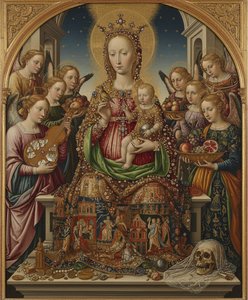
Carlo Crivelli: Misticismo e Materialità nel Rinascimento Veneziano
Esplora il misticismo e la straordinaria materialità nelle opere di Carlo Crivelli, maestro del Rinascimento veneziano. Analisi approfondita della sua tecnica pittorica, iconografia e eredità artistica.
Jacob Maris: Il Maestro del Realismo Atmosferico e dell'Intimo Paesaggio Olandese
Scopri Jacob Maris, il maestro del realismo atmosferico olandese e figura chiave della Scuola dell'Aia. Approfondisci la sua vita, le opere iconiche e l'influenza sulla pittura paesaggistica del XIX secolo.
Divine Grace: A Journey Through the Most Iconic Depictions of the Virgin Mary in Art History
Embark on a profound journey through art history with our exploration of the most iconic depictions of the Virgin Mary. Discover the divine grace, symbolism, and masterful techniques found in Renaissance masterpieces and sacred iconography.


