

 Anteprima in scala reale
 Condividi
 Condividi
 Dettagli
 Guida stampabile

 Scarica
 Articoli simili
 Radiografia
 Slideshow
 Statistiche
Untitled
 Oil On Board
- Futurist Movement
 1915
1915- Early Modern
 44.0 x 24.0 cm
 MAM Rio
 Leggi tutto
L'opera d'arte visualizzata in questa pagina è protetta dalle leggi sul diritto d'autore, il che significa che non possiamo legalmente creare o vendere una riproduzione identica. Tale protezione è garantita da accordi internazionali quali la Convenzione di Berna e dalle leggi nazionali, incluse quelle stabilite da Legge sul copyright degli Stati Uniti - Titolo 17. Tutti i diritti riservati. Le immagini presenti su questo sito sono protette da copyright e non possono essere riprodotte o utilizzate senza l'autorizzazione scritta di WahooArt.com o dei rispettivi proprietari del copyright.
Questo metodo è pienamente conforme alle normative sul diritto d'autore poiché non prevede la copia o la duplicazione dell'opera protetta. Si tratta invece di una rielaborazione creativa: un nuovo dipinto che trae ispirazione dall'originale, senza tuttavia esserne identico.
Giclée / Stampe d'arte
Stampa giclée o su tela di qualità museale, con produzione rapida e diverse opzioni di finitura. ( Ordina la riproduzione dipinta a mano Passa all'immagine digitale)




P118B €10

P118H €10

P118W €10

P438Z €10

P508JH €12

P508YH €12

P805H €10

P805Z €10

P919BZ €10

P919G €10

P919XJ €10

P959ZH €10

P968JZ €12

W106C €8

W218G €10

W218JH €8

W218Y €10

W307PJ €10

W316G €10

W316PJ €8

W316Y €10

W398PJ €8

W4111J €10

W500HY €15

W500JH €15

W692G €12

W849H €8

W940BG €15

W953PJ €8




Scegli tra le nostre dimensioni predefinite, che rispettano le proporzioni originali dell'opera d'arte.

Inserisci la larghezza e l'altezza desiderate, per adattarle alla tua cornice o alla tua parete. Una stampa può essere solo ritagliata, mai resa più grande dell'immagine originale; pertanto, un formato con una forma differente comporterà la perdita di una parte dell'opera. Ti invieremo un mockup digitale da approvare prima di procedere con la stampa. L'immagine mostrata in questa pagina non rappresenta il ritaglio reale — solo il mockup lo mostra.
Consegna in tutto il mondo () in 2 settimane invece delle normali 4/5 settimane. (23 Ottobre)

Spedizione espressa gratuita in tutto il mondo

Tela in lino di alta qualità

Assicurazione completa sulla spedizione

Garanzia di rimborso dei dazi doganali

Garanzia di perfetta fedeltà cromatica

Politica di reso entro 100 giorni (solo per difetti di fabbricazione)

Garanzia di rimborso al 100%

Sconto per acquisti multipli
 L'opzione vetro è disponibile solo per dimensioni inferiori a 110 cm

Untitled
Giclée / Stampe d'arte
Dimensioni della riproduzione
-


Prezzo totale
€ 70
Carlo Carrà’s “Untitled”: A Fragment of Futurist Rebellion
The painting "Untitled," created by Carlo Carrà in 1915, stands as a haunting testament to the turbulent spirit of Italian Futurism—a movement that sought to shatter artistic conventions and embrace dynamism, speed, and technological advancement. More than just an image on canvas; it’s a distillation of anxieties surrounding the dawn of the Great War and a profound exploration of human form stripped bare by existential questioning. Carrà himself famously declared that he wished to “destroy everything” in order to rebuild it anew, a manifesto that fueled his artistic endeavors throughout his prolific career.- Subject Matter: The composition depicts a man’s torso—a deliberately incomplete figure—positioned against a muted brown background. This stark simplicity is deceptive; the absence of facial features amplifies the sense of isolation and vulnerability, forcing viewers to confront the fundamental human condition.
- Style & Technique: Carrà's approach aligns with the Futurist preoccupation with geometric abstraction and fragmentation. The figure’s torso is rendered in a flattened perspective, reminiscent of Byzantine icons—a deliberate stylistic choice intended to evoke a sense of timelessness and spiritual contemplation amidst the chaos of modern warfare. Carrà employed oil paint on board, utilizing thick impasto strokes that convey texture and physicality, mirroring the materiality of sculpture and rejecting the illusionistic techniques favored by academic painting.
- Historical Context: Painted during the height of World War I, “Untitled” reflects the pervasive fear and uncertainty gripping Europe at the time. Futurists rejected sentimentality and nostalgia for the past, advocating instead for a radical embrace of progress and violence—a worldview encapsulated in their fervent belief that art should serve as a catalyst for societal transformation. Carrà’s work embodies this ethos, presenting a deliberately unsettling image that challenges viewers to contemplate mortality and the fragility of human existence.
- Symbolism: The man's nude torso symbolizes not merely physical vulnerability but also spiritual openness—a willingness to confront the abyss without recourse to comforting illusions. The brown background serves as a grounding element, representing earthiness and stability against which the figure’s incompleteness is accentuated. Carrà’s deliberate omission of facial features underscores the importance of inner experience over outward appearance, suggesting that true understanding resides in confronting one's own limitations.
- Emotional Impact: “Untitled” evokes a palpable sense of melancholy and contemplation—a quiet defiance against the horrors unfolding on the battlefield. The painting compels viewers to grapple with questions of identity, loss, and the inescapable awareness of death. Carrà’s masterful manipulation of form and color achieves an extraordinary feat: conveying profound emotion through minimalist visual language.
Domande e risposte
In quale ambiente si consiglia di collocare "Untitled" di Carlo Carrà?
"Untitled" di Carlo Carrà è consigliato per un/una Living Room. Questo suggerimento si basa sul soggetto, sui colori e sull'atmosfera dell'opera.
Quale collocazione si adatta meglio al formato di "Untitled" di Carlo Carrà?
Con la sua forma Tall, una riproduzione di "Untitled" è ideale per un Living Room.
Quali soggetti appaiono in "Untitled" di Carlo Carrà?
I temi presenti in "Untitled" di Carlo Carrà includono painting, man, headlessfigure, greensuit, brownbackground, oilonboard, carlocarrà. Insieme, essi riassumono il soggetto dell'opera.
Biografia dell'artista
Early Life and the Seeds of Artistic Rebellion
Carlo Carrà, born in Quargnento near Alessandria, Italy, on February 11, 1881, embarked on a path diverging sharply from academic tradition. His youth was marked by necessity; at twelve years old, he left his family to apprentice as a mural decorator. This formative experience, steeped in the physicality of art-making and craftsmanship, indelibly shaped his artistic sensibilities. It wasn’t merely applying paint—it was immersion into color, form, and visual communication. A sojourn to Paris at the turn of the century, decorating pavilions for the Exposition Universelle, exposed him to burgeoning currents of contemporary French art, a crucial awakening that broadened his horizons beyond Italian provincialism. This exposure was followed by a brief period in London, where he encountered exiled Italian anarchists—a political undercurrent subtly informing his early work with themes of social unrest and rebellion. His parents separated two years after their marriage, and Raffaella Carrà, his daughter, spent much of her childhood between Bologna and Bellaria. At eight years old she left Emilia-Romagna to pursue her studies directly in Rome, initially at the Accademia nazionale di danza, founded by Jia Ruskaja, where she remained until her fourteenth year, abandoning it after Ruskaja discouraged her. He began his artistic training as a decorator, mastering techniques of fresco and mural painting—skills that would prove invaluable throughout his career. The influence of Segantini, Previati, and Mosè Bianchi—artists who championed a return to the expressive power of tonal painting—became formative during this period. Carrà’s early artistic vision was shaped by a profound awareness of the limitations of prevailing academic styles.Embracing Dynamism: The Futurist Years
The year 1910 marked a decisive turning point. Carrà, alongside Umberto Boccioni, Luigi Russolo, and Giacomo Balla, signed the manifesto of the Futurist painters—a declaration irrevocably altering Italian art’s course. Futurism was a radical ideology, an explosive celebration of modernity, speed, technology, youth, and the machine age's relentless energy. It rejected the past, embracing dynamism and anticipating a future defined by progress. Carrà’s early Futurist works—such as The Funeral of the Anarchist Galli (1911) and Rhythms of Objects (1911)—vividly embody these principles. The Funeral of the Anarchist Galli, a chaotic yet compelling depiction of grief and protest, isn’t merely representation but a visceral experience of movement and emotion. The fractured forms and jarring colors convey the raw energy of the crowd and disruptive political force. Rhythms of Objects further demonstrates his exploration of dynamism, breaking down everyday objects into fragmented shapes suggesting motion and transformation. These paintings weren’t about *what* was depicted but *how* it was perceived—a revolutionary approach to representation. He wasn’t just painting scenes; he attempted to capture the very essence of modern life in all its frenetic glory. His encounter with Giorgio de Chirico—during a visit to Paris—proved transformative, sparking an interest in De Chirico’s metaphysical art style characterized by unsettling juxtapositions and dreamlike atmospheres. Carrà’s exploration of psychological states and existential anxieties intensified during this period, culminating in works like The Daughters of Lot (1919). This shift away from Futurism's outward dynamism toward an inward gaze signaled a new artistic direction—one rooted in contemplation and symbolic imagery.From Metaphysics to Landscape Painting: A Mature Style
Carrà’s engagement with De Chirico’s metaphysical vision profoundly influenced his subsequent artistic endeavors. He adopted a naturalistic approach to landscape painting, prioritizing atmospheric perspective and textural brushwork—a style that persisted throughout his career. This stylistic evolution reflected a desire for balance between expressive experimentation and formal restraint. His landscapes are imbued with quiet contemplation, capturing the subtle nuances of light and color—a testament to his artistic maturity. ## Legacy and Recognition Carlo Carrà’s contribution to Italian art is undeniable. He championed Futurism’s revolutionary spirit and explored Metaphysical painting's unsettling psychological depths. His unwavering commitment to artistic innovation cemented his place as a pivotal figure in 20th-century art history. Despite controversies surrounding his political affiliations—particularly his embrace of Fascist ideology—Carrà’s enduring influence continues to inspire artists today. He passed away in Milan on April 13, 1966, leaving behind a rich artistic legacy that transcends stylistic boundaries and resonates with profound philosophical questions.
Carlo Carrà
1881 - 1966 , Italia
Informazioni rapide
- Artistic Movement Or Style: Futurism, Metaphysical art
- Artists Who Influenced This Artist:
- Giorgio de Chirico
- Luigi Russolo
- Date Of Birth: Feb 11, 1881
- Date Of Death: Apr 13, 1966
- Full Name: Carlo Carrà
- Nationality: Italian
- Notable Artworks:
- Funeral of Galli
- Rhythms of Objects
- Daughters of Lot
- Place Of Birth: Alessandria, Italy
Articoli correlati
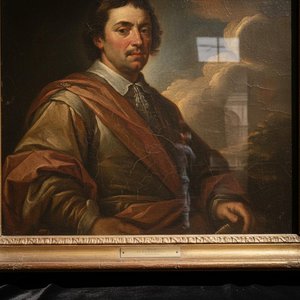
Mastering Oil on Board: The Timeless Appeal of Texture, Durability, and Art Historical Grandeur
Discover the enduring legacy of oil on board painting. Explore how historical techniques, rich impasto textures, and structural durability create timeless masterpieces that bridge Renaissance grandeur with modern art collecting excellence.
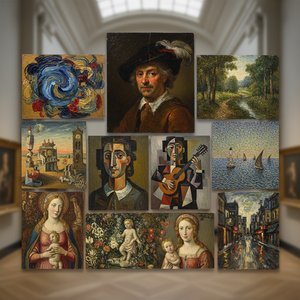
I 10 Capolavori a Olio su Tavola che Hanno Rivoluzionato l'Arte | OriginalUniqueArt
Esplora i 10 capolavori a olio su tavola che hanno segnato la storia dell'arte! Da Van Eyck a Monet, scopri le storie e le tecniche di artisti iconici. Trova riproduzioni di alta qualità per arredare con stile: colori, emozioni e bellezza senza tempo ti aspettano su OriginalUniqueArt.com.

Oil on Board: A Historical Survey of Technique, Aesthetic Qualities & Enduring Appeal
Explore the rich history of oil on board painting! Discover techniques, aesthetic qualities & enduring appeal from early masters to modern practice. Expert insights for collectors and art enthusiasts.

Carlo Carrà: Visioni Futuriste e Trasformazioni Metafisiche nella Pittura Italiana del Primo Novecento
Esplora la vita e le opere di Carlo Carrà, figura chiave del Futurismo e della Pittura metafisica italiana. Analisi approfondite, contesto storico e l'eredità artistica di un maestro del Novecento.

The Enduring Legacy of Oil on Canvas: Technique, History & Aesthetic Impact
Explore the rich history & techniques of oil painting – from Renaissance masters to Impressionism. Discover pigments, layering methods, and why this timeless medium endures. Expert insights for artists & art enthusiasts.

