

 Preview
 Acquista stampa Acquista download
 Invia
Invia
 Condividi
 Dettagli opera
 Aggiungi ai preferiti

 Scarica
 Simili
 Radiografia
 Slideshow
Florence
 Oil On Canvas
- WallArt
- Futurist Painting
 Modern
 50.0 x 60.0 cm
 MAGA Museo Arte Gallarate
 Scopri di più
Riproduzione a olio fatta a mano
Olio su tela dipinto a mano nelle tue dimensioni e con la tua cornice, realizzato su ordinazione dai nostri artisti.




P118B $10

P118H $10

P118W $10

P438Z $10

P508JH $12

P508YH $12

P805H $10

P805Z $10

P919BZ $10

P919G $10

P919XJ $10

P959ZH $10

P968JZ $12

W106C $8

W218G $10

W218JH $8

W218Y $10

W307PJ $10

W316G $10

W316PJ $8

W316Y $10

W398PJ $8

W4111J $10

W500HY $15

W500JH $15

W692G $12

W849H $8

W940BG $15

W953PJ $8




Scegli tra le nostre dimensioni predefinite, che rispettano le proporzioni originali dell'opera d'arte.

È possibile inserire dimensioni personalizzate per adattare l'opera a una cornice o a uno spazio specifico. Se la dimensione selezionata non corrisponde alle proporzioni dell'immagine originale, provvederemo a ritagliare l'opera o a estendere il dipinto con elementi aggiuntivi dipinti a mano. Un mockup digitale ti sarà inviato per approvazione prima dell'inizio della produzione.
Si prega di notare che l'anteprima a schermo non riflette il ritaglio o l'estensione effettivi. Solo il mockup mostrerà accuratamente la composizione finale.
Sebbene siano disponibili dimensioni personalizzate, consigliamo di selezionare una dimensione dall'elenco predefinito per preservare le proporzioni originali.
Dopo l'ordine, il team di OriginalUniqueArt.com invierà un'e-mail al cliente per le istruzioni e fornirà un'anteprima del mockup
Consegna in tutto il mondo () in 3/4 settimane anziché nelle normali 5 settimane. (27 Luglio). Nessun compromesso sulla qualità.

Spedizione espressa gratuita in tutto il mondo

Tela in lino di alta qualità

Assicurazione completa sulla spedizione

Garanzia di rimborso dei dazi doganali

Garanzia di fedeltà cromatica

Politica di reso entro 60 giorni (solo per difetti)

Garanzia di rimborso al 100%

Sconto per acquisti multipli
 L'opzione vetro è disponibile solo per dimensioni inferiori a 110 cm

Florence
Tecnica di riproduzione
Dimensioni riproduzione
-


Prezzo totale finale
-
Descrizione dell'opera
A Vision of Eternal Florence
To gaze upon this depiction of Florence is to step through a veil of time, into a moment suspended between vibrant history and quiet contemplation. Carlo Carrà’s vision captures more than just the magnificent dome of Santa Maria del Fiore; it encapsulates the very soul of Florentine artistry—a spirit rooted in the rigorous beauty of the Quattrocento. The composition itself feels like an archaeological discovery rendered in paint, presenting the city not as a mere collection of buildings, but as a unified, breathing volume. Carrà masterfully guides the eye across this aerial panorama, where every overlapping block and delicate curve speaks to centuries of human endeavor and artistic devotion.
Mastery in Light and Line: Technique and Form
Technically, the painting is a profound study in restraint. Carrà employs a technique characterized by light, quick brushstrokes and the exquisite layering of transparent glazes, or velature. This process allows the color to build up luminosity from within, giving the entire scene an ethereal, almost spiritual glow that seems to emanate from the very stone of the city. The structure is defined by thin, delicate black outlines—lines that are structural rather than restrictive. These lines serve to delineate the cubic forms of the architecture, suggesting a geometric order beneath the soft wash of color. It is this interplay between the rigid geometry suggested by the outlines and the atmospheric softness achieved through glazing that gives the piece its unique visual tension.
Historical Echoes: Carrà’s Late Period Synthesis
This work stands as a beautiful testament to the breadth of Carrà's artistic journey. Having navigated the turbulent waters of Futurism, Metaphysics, and various avant-garde movements throughout the twentieth century, here he finds a profound synthesis. In this later period, his focus turns inward, toward essential forms and pictorial simplicity. The painting moves away from overt naturalism or dramatic impressionism, instead achieving an equilibrium between concrete reality and sublime abstraction. It is Carrà distilling the monumental into its most fundamental visual components—a mature artist finding quiet power in elegant reduction.
Symbolism of Place and Spirit
The subject matter itself carries immense symbolic weight. Florence, particularly viewed through the lens of Brunelleschi’s dome, represents the pinnacle of Renaissance humanism and artistic revival. For Carrà, this city was not just a backdrop; it was a cultural touchstone. The muted palette—of soft blues, earthy grays, and pale terracotta—contributes to an overwhelming sense of tranquility. It invites the viewer into a meditative state, suggesting that true beauty lies in the enduring structure of culture itself. Owning this piece is acquiring not just art, but a tangible connection to the deep, abiding spirit of Italian artistic heritage.
Bringing the Masterpiece Home
For collectors and designers seeking an object imbued with history and quiet grandeur, this reproduction offers unparalleled depth. The soft luminosity achieved through Carrà’s glazing technique translates beautifully into interior spaces, acting as a focal point that uplifts any room without overwhelming it. It speaks to those who appreciate art that rewards close looking—a piece where the eye can wander from the defined geometry of the foreground blocks to the hazy, luminous expanse of the sky, finding continuous beauty in every subtle shift of tone.
Biografia dell'artista
Early Life and the Seeds of Artistic Rebellion
Carlo Carrà, born in Quargnento near Alessandria, Italy, on February 11, 1881, embarked on a path diverging sharply from academic tradition. His youth was marked by necessity; at twelve years old, he left his family to apprentice as a mural decorator. This formative experience, steeped in the physicality of art-making and craftsmanship, indelibly shaped his artistic sensibilities. It wasn’t merely applying paint—it was immersion into color, form, and visual communication. A sojourn to Paris at the turn of the century, decorating pavilions for the Exposition Universelle, exposed him to burgeoning currents of contemporary French art, a crucial awakening that broadened his horizons beyond Italian provincialism. This exposure was followed by a brief period in London, where he encountered exiled Italian anarchists—a political undercurrent subtly informing his early work with themes of social unrest and rebellion. His parents separated two years after their marriage, and Raffaella Carrà, his daughter, spent much of her childhood between Bologna and Bellaria. At eight years old she left Emilia-Romagna to pursue her studies directly in Rome, initially at the Accademia nazionale di danza, founded by Jia Ruskaja, where she remained until her fourteenth year, abandoning it after Ruskaja discouraged her. He began his artistic training as a decorator, mastering techniques of fresco and mural painting—skills that would prove invaluable throughout his career. The influence of Segantini, Previati, and Mosè Bianchi—artists who championed a return to the expressive power of tonal painting—became formative during this period. Carrà’s early artistic vision was shaped by a profound awareness of the limitations of prevailing academic styles.Embracing Dynamism: The Futurist Years
The year 1910 marked a decisive turning point. Carrà, alongside Umberto Boccioni, Luigi Russolo, and Giacomo Balla, signed the manifesto of the Futurist painters—a declaration irrevocably altering Italian art’s course. Futurism was a radical ideology, an explosive celebration of modernity, speed, technology, youth, and the machine age's relentless energy. It rejected the past, embracing dynamism and anticipating a future defined by progress. Carrà’s early Futurist works—such as The Funeral of the Anarchist Galli (1911) and Rhythms of Objects (1911)—vividly embody these principles. The Funeral of the Anarchist Galli, a chaotic yet compelling depiction of grief and protest, isn’t merely representation but a visceral experience of movement and emotion. The fractured forms and jarring colors convey the raw energy of the crowd and disruptive political force. Rhythms of Objects further demonstrates his exploration of dynamism, breaking down everyday objects into fragmented shapes suggesting motion and transformation. These paintings weren’t about *what* was depicted but *how* it was perceived—a revolutionary approach to representation. He wasn’t just painting scenes; he attempted to capture the very essence of modern life in all its frenetic glory. His encounter with Giorgio de Chirico—during a visit to Paris—proved transformative, sparking an interest in De Chirico’s metaphysical art style characterized by unsettling juxtapositions and dreamlike atmospheres. Carrà’s exploration of psychological states and existential anxieties intensified during this period, culminating in works like The Daughters of Lot (1919). This shift away from Futurism's outward dynamism toward an inward gaze signaled a new artistic direction—one rooted in contemplation and symbolic imagery.From Metaphysics to Landscape Painting: A Mature Style
Carrà’s engagement with De Chirico’s metaphysical vision profoundly influenced his subsequent artistic endeavors. He adopted a naturalistic approach to landscape painting, prioritizing atmospheric perspective and textural brushwork—a style that persisted throughout his career. This stylistic evolution reflected a desire for balance between expressive experimentation and formal restraint. His landscapes are imbued with quiet contemplation, capturing the subtle nuances of light and color—a testament to his artistic maturity. ## Legacy and Recognition Carlo Carrà’s contribution to Italian art is undeniable. He championed Futurism’s revolutionary spirit and explored Metaphysical painting's unsettling psychological depths. His unwavering commitment to artistic innovation cemented his place as a pivotal figure in 20th-century art history. Despite controversies surrounding his political affiliations—particularly his embrace of Fascist ideology—Carrà’s enduring influence continues to inspire artists today. He passed away in Milan on April 13, 1966, leaving behind a rich artistic legacy that transcends stylistic boundaries and resonates with profound philosophical questions.
Carlo Carrà
1881 - 1966 , Italia
Dati rapidi
- Artistic Movement Or Style: Futurism, Metaphysical art
- Artists Who Influenced This Artist:
- Giorgio de Chirico
- Luigi Russolo
- Date Of Birth: Feb 11, 1881
- Date Of Death: Apr 13, 1966
- Full Name: Carlo Carrà
- Nationality: Italian
- Notable Artworks:
- Funeral of Galli
- Rhythms of Objects
- Daughters of Lot
- Place Of Birth: Alessandria, Italy
Articoli correlati

Alfred Worthington: Bridging Victorian Realism & Early Modern Landscape Painting
Explore the captivating landscapes of Alfred Worthington (1834-1927), a pivotal figure bridging Victorian realism & early Impressionism. Discover his Welsh hunting scenes, artistic evolution, and collecting guide.

Carlo Carrà: Visioni Futuriste e Trasformazioni Metafisiche nella Pittura Italiana del Primo Novecento
Esplora la vita e le opere di Carlo Carrà, figura chiave del Futurismo e della Pittura metafisica italiana. Analisi approfondite, contesto storico e l'eredità artistica di un maestro del Novecento.

Concrete Visions: Exploring the Urban Landscape in Painting – From Realism to Contemporary Art
Explore the evolution of cityscape painting from Realism to contemporary art with OriginalUniqueArt. Discover key artists & invest in timeless urban visions. Expert guidance, museum-quality reproductions.

Evocations of Place: A Historical Journey Through Landscape Art
Explore the rich history of landscape art with OriginalUniqueArt. Discover renowned artists, movements like Impressionism & tonalism, and expert guidance for collecting timeless pieces. Find your perfect serene escape today!
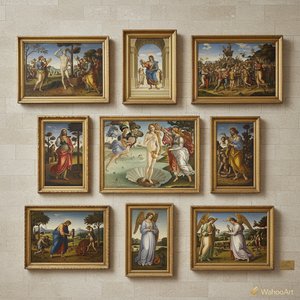
I 10 Capolavori del Rinascimento Iniziale che Hanno Definito l'Arte: Scopri i Maestri
Esplora i 10 capolavori del Rinascimento italiano: Leonardo, Michelangelo, Raffaello e altri maestri. Scopri la storia, il simbolismo e le tecniche di queste opere iconiche. Trova riproduzioni d'arte di alta qualità su !


