

 Anteprima in scala reale
 Invia
Invia Condividi
 Dettagli opera

 Scarica immagine
 Simili
 Radiografia
 Slideshow
The Lost Trail
 1856
1856 50.0 x 78.0 cm
 Museo Thyssen-Bornemisza
 Espandi i dettagli
Riproduzione a olio fatta a mano
Olio su tela dipinto a mano nelle tue dimensioni e con la tua cornice, realizzato su ordinazione dai nostri artisti. ( Acquista stampa Acquista immagine)




































Scegli tra le nostre dimensioni predefinite, che rispettano le proporzioni originali dell'opera d'arte.

È possibile inserire dimensioni personalizzate per adattare l'opera a una cornice o a uno spazio specifico. Se la dimensione selezionata non corrisponde alle proporzioni dell'immagine originale, provvederemo a ritagliare l'opera o a estendere il dipinto con elementi aggiuntivi dipinti a mano. Un mockup digitale ti sarà inviato per approvazione prima dell'inizio della produzione.
Si prega di notare che l'anteprima a schermo non riflette il ritaglio o l'estensione effettivi. Solo il mockup mostrerà accuratamente la composizione finale.
Sebbene siano disponibili dimensioni personalizzate, consigliamo di selezionare una dimensione dall'elenco predefinito per preservare le proporzioni originali.
Dopo l'ordine, il team di OriginalUniqueArt.com contatterà il cliente via e-mail per le istruzioni e fornirà un'anteprima del mockup
Consegna in tutto il mondo () in 3/4 settimane anziché nelle normali 5 settimane. (29 Agosto). Nessun compromesso sulla qualità.

Spedizione espressa gratuita in tutto il mondo

Tela in lino di alta qualità

Assicurazione completa sulla spedizione

Garanzia di rimborso dei dazi doganali

Garanzia di fedeltà cromatica

Politica di reso entro 60 giorni (solo per difetti di fabbricazione)

Garanzia di rimborso al 100%

Offerta per acquisti multipli
 L'opzione vetro è disponibile solo per dimensioni inferiori a 110 cm

The Lost Trail
Tecnica di riproduzione
Dimensioni riproduzione
-


Prezzo totale calcolato
$ 300
Biografia dell'artista
The Chronicler of the American Frontier: The Life and Vision of Carl Wimar
Karl Ferdinand Wimar, known to many as Charles Wimar, occupied a unique and vital space in the mid-19th-century art world, acting as a visual bridge between the disciplined traditions of European academies and the raw, untamed spirit of the American West. Born in 1828 in Siegburg, Prussia, Wimar’s journey was one of profound geographical and artistic transformation. After emigrating to St. Louis at the tender age of fifteen, he found himself immersed in the burgeoning frontier culture of Missouri. This early exposure to the vastness of the American landscape would later become the heartbeat of his creative output. His formal education, however, remained deeply rooted in the prestigious traditions of the Old World. By enrolling at the Düsseldorf Academy in 1852, Wimar placed himself under the tutelage of Emanuel Leutze, a master of Romanticism. This mentorship was transformative, instilling in him a rigorous dedication to realism and a penchant for dramatic, narrative-driven compositions that would define his later masterpieces.Expeditions into the Heart of the Great Plains
The true essence of Wimar’s artistry was forged not in the quiet studios of Germany, but along the winding currents of the Missouri and Mississippi Rivers. During the pivotal expeditions of 1858 and 1859, Wimar transitioned from a student of technique to an intrepid observer of life. Driven by an insatiable curiosity, he ventured deep into the Great Plains, documenting the rhythmic, nomadic existence of Native American tribes with an eye for both ethnographic detail and emotional resonance. He did not merely paint landscapes; he captured the pulse of a disappearing era. His canvases became windows into the daily rituals of indigenous peoples, the thunderous movement of massive buffalo herds, and the precarious encounters between migrating pioneer wagon trains and the original inhabitants of the land. Through his meticulous observation, Wimar imbued his subjects with a dignity and vitality that transcended simple documentation, elevating frontier life to the realm of high art.Legacy and Artistic Significance
Wimar’s body of work is characterized by a remarkable synthesis of Realism and Symbolism. While his technical execution relied on the precision learned at Düsseldorf, his thematic focus often touched upon the profound tensions of the colonial era. One of his most celebrated early achievements, The Abduction of Boone's Daughter by the Indians, serves as a hauntingly beautiful example of his ability to weave historical incident with dramatic tension. Beyond his individual canvases, Wimar’s contribution to American visual identity was cemented through large-scale projects, such as the magnificent murals he painted in 1861 for the Rotunda of the St. Louis Court House. Though his life was tragically short, ending in 1862, the impact of his vision remains indelible. He remains a foundational figure for anyone seeking to understand the complex, often turbulent, beauty of the American frontier through the lens of a master painter who saw both the majesty and the tragedy of a changing world.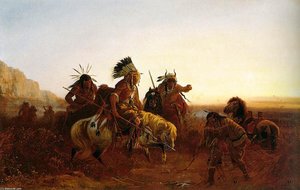
carl wimar
1828 - 1862 , Germany
Dati rapidi
- Artistic Movement Or Style: Romanticism
- Artists Or Movements Influenced By This Artist: ['Düsseldorf School']
- Artists Who Influenced This Artist: ['Emanuel Leutze']
- Date Of Birth: February 20, 1828
- Full Name: Karl Ferdinand Wimar
- Nationality: German-American
- Notable Artworks:
- The Abduction of Boone's Daughter by the Indians
- The Lost Trail
- Place Of Birth: Siegburg, Germany

