Dimensione testo

() ·

Un dipinto creato per te, a mano

Il Sacrificio di Isacco

Riproduzione a olio fatta a mano

Olio su tela dipinto a mano nelle tue dimensioni e con la tua cornice, realizzato su ordinazione dai nostri artisti. ( Passa alle stampe Passa all'immagine digitale)

Descrizione del reperto

Esprimi l'esperienza del 'Sacrificio di Isacco' di Caravaggio! Un capolavoro barocco drammatico, celebre per il suo realismo intenso e l'uso magistrale del chiaroscuro. Esplora questa opera iconica presso gli Uffizi.

Biografia dell'artista

Esplora Caravaggio (1571-1610): Maestro del Barocco di realismo e tenebrismo. Scene religiose drammatiche, chiaroscuro intenso e uno stile rivoluzionario che ha influenzato Rubens e Rembrandt.

da ·

Capitolo 1

Di che dimensioni dovrebbe essere?

Scorri per cambiare la dimensione; l'immagine a sinistra mostra la cornice nella sua larghezza reale. Le proporzioni dell'originale vengono mantenute.

Formato standard
su misura
CM
INCH

Scegli tra le nostre dimensioni predefinite, che rispettano le proporzioni originali dell'opera d'arte.

larghezza
altezza

Inserisci la larghezza e l'altezza desiderate, per adattarle alla tua cornice o alla tua parete. Trattandosi di un'opera dipinta a mano, in caso di dimensioni con un formato differente, l'artista può estendere leggermente il dipinto oltre i bordi dell'immagine o ritagliare una piccola parte — la scelta spetta a te. Ti invieremo un mockup digitale da approvare prima che la realizzazione abbia inizio. L'immagine mostrata in questa pagina non rappresenta il risultato finale — solo il mockup lo fa.

Capitolo 2

Come desideri che venga consegnato?

Scegli il tipo di bordo per la tela tesa

Scegli la tua cornice

Corner sample of the WhiteWrap canvas edge finish, stretched on legno massello bars
Bianco €1
Corner sample of the BlurSideWrap canvas edge finish, stretched on legno massello bars
Bordi sfumati €1
Corner sample of the ExtendedWrap canvas edge finish, stretched on legno massello bars
Bordi estesi €1
Corner sample of the P118B picture frame: polistirene stampato, 5 cm wide and 3 cm thick
P118B €10
Corner sample of the P118H picture frame: polistirene stampato, 5 cm wide and 3 cm thick
P118H €10
Corner sample of the P118W picture frame: polistirene stampato, 5 cm wide and 3 cm thick
P118W €10
Corner sample of the P438Z picture frame: polistirene stampato, 5.5 cm wide and 3.5 cm thick
P438Z €10
Corner sample of the P508JH picture frame: polistirene stampato, 7 cm wide and 3.5 cm thick
P508JH €12
Corner sample of the P508YH picture frame: polistirene stampato, 7 cm wide and 3.5 cm thick
P508YH €12
Corner sample of the P805H picture frame: polistirene stampato, 5 cm wide and 3.5 cm thick
P805H €10
Corner sample of the P805Z picture frame: polistirene stampato, 5 cm wide and 3.5 cm thick
P805Z €10
Corner sample of the P919BZ picture frame: polistirene stampato, 7 cm wide and 3.5 cm thick
P919BZ €10
Corner sample of the P919G picture frame: polistirene stampato, 7 cm wide and 3.5 cm thick
P919G €10
Corner sample of the P919XJ picture frame: polistirene stampato, 7 cm wide and 3.5 cm thick
P919XJ €10
Corner sample of the P959ZH picture frame: polistirene stampato, 5 cm wide and 3 cm thick
P959ZH €10
Corner sample of the P968JZ picture frame: polistirene stampato, 6 cm wide and 4 cm thick
P968JZ €12
Corner sample of the W106C picture frame: legno massello, 5 cm wide and 3 cm thick
W106C €8
Corner sample of the W218G picture frame: legno massello, 5 cm wide and 3 cm thick
W218G €10
Corner sample of the W218JH picture frame: legno massello, 5 cm wide and 3 cm thick
W218JH €8
Corner sample of the W218Y picture frame: legno massello, 5 cm wide and 3 cm thick
W218Y €10
Corner sample of the W307PJ picture frame: legno massello, 6 cm wide and 3 cm thick
W307PJ €10
Corner sample of the W316G picture frame: legno massello, 6 cm wide and 3 cm thick
W316G €10
Corner sample of the W316PJ picture frame: legno massello, 6 cm wide and 3 cm thick
W316PJ €8
Corner sample of the W316Y picture frame: legno massello, 6 cm wide and 3 cm thick
W316Y €10
Corner sample of the W398PJ picture frame: legno massello, 5 cm wide and 3 cm thick
W398PJ €8
Corner sample of the W4111J picture frame: legno massello, 6.5 cm wide and 3.5 cm thick
W4111J €10
Corner sample of the W500HY picture frame: legno massello, 7 cm wide and 5 cm thick
W500HY €15
Corner sample of the W500JH picture frame: legno massello, 7 cm wide and 5 cm thick
W500JH €15
Corner sample of the W692G picture frame: legno massello, 8 cm wide and 4 cm thick
W692G €12
Corner sample of the W849H picture frame: legno massello, 5 cm wide and 3 cm thick
W849H €8
Corner sample of the W940BG picture frame: legno massello, 7.5 cm wide and 4.5 cm thick
W940BG €15
Corner sample of the W953PJ picture frame: legno massello, 6 cm wide and 3.5 cm thick
W953PJ €8
Corner sample of the H24-GOLD picture frame: legno intagliato e gessato, 10 cm wide and 6 cm thick
H24-GOLD €30
Corner sample of the H24-SILVER picture frame: legno intagliato e gessato, 10 cm wide and 6 cm thick
H24-SILVER €30
Corner sample of the H36-GOLD picture frame: legno intagliato e gessato, 15 cm wide and 6.5 cm thick
H36-GOLD €45
Corner sample of the H36-SILVER picture frame: legno intagliato e gessato, 15 cm wide and 6.5 cm thick
H36-SILVER €45
Anteprima cornice
Con cornice

Cornice: . Dimensioni complessive con cornice: .

Capitolo 3

Chi lo dipinge, e dovrebbe cambiare qualcosa?

Esempi di ciò che può essere modificato: Sostituire il volto con la foto del cliente; Aggiungere un animale domestico (ad es. sostituire il gatto con un cane); Inserire un messaggio nascosto nello sfondo; Cambiare il paesaggio o gli elementi dello sfondo.
Dopo l'ordine, il team di OriginalUniqueArt.com invierà un'e-mail al cliente per le istruzioni e fornirà un'anteprima del mockup

Consegna in tutto il mondo () in 3/4 settimane anziché nelle normali 5 settimane. (3 Novembre). Nessun compromesso sulla qualità.

Capitolo 4

Le ultime rifiniture

Una targhetta, come quella di un museo?

Dettagli della targhetta in bronzo inciso

This elegant plaque features the artist's name and the title of the artwork, finely engraved for a timeless presentation.

It is made from bronze with a refined, elegant finish. The text is precisely laser-engraved for a sharp and permanent result. Measuring 9x2 cm, the plaque is compact yet easy to read. It's built to be durable and scratch-resistant, offering a professional, museum-quality look. Mounting is simple thanks to the included adhesive backing.

Dettagli della targhetta in acrilico trasparente

The plaque includes essential engraved details such as the artist's name, the title of the artwork, the date it was created, the type of media used-like oil on canvas or watercolor-a brief description of the piece, and a QR code that links to the complete artwork information.

It is crafted from clear acrylic, offering a sleek, modern appearance. The text is UV-engraved in black to ensure strong visual contrast. With a size of 10x15 cm, it ensures optimal readability. It comes equipped with two metal hooks for secure wall mounting. The plaque is designed to be weather-resistant, making it suitable for various environments, and it includes interactive features that work seamlessly with smartphone scanning.

Dettagli della targhetta in acrilico nero

This elegant plaque includes engraved information such as the artist's name, the title of the artwork, the date it was created, the type of media used (like oil on canvas or watercolor), a short description of the artwork, and a QR code for quick access to more information.

The plaque itself is made from refined black acrylic with a premium finish. The text is laser-engraved in white for high contrast and readability. Its size is 10x15 cm, designed to be easy to read. It comes with two metal hooks for professional mounting. The design is sleek and fits any interior style. It is also weather-resistant and durable, with built-in digital integration for mobile compatibility.

Una vernice protettiva?

Quando ti serve?

Capitolo 5

Il tuo dipinto, esattamente come lo hai ordinato

Il Sacrificio di Isacco

Tecnica di riproduzione

Dimensioni riproduzione

-

Artisti di alto livello

Maggiore dettaglio, finezza e tempi di produzione dedicati

-

Cornice per riproduzione

-

-

Per opere d'arte o riproduzioni con un lato superiore a 105 cm (circa 41 pollici), la cornice verrà spedita in forma di kit smontato. Questo metodo garantisce una consegna sicura e previene danni durante il trasporto.

Montaggio professionale richiesto - non è un prodotto fai-da-te.
Il kit deve essere assemblato e la tela tesa da un esperto cornice professionista, utilizzando colla per legno (non inclusa), una pinza per tendere la tela e morsetti per mantenere i listelli in squadra durante l'asciugatura della colla. Un montaggio errato o una tensione non uniforme della tela possono danneggiare permanentemente l'opera d'arte e non sono coperti dalla nostra garanzia.

  • Tutte le barre in legno massello sono incluse, tagliate con precisione alle dimensioni corrette.

  • Da assemblare con le viti fornite e con la colla per legno per gli incastri degli angoli, che non è inclusa e dovrà essere reperita dal vostro corniceio.

  • Sono necessari strumenti professionali non inclusi: una pinza tendicanvas (tenditore) e dei morsetti per mantenere i listelli in squadra durante l'asciugatura della colla.

Importante:
Gli incastri d'angolo richiedono colla per legno, i listelli devono essere mantenuti in posizione con dei morsetti finché la colla non è completamente asciutta, e il tensionamento della tela sulla cornice assemblata richiede una pinza per tendere la tela. Nessuno di questi strumenti è incluso nel kit. Si prega di consultare un incorniciatore professionista esperto prima di ordinare questa misura.

Didascalia

-

-

Vernice protettiva

Vernice lucida (esalta i colori, protegge da luce e umidità)

-

Personalizza la mia opera

Esempi di personalizzazione: sostituire il volto con una foto del cliente; aggiungere un animale domestico (ad esempio, sostituire un gatto con un cane); inserire un messaggio nascosto nello sfondo; cambiare il paesaggio o gli elementi dello sfondo.

-

Consegna rapida

Consegna in tutto il mondo () in 3/4 settimane anziché nelle normali 5 settimane. (3 Novembre). Nessun compromesso sulla qualità.

-

Spedizione espressa

Spedizione in tutto il mondo () in 5 settimane. (10 Novembre).

Spedizione inclusa

Prezzo finale calcolato

€ 290

Prezzo totale € 290

L'opzione vetro è disponibile solo per dimensioni inferiori a 110 cm

Incluso in ogni ordine

  • Spedizione espressa gratuita in tutto il mondo
  • Tela in lino di alta qualità
  • Assicurazione completa sulla spedizione
  • Garanzia di rimborso dei dazi doganali
  • Garanzia di fedeltà cromatica assoluta
  • Politica di reso entro 100 giorni (solo per difetti di fabbricazione)
  • Garanzia di rimborso al 100%
  • Offerta per acquisti multipli

A Moment Suspended: Unveiling Caravaggio’s *The Sacrifice of Isaac*

Caravaggio's 1601 masterpiece, *The Sacrifice of Isaac*, is a visceral and profoundly moving depiction of one of the most dramatic narratives in the Old Testament. Housed within the esteemed Galleria degli Uffizi in Florence, this oil on canvas (104 x 135 cm) continues to captivate viewers with its raw emotionality and revolutionary artistic approach. It’s a painting that transcends mere representation; it strives to capture the very essence of faith, doubt, and agonizing decision—themes that resonate powerfully across centuries.

Biblical Narrative & Historical Context

The painting illustrates the biblical story of God’s test of Abraham's faith – a command to sacrifice his beloved son, Isaac. Just as Abraham raises his knife, poised to obey, an angel intervenes, halting the act and providing a ram for sacrifice in its place. Created during the Counter-Reformation, Caravaggio’s interpretation resonated with the era’s emphasis on religious fervor and personal piety. However, unlike earlier depictions that often glorified the divine intervention, Caravaggio focuses intensely on the *human* drama of the moment – Abraham's internal struggle and Isaac’s vulnerability. This deliberate choice to portray not triumphant piety but palpable anguish distinguishes Caravaggio from his contemporaries and elevates *The Sacrifice of Isaac* to a pinnacle of Baroque psychological realism. The painting reflects the anxieties of its time, grappling with questions of divine justice and human responsibility in the face of overwhelming moral dilemmas.

A Masterclass in Baroque Realism

Caravaggio’s style is immediately recognizable for its dramatic realism and groundbreaking use of light and shadow—a technique known as *tenebrism*. He eschewed idealized forms, instead portraying his figures with unflinching honesty, revealing their age, imperfections, and emotional turmoil. This departure from Mannerist conventions was revolutionary. The composition isn't grand or sweeping; it’s intimate and claustrophobic, drawing the viewer directly into the heart of the scene. Consider the deliberate positioning of Abraham and Isaac—their bodies crammed into a small space, mirroring the compressed emotional landscape of the narrative. Caravaggio’s masterful manipulation of light creates an unsettling theatrical effect, highlighting key details while plunging much of the canvas into darkness – a technique designed to heighten suspense and convey profound psychological depth.

Decoding the Artistic Technique

  • Chiaroscuro & Tenebrism: The stark contrast between intensely lit areas and deep shadows isn’t merely aesthetic; it heightens the emotional tension, focusing our attention on Abraham's hand with the knife and Isaac’s resigned expression. It creates a theatrical spotlight effect that draws the eye to the central action.
  • Naturalistic Detail: Note the meticulous rendering of textures – the rough fabric of Abraham’s clothing, the smooth skin of Isaac, and even the subtle details of their hands. This commitment to realism grounds the scene in tangible reality, mirroring Caravaggio's fascination with observing human anatomy and portraying it with unprecedented accuracy.
  • Compositional Focus: The figures are tightly grouped, almost filling the canvas, which amplifies the sense of immediacy and psychological pressure. The angel’s arm, reaching down from the darkness, acts as a powerful diagonal line that disrupts the impending act—a compositional element designed to convey both divine intervention and human vulnerability simultaneously.
  • Direct Observation: Caravaggio famously worked directly from life models, eschewing preparatory sketches. This approach lends an unparalleled authenticity to his figures, capturing their physicality and emotional expressions with remarkable sensitivity.

Symbolism & Emotional Resonance

Beyond the literal depiction of the biblical story, *The Sacrifice of Isaac* is rich in symbolism. Abraham’s aged face and hesitant posture suggest not triumphant faith, but agonizing internal conflict—a reflection of the profound moral dilemma faced by any human being confronted with divine command. Isaac's youthful vulnerability underscores the tragedy of the potential loss—a poignant reminder of innocence threatened by forces beyond human control. The angel isn’t portrayed as a radiant being, but as a human figure emerging from shadow – a subtle yet powerful representation of divine intervention that feels both immediate and relatable. The painting evokes feelings of fear, sorrow, faith, and ultimately, relief—a complex tapestry of emotions woven together with masterful artistic skill.

A Lasting Legacy & Collecting Considerations

*The Sacrifice of Isaac* is a cornerstone of Baroque art, profoundly influencing generations of artists. Its dramatic intensity, psychological depth, and innovative technique continue to inspire awe and admiration. For collectors and interior designers seeking a statement piece that embodies both artistic mastery and emotional power, a high-quality reproduction of this work offers an opportunity to bring a fragment of art history into any space. The painting’s somber palette and powerful imagery lend themselves well to a variety of interiors, adding depth and sophistication to both traditional and contemporary settings. Consider framing it in a dark wood frame to accentuate the dramatic chiaroscuro—a gesture that honors Caravaggio's artistic vision and elevates its visual impact. Photo Description: --Overall Impression-- The artwork is a dramatic oil painting depicting the biblical scene of Isaac’s sacrifice by his father Abraham. It’s characterized by intense emotionality and a stark realism typical of Caravaggio’s style. The composition is dynamic, with figures clustered closely together in the foreground, creating a sense of immediacy and urgency. Light plays a crucial role, dramatically illuminating the central action while casting deep shadows that heighten the scene's tension. Lines are used to define strong contours and create a sense of volume, particularly in the figures’ musculature and drapery. Shapes are predominantly organic – human forms, animal shapes (the ram), and natural elements like trees and mountains. Textures appear smooth due to the oil paint technique, but there is also a visible layering that contributes to the depth. The lighting is chiaroscuro, with strong contrasts between light and dark areas, emphasizing key details and creating a theatrical effect. Perspective is somewhat flattened, focusing on the immediate action rather than strict spatial realism. Depth is suggested through atmospheric perspective – distant elements are rendered in paler tones. The subject matter is religious and symbolic, representing faith, obedience, and divine will. Symbolic elements include the ram offered as a substitute for Isaac, highlighting Abraham’s willingness to sacrifice his son. Emotionally, the painting evokes feelings of fear, sorrow, faith, and acceptance. The style is Baroque, emphasizing drama and emotional intensity. The technique involves meticulous brushwork and layering of oil paint to achieve rich colors and textures. Materials used are primarily oil paints on canvas. Size: 104 x 135 cm Date: 1601 ARTIST INFORMATION: ================== Artist: Caravaggio Birth Year: 1571 Death Year: 1610 Birth City: Milan Birth Country: Spain Biography:

A Life Forged in Shadow and Light

Michelangelo Merisi da Caravaggio, a name synonymous with the dramatic intensity of Baroque painting, was born in Milan in 1571, a period steeped in both artistic flourishing and societal upheaval. His early life was marked by loss; plague ravaged his hometown, claiming the lives of his father and grandfather when he was just six years old. Raised amidst relative poverty, young Michelangelo’s formative years instilled within him a keen awareness of human suffering and resilience—themes that would later dominate his canvases. He began his artistic training in Milan under Simone Peterzano, a former pupil of Titian, absorbing the fundamentals of Renaissance technique but already hinting at a rebellious spirit that would soon shatter conventional norms. This apprenticeship provided a solid foundation, yet it was in Rome, arriving around 1592, that Caravaggio truly found his voice, though not without initial struggle and hardship. He developed a considerable name as an artist and as a violent, touchy and provocative man. He killed Ranuccio Tommasoni in a brawl, which led to a death sentence for murder and forced him to flee to Naples. There he again established himself as one of the most prominent Italian painters of his generation. He travelled to Malta and on to Sicily in 1607 and pursued a papal pardon for his sentence. In 1609, he returned to Naples, where he was involved in a violent clash; his face was disfigured, and rumours of his death circulated. Questions about his mental state arose from his erratic and bizarre behavior. He died in 1610 under uncertain circumstances while on his way from Naples to Rome. Reports stated that he died of a fever, but suggestions have been made that he was murdered or that he died of lead poisoning. Caravaggio's innovations inspired Baroque painting, but the latter incorporated the drama of his chiaroscuro without the psychological realism. The style evolved and fashions changed, and Caravaggio fell out of favour. In the 20th century, interest in his work revived, and his importance to the development of Western art was reevaluated. The 20th-century art historian André Berne-Joffroy stated: “What begins in the work of Caravaggio is, quite simply, modern painting.”

Domande e risposte

Qual è la tecnica e la data di "Il Sacrificio di Isacco" di Caravaggio?

La tecnica di "Il Sacrificio di Isacco" di Caravaggio è Olio su tela e l'opera risale al 1601.

In quale stanza si consiglia di collocare "Il Sacrificio di Isacco" di Caravaggio, considerando i suoi colori?

Grazie alla sua palette di colori Toni della terra, si consiglia di inserire "Il Sacrificio di Isacco" in un/una Zona living.

A quale periodo appartiene "Il Sacrificio di Isacco" di Caravaggio?

Il periodo storico di "Il Sacrificio di Isacco" di Caravaggio è Età Moderna. Questa classificazione colloca l'opera all'interno della storia dell'arte.

Maggiori informazioni su questo dipinto

Anteprima in scala reale Anteprima in AR Passa alle stampe Passa all'immagine digitale Invia
Dettagli opera Guida Aggiungi ai preferiti Scarica Simili Radiografia Slideshow Domande e risposte Statistiche

In numeri

  • 1601l'anno in cui è stata dipinta
  • 29cornici tra cui scegliere
  • dimensioni standard, nelle proprie proporzioni
  • 5settimane per la realizzazione e la consegna
Caravaggio

Caravaggio

1571 - 1610, Spagna

Informazioni rapide su Caravaggio

  • Artisti Influenti:
    • Simone Peterzano
    • Tiziano
    • Leonardo da Vinci
  • Artisti Influenzati:
    • Peter Paul Rubens
    • Giuseppe de Ribera
    • Rembrandt
  • Data Di Morte: 1610
  • Data Di Nascita: 1571
  • Luogo Di Nascita: Milano, Spagna
  • Movimento Artistico: Barocco
  • Nazionalità: Italiana
  • Nome Completo: Michelangelo Merisi da Caravaggio
  • Opere Notevoli:
    • La Vocazione di San Matteo
    • Davide e Golia
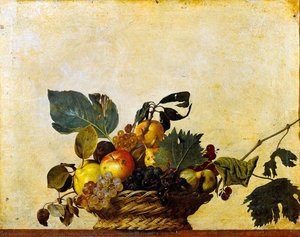
    • Cesta di Frutta
    • Giuditta che decapita Oloferne
    • San Francesco in Estasi

Biografia dell'artista

Michelangelo Merisi da Caravaggio: Vita e Eredità

Primi Anni di Vita e Formazione (1571-1592)

  • Michelangelo Merisi da Caravaggio, comunemente noto semplicemente come Caravaggio, nacque a Milano nel 1571.
  • La sua famiglia si trasferì nella città di Caravaggio a causa di una devastante epidemia che colpì Milano.
  • Dopo la morte del padre e del nonno nel 1577, la madre allevò i cinque figli in relativa povertà.

  • Nel 1584, iniziò un apprendistato di quattro anni con Simone Peterzano, un pittore che era stato allievo di Tiziano. Questa formazione fondamentale gli instillò le tecniche della pittura rinascimentale.

Carriera Artistica e Stile (1592-1610)

  • La carriera artistica di Caravaggio fiorì a Roma, dove arrivò intorno al 1592. Inizialmente ebbe difficoltà a ottenere riconoscimento ma si affermò rapidamente con il suo stile innovativo.
  • La sua caratteristica più definitoria fu l'uso magistrale del chiaroscuro, il contrasto drammatico tra luce e oscurità. Questa tecnica, spesso chiamata tenebrismo, divenne un marchio di fabbrica della pittura barocca.
  • Rifiutò le forme idealizzate a favore di rappresentazioni realistiche, spesso utilizzando persone comuni come modelli per figure religiose.
  • I dipinti di Caravaggio sono noti per il loro intenso realismo emotivo e la narrazione drammatica.

Opere Chiave

  • La Dottoressa Malata (1594): Un'opera precoce che mostra il suo stile realista e l’attenzione ai dettagli.
  • Il Banchetto delle Canestree (1600-1601): Una potente rappresentazione della scena biblica, dimostrando la sua maestria nel chiaroscuro e nell'intensità emotiva.
  • San Francesco d'Assisi in Estasi (1594): Illustra la sua capacità di comunicare l’esperienza spirituale attraverso immagini realistiche.
  • La Resurrezione di Cristo (c. 1602-1603): Una composizione drammatica che evidenzia il tradimento e la cattura di Gesù.
  • Davide con la Testa di Golia (c. 1610): Un ritratto psicologicamente complesso dell'eroe biblico.

Influenze e Sviluppo Artistico

  • Caravaggio fu influenzato dalle opere dei maestri rinascimentali come Tiziano, Leonardo da Vinci e Michelangelo, che studiò durante il suo apprendistato.
  • Si allontanò dallo stile prevalente del manierismo, abbracciando un approccio più diretto e naturalistico alla pittura.
  • L'uso di luce e ombra fu ispirato sia dalle tradizioni artistiche che dall’illuminazione teatrale comune a Roma all'epoca.

Realizzazioni Principali e Significato Storico

  • Caravaggio rivoluzionò la pittura barocca con il suo realismo drammatico, l'uso innovativo del chiaroscuro e le composizioni cariche di emozione.
  • Ispirò una generazione di artisti noti come i “Caravaggeschi” o “ombraisti”, che adottarono il suo stile in tutta Europa. Seguaci importanti includono Pietro Paolo Rubens, Giusepe de Ribera e Gerrit van Honthorst.
  • Il suo lavoro sfidò le convenzioni artistiche e aprì la strada a un approccio più moderno alla pittura.
  • Nonostante una vita personale turbolenta segnata da violenza e problemi legali, l'eredità artistica di Caravaggio rimane profonda e duratura.

Vita Tardiva e Morte

  • Nel 1606, Caravaggio fuggì da Roma dopo aver ucciso un uomo in una rissa. Trascorse gli anni successivi viaggiando tra Napoli, Malta e Sicilia.
  • Richiese il perdono papale ma continuò a fronteggiare sfide legali e conflitti personali.
  • Caravaggio morì a Porto Ercole, in Italia, nel 1610 sotto circostanze misteriose. La causa della sua morte rimane dibattuta, con teorie che vanno da febbre a avvelenamento.

Informazioni rapide

  • Subject or theme: Biblica
  • Influences: Michelangelo Buonarroti
  • Notable elements or techniques: Tenebrismo
  • Artist: Caravaggio
  • Movement: Barocco
  • Medium: Olio su tela

Quiz d'arte

Per ogni domanda è presente una sola risposta corretta.

Domanda 1:
Quale storia biblica raffigura Caravaggio ne 'Il Sacrificio di Isacco'?
Domanda 2:
Quale tecnica artistica è utilizzata in modo più prominente ne 'Il Sacrificio di Isacco' per creare un contrasto drammatico?
Domanda 3:
In quale città è attualmente conservato 'Il Sacrificio di Isacco'?
Domanda 4:
Quale stato emotivo è più evidente nella raffigurazione di Isacco all'interno del dipinto?
Domanda 5:
A quale movimento artistico è più strettamente associato Caravaggio?