Anteprima in scala reale
 Condividi
 Condividi
 Dettagli
 Guida stampabile

 Scarica
 Articoli simili
 Radiografia
 Slideshow
 Statistiche
Haymaking


 Leggi tutto
Giclée / Stampe d'arte
Stampa giclée o su tela di qualità museale, con produzione rapida e diverse opzioni di finitura. ( Ordina la riproduzione dipinta a mano Passa all'immagine digitale)




P118B €10

P118H €10

P118W €10

P438Z €10

P508JH €12

P508YH €12

P805H €10

P805Z €10

P919BZ €10

P919G €10

P919XJ €10

P959ZH €10

P968JZ €12

W106C €8

W218G €10

W218JH €8

W218Y €10

W307PJ €10

W316G €10

W316PJ €8

W316Y €10

W398PJ €8

W4111J €10

W500HY €15

W500JH €15

W692G €12

W849H €8

W940BG €15

W953PJ €8




Scegli tra le nostre dimensioni predefinite, che rispettano le proporzioni originali dell'opera d'arte.

Inserisci la larghezza e l'altezza desiderate, per adattarle alla tua cornice o alla tua parete. Una stampa può essere solo ritagliata, mai resa più grande dell'immagine originale; pertanto, un formato con una forma differente comporterà la perdita di una parte dell'opera. Ti invieremo un mockup digitale da approvare prima di procedere con la stampa. L'immagine mostrata in questa pagina non rappresenta il ritaglio reale — solo il mockup lo mostra.
Consegna in tutto il mondo () in 2 settimane invece delle normali 4/5 settimane. (25 Ottobre)

Spedizione espressa gratuita in tutto il mondo

Tela in lino di alta qualità

Assicurazione completa sulla spedizione

Garanzia di rimborso dei dazi doganali

Garanzia di perfetta fedeltà cromatica

Politica di reso entro 100 giorni (solo per difetti di fabbricazione)

Garanzia di rimborso al 100%

Sconto per acquisti multipli
 L'opzione vetro è disponibile solo per dimensioni inferiori a 110 cm

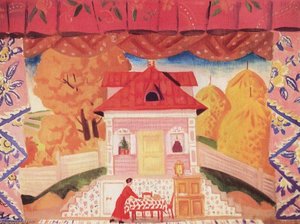
Haymaking
Giclée / Stampe d'arte
Dimensioni della riproduzione
-


Prezzo totale
€ 70
A Window into Rural Russia: Boris Kustodiev’s “Haymaking”
Boris Mikhailovich Kustodiev's "Haymaking," painted in 1917, isn’t merely a depiction of agricultural labor; it’s a vibrant portal into the soul of rural Russia at a pivotal moment in its history. Born in Astrakhan in 1878 and tragically cut short by illness in 1927, Kustodiev possessed an extraordinary ability to capture the essence of everyday life, imbuing even the most commonplace scenes with profound emotion and a distinctive visual language. This particular painting, rendered in a style that blends elements of Realism, Symbolism, and touches of Art Nouveau, offers a captivating glimpse into a world steeped in tradition, community, and the rhythms of the land. The scene unfolds within a sun-drenched field, dominated by six figures engaged in the arduous task of harvesting hay – a process central to the survival and prosperity of countless Russian villages.The Palette of Tradition: Style and Technique
Kustodiev’s masterful technique is immediately striking. He employs a rich, saturated palette—deep greens, earthy browns, and vibrant yellows—that evokes the warmth of the sun and the abundance of the harvest. The brushstrokes are bold and expressive, creating a sense of movement and vitality within the composition. Notice how he utilizes impasto – applying thick layers of paint directly to the canvas – particularly in the depiction of the haystacks, lending them a tangible weight and presence. This textural approach is further enhanced by his skillful use of color gradients, subtly shifting tones to create depth and volume. The figures themselves are rendered with a remarkable degree of detail, each individual possessing a unique character and posture that speaks volumes about their roles within the collective effort. The painting’s style leans heavily into the traditions of Russian folk art, evident in the stylized forms and the emphasis on communal labor – a cornerstone of rural Russian identity.A Chronicle of Change: Historical Context
“Haymaking” was painted during a period of immense social and political upheaval in Russia—the twilight years of the Tsarist regime and the nascent days of the Bolshevik Revolution. The painting’s subject matter, the simple act of harvesting hay, becomes imbued with symbolic significance. It represents not just sustenance but also community, resilience, and the enduring values of rural life. Kustodiev himself was deeply affected by these changes, documenting the lives of ordinary people in a time of dramatic transformation. His work often reflects a nostalgic longing for a disappearing world, while simultaneously capturing its beauty and dignity. The painting’s creation coincided with a period where traditional village life was facing increasing pressure from industrialization and urbanization – making this image all the more poignant.Symbolism in the Field: Figures and Meaning
The six figures within the scene are not merely laborers; they embody a complex tapestry of roles and relationships. A young boy, likely assisting his father, stands prominently near the foreground, representing the future generation. An older man, possibly the patriarch of the family, directs the work with authority. Others carry bundles of hay, their faces etched with concentration and determination. The arrangement suggests a harmonious collaboration—a testament to the importance of collective effort in Russian rural society. The vastness of the field itself symbolizes abundance and prosperity, while the golden hue of the haystacks evokes feelings of warmth, security, and the promise of a bountiful harvest. Kustodiev’s ability to imbue such a seemingly simple scene with layers of symbolic meaning is what elevates “Haymaking” beyond mere representation—it becomes a powerful meditation on life, labor, and community.An Echo of Russia: Emotional Impact
Ultimately, "Haymaking" resonates deeply because it taps into universal human experiences – the satisfaction of hard work, the bonds of family and community, and the connection to the land. The painting’s vibrant colors and dynamic composition evoke a sense of warmth, optimism, and nostalgia. It's a reminder of a time when life moved at a slower pace, when communities were tightly knit, and when the rhythms of nature dictated the seasons. Reproductions of this iconic work offer a beautiful way to bring a piece of authentic Russian culture into any space, serving as both an artistic statement and a poignant reflection on the enduring spirit of rural Russia.Domande e risposte
Quali sono i diritti di riproduzione di "Haymaking" presso il Donetsk Regional Art Museum?
Lo stato del copyright di "Haymaking" di Boris Michailovič Kustodiev è chiaro: l'opera è di pubblico dominio - il suo copyright è scaduto. La sua presenza presso Donetsk Regional Art Museum non ne cambia lo stato.
Quale tonalità di fondo attraversa "Haymaking" di Boris Michailovič Kustodiev?
Una tonalità Green to Violet Spectrum attraversa l'opera "Haymaking" di Boris Michailovič Kustodiev.
Che dimensione dovrei scegliere per la stampa di "Haymaking" in base alla mia stanza?
L'abbinamento consigliato per "Haymaking" di Boris Michailovič Kustodiev: una stampa di dimensioni Medium in un/una Living Room.
Biografia dell'artista
La Vita e l'Educazione di Boris Michailovič Kustodiev
Boris Michailovič Kustodiev (7 marzo 1878 – 28 maggio 1927) è stato un pittore e scenografo russo, noto per le sue vibranti rappresentazioni della vita russa, della cultura mercantile e delle scene di genere. Nato ad Astrakhan, in Russia, Kustodiev proveniva da una famiglia colta: suo padre era professore di filosofia, letteratura e logica presso il seminario teologico locale. La prematura scomparsa del padre lasciò la madre a sostenere finanziariamente la famiglia, un'esperienza che influenzò profondamente le successive tematiche artistiche di Kustodiev. Tra il 1893 e il 1896, studiò al seminario teologico di Astrakhan, prendendo lezioni private d’arte da Pavel Vlasov, allievo di Vasily Perov. Successivamente, dal 1896 al 1903, frequentò lo studio di Ilya Repin presso l'Accademia Imperiale delle Arti di San Pietroburgo.L'Evoluzione Artistica e le Opere Principali
La carriera artistica di Kustodiev fu caratterizzata da una versatilità che spaziava tra ritratti, scene di genere e illustrazioni per libri. Il suo stile si evolse nel tempo, passando da un’influenza realista a una più vivace ed espressiva interpretazione della vita russa. Tra le sue opere più celebri spicca La Mercante, dipinta nel 1918, considerata un capolavoro del realismo russo. Altre opere significative includono *Fontanka* (1916), che cattura la vivacità della vita cittadina di San Pietroburgo, e *Martedì di Maslenitsa/Maslenitsa* (1916), una vibrante celebrazione delle tradizioni russe. I suoi ritratti, come quelli di Ivan Bilibin (1901), Moldovtsev (1901) e l'incisore Mate (1902), dimostrano la sua abilità nel cogliere l’essenza dei suoi soggetti. Kustodiev si distinse anche come illustratore, lavorando a opere classiche della letteratura russa come *Anime Morte* di Gogol e *Il Conte Nullovich* di Lermontov.Sfide Personali e la Prolificità Artistica
Nel 1916, Kustodiev subì un grave incidente che lo rese paraplegico. Nonostante questa sfida fisica devastante, continuò a dipingere con grande prolificità. Le sue opere successive si caratterizzarono per una tavolozza di colori ancora più vivace e un’atmosfera gioiosa, quasi a voler contrastare la sofferenza personale. Questo periodo testimonia la sua straordinaria resilienza e il suo impegno costante verso l'arte.Influenze e Significato Storico
Kustodiev fu influenzato da diversi artisti, tra cui Vasily Perov, Ilya Repin e i membri del gruppo *Mir Iskusstva* (Mondo dell’Arte). La sua opera riflette un profondo amore per la cultura russa e una particolare attenzione alla vita della classe mercantile. Il suo stile unico, caratterizzato da colori brillanti, composizioni dinamiche e un tocco di ironia, lo ha reso uno dei pittori più amati in Russia. Il suo lavoro continua ad essere apprezzato per la sua capacità di catturare l'essenza della vita russa del suo tempo, offrendo una finestra preziosa sulla storia e le tradizioni del paese. L’influenza di Kustodiev è evidente anche nell’opera successiva di altri artisti, come dimostra il dipinto *Il Mercato* di Alexey Petrovich Bogolyubov.Collezioni Museali e Eredità
Le opere di Boris Michailovič Kustodiev sono esposte in numerosi musei in Russia e all'estero. Il Museo delle Belle Arti Kramskoy a Voronezh, in Russia, ospita una collezione significativa della sua arte, insieme a opere di altri importanti artisti russi come Vasily Maximov e Isaac Ilyich Levitan. Il Museo d’Arte di Kharkiv (Ucraina) possiede anch’esso un'ampia collezione di dipinti, tra cui lavori di Sergei Arsenievich Vinogradov e Nikolai Pimonenko. La sua eredità artistica continua a ispirare generazioni di artisti e appassionati d'arte in tutto il mondo.
Boris Michailovič Kustodiev
1878 - 1927 , Russia
Informazioni rapide
- Artisti Influenti:
- Ilya Repin
- Vasily Perov
- Data Di Nascita: 7 marzo 1878
- Luogo Di Nascita: Astrachan', Russia
- Movimento Artistico: Realismo, Art Nouveau
- Nazionalità: Russa
- Nome Completo: Boris Michailovič Kustodiev
- Opere Notevoli:
- La mercia moglie
- Fontanka
- Martedì dei pancake/Maslenitsa
Articoli correlati

I 10 Capolavori del Paesaggio Romantico: Arte, Storia e Decorazioni di Lusso
Esplora i 10 capolavori del Paesaggio Romantico con OriginalUniqueArt.com! Caspar David Friedrich, Turner e altri maestri: storia, tecnica e colori che definiscono un'epoca. Trova riproduzioni d'arte di lusso per la tua casa. Scopri la collezione completa online!
Evoking Arcadia: A Historical & Aesthetic Exploration of Rural Landscape Art
Explore the rich history of pastoral landscape art, from classical Arcadia to Impressionism & beyond. Discover key artists, movements, and how to collect serene rural scenes for your home. Expert insights at OriginalUniqueArt.

Echoes of Arcadia: Nostalgia & Transformation in Vintage Landscape Art
Explore the evocative world of vintage landscape art! Discover the history, artists & emotional power behind masterpieces from the Hudson River School & beyond. Expert insights for collectors & enthusiasts.

Cultivating Visions: A Historical Journey Through Rural Landscapes in Art
Explore the rich history of rural landscape painting with OriginalUniqueArt. Discover Impressionist masterpieces, key artists & movements. Find your perfect serene artwork and bring nature's beauty home.

John Constable: I 25 Capolavori che Celebrano la Bellezza della Campagna Inglese
Esplora i 25 capolavori di John Constable, il maestro del Romanticismo inglese. Paesaggi suggestivi, luce naturale e colori vibranti ti aspettano. Acquista riproduzioni d'arte di alta qualità su OriginalUniqueArt.com e porta la bellezza della campagna inglese nella tua casa.