Anteprima in scala reale
 Condividi
 Condividi
 Dettagli
 Guida stampabile

 Scarica
 Articoli simili
 Radiografia
 Slideshow
 Statistiche
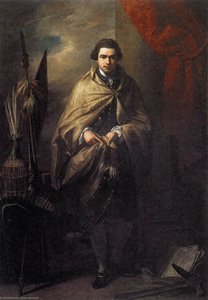
Self-Portrait


 Leggi tutto
Giclée / Stampe d'arte
Stampa giclée o su tela di qualità museale, con produzione rapida e diverse opzioni di finitura. ( Ordina la riproduzione dipinta a mano Passa all'immagine digitale)




P118B €10

P118H €10

P118W €10

P438Z €10

P508JH €12

P508YH €12

P805H €10

P805Z €10

P919BZ €10

P919G €10

P919XJ €10

P959ZH €10

P968JZ €12

W106C €8

W218G €10

W218JH €8

W218Y €10

W307PJ €10

W316G €10

W316PJ €8

W316Y €10

W398PJ €8

W4111J €10

W500HY €15

W500JH €15

W692G €12

W849H €8

W940BG €15

W953PJ €8




Scegli tra le nostre dimensioni predefinite, che rispettano le proporzioni originali dell'opera d'arte.

Inserisci la larghezza e l'altezza desiderate, per adattarle alla tua cornice o alla tua parete. Una stampa può essere solo ritagliata, mai resa più grande dell'immagine originale; pertanto, un formato con una forma differente comporterà la perdita di una parte dell'opera. Ti invieremo un mockup digitale da approvare prima di procedere con la stampa. L'immagine mostrata in questa pagina non rappresenta il ritaglio reale — solo il mockup lo mostra.
Consegna in tutto il mondo () in 2 settimane invece delle normali 4/5 settimane. (21 Ottobre)

Spedizione espressa gratuita in tutto il mondo

Tela in lino di alta qualità

Assicurazione completa sulla spedizione

Garanzia di rimborso dei dazi doganali

Garanzia di perfetta fedeltà cromatica

Politica di reso entro 100 giorni (solo per difetti di fabbricazione)

Garanzia di rimborso al 100%

Sconto per acquisti multipli
 L'opzione vetro è disponibile solo per dimensioni inferiori a 110 cm

Self-Portrait
Giclée / Stampe d'arte
Dimensioni della riproduzione
-


Prezzo totale
€ 70
A Portrait of Reflection: Benjamin West's Self-Portrait
- The Weight of History
- Neo-Classical Dignity
- Technique and Texture
- Symbolism of the Self
Neo-Classical Dignity: Style and Form
West’s approach firmly aligns with the tenets of Neoclassicism, a movement that sought to revive the artistic principles of ancient Greece and Rome. This is evident in every aspect of the composition – the formal arrangement of the figure, the emphasis on idealized beauty, and the restrained palette. The subject's pose, reminiscent of classical sculptures, conveys an air of dignified composure and intellectual seriousness. His attire—a dark coat with a high collar and a crisp white cravat—is characteristic of late 18th-century fashion, subtly signaling his status as a respected artist within Philadelphia society. The careful attention to detail in the rendering of his clothing – the subtle folds, the texture of the fabric – speaks to West’s commitment to realism, a key element of the Neoclassical style. The dark background serves not as a distraction but rather as a deliberate device, intensifying the focus on the figure and reinforcing the sense of solemnity.Technique and Texture: A Master's Hand
West’s technical skill is immediately apparent in the meticulous rendering of facial features and textures. He employs a glazing technique – applying thin layers of translucent paint over dried underlayers – to achieve remarkable depth and luminosity. The subtle play of light and shadow across his face draws attention to his expressive eyes, conveying a sense of self-assuredness and intellectual curiosity. The brushwork is controlled yet confident, demonstrating West’s mastery of oil paints. Note the delicate rendering of the hair, powdered and meticulously styled, a hallmark of the period's fashion. The texture of the fabric – the heavy wool of the coat, the smooth silk of the cravat – is rendered with remarkable accuracy, adding to the painting’s overall sense of realism and tactile quality. This level of detail was not merely decorative; it served to elevate the portrait beyond a simple likeness, transforming it into a symbol of West's artistic prowess and dedication.Symbolism of the Self: Identity and Ambition
The act of self-portraiture itself held significant symbolic weight in the 18th century. It was a demonstration of an artist’s skill, a declaration of their identity, and often, a meditation on mortality. In West's case, this particular self-portrait is particularly revealing. Painted just as he was establishing himself as a leading portraitist, it represents not only his artistic abilities but also his ambition to achieve recognition within the European art world. The serious expression on his face suggests a man deeply engaged with his craft and aware of its potential impact. The gaze directly at the viewer creates an intimate connection, inviting us into his thoughts and reflecting upon our own relationship with art and self-representation. This portrait is a testament to West’s confidence and determination – qualities that would ultimately define his remarkable career.Domande e risposte
"Self-Portrait" presenta forti contrasti chiaroscurali?
"Self-Portrait" di Benjamin West mostra un contrasto Gentle tra le sue zone chiare e scure.
Quale tavolozza e quale emozione unisce "Self-Portrait"?
La tavolozza Earthy di "Self-Portrait" di Benjamin West si sposa con il suo tono emotivo Reflective. Il colore è uno dei modi in cui un'opera trasmette emozioni.
Quanto è conosciuta "Self-Portrait" di Benjamin West?
"Self-Portrait" è classificata come Recognized.
Biografia dell'artista
Benjamin West: Un Pioniere dell'Arte Americana
- Nato: 10 ottobre 1738, Springfield, Stati Uniti d'America
- Morto: 11 marzo 1820
Primi Anni e Sviluppo Artistico
- Benjamin West nacque in una famiglia modesta a Springfield, Pennsylvania. Suo padre gestiva un’osteria e la famiglia si trasferì successivamente a Newtown Square.
- West dimostrò un talento artistico notevole fin da giovane, apprendendo presumibilmente tecniche pittoriche rudimentali dai nativi americani.
- Ricevette una formazione scolastica limitata ma perseguì con passione il suo interesse artistico in modo indipendente.
- La sua prima carriera si concentrò sulla ritrattistica in Pennsylvania.
- Un momento cruciale fu l'incoraggiamento a dipingere "La Morte di Socrate", che differiva significativamente dalla calcografia originale e segnò una svolta nella sua carriera.
- Nel 1760, viaggiò in Italia, studiando direttamente le opere dei maestri come Tiziano e Raffaello, e incontrando artisti neoclassici come Anton Rafael Mengs, Gavin Hamilton e Angelica Kauffmann.
Carriera a Londra e la Royal Academy
- West si trasferì a Londra nel 1763 e divenne rapidamente una figura di spicco nella scena artistica britannica.
- Fu eletto membro della Royal Academy e successivamente ne fu presidente dal 1792 fino alla sua morte nel 1820.
- I suoi dipinti storici, come "La Partenza di Regolo", ottennero un notevole apprezzamento, guadagnandogli il soprannome di “l'Americana Raffaello”.
- Promosse uno stile che incorporava abiti contemporanei nelle scene storiche, evidente soprattutto in "La Morte del Generale Wolfe", che sfidò le convenzioni artistiche tradizionali e suscitò dibattiti.
Stile Artistico e Opere Principali
- Lo stile di West si evolse dalle prime influenze neoclassiche per incorporare elementi del Romanticismo più tardi nella sua carriera.
- Opere notevoli includono:
- La Morte del Generale Wolfe (1770) – Un'opera rivoluzionaria che fonde la narrazione storica con l'abbigliamento contemporaneo.
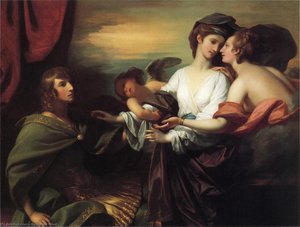
- Teti Porta l'Armatura a Achille – Dimostra una padronanza dei temi classici e della composizione.
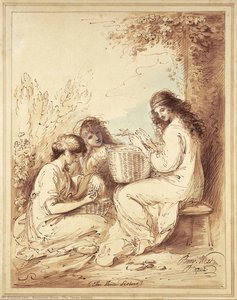
- Le Tre Sorelle – Mostra la sua capacità di ritrarre soggetti allegorici.
- La Paura di Astianatte – Una drammatica rappresentazione di una scena mitologica.
- La Caverna della Disperazione – Esemplifica il suo stile romantico in evoluzione.
- Il suo lavoro è caratterizzato dall'ambizione, dalla composizione dettagliata e dall'esplorazione di temi storici e mitologici.
Eredità e Significato Storico
- Benjamin West lasciò un impatto duraturo sull'arte americana, aprendo la strada alla pittura storica e influenzando generazioni di artisti.
- Svolse un ruolo cruciale nella definizione dell'identità dell'espressione artistica americana.
- La sua presidenza della Royal Academy contribuì in modo significativo allo sviluppo dell'arte britannica.
- L'eredità di West va oltre le sue singole opere; promosse un ambiente che incoraggiò e sostenne gli artisti americani emergenti che studiavano all'estero, tra cui Allston, Copley e Morse.
- Il suo approccio innovativo alla pittura storica aprì la strada a futuri movimenti artistici e continua a ispirare artisti contemporanei e appassionati d'arte.

Benjamin West
1738 - 1820 , Stati Uniti d'America
Informazioni rapide
- Artistic Movement Or Style: Neoclassicismo, pittura storica
- Artists Or Movements Influenced By This Artist:
- Edward William J. Savage
- Copley
- Allston
- Morse
- Artists Who Influenced This Artist:
- Tiziano
- Rafael
- Date Of Birth: 10 ottobre 1738
- Date Of Death: 11 marzo 1820
- Full Name: Benjamin West
- Nationality: Americano
- Notable Artworks:
- La Morte del Generale Wolfe
- Tetide che porta l'armatura
- Le Tre Sorelle
- Lo Spavento di Astianatte
- La Caverna della Disperazione
- Place Of Birth: Springfield, USA
Articoli correlati
I 10 Dipinti Più Famosi nei Toni del Fungo: Arte, Storia e Decorazioni Raffinate
Esplora i 10 dipinti più iconici nei toni del fungo, dai capolavori rinascimentali all'impressionismo. Scopri la storia degli artisti e lasciati ispirare per decorazioni artistiche uniche. Acquista riproduzioni di alta qualità su !

Benjamin West: Ambizione Transatlantica e la Formazione dell'Arte Americana
Esplora la vita e l'opera di Benjamin West, figura chiave dell'arte americana e del neoclassicismo. Analisi approfondita della sua ambizione transatlantica e del suo ruolo nella formazione di una nuova identità artistica.
I 10 Dipinti Più Famosi dai Tonalità Sabbia: Arte, Storia e Decorazioni Raffinate
Esplora i 10 dipinti più iconici dominati da tonalità sabbia e colori terra. Scopri la storia, gli artisti e le tecniche dietro questi capolavori senza tempo. Trova riproduzioni artistiche di alta qualità per decorare casa con .
I 10 Dipinti Più Famosi Dominati dai Tonalità di Terra: Arte e Decorazioni Raffinate
Esplora i 10 dipinti più iconici dominati dalle calde tonalità di terra. Scopri la storia, gli artisti e le tecniche dietro capolavori senza tempo. Trova riproduzioni artistiche di alta qualità per decorare casa con .

I 10 Dipinti Più Famosi Dominati dal Nero: Maestri e Storie d'Arte
Esplora i 10 dipinti più iconici dominati dal nero, da Caravaggio a Munch. Scopri storie, tecniche e il potere espressivo di artisti come Rembrandt e Goya. Trova stampe d'arte di alta qualità per la tua casa su .