 Anteprima in scala reale
 Invia
Invia Condividi
 Dettagli opera
 Guida
Guida

 Scarica
 Simili
 Radiografia
 Slideshow
 Statistiche
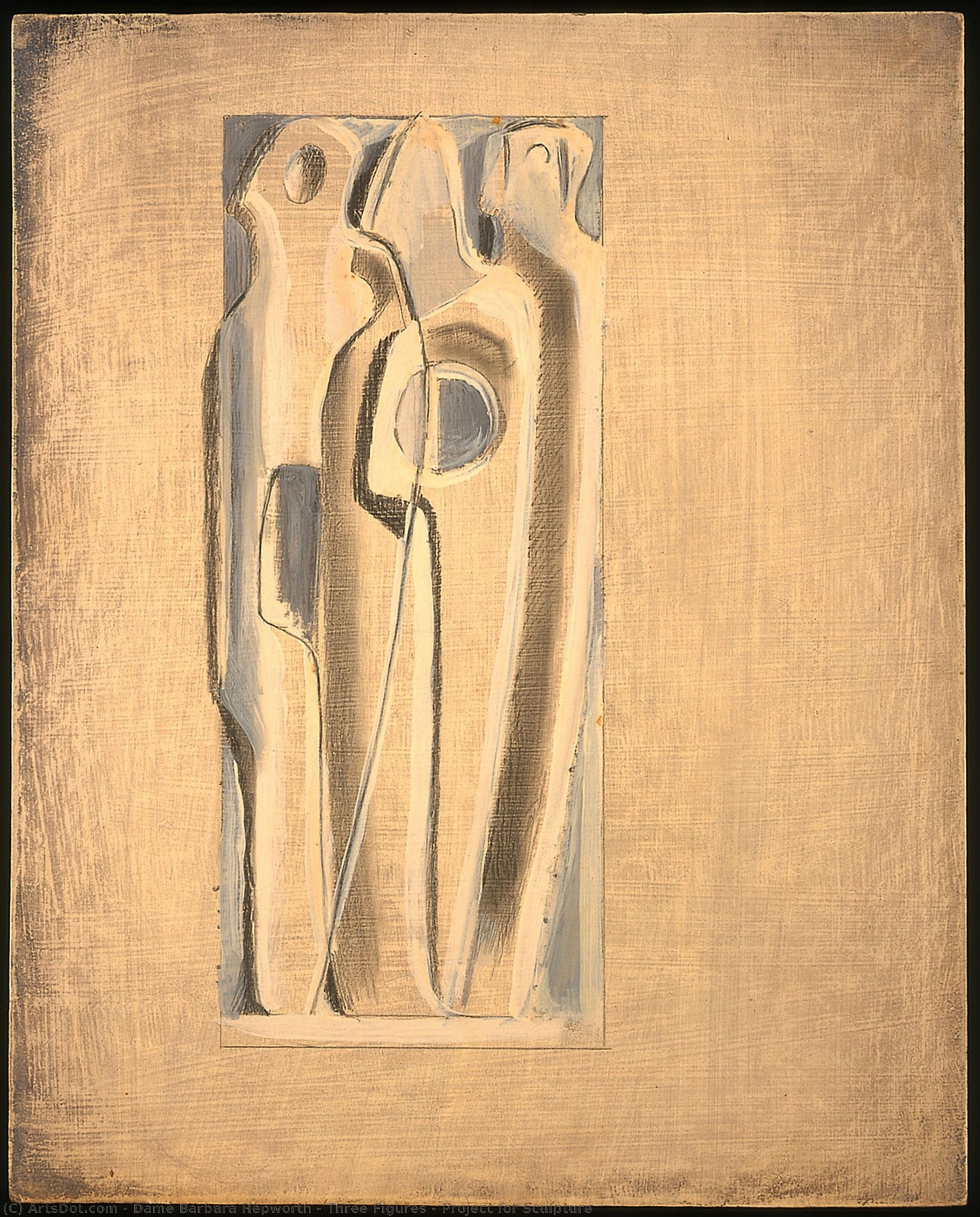
Three Figures – Project for Sculpture


 Espandi i dettagli
L'opera d'arte visualizzata in questa pagina è protetta dalle leggi sul diritto d'autore, il che significa che non possiamo legalmente creare o vendere una riproduzione identica. Tale protezione è garantita da accordi internazionali quali la Convenzione di Berna e dalle leggi nazionali, incluse quelle stabilite da Legge sul copyright degli Stati Uniti - Titolo 17. Tutti i diritti riservati. Le immagini presenti su questo sito sono protette da copyright e non possono essere riprodotte o utilizzate senza l'autorizzazione scritta di WahooArt.com o dei rispettivi proprietari del copyright.
Questo metodo è pienamente conforme alle normative sul diritto d'autore poiché non prevede la copia o la duplicazione dell'opera protetta. Si tratta invece di una rielaborazione creativa: un nuovo dipinto che trae ispirazione dall'originale, senza tuttavia esserne identico.
Giclée / Stampe d'arte
Stampa giclée o su tela di qualità museale, con produzione rapida e diverse opzioni di finitura. ( Acquista il dipinto realizzato a mano Passa all'immagine digitale)




P118B €10

P118H €10

P118W €10

P438Z €10

P508JH €12

P508YH €12

P805H €10

P805Z €10

P919BZ €10

P919G €10

P919XJ €10

P959ZH €10

P968JZ €12

W106C €8

W218G €10

W218JH €8

W218Y €10

W307PJ €10

W316G €10

W316PJ €8

W316Y €10

W398PJ €8

W4111J €10

W500HY €15

W500JH €15

W692G €12

W849H €8

W940BG €15

W953PJ €8




Scegli tra le nostre dimensioni predefinite, che rispettano le proporzioni originali dell'opera d'arte.

Inserisci la larghezza e l'altezza desiderate, per adattarle alla tua cornice o alla tua parete. Una stampa può essere solo ritagliata, mai resa più grande dell'immagine originale; pertanto, un formato con una forma differente comporterà la perdita di una parte dell'opera. Ti invieremo un mockup digitale da approvare prima di procedere con la stampa. L'immagine mostrata in questa pagina non rappresenta il ritaglio reale — solo il mockup lo mostra.
Consegna in tutto il mondo () in 2 settimane invece delle normali 4/5 settimane. (26 Ottobre)

Spedizione espressa gratuita in tutto il mondo

Tela in lino di alta qualità

Assicurazione completa sulla spedizione

Garanzia di rimborso dei dazi doganali

Garanzia di fedeltà cromatica assoluta

Politica di reso entro 100 giorni (solo per difetti di fabbricazione)

Garanzia di rimborso al 100%

Offerta per acquisti multipli
 L'opzione vetro è disponibile solo per dimensioni inferiori a 110 cm

Three Figures – Project for Sculpture
Giclée / Stampe d'arte
Dimensioni riproduzione
-


Prezzo finale calcolato
€ 70
Barbara Hepworth’s ‘Three Figures – Project for Sculpture’: A Meditation on Form and Connection
“Three Figures – Project for Sculpture,” created in 1951 by the influential British sculptor Barbara Hepworth, offers a compelling glimpse into her exploration of form and space during a pivotal moment in modern art. This work, rendered in a luminous golden hue, transcends mere representation to become a deeply evocative study of human presence—a testament to Hepworth’s mastery of abstraction and her profound engagement with the fundamental principles of sculpture. The painting's strength lies not in literal depiction but in its ability to conjure a sense of quiet contemplation, inviting viewers to consider the relationships between individuals and their shared experience.
A Modernist Vision: Style and Technique
Hepworth’s approach aligns squarely with the modernist movement, particularly its emphasis on reducing forms to their essential geometric elements. The composition is dominated by rectangular and triangular shapes, meticulously constructed to create a sense of depth through overlapping planes and subtle tonal variations. Visible brushstrokes, layered and glazed with oil paint, contribute significantly to the artwork's tactile quality – an invitation to almost reach out and touch the implied solidity of the figures. The directional lighting further enhances this three-dimensionality, casting carefully considered shadows that sculpt the forms themselves. This technique, rooted in Hepworth’s training at the Royal College of Art, demonstrates a sophisticated understanding of both representational space and abstract form.
Historical Context and Influences
Created in 1951, “Three Figures” reflects a period of significant artistic innovation. Hepworth was a key figure within the Unit One movement, alongside Ben Nicholson and Paul Nash, which sought to bridge the gap between Surrealism and Abstraction – a bold experiment that challenged traditional notions of representation. Her earlier work, heavily influenced by her time in Paris and engagement with abstraction-création, paved the way for this exploration of simplified forms and spatial relationships. The painting’s restrained style echoes the growing interest in geometric abstraction prevalent throughout Europe at the time, while retaining a distinctly humanistic focus.
Symbolism and Emotional Resonance
While overtly symbolic elements are absent, “Three Figures” possesses a powerful emotional resonance. The solemn postures of the figures suggest introspection and perhaps a shared experience – a quiet connection forged through form and space. Hepworth’s work often explored themes of human vulnerability and resilience, and this piece is no exception. It invites viewers to contemplate their own place within the larger world, prompting a sense of empathy and understanding. The painting's enduring appeal lies in its ability to tap into these universal emotions, making it a timeless meditation on the nature of human connection.
Domande e risposte
Cosa rappresenta "Three Figures – Project for Sculpture" e quale atmosfera trasmette?
"Three Figures – Project for Sculpture" di Barbara Hepworth ritrae abstract figures, contemplative art, geometric forms, profile composition, warm color palette, modern sculpture, stylized human form, con un'atmosfera Calm. Il soggetto e l'atmosfera insieme descrivono l'opera.
I colori di "Three Figures – Project for Sculpture" appaiono intensi o delicati?
I colori di "Three Figures – Project for Sculpture" di Barbara Hepworth hanno un'intensità Vivid.
Posso visualizzare "Three Figures – Project for Sculpture" come una presentazione a schermo intero?
Puoi visualizzare "Three Figures – Project for Sculpture" di Barbara Hepworth in formato slideshow nella pagina Slideshow dell'opera.
Biografia dell'artista
Primi anni e formazione
Dame Barbara Hepworth, rinomata artista e scultrice inglese, nacque il 10 gennaio 1903 a Wakefield, nello Yorkshire. Suo padre, Herbert Hepworth, era un ingegnere civile per il West Riding County Council, che nel 1921 divenne County Surveyor. Da bambina, accompagnava il padre nei viaggi in auto che faceva in tutta la contea del West Riding. Frequentò la Wakefield Girls' High School e ottenne una borsa di studio aperta nel 1917. Le estati le furono trascorse a Robin Hood's Bay, vicino a Whitby, North Yorkshire.Carriera artistica
- Dal 1920 al 1921 frequentò la Leeds School of Art; Henry Moore era un compagno di studi.
- Dal 1921 al 1924 studiò scultura alla Royal College of Art di Londra.
Opere significative ed esposizioni
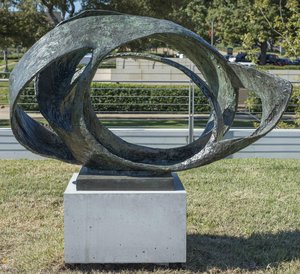
- Oval Form (Trezion), una scultura in bronzo, fa parte della collezione del Kimbell Art Museum a Fort Worth, negli Stati Uniti. (visualizza su OriginalUniqueArt)
- Two Forms, una scultura, è esposta al The Hepworth Wakefield a Wakefield, nel Regno Unito. (visualizza su OriginalUniqueArt)
- Totem, una scultura in marmo, fa anche parte della collezione al The Hepworth Wakefield. (visualizza su OriginalUniqueArt)
Evoluzione artistica e influenze
Hepworth scoprì la sua passione per la scultura da bambina. Nel corso della sua carriera, sperimentò con diverse tecniche e materiali, evolvendo dal naturalismo semplificato all'astrazione pura. Fu influenzata dai movimenti artistici europei come il surrealismo e il costruttivismo, e collaborò con artisti come Ben Nicholson, Paul Nash e Henry Moore. La sua sensibilità per i materiali era notevole e praticava spesso la scultura a diretto taglio. A volte incorporava stringhe, fili e vernice colorata nelle sue sculture. Era affascinata dal gioco tra massa e spazio, e il suo approccio creava una tensione tra uno spazio aperto e interno e la massa materiale circostante.Eredità e collezioni museali
Il lavoro di Barbara Hepworth è ampiamente riconosciuto, con le sue sculture e dipinti che fanno parte di varie collezioni museali in tutto il mondo. Il The Hepworth Wakefield, intitolato all'artista, ospita numerosi capolavori di artisti rinomati, tra cui le opere stesse di Hepworth. (scopri di più su The Hepworth Wakefield su OriginalUniqueArt)Significato storico
Il lavoro pionieristico di Dame Barbara Hepworth nella scultura britannica moderna ha lasciato un segno indelebile nel mondo dell'arte. La sua eredità continua a ispirare artisti e appassionati d'arte, con le sue opere che rimangono una testimonianza del suo spirito innovativo e del genio artistico. Ulteriori informazioni su Barbara Hepworth su Wikipedia
Barbara Hepworth
1903 - 1975 , Regno Unito
Dettagli rapidi
- Artisti Influenti:
- Henry Moore
- Brancusi
- Arp
- Data Di Nascita: 10 gennaio 1903
- Luogo Di Nascita: Wakefield, Regno Unito
- Movimento Artistico: Modernismo, Scultura astratta
- Nazionalità: Britannica
- Nome Completo: Barbara Hepworth
- Opere Notevoli:
- Oval Form (Trezion)
- Two Forms
- Totem
Articoli correlati

The Enduring Form: Exploring Themes & Techniques in Sculpture Across Historical Periods
Explore the rich history of sculpture from ancient masterpieces to contemporary innovations. Discover key techniques, influential artists & investment potential for discerning art collectors.

The Enduring Form: Sculpture Across History, Technique & Emotional Resonance
Explore the rich history of sculpture with OriginalUniqueArt. Discover key techniques, influential artists & investment potential for discerning collectors. Expert insights into valuing and collecting timeless masterpieces.
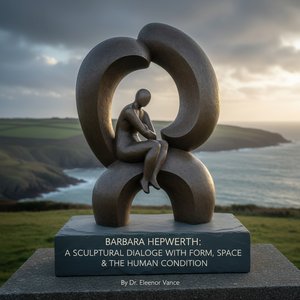
Barbara Hepworth: Un Dialogo Scultoreo con Forma, Spazio e la Condizione Umana
Esplora l'universo scultoreo di Barbara Hepworth: un viaggio attraverso forma, spazio e la condizione umana. Analisi approfondite, contesto storico e l'eredità di una maestra dell'arte moderna.

I 10 Capolavori in Bronzo che Hanno Rivoluzionato la Storia dell'Arte | OriginalUniqueArt
Esplora i 10 capolavori in bronzo che hanno segnato la storia dell'arte! Da Michelangelo a Rodin, scopri le storie e le tecniche dietro queste statue iconiche. Trova riproduzioni artistiche di alta qualità per decorare casa tua con OriginalUniqueArt.com.

I 10 Capolavori Bronzei che Hanno Rivoluzionato la Storia dell'Arte | OriginalUniqueArt
Esplora i 10 capolavori bronzei che hanno segnato la storia dell'arte! Da Rodin a Michelangelo, scopri le storie e le tecniche dietro queste sculture iconiche. Trova riproduzioni d'arte di alta qualità per decorare la tua casa con OriginalUniqueArt.com.