Anteprima in scala reale
 Condividi
 Condividi
 Dettagli
 Guida stampabile

 Scarica
 Articoli simili
 Radiografia
 Slideshow
 Statistiche
Thomas Hunt III (1721–1788)
 Oil On Canvas
- WallArt
- Classical Portraiture
 1743
1743 50.0 x 35.0 cm
 National Trust
 Leggi tutto
Riproduzione a olio fatta a mano
Olio su tela dipinto a mano nelle tue dimensioni e con la tua cornice, realizzato su ordinazione dai nostri artisti. ( Passa alle stampe Passa all'immagine digitale)




P118B €10

P118H €10

P118W €10

P438Z €10

P508JH €12

P508YH €12

P805H €10

P805Z €10

P919BZ €10

P919G €10

P919XJ €10

P959ZH €10

P968JZ €12

W106C €8

W218G €10

W218JH €8

W218Y €10

W307PJ €10

W316G €10

W316PJ €8

W316Y €10

W398PJ €8

W4111J €10

W500HY €15

W500JH €15

W692G €12

W849H €8

W940BG €15

W953PJ €8




Scegli tra le nostre dimensioni predefinite, che rispettano le proporzioni originali dell'opera d'arte.

Inserisci la larghezza e l'altezza di cui hai bisogno, per adattarle alla tua cornice o alla tua parete. Trattandosi di un'opera dipinta a mano, in caso di dimensioni con una forma differente, l'artista può dipingere un po' più oltre i bordi dell'immagine o ritagliare leggermente — la scelta spetta a te. Ti invieremo un mockup digitale da approvare prima che la pittura abbia inizio. L'immagine mostrata in questa pagina non rappresenta il risultato reale — solo il mockup lo fa.
Dopo l'ordine, il team di OriginalUniqueArt.com contatterà il cliente via e-mail per ricevere le istruzioni e fornirà un'anteprima del mockup
Consegna in tutto il mondo () in 3/4 settimane anziché nelle normali 5 settimane. (24 Ottobre). Nessun compromesso sulla qualità.

Spedizione espressa gratuita in tutto il mondo

Tela in lino di alta qualità

Assicurazione completa sulla spedizione

Garanzia di rimborso dei dazi doganali

Garanzia di perfetta fedeltà cromatica

Politica di reso entro 100 giorni (solo per difetti di fabbricazione)

Garanzia di rimborso al 100%

Sconto per acquisti multipli
 L'opzione vetro è disponibile solo per dimensioni inferiori a 110 cm

Thomas Hunt III (1721–1788)
Tecnica di riproduzione
Dimensioni della riproduzione
-


Prezzo totale
€ 264
Thomas Hunt III (1721–1788): A Portrait of Dignified Reflection
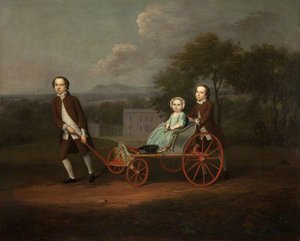
Arthur William Devis’s “Thomas Hunt III” stands as a quintessential example of the conversation piece—a genre that flourished in Georgian England and captured the spirit of its age. Executed around 1743, this oil painting transcends mere likeness; it embodies an idealized vision of gentlemanly virtue and intellectual pursuits, reflecting the values championed by the Enlightenment.
The subject himself is presented with remarkable composure—Thomas Hunt III, a prominent barrister and landowner, occupies center stage within a richly appointed interior. Devis skillfully employs linear perspective to establish depth, guiding the viewer’s gaze across the room towards a distant windowpane. The muted palette of browns, blacks, and whites contributes to an atmosphere of solemn dignity, mirroring the seriousness of Hunt’s expression.
- Composition: Devis’s masterful arrangement emphasizes Hunt's figure against a backdrop of wooden paneling and windows, creating a sense of contained grandeur.
- Technique: The artist demonstrates meticulous attention to detail through visible brushstrokes—a hallmark of traditional oil painting—allowing texture to convey the materiality of fabric and wood surfaces.
- Lighting: Light emanates from the left side of the canvas, casting subtle shadows that accentuate Hunt’s form and imbue the scene with warmth and dimension.
- Style: Rooted in classical portraiture, “Thomas Hunt III” adheres to conventions established by artists like Rembrandt and Rubens, prioritizing realism and conveying an inner psychological state.
Beyond its technical prowess, the painting resonates with symbolic significance. Hunt’s posture—seated at a desk with a book in his left hand—represents erudition and moral responsibility – ideals central to Georgian society. The inclusion of classical motifs—such as the urn—references humanist philosophy and elevates Hunt's status within the intellectual landscape.
“Thomas Hunt III” continues to captivate viewers today not only for its aesthetic beauty but also for its ability to transport us back to a pivotal moment in British history. It serves as a testament to Devis’s artistic vision and his enduring legacy as one of England's most celebrated portraitists.
Domande e risposte
Come viene descritta la tavolozza di "Thomas Hunt III (1721–1788)" di Arthur Devis?
"Thomas Hunt III (1721–1788)" di Arthur Devis utilizza una tavolozza di colori Earthy. La palette riassume il carattere cromatico complessivo dell'opera.
Che atmosfera trasmette "Thomas Hunt III (1721–1788)"?
L'atmosfera generale di "Thomas Hunt III (1721–1788)" di Arthur Devis è Elegant. Il tono descrive l'atmosfera complessiva dell'opera.
Come posso visualizzare un'anteprima di una riproduzione di "Thomas Hunt III (1721–1788)" di Arthur Devis?
La pagina di Anteprima di "Thomas Hunt III (1721–1788)" ti permette di visualizzare l'anteprima dell'opera prima dell'ordine.
Biografia dell'artista
Arthur Devis (1762–1822): The Gentle Painter of Conversation Pieces
Arthur William Devis (19 February 1762 – 25 July 1787) was an English painter whose father, Anthony, was progenitor of what became a family dynasty of painters and writers. The place of Arthur Devis in art history is generally as painter of the type of portrait now called a conversation piece—a genre that flourished in Britain during the mid-eighteenth century. Unlike the grand historical canvases championed by artists like Joshua Reynolds or Johann Zoffany, Devis’s paintings focused on intimate scenes depicting individuals engaged in quiet contemplation within domestic interiors or landscapes. This stylistic choice distinguished him from his contemporaries and contributed to his relative obscurity after his death until a revival of interest in the conversation piece occurred in the twentieth century.- Early Life and Training: Arthur Devis was born in Preston, Lancashire, the eldest son of Anthony Devis, carpenter and town councillor, who ultimately became a freeman of the town and a member of the town council. His father instilled in him an appreciation for artistic craftsmanship and introduced him to Peter Tillemans, a Flemish painter whose studio in London served as his formative environment. Tillemans’s influence shaped Devis's technique and fostered his fascination with Italianate landscapes—a stylistic trend that would define much of his oeuvre.
- The Royal Academy Years: Devis enrolled at the Royal Academy Schools in 1774, where he honed his skills alongside fellow artists like Thomas Gainsborough and George Romney. His membership at the Academy provided him with access to influential patrons and fostered connections within London’s artistic circles. He exhibited regularly at the Academy from 1779 until his death in 1787, showcasing a prolific output of portraits and landscapes.
- Conversation Piece Technique: Devis perfected the conversation piece style—characterized by carefully staged scenes featuring figures posed in relaxed postures amidst richly decorated interiors or tranquil outdoor settings. He skillfully employed layered glazes and meticulous brushwork to achieve a luminous finish that captured subtle nuances of emotion and atmosphere. His canvases often depicted familial gatherings, conveying an idealized vision of domestic life.
- Notable Works: Among Devis’s most celebrated paintings are ‘Hoghton Tower from Duxon Hill,’ Lancashire (1735), a breathtaking panoramic view that exemplifies the Hudson River School aesthetic; portraits of Sir William Jones and King George III, demonstrating his ability to capture regal dignity and composure; and numerous depictions of admirals and generals—subjects reflecting Devis’s involvement in the naval world.
- Legacy: Although Devis remained largely unrecognized during his lifetime, his work has experienced a resurgence of appreciation in recent decades. Scholars recognize him as a pivotal figure in establishing the conversation piece genre and celebrate his contribution to British art history. His paintings continue to inspire admiration for their delicate beauty and psychological insight—testaments to Devis’s artistic vision and enduring legacy.
Influences and Artistic Style
Devis's artistic style was profoundly shaped by the artistic currents of his time, particularly the influence of Flemish masters like Peter Tillemans. Like many artists of his generation, Devis studied Dutch landscape painters—such as Jacob Ruysdael and Rembrandt van Rijn—to master techniques of tonal painting and atmospheric perspective. These influences informed his approach to depicting landscapes, resulting in compositions characterized by luminous colors and subtle gradations of light and shadow. Furthermore, Devis’s meticulous brushwork and layering of glazes—a hallmark of Baroque art—contributed to the textural richness and visual depth of his canvases.Family Connections and Artistic Dynasty
Arthur Devis belonged to a family renowned for its artistic talent. His father, Anthony Devis, was himself a painter and a respected figure in Preston’s civic life—a role that instilled in Arthur a deep appreciation for craftsmanship and artistic excellence. Thomas Anthony Devis, Arthur’s brother, followed in his father's footsteps as a painter, establishing a family tradition of artistic creativity. Ellin Devis, Arthur’s sister-in-law, was a teacher and writer who nurtured the intellectual curiosity of her children—including Arthur William Devis himself. This familial network fostered an environment conducive to artistic development and ensured that Devis's legacy would endure through subsequent generations.Reception and Rediscovery
During his lifetime, Arthur Devis enjoyed modest recognition within London’s artistic circles—primarily due to his membership at the Royal Academy. However, his work remained largely forgotten until the 1930s when scholars began to reassess its significance and appreciate its stylistic innovations. The rediscovery of Devis's paintings sparked renewed interest in the conversation piece genre and cemented his place as a pivotal figure in British art history—a testament to the enduring power of artistic beauty and the importance of historical scholarship.
Arthur Devis
1712 - 1787 , Regno Unito
Informazioni rapide
- Artistic Movement Or Style: Conversazione piece
- Artists Or Movements Influenced By This Artist: ['Joshua Reynolds']
- Artists Who Influenced This Artist: ['Peter Tillemans']
- Date Of Birth: Londra, Regno Unito (1712)
- Date Of Death: 1787
- Full Name: Arthur William Devis
- Nationality: Inglese
- Notable Artworks:
- Nelson Portraits
- Hoghton Tower
- Place Of Birth: Preston, Lancashire
Articoli correlati

Arthur William Devis: A Provincial Eye on Georgian Life & Naval History
Explore the life & work of Arthur William Devis (1762-1822), a key figure in Georgian portraiture and naval history painting. Discover his intimate 'conversation pieces' and captivating depictions of colonial India. Learn more at OriginalUniqueArt.
Il XVIII Secolo nell'Arte: 10 Capolavori da Ammirare e Decorare la Tua Casa
Esplora i 10 capolavori che definiscono l'arte del XVIII secolo! Da Guardi a Fragonard, scopri storie, tecniche e colori di un'epoca d'oro. Trova riproduzioni artistiche di alta qualità per decorare la tua casa su OriginalUniqueArt.com.
William Henry Hunt: Luminosity & Detail in Early 19th-Century Watercolour Painting
Explore the captivating watercolour paintings of William Henry Hunt (1790-1864). Discover his mastery of naturalistic detail, luminous technique & influence on 19th-century art. Learn about collecting Hunt's work and its enduring value.
The Enduring Legacy of Classicism: Principles, Evolution & Influence in Western Art
Explore the enduring legacy of Classicism in Western art! Discover its historical context, key principles, iconic masterpieces & lasting influence. Learn about Renaissance and Neoclassical movements with OriginalUniqueArt.
I 10 Capolavori del Neoclassicismo che Hanno Definito l'Arte: Scopri Stile e Bellezza
Esplora i 10 capolavori del Neoclassicismo con ! Scopri la storia di David, Canova e altri maestri, le tecniche artistiche e l'eleganza senza tempo di questo movimento. Acquista riproduzioni d'arte di alta qualità per decorare la tua casa. Esplora la collezione online!