Anteprima in scala reale
 Condividi
 Condividi
 Dettagli
 Guida stampabile

 Scarica
 Articoli simili
 Radiografia
 Slideshow
 Statistiche
Flounders and Smelts
 Acrylic On Canvas
- WallArt
- Romantic Landscape Painting
 1772
1772- 19th Century
 54.0 x 54.0 cm
 National Trust
 Leggi tutto
Giclée / Stampe d'arte
Stampa giclée o su tela di qualità museale, con produzione rapida e diverse opzioni di finitura. ( Ordina la riproduzione dipinta a mano Passa all'immagine digitale)




P118B €10

P118H €10

P118W €10

P438Z €10

P508JH €12

P508YH €12

P805H €10

P805Z €10

P919BZ €10

P919G €10

P919XJ €10

P959ZH €10

P968JZ €12

W106C €8

W218G €10

W218JH €8

W218Y €10

W307PJ €10

W316G €10

W316PJ €8

W316Y €10

W398PJ €8

W4111J €10

W500HY €15

W500JH €15

W692G €12

W849H €8

W940BG €15

W953PJ €8




Scegli tra le nostre dimensioni predefinite, che rispettano le proporzioni originali dell'opera d'arte.

Inserisci la larghezza e l'altezza desiderate, per adattarle alla tua cornice o alla tua parete. Una stampa può essere solo ritagliata, mai resa più grande dell'immagine originale; pertanto, un formato con una forma differente comporterà la perdita di una parte dell'opera. Ti invieremo un mockup digitale da approvare prima di procedere con la stampa. L'immagine mostrata in questa pagina non rappresenta il ritaglio reale — solo il mockup lo mostra.
Consegna in tutto il mondo () in 2 settimane invece delle normali 4/5 settimane. (23 Ottobre)

Spedizione espressa gratuita in tutto il mondo

Tela in lino di alta qualità

Assicurazione completa sulla spedizione

Garanzia di rimborso dei dazi doganali

Garanzia di perfetta fedeltà cromatica

Politica di reso entro 100 giorni (solo per difetti di fabbricazione)

Garanzia di rimborso al 100%

Sconto per acquisti multipli
 L'opzione vetro è disponibile solo per dimensioni inferiori a 110 cm

Flounders and Smelts
Giclée / Stampe d'arte
Dimensioni della riproduzione
-


Prezzo totale
€ 70
A Moment Frozen in Time: Devis's "Flounders and Smelts"
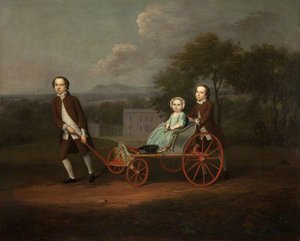
Arthur William Devis’s “Flounders and Smelts,” painted in 1772, is more than just a depiction of fish; it’s a poignant meditation on mortality, the transient nature of beauty, and the quiet dignity of the natural world. Measuring a modest 54 x 54 cm, this canvas offers an intimate glimpse into the artistic sensibilities of a man largely overlooked by art history until recently. Devis, a London-based painter working during a period of significant stylistic shifts, produced works that fall squarely within the burgeoning genre of the ‘conversation piece’ – large-scale paintings intended to be displayed in drawing rooms and designed to spark discussion amongst their viewers.
The Conversation Piece: Genre and Context
Devis's work reflects the tastes of his era, a time when portraiture was evolving beyond simple likenesses. The conversation piece aimed for something more substantial – a scene that invited interpretation and offered a window into the owner’s interests or social standing. “Flounders and Smelts” embodies this perfectly. Painted in the mid-18th century, it aligns with Devis's focus on depicting scenes of natural beauty and domestic tranquility, hallmarks of the conversation piece genre. The painting’s subject matter – a still life featuring fish – was not uncommon, but Devis elevates it through his meticulous observation and skillful execution. It is important to note that Devis's career was marked by fluctuating success; he struggled to adapt to the increasingly fashionable styles emerging in London, ultimately leading to a decline in commissions after his death.
Technique and Composition
Devis’s technique is characterized by a delicate hand and a masterful understanding of light and shadow. The fish themselves are rendered with remarkable realism – their scales shimmer subtly, their forms possess a palpable sense of weight and texture. The artist employs a muted palette dominated by earthy tones—greens, browns, and grays—creating a somber yet harmonious atmosphere. The composition is carefully balanced, drawing the eye across the canvas through a series of overlapping planes and subtle gradations in tone. The inclusion of trees in the background adds depth and reinforces the painting’s connection to the natural world, further emphasizing its contemplative mood. Note the use of *sfumato*, a technique popularized by Leonardo da Vinci, subtly blurring edges and creating an ethereal quality.
Symbolism and Emotional Resonance
Beyond its aesthetic qualities, “Flounders and Smelts” carries a profound symbolic weight. The presence of dead or dying fish immediately evokes themes of mortality and decay – reminders of the ephemeral nature of life. Yet, Devis avoids sentimentality; instead, he presents this subject matter with quiet dignity and restraint. The painting’s emotional impact lies in its ability to invite reflection on our own mortality and the beauty that can be found even in moments of decline. It is a work that speaks to the human condition, prompting viewers to contemplate their place within the larger cycle of life and death. This piece offers a unique opportunity to own a significant work from a largely forgotten master, a testament to Devis's skill and his ability to capture a fleeting moment with remarkable sensitivity.
Domande e risposte
Che armonia cromatica esprime "Flounders and Smelts" di Arthur Devis?
I colori di "Flounders and Smelts" di Arthur Devis mostrano un'armonia Unified Palette. L'armonia descrive il modo in cui i colori interagiscono tra loro.
A quale artista è attribuito "Flounders and Smelts"?
"Flounders and Smelts" è attribuito a Arthur Devis.
In quale periodo della carriera di Arthur Devis si colloca "Flounders and Smelts"?
All'interno della carriera di Arthur Devis, "Flounders and Smelts" appartiene al Late Romantic. Questa fase permette di confrontarla con le altre opere dell'artista.
Biografia dell'artista
Arthur Devis (1762–1822): The Gentle Painter of Conversation Pieces
Arthur William Devis (19 February 1762 – 25 July 1787) was an English painter whose father, Anthony, was progenitor of what became a family dynasty of painters and writers. The place of Arthur Devis in art history is generally as painter of the type of portrait now called a conversation piece—a genre that flourished in Britain during the mid-eighteenth century. Unlike the grand historical canvases championed by artists like Joshua Reynolds or Johann Zoffany, Devis’s paintings focused on intimate scenes depicting individuals engaged in quiet contemplation within domestic interiors or landscapes. This stylistic choice distinguished him from his contemporaries and contributed to his relative obscurity after his death until a revival of interest in the conversation piece occurred in the twentieth century.- Early Life and Training: Arthur Devis was born in Preston, Lancashire, the eldest son of Anthony Devis, carpenter and town councillor, who ultimately became a freeman of the town and a member of the town council. His father instilled in him an appreciation for artistic craftsmanship and introduced him to Peter Tillemans, a Flemish painter whose studio in London served as his formative environment. Tillemans’s influence shaped Devis's technique and fostered his fascination with Italianate landscapes—a stylistic trend that would define much of his oeuvre.
- The Royal Academy Years: Devis enrolled at the Royal Academy Schools in 1774, where he honed his skills alongside fellow artists like Thomas Gainsborough and George Romney. His membership at the Academy provided him with access to influential patrons and fostered connections within London’s artistic circles. He exhibited regularly at the Academy from 1779 until his death in 1787, showcasing a prolific output of portraits and landscapes.
- Conversation Piece Technique: Devis perfected the conversation piece style—characterized by carefully staged scenes featuring figures posed in relaxed postures amidst richly decorated interiors or tranquil outdoor settings. He skillfully employed layered glazes and meticulous brushwork to achieve a luminous finish that captured subtle nuances of emotion and atmosphere. His canvases often depicted familial gatherings, conveying an idealized vision of domestic life.
- Notable Works: Among Devis’s most celebrated paintings are ‘Hoghton Tower from Duxon Hill,’ Lancashire (1735), a breathtaking panoramic view that exemplifies the Hudson River School aesthetic; portraits of Sir William Jones and King George III, demonstrating his ability to capture regal dignity and composure; and numerous depictions of admirals and generals—subjects reflecting Devis’s involvement in the naval world.
- Legacy: Although Devis remained largely unrecognized during his lifetime, his work has experienced a resurgence of appreciation in recent decades. Scholars recognize him as a pivotal figure in establishing the conversation piece genre and celebrate his contribution to British art history. His paintings continue to inspire admiration for their delicate beauty and psychological insight—testaments to Devis’s artistic vision and enduring legacy.
Influences and Artistic Style
Devis's artistic style was profoundly shaped by the artistic currents of his time, particularly the influence of Flemish masters like Peter Tillemans. Like many artists of his generation, Devis studied Dutch landscape painters—such as Jacob Ruysdael and Rembrandt van Rijn—to master techniques of tonal painting and atmospheric perspective. These influences informed his approach to depicting landscapes, resulting in compositions characterized by luminous colors and subtle gradations of light and shadow. Furthermore, Devis’s meticulous brushwork and layering of glazes—a hallmark of Baroque art—contributed to the textural richness and visual depth of his canvases.Family Connections and Artistic Dynasty
Arthur Devis belonged to a family renowned for its artistic talent. His father, Anthony Devis, was himself a painter and a respected figure in Preston’s civic life—a role that instilled in Arthur a deep appreciation for craftsmanship and artistic excellence. Thomas Anthony Devis, Arthur’s brother, followed in his father's footsteps as a painter, establishing a family tradition of artistic creativity. Ellin Devis, Arthur’s sister-in-law, was a teacher and writer who nurtured the intellectual curiosity of her children—including Arthur William Devis himself. This familial network fostered an environment conducive to artistic development and ensured that Devis's legacy would endure through subsequent generations.Reception and Rediscovery
During his lifetime, Arthur Devis enjoyed modest recognition within London’s artistic circles—primarily due to his membership at the Royal Academy. However, his work remained largely forgotten until the 1930s when scholars began to reassess its significance and appreciate its stylistic innovations. The rediscovery of Devis's paintings sparked renewed interest in the conversation piece genre and cemented his place as a pivotal figure in British art history—a testament to the enduring power of artistic beauty and the importance of historical scholarship.
Arthur Devis
1712 - 1787 , Regno Unito
Informazioni rapide
- Artistic Movement Or Style: Conversazione piece
- Artists Or Movements Influenced By This Artist: ['Joshua Reynolds']
- Artists Who Influenced This Artist: ['Peter Tillemans']
- Date Of Birth: Londra, Regno Unito (1712)
- Date Of Death: 1787
- Full Name: Arthur William Devis
- Nationality: Inglese
- Notable Artworks:
- Nelson Portraits
- Hoghton Tower
- Place Of Birth: Preston, Lancashire
Articoli correlati

John Constable: I 25 Capolavori che Celebrano la Bellezza della Campagna Inglese
Esplora i 25 capolavori di John Constable, il maestro del Romanticismo inglese. Paesaggi suggestivi, luce naturale e colori vibranti ti aspettano. Acquista riproduzioni d'arte di alta qualità su OriginalUniqueArt.com e porta la bellezza della campagna inglese nella tua casa.

Arthur William Devis: A Provincial Eye on Georgian Life & Naval History
Explore the life & work of Arthur William Devis (1762-1822), a key figure in Georgian portraiture and naval history painting. Discover his intimate 'conversation pieces' and captivating depictions of colonial India. Learn more at OriginalUniqueArt.

Evocations of Place: A Historical Journey Through Landscape Art
Explore the rich history of landscape art with OriginalUniqueArt. Discover renowned artists, movements like Impressionism & Romanticism, and expert guidance for collecting timeless pieces. Find your perfect serene escape today!

I 10 Capolavori del Paesaggio Romantico: Arte, Storia e Decorazioni di Lusso
Esplora i 10 capolavori del Paesaggio Romantico con OriginalUniqueArt.com! Caspar David Friedrich, Turner e altri maestri: storia, tecnica e colori che definiscono un'epoca. Trova riproduzioni d'arte di lusso per la tua casa. Scopri la collezione completa online!

Evocations of Place: A Historical Journey Through Landscape Art
Explore the rich history of landscape art with OriginalUniqueArt. Discover renowned artists, movements like Impressionism & tonalism, and expert guidance for collecting timeless pieces. Find your perfect serene escape today!