

 Anteprima in scala reale
 Condividi
 Condividi
 Dettagli
 Guida stampabile

 Scarica
 Articoli simili
 Radiografia
 Slideshow
 Statistiche
(House builders, Cairo)
 Oil On Board
- Australian Impressionism
 1897
1897- 19th Century
 133.0 x 242.0 cm
 Galleria Nazionale dell'Australia
 Leggi tutto
Giclée / Stampe d'arte
Stampa giclée o su tela di qualità museale, con produzione rapida e diverse opzioni di finitura. ( Ordina la riproduzione dipinta a mano Passa all'immagine digitale)




P118B €10

P118H €10

P118W €10

P438Z €10

P508JH €12

P508YH €12

P805H €10

P805Z €10

P919BZ €10

P919G €10

P919XJ €10

P959ZH €10

P968JZ €12

W106C €8

W218G €10

W218JH €8

W218Y €10

W307PJ €10

W316G €10

W316PJ €8

W316Y €10

W398PJ €8

W4111J €10

W500HY €15

W500JH €15

W692G €12

W849H €8

W940BG €15

W953PJ €8




Scegli tra le nostre dimensioni predefinite, che rispettano le proporzioni originali dell'opera d'arte.

È possibile inserire dimensioni personalizzate per adattare l'opera a una cornice o a uno spazio specifico. Se la dimensione selezionata non corrisponde alle proporzioni dell'immagine originale, procederemo al ritaglio dell'opera o all'estensione dell'immagine con un bordo specchiato o a tinta unita. Un mockup digitale ti verrà inviato per approvazione prima dell'inizio della produzione.
Si prega di notare che l'anteprima a schermo non riflette il ritaglio o l'estensione effettivi. Solo il mockup mostrerà accuratamente la composizione finale.
Sebbene siano disponibili dimensioni personalizzate, si raccomanda di selezionare una dimensione dall'elenco predefinito per preservare le proporzioni originali.
Consegna in tutto il mondo () in 2 settimane invece delle normali 4/5 settimane. (8 Ottobre)

Spedizione espressa gratuita in tutto il mondo

Tela in lino di alta qualità

Assicurazione completa sulla spedizione

Garanzia di rimborso dei dazi doganali

Garanzia di perfetta fedeltà cromatica

Politica di reso entro 100 giorni (solo per difetti di fabbricazione)

Garanzia di rimborso al 100%

Sconto per acquisti multipli
 L'opzione vetro è disponibile solo per dimensioni inferiori a 110 cm

(House builders, Cairo)
Giclée / Stampe d'arte
Dimensioni della riproduzione
-


Prezzo totale
€ 69
A Tapestry of Labor and Life in Cairo
Arthur Streeton’s (House builders, Cairo) is far more than a mere depiction of manual labor; it is a vibrant, sprawling narrative painted onto the canvas that captures the very pulse of a bustling nineteenth-century metropolis. The scene unfolds near the lifeblood of Egypt, the Nile River, presenting an almost cinematic tableau of human industry. One can feel the grit underfoot and hear the rhythmic calls echoing across the dusty thoroughfare. Streeton masterfully composes a gathering of at least nine figures, each deeply engaged in their specific task—hauling materials, directing effort, or simply observing the monumental undertaking of building a home. The inclusion of a truck grounds the scene in a tangible reality, adding a layer of industrial scale to what might otherwise seem like a purely pastoral moment.
Mastery of Light and Atmosphere
As an artist deeply connected to capturing the unique quality of light, Streeton brings his signature brilliance to this Egyptian setting. While his reputation is often tied to the Australian bush, here he translates that expertise to a foreign locale, demonstrating an unparalleled ability to render atmosphere. Observe how the sunlight interacts with the figures and the materials; it is not a flat illumination but one that suggests heat, dust motes dancing in the air, and the deep shadows cast by half-finished walls. The technique employed—an oil on board medium—allows for rich tonal variation, giving depth to the foreground while maintaining an expansive sense of space toward the background. This technical prowess ensures that even a reproduction will carry the weight and luminosity of the original masterwork.
Historical Context and Cultural Immersion
Painted in 1897, this work situates itself at a fascinating crossroads of cultures. It speaks to the era of burgeoning international trade and construction projects along vital waterways like the Nile. For the contemporary viewer, it offers an intimate glimpse into the mechanics of life outside the privileged European gaze—a view filtered through the lens of a skilled colonial observer, yet rendered with profound respect for the sheer effort involved. The painting serves as a historical document, yes, but more compellingly, it is a meditation on community and shared purpose, allowing us to step back into a moment where collective will shapes physical reality.
Symbolism of Creation and Resilience
At its heart, (House builders, Cairo) resonates with universal themes. The act of building itself is a potent symbol—it represents aspiration, the establishment of roots, and the enduring human desire for shelter and permanence. The collaboration among the workers symbolizes the strength found in community effort; no single person can raise such a structure alone. For those seeking art to inspire their own spaces or endeavors, this painting offers an emotional anchor: a reminder that great things are achieved through focused, shared dedication. Owning a reproduction of this piece is not just acquiring decoration; it is curating a vision of industrious beauty and enduring human spirit for your walls.
Domande e risposte
Che livello di saturazione del colore ha "(House builders, Cairo)" di Arthur Streeton?
La tavolozza di "(House builders, Cairo)" ha una saturazione Subtle Color.
Quale posto occupa "(House builders, Cairo)" tra i soggetti ricorrenti di Arthur Streeton?
Tra i temi ricorrenti di Arthur Streeton - australian impressionist style influence, daily life scenes depiction, colonial setting documentation, study of human activity - "(House builders, Cairo)" pone un particolare accento su cairo life, construction work, nile river scene, group portrait, laborers, australian art.
In che anno è stata realizzata l'opera "(House builders, Cairo)" di Arthur Streeton?
La creazione di "(House builders, Cairo)" di Arthur Streeton risale al 1897.
Che atmosfera trasmette "(House builders, Cairo)"?
"(House builders, Cairo)" ha un'atmosfera Nostalgic.
Quale tavolozza e quale emozione unisce "(House builders, Cairo)"?
In "(House builders, Cairo)", i colori di Neutrals accompagnano una sensazione Nostalgic.
A che età Arthur Streeton ha realizzato "(House builders, Cairo)"?
Arthur Streeton aveva 30 anni quando ha creato "(House builders, Cairo)" nel 1897. L'età è calcolata sulla base dell'anno di nascita dell'artista, 1867.
Chi ha creato "(House builders, Cairo)"?
"(House builders, Cairo)" è stata creata da Arthur Streeton. Le informazioni contenute in questa pagina descrivono l'opera originale di Arthur Streeton.
Biografia dell'artista
Primi anni di vita e formazione
Arthur Streeton, un importante pittore paesaggista australiano, nacque l'8 aprile 1867 a Duneed, Victoria. Iniziò il suo percorso artistico alla National Gallery School sotto la guida di George Folingsby nel 1882. Questo primo addestramento pose le basi per il suo futuro successo come membro di spicco della Heidelberg School, conosciuta anche come impressionismo australiano.Carriera e opere principali
Il lavoro di Streeton migliorò rapidamente durante i suoi anni formativi e, entro il 1888, era ampiamente considerato uno dei giovani pittori più dotati del Victoria. La sua associazione con altri artisti, Tom Roberts e Frederick McCubbin, portò alla formazione di un periodo di due anni di stretta compagnia creativa, che sarebbe poi diventata nota come movimento della Heidelberg School. Durante questo periodo, Streeton creò opere significative come "Golden Summer, Eaglemont" (1889) e "'Still glides the stream, and shall for ever glide'" (1890). Queste scene pastorali illuminate dal sole mostrarono il suo stile unico, che fu successivamente esposto alla Royal Academy di Londra e gli valse una menzione onorevole al Salon parigino del 1892. Altre opere importanti includono "The Spirit of the Drought" e "Early Summer - Gorse in Bloom".Il Campo di Eaglemont e l'influenza
Il periodo trascorso al campo di Eaglemont nel 1888 segnò un punto di svolta significativo nella carriera di Streeton. Questo periodo fu caratterizzato da una forte influenza del pittore italiano Girolamo Nerli, che incoraggiò Streeton a dipingere all'aperto (en plein air) e a catturare la luce e l'atmosfera in modo più diretto. L’esperienza al campo di Eaglemont non solo portò alla creazione di opere iconiche ma contribuì anche a definire lo stile distintivo della Heidelberg School, che si concentrava sulla rappresentazione del paesaggio australiano con una sensibilità impressionista.Anni successivi e eredità
Streeton salpò per Londra sul Polynesien nel 1897, esponendo successivamente alla Royal Academy nel 1900. Sebbene sviluppasse una considerevole reputazione in Australia, non riuscì a raggiungere lo stesso successo in Inghilterra. Durante la Prima Guerra Mondiale, Streeton prestò servizio come artista militare ufficiale. Morì il 1° settembre 1943. La sua eredità risiede nella sua capacità di catturare la bellezza del paesaggio australiano con una pennellata vibrante e luminosa, contribuendo in modo significativo alla nascita dell'arte moderna australiana.Rilevanza storica
- Pioniere dell’Impressionismo Australiano: Streeton è considerato uno dei padri fondatori dell'impressionismo australiano, insieme a Tom Roberts e Frederick McCubbin. Il suo lavoro ha contribuito a definire lo stile della Heidelberg School, caratterizzato dalla pittura en plein air e dall'attenzione alla luce e all'atmosfera.
- Rappresentazione del Paesaggio Australiano: Streeton ha immortalato il paesaggio australiano in modo vivido e suggestivo, contribuendo a creare un’immagine iconica della terra d'Australia.
- Influenza sulle Generazioni Successive: Il suo lavoro ha influenzato generazioni di artisti australiani, ispirandoli a esplorare la bellezza del paesaggio nazionale con una sensibilità moderna.

Arthur Streeton
1867 - 1943 , Australia
Informazioni rapide
- Artisti Influenti: ['Girolamo Nerli']
- Data Di Morte: 1 settembre 1943
- Data Di Nascita: 8 aprile 1867
- Luogo Di Nascita: Mount Moriac, Australia
- Movimenti Influenzati: ['Heidelberg School']
- Movimento Artistico: Impressionismo australiano
- Nazionalità: Australiano
- Nome Completo: Arthur Ernest Streeton
- Opere Notevoli:
- Golden summer, Eaglemont
- Still glides the stream
- The spirit of the drought
- Early summer - gorse in bloom
Articoli correlati

Oil on Canvas: A Historical & Technical Exploration of a Timeless Artistic Medium
Explore the rich history & enduring techniques of oil painting on canvas. Discover the science behind its longevity, conservation practices, and contemporary relevance. Expert insights for art enthusiasts.
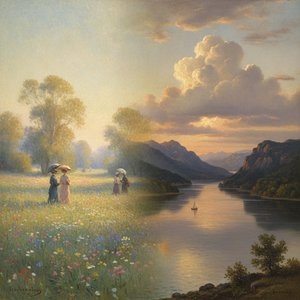
Capturing the Light: A Journey Through the Soul of American Impressionism and the Hudson River School
Explore the luminous beauty of American Impressionism and the Hudson River School. Discover a curated journey through light, landscape, and history, celebrating the enduring legacy of masters through exquisite, hand-painted oil reproductions for the discerning art lover.

Flowing Narratives: Rivers in Painting – A Historical Exploration
Explore the rich history of rivers in painting! Discover masterpieces from ancient times to Impressionism & beyond. Learn about symbolism, artists like Monet & Daubigny, and find your perfect serene artwork at OriginalUniqueArt.

The Soul of Impressionism: Why Oil on Canvas Captures Eternal Light and Timeless Emotion
Discover the enchanting alchemy of Impressionism. Explore how the mastery of oil on canvas, through glazing and impasto, captures eternal light and emotion. Perfect for lovers of Monet and Van Gogh seeking the profound depth of hand-painted fine art.

The Enduring Legacy of Oil on Canvas: Technique, History & Aesthetic Impact
Explore the rich history & techniques of oil painting – from Renaissance masters to Impressionism. Discover pigments, layering methods, and why this timeless medium endures. Expert insights for artists & art enthusiasts.


