Anteprima in scala reale
 Invia
Invia Condividi
 Dettagli opera
 Guida
Guida

 Scarica
 Simili
 Radiografia
 Slideshow
 Domande e risposte
 Statistiche
The Critic


 Espandi i dettagli
Giclée / Stampe d'arte
Stampa giclée o su tela di qualità museale, con produzione rapida e diverse opzioni di finitura. ( Acquista il dipinto realizzato a mano Passa all'immagine digitale)




P118B €10

P118H €10

P118W €10

P438Z €10

P508JH €12

P508YH €12

P805H €10

P805Z €10

P919BZ €10

P919G €10

P919XJ €10

P959ZH €10

P968JZ €12

W106C €8

W218G €10

W218JH €8

W218Y €10

W307PJ €10

W316G €10

W316PJ €8

W316Y €10

W398PJ €8

W4111J €10

W500HY €15

W500JH €15

W692G €12

W849H €8

W940BG €15

W953PJ €8




Scegli tra le nostre dimensioni predefinite, che rispettano le proporzioni originali dell'opera d'arte.

Inserisci la larghezza e l'altezza desiderate, per adattarle alla tua cornice o alla tua parete. Una stampa può essere solo ritagliata, mai resa più grande dell'immagine originale; pertanto, un formato con una forma differente comporterà la perdita di una parte dell'opera. Ti invieremo un mockup digitale da approvare prima di procedere con la stampa. L'immagine mostrata in questa pagina non rappresenta il ritaglio reale — solo il mockup lo mostra.
Consegna in tutto il mondo () in 2 settimane invece delle normali 4/5 settimane. (11 Novembre)

Spedizione espressa gratuita in tutto il mondo

Tela in lino di alta qualità

Assicurazione completa sulla spedizione

Garanzia di rimborso dei dazi doganali

Garanzia di fedeltà cromatica assoluta

Politica di reso entro 100 giorni (solo per difetti di fabbricazione)

Garanzia di rimborso al 100%

Offerta per acquisti multipli
 L'opzione vetro è disponibile solo per dimensioni inferiori a 110 cm

The Critic
Giclée / Stampe d'arte
Dimensioni riproduzione
-


Prezzo finale calcolato
€ 73
A Fragmented Portrait of Judgment
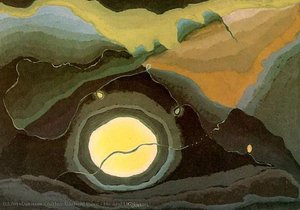
Arthur Garfield Dove’s “The Critic,” painted in 1925, isn't merely a depiction of an art critic; it’s a potent visual embodiment of the very act of critical observation itself. Born amidst the vibrant currents of early 20th-century America, Dove was a pioneer, boldly rejecting representational painting and forging his own path towards abstraction – a move that positioned him as one of the first true American abstract artists. This work, created during a period of intense experimentation within the Dada movement, reflects this spirit with its deliberate deconstruction and layered complexity. The piece immediately commands attention not through polished beauty, but through an unsettling honesty—a raw portrayal of the fragmented nature of perception and judgment.
The composition is strikingly unconventional. A humanoid figure, constructed from a chaotic assemblage of newspaper clippings, printed papers, and other found materials, dominates the center of the canvas. This isn’t a portrait in the traditional sense; rather, it's an almost architectural construction, suggesting a being built not of flesh and blood, but of ideas, opinions, and the relentless flow of information. The figure’s elongated limbs and angular silhouette contribute to a feeling of unease, as if it were perpetually caught mid-thought or in the process of dissecting something unseen. The background is a dense tapestry of text – snippets from newspapers, advertisements, and other printed sources—creating a visual echo of the critic's environment: a world saturated with commentary and opinion.
Dadaist Techniques & Materiality
Dove’s masterful use of collage is central to “The Critic’s” impact. He doesn’t simply adhere paper to a surface; he layers, overlaps, and manipulates the materials to create a tactile and visually rich experience. The rough texture of the newspaper fragments—the creases, tears, and faded ink—are deliberately preserved, adding an element of historical weight and reminding us that this critic is constructed from the remnants of past discourse. The deliberate lack of clean lines – relying instead on the inherent boundaries created by the paper itself – speaks to the Dadaist rejection of traditional artistic conventions. The artist’s technique involved careful cutting, precise pasting, and a meticulous arrangement designed to achieve a specific effect: a visual representation of intellectual dissection.
Symbolism & The Burden of Judgment
The symbolism within “The Critic” is layered and open to interpretation. The fragmented figure can be seen as representing the subjective nature of criticism – an individual’s perspective inevitably shaped by their own biases, experiences, and preconceptions. The newspaper clippings, a constant barrage of information, suggest the overwhelming pressure faced by critics to analyze and interpret the world around them. The bright red hat worn by the figure adds a touch of theatricality and perhaps even a hint of defiance—a visual assertion of individuality within a sea of opinion. Furthermore, the inclusion of text fragments hints at the ephemeral nature of public opinion, constantly shifting and evolving.
A Window into the 1920s & Dove’s Legacy
“The Critic” was created during a period of profound social and artistic change in America—the Roaring Twenties. The rise of mass media, coupled with the burgeoning avant-garde movements like Dadaism and Surrealism, challenged traditional notions of art and representation. Dove's work reflects this spirit of experimentation and rebellion, pushing the boundaries of what was considered acceptable within the American art scene. His pioneering role as an abstract painter paved the way for future generations of artists to explore non-representational forms. Studying “The Critic” offers a fascinating glimpse into the intellectual climate of the era and reveals Dove’s enduring legacy as a visionary artist who dared to question established norms.
Domande e risposte
In quale stanza si consiglia di collocare "The Critic" di Arthur Garfield Dove, considerando i suoi colori?
Grazie alla sua palette Dark, si consiglia di inserire "The Critic" di Arthur Garfield Dove in un/una Living Room: sono proprio i suoi colori a ispirare questo suggerimento.
Qual è il formato di "The Critic"?
Il formato di "The Critic" è Portrait. Questa informazione è utile per pianificare il posizionamento di una riproduzione.
Quante persone visualizzano "The Critic"?
È disponibile una pagina Statistiche per "The Critic", che illustra le visite mensili dell'opera e delle altre creazioni dell'artista, con dettagli relativi a paese e lingua.
Biografia dell'artista
Introduzione ad Arthur Garfield Dove
Arthur Garfield Dove, un artista americano, è rinomato per le sue opere astratte che esplorano il rapporto tra forma e colore. Nato il 2 agosto 1880 a Canandaigua, New York, Dove fu uno dei primi artisti americani a sperimentare stili modernisti.Primi anni ed educazione
Dove crebbe in una famiglia benestante e prese il nome dai candidati repubblicani alla presidenza e vicepresidenza nelle elezioni del 1880, James Garfield e Chester Arthur. I suoi interessi infantili includevano suonare il pianoforte, prendere lezioni di pittura ed essere lanciatore in una squadra di baseball della scuola superiore. Dove frequentò l'Hobart College e la Cornell University, laureandosi alla Cornell nel 1903.Carriera Artistica
La carriera di Dove come artista iniziò con l'illustrazione commerciale a New York City, lavorando per la rivista Harper’s e il Saturday Evening Post. Divenne un illustratore noto, ma i suoi genitori non erano favorevoli alle difficoltà che derivavano da una carriera artistica. Nel 1907, Dove viaggiò in Francia e si trasferì a Parigi, allora capitale mondiale dell'arte. Si unì a un gruppo di artisti sperimentali provenienti dagli Stati Uniti, tra cui Alfred Henry Maurer. Dove fu introdotto a nuovi stili di pittura, in particolare alle opere fauviste di Henri Matisse, ed espose all'annuale Salon d'Automne nel 1908 e 1909.Pittura Astratta e Innovazioni Tecniche
Dove utilizzò un’ampia gamma di media, a volte in combinazioni non convenzionali, per produrre le sue astrazioni e i suoi paesaggi astratti. La sua pittura Io e la Luna del 1937 è un buon esempio di paesaggio astratto. Dove sperimentò anche tecniche, combinando vernici come olio o tempera miscelati a mano su un'emulsione di cera, come esemplificato nel suo dipinto del 1938 "Serbatoi", nella collezione del Museum of Fine Arts di Boston. Dove si riferiva al suo tipo di astrazione come "estrazione", dove estraeva le forme essenziali di una scena dalla natura.Collaborazione con Alfred Stieglitz e Eredità
Dove incontrò Alfred Stieglitz, un noto fotografo e proprietario di galleria, che si stava attivamente impegnando nella promozione dell'arte moderna in America. Stieglitz gli fornì la sua prima mostra personale nel 1912 alla 291 Gallery. I lavori di Dove hanno avuto un impatto significativo sul modernismo americano. Il suo uso di media e tecniche non convenzionali ha influenzato generazioni di artisti. Le sue opere possono essere ammirate in vari musei, tra cui l'Hirshhorn Museum and Sculpture Garden, che ospita diverse delle sue opere notevoli.- Visita https://OriginalUniqueArt.com/@/arthur-garfield-dove per esplorare le opere di Dove.
- Scopri di più su Alfred Stieglitz e il suo contributo al modernismo americano a /it/art/show/art-8xyffg-it/.
- Scopri il Museum of Fine Arts di Boston e la sua collezione di arte moderna a /it/art/show/art-5zkg47-it/.

Arthur Garfield Dove
1880 - 1946 , Stati Uniti d'America
Dettagli rapidi
- Artistic Movement Or Style: Modernismo Americano, Astrattismo
- Artists Who Influenced This Artist: ['Henri Matisse']
- Date Of Birth: 2 agosto 1880
- Date Of Death: 1946
- Full Name: Arthur Garfield Dove
- Nationality: Americano
- Notable Artworks:
- Me and the Moon
- Tanks
- Place Of Birth (City And Country): Canandaigua, USA
Articoli correlati

Arthur Dove: Il Pioniere dell'Astrazione Americana e il Linguaggio Poetico del Modernismo
Esplora la vita e l'opera di Arthur Dove, pioniere dell'astrazione americana. Approfondimenti sulla sua tecnica unica, l'influenza di Stieglitz e il suo ruolo chiave nello sviluppo dell'Espressionismo Astratto. Scopri perché collezionare un'opera di Dove è un investimento prezioso.

Espressionismo Astratto: I 10 Capolavori che Hanno Definito un Movimento Artistico Rivoluzionario
Esplora i 10 capolavori dell'Espressionismo Astratto con ! Scopri Pollock, Rothko e De Kooning: storia, tecnica e significato di opere iconiche per arredare la tua casa con arte di alta qualità. Esplora la collezione online!

Lyrical Abstraction: The High-Energy Soul of Modern Art’s Most Vibrant Movement
Dive into the high-energy world of Lyrical Abstraction. Explore how bold colors, fluid motion, and emotional depth define this modern masterpiece movement. Discover iconic artists and learn to bring this vibrant, soulful energy into your contemporary space.

Astrazione Geometrica: 10 Capolavori che Hanno Definito un Movimento Artistico
Esplora i 10 capolavori dell'Astrazione Geometrica: Mondrian, Malevich e Kandinsky rivoluzionano l'arte moderna. Scopri la storia, i colori e le tecniche di questi movimenti iconici. Stampe d'arte di alta qualità su OriginalUniqueArt.com!

The Soul of Color: A Journey into the Emotional Resonance of Lyrical Abstraction
Embark on a cultural journey through Lyrical Abstraction. Explore how masters like Kandinsky used color and motion to translate emotion into visual poetry. Discover the profound beauty of abstract expressionism and learn to curate emotional resonance in your own art collection.