

 Condividi
 Condividi
 Dettagli
 Guida stampabile

 Scarica
 Articoli simili
 Slideshow
 Statistiche
Pace sulla Terra, op. 13
 Fotografia in bianco e nero
- Fotografia
 1907
1907 25.0 x 34.0 cm
 Arnold Schönberg Center
 Leggi tutto
Giclée / Stampe d'arte
Stampa giclée o su tela di qualità museale, con produzione rapida e diverse opzioni di finitura. ( Ordina la riproduzione dipinta a mano Passa all'immagine digitale)




































Scegli tra le nostre dimensioni predefinite, che rispettano le proporzioni originali dell'opera d'arte.

È possibile inserire dimensioni personalizzate per adattare l'opera a una cornice o a uno spazio specifico. Se la dimensione selezionata non corrisponde alle proporzioni dell'immagine originale, procederemo al ritaglio dell'opera o all'estensione dell'immagine con un bordo specchiato o a tinta unita. Un mockup digitale ti verrà inviato per approvazione prima dell'inizio della produzione.
Si prega di notare che l'anteprima a schermo non riflette il ritaglio o l'estensione effettivi. Solo il mockup mostrerà accuratamente la composizione finale.
Sebbene siano disponibili dimensioni personalizzate, si raccomanda di selezionare una dimensione dall'elenco predefinito per preservare le proporzioni originali.
Consegna in tutto il mondo () in 2 settimane invece delle normali 4/5 settimane. (27 Settembre)

Spedizione espressa gratuita in tutto il mondo

Tela in lino di alta qualità

Assicurazione completa sulla spedizione

Garanzia di rimborso dei dazi doganali

Garanzia di perfetta fedeltà cromatica

Politica di reso entro 100 giorni (solo per difetti di fabbricazione)

Garanzia di rimborso al 100%

Sconto per acquisti multipli
 L'opzione vetro è disponibile solo per dimensioni inferiori a 110 cm

Pace sulla Terra, op. 13
Giclée / Stampe d'arte
Dimensioni della riproduzione
-


Prezzo totale
€ 69
A Symphony in Silence: Exploring Peace on Earth, op. 13
To gaze upon this depiction of Arnold Schoenberg's "Peace on Earth, op. 13" is not merely to look at an aged sheet of music; it is to encounter a preserved echo of profound human yearning. This composition, born from the charged atmosphere of early twentieth-century Europe, transcends its musical notation to become a tangible artifact of hope. The visual evidence—the sepia tones, the delicate creases, the faint patina of time upon the black and white score—whispers tales of dedication, competition, and the enduring quest for tranquility.
Historical Resonance and Creative Genesis
Composed around 1907, this work arrived at a pivotal moment in cultural history. Schoenberg himself was navigating the burgeoning currents of modern musical thought, pushing boundaries that would redefine art for generations to come. The context surrounding "Peace on Earth" is rich; it was associated with competitions, notably the 1st Styrian Music Festival, an event spurred by the recent success of Richard Strauss's opera, Salome. This suggests a vibrant, competitive artistic milieu where grand statements were expected. Furthermore, the text itself draws from Conrad Ferdinand Meyer’s Christmas poem, grounding this lofty musical aspiration in deeply rooted cultural and seasonal symbolism.
Symbolism Woven into the Notes
The very title speaks volumes: "Peace on Earth." The accompanying narrative reveals that the piece contemplates a journey from the tidings of peace found within a sacred story to an examination of world history—a cycle marked by conflict, yet persistently upheld by the unwavering belief in justice. This duality is the core symbolism here. It suggests that true peace is not merely an absence of noise, but an active, hard-won state of grace built upon enduring ideals. For collectors and admirers, this piece offers a potent meditation on humanity's cyclical struggle between discord and harmony.
Aesthetic Appeal for the Modern Space
While intrinsically musical, the physical representation—the aged manuscript photograph—lends itself beautifully to interior design. Its monochromatic palette and visible signs of history lend an air of scholarly gravitas and nostalgic romance. Reproducing this piece allows one to infuse a space with intellectual depth. Imagine it displayed in a library, a study, or a gallery lounge; the subtle texture and historical weight elevate any setting from merely decorated to deeply curated. It speaks to an appreciation for foundational artistic movements and the enduring power of human aspiration.
The Enduring Emotional Impact
Ultimately, "Peace on Earth" resonates emotionally because it is universal. Regardless of one's personal background or era, the desire for a lasting peace remains the most potent human sentiment. Owning a reproduction of this score is akin to possessing a visual manifesto—a beautiful reminder that even amidst the cacophony of modern life, the hope for a better tomorrow, articulated through art and music, continues to resonate with breathtaking clarity.
Biografia dell'artista
Early Life and Musical Beginnings
Arnold Schoenberg, Austrian-American composer who created new methods of musical composition involving atonality, namely serialism and the twelve-tone row. He was also one of the most influential teachers of the 20th century; among his most significant pupils were Alban Berg and Anton Webern. His birth on September 13, 1874, in Vienna, Austria, began a life shaped by humble origins—his father operated a shoe shop—yet Schoenberg’s innate passion for music propelled him to largely self-educate himself in the field. Initially, his musical explorations mirrored the stylistic fusion championed by Johannes Brahms and Richard Wagner, as evidenced in his early masterpiece, “Verklärte Nacht” (1899). However, he swiftly ascended to prominence as a central figure of the Second Viennese School alongside Webern and Berg, marking the dawn of a revolutionary era in musical thought.Notable Works and Musical Innovation
Schoenberg’s compositional breakthroughs fundamentally altered the trajectory of classical music. His seminal works—including “String Quartet No. 2” (1907–1908), “Erwartung” (1909), and “Pierrot Lunaire” (1912)—became emblems of atonality, a radical departure from tonal harmony that challenged established musical conventions. This pioneering approach—later formalized as serialism—involved arranging musical elements in predetermined sequences based on mathematical ratios, fundamentally reshaping the sonic landscape of the time. Furthermore, Schoenberg’s unwavering commitment to artistic integrity led him to resign from the Prussian Academy of Arts in 1933 due to mounting pressure from Nazi ideology, labeling his music as “degenerate.” Despite this perilous period, he persevered in teaching at UCLA (1936–1944), where facilities bear his name—a testament to his enduring legacy.Influence and Legacy
Schoenberg’s influence extended far beyond his immediate contemporaries, shaping the artistic sensibilities of subsequent generations of composers. Theodor W. Adorno and Carl Dahlhaus recognized Schoenberg's profound impact on musicological thought, acknowledging his contribution to redefining musical aesthetics. His aesthetic and music-historical views profoundly impacted the understanding of modern classical music, establishing him as a pivotal figure in shaping its intellectual framework.Later Life and Recognition
As awareness grew of the horrors inflicted during the Holocaust, Schoenberg honored the memory of victims through “A Survivor from Warsaw” (1947), demonstrating his compassion for human suffering. The Israel Conservatory and Academy of Music elected him honorary president in 1951—a poignant acknowledgment of his artistic stature and humanitarian spirit. His final composition, "String Trio" (1946), reflects the somber mood of Vienna during wartime, capturing a moment of vulnerability amidst profound historical upheaval.
Arnold Schoenberg
1874 - 1951 , Austria
Informazioni rapide
- Artistic Movement Or Style: Twelve-tone technique; Expressionism
- Artists Or Movements Influenced By This Artist:
- Anton Webern
- Alban Berg
- Artists Who Influenced This Artist:
- Johannes Brahms
- Richard Wagner
- Date Of Birth: 1874
- Date Of Death: 1951
- Full Name: Arnold Schoenberg
- Nationality: Austrian-American
- Notable Artworks:
- Suite, op. 29
- Music Typewriter
- Staffliner
- Place Of Birth: Vienna, Austria
Articoli correlati

Echoes of Time: Exploring the Enduring Appeal & Historical Context of Vintage Art Prints
Explore the captivating world of vintage art prints! Discover their history, collecting tips & enduring appeal. Expert insights on chromolithography and building a legacy collection with OriginalUniqueArt.

Giclée Prints: Archival Quality & Aesthetic Nuances for the Discerning Collector
Explore the world of giclée prints with OriginalUniqueArt. Learn about archival quality, aesthetic nuances & investment potential. Expert guidance for discerning art collectors seeking museum-quality reproductions and lasting value.

Espressionismo Tedesco: 10 Capolavori Rivoluzionari per Arredare con Emozione
Esplora i 10 capolavori dell'Espressionismo Tedesco con OriginalUniqueArt.com! Scopri Kirchner, Munch e Nolde, le loro emozioni intense e tecniche rivoluzionarie. Arreda la tua casa con stampe d'arte di alta qualità. Esplora la collezione online!
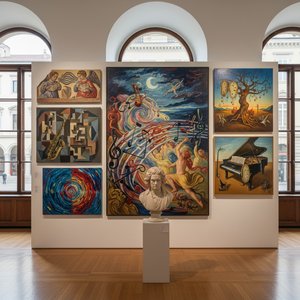
Harmonies on Canvas: Exploring the Visual Representation of Music in Art History
Explore the fascinating history of music's visual representation in art! From ancient symbolism to modern abstraction, discover how artists have captured sound and emotion on canvas. Expert insights & stunning examples.

The Enduring Legacy of Fine Art Prints: Technique, History & Aesthetic Impact
Explore the rich history & techniques of fine art prints. Discover investment potential, assess authenticity, and learn how to preserve your collection with expert guidance. Trusted insights for discerning collectors.


