
 Anteprima in scala reale
 Invia
Invia Condividi
 Dettagli opera
 Guida
Guida

 Scarica
 Simili
 Radiografia
 Slideshow
 Domande e risposte
 Statistiche
Ritratto di Ester

- 56.0 x 46.0 cm


 Espandi i dettagli
Giclée / Stampe d'arte
Stampa giclée o su tela di qualità museale, con produzione rapida e diverse opzioni di finitura. ( Acquista il dipinto realizzato a mano Passa all'immagine digitale)




P118B €10

P118H €10

P118W €10

P438Z €10

P508JH €12

P508YH €12

P805H €10

P805Z €10

P919BZ €10

P919G €10

P919XJ €10

P959ZH €10

P968JZ €12

W106C €8

W218G €10

W218JH €8

W218Y €10

W307PJ €10

W316G €10

W316PJ €8

W316Y €10

W398PJ €8

W4111J €10

W500HY €15

W500JH €15

W692G €12

W849H €8

W940BG €15

W953PJ €8




Scegli tra le nostre dimensioni predefinite, che rispettano le proporzioni originali dell'opera d'arte.

Inserisci la larghezza e l'altezza desiderate, per adattarle alla tua cornice o alla tua parete. Una stampa può essere solo ritagliata, mai resa più grande dell'immagine originale; pertanto, un formato con una forma differente comporterà la perdita di una parte dell'opera. Ti invieremo un mockup digitale da approvare prima di procedere con la stampa. L'immagine mostrata in questa pagina non rappresenta il ritaglio reale — solo il mockup lo mostra.
Consegna in tutto il mondo () in 2 settimane invece delle normali 4/5 settimane. (7 Novembre)

Spedizione espressa gratuita in tutto il mondo

Tela in lino di alta qualità

Assicurazione completa sulla spedizione

Garanzia di rimborso dei dazi doganali

Garanzia di fedeltà cromatica assoluta

Politica di reso entro 100 giorni (solo per difetti di fabbricazione)

Garanzia di rimborso al 100%

Offerta per acquisti multipli
 L'opzione vetro è disponibile solo per dimensioni inferiori a 110 cm

Ritratto di Ester
Giclée / Stampe d'arte
Dimensioni riproduzione
-


Prezzo finale calcolato
€ 72
António Teixeira Carneiro Júnior: Un Portrait of Loss and Spiritual Reflection
António Teixeira Carneiro Júnior (1872-1930) stands as a cornerstone of Portuguese Expressionism, an artist whose oeuvre transcends mere visual representation to embody profound emotional depth—a testament to the enduring power of art to grapple with existential themes. His life narrative mirrors the turbulent currents of his era, marked by personal tragedy and intellectual engagement with European artistic movements.
- Early Life and Formation: Born in Amarante, Portugal, Carneiro’s childhood was profoundly shaped by abandonment—the absence of his father and the untimely passing of his mother instilled within him a sensitivity to sorrow that would permeate his artistic vision. His formative years spent at the Santa Casa da Misericórdia orphanage fostered an initial connection with art through copying religious iconography, establishing a foundational understanding of composition and symbolism.
- The Escola Superior de Belas-Artes do Porto: Recognizing his burgeoning talent, Carneiro’s teacher championed his aspirations, securing him enrollment at the Porto Academy of Fine Arts in 1884. Under the tutelage of João Marques de Oliveira, he honed his skills in historical drawing, absorbing influences from Academic traditions while simultaneously cultivating a distinctive artistic voice.
- Parisian Influence and Artistic Breakthrough: A scholarship enabled Carneiro’s journey to Paris in 1900, where he immersed himself in the vibrant atmosphere of the Académie Julien. Studying alongside Jean-Paul Laurens and Jean-Joseph Benjamin-Constant—artists deeply invested in Impressionism and Symbolism—he absorbed stylistic innovations that would propel him toward his artistic zenith. The prestigious Silver Medal awarded at the Exposition Universelle for “Life” solidified his reputation as a gifted painter.
- Return to Portugal and Pedagogical Commitment: Carneiro’s return to Porto in 1911 marked a pivotal moment, culminating in his appointment as Chair of Drawing at the Escola Superior de Belas-Artes. Despite facing financial hardships, he remained steadfast in his dedication to artistic education, nurturing generations of aspiring artists.
- Legacy and Symbolism: Carneiro’s oeuvre is characterized by portraits imbued with psychological nuance—faces rendered not merely as likenesses but as conduits for emotion. His landscapes, too, convey a palpable sense of melancholy and contemplation, reflecting the artist's preoccupation with spiritual themes. The enduring resonance of his work lies in its ability to evoke profound feelings of empathy and introspection—a testament to Carneiro’s mastery of artistic expression.
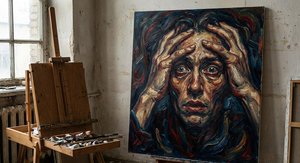
The painting “Retrato de Ester” exemplifies Carneiro’s stylistic approach: a masterful blend of realism and expressive brushwork, capturing the subtle nuances of human emotion. The muted palette and careful attention to detail underscore his commitment to conveying inner states rather than simply depicting external appearances. Its presence at the Centro de Arte Moderna Gulbenkian serves as a poignant reminder of Portugal's artistic heritage.
Domande e risposte
In che modo i colori di "Ritratto di Ester" di António Teixeira Carneiro Júnior si riflettono nel suo impatto emotivo?
La tavolozza Scuri di "Ritratto di Ester" di António Teixeira Carneiro Júnior si sposa con il suo tono emotivo Contemplativo. Il colore è uno dei mezzi attraverso cui un'opera trasmette emozioni.
Cosa rappresenta "Ritratto di Ester" di António Teixeira Carneiro Júnior?
I temi presenti in "Ritratto di Ester" di António Teixeira Carneiro Júnior includono portuguese painting, portraiture, psychological depth, religious imagery, lisbon art scene, expressionist style, childhood loss, spiritual reflection, elementi che insieme sintetizzano il soggetto dell'opera.
Quale emozione trasmette l'opera del Portuguese Expressionism "Ritratto di Ester"?
All'interno del movimento Portuguese Expressionism, "Ritratto di Ester" si distingue per il suo tono Contemplativo.
Biografia dell'artista
António Teixeira Carneiro Júnior: A Soul Captured in Color
António Teixeira Carneiro Júnior (1872 – 1930) stands as a cornerstone of Portuguese Expressionism, an artist whose life narrative intertwines tragedy and triumph—a poignant reflection of the artistic spirit he embodied. Born into humble circumstances in Amarante, Portugal, his early years were marked by profound hardship: orphaned at seven due to his father’s abandonment and subsequently placed in the Barão da Nova Sintra Asylum, Carneiro experienced firsthand the vulnerabilities inherent in existence. Yet, amidst these difficulties, a remarkable talent emerged—a fascination with religious illustrations that would propel him toward formal artistic training under the guidance of João Marques de Oliveira at the Escola Superior de Belas-Artes do Porto (1884–90). This formative period instilled within him not merely technical skills but also an unwavering dedication to observation and emotional resonance—qualities that would characterize his entire artistic career.Parisian Awakening: Symbolism and Artistic Innovation
The pivotal moment in Carneiro’s artistic evolution arrived with his relocation to Paris in 1897, fueled by a scholarship awarded by António Borges, Marquês da Praia e Monforte. Embracing the intellectual ferment of the fin-de siècle, he enrolled at the Académie Julien under Jean-Paul Laurens and Benjamin Constant—encountering artists who championed Symbolist aesthetics and challenged prevailing artistic conventions. This immersion in Parisian culture profoundly impacted his worldview and artistic sensibilities, fostering a rejection of naturalism and propelling him toward explorations of spirituality, melancholy, and psychological introspection. It was during this period that he began to hone his distinctive Expressionist style, prioritizing emotional intensity over mere representation—a stylistic choice that would define his oeuvre for decades to come. The Universal Exhibition of 1900 served as a catalyst for recognition, securing him a Silver Medal for his monumental triptych *A Vida* (Life)—a work lauded by critics and historians alike as an emblem of Portuguese artistic innovation.Landscape and Portraiture: Two Sides of a Singular Vision
Carneiro’s artistic practice centered primarily on two genres—landscape painting and portraiture—each meticulously crafted to convey profound psychological insights. Unlike many of his contemporaries who sought to depict the external world objectively, Carneiro imbued his landscapes with mood and atmosphere, transforming natural vistas into reflections of human emotion. His canvases pulsated with color and texture, capturing not just visual details but also intangible sensations—a testament to his belief that art should aspire to capture the essence of experience. Simultaneously, he excelled in portraiture, delving beneath superficial appearances to reveal the inner workings of his subjects’ minds. He possessed an uncanny ability to portray individuals with sensitivity and nuance, conveying their personalities through subtle gestures and expressions—a skill honed by years of meticulous observation and artistic experimentation.A Legacy Etched in Color: Recognition and Artistic Influence
Throughout his life, Carneiro received considerable acclaim for his work, garnering awards both domestically and internationally. His paintings were exhibited extensively, securing prominent positions within national museum collections and establishing him as a celebrated figure among Portuguese artists. Notably, the Museu Nacional Soares dos Reis houses a significant collection of his canvases—a testament to their enduring artistic merit and historical significance. Furthermore, Carneiro’s influence extended beyond his own lifetime, shaping the artistic landscape of Portugal in the decades following his death. His pioneering Expressionist style inspired subsequent generations of painters—artists who embraced psychological depth and emotional intensity as core tenets of their creative endeavors. António Teixeira Carneiro Júnior remains a beacon of Portuguese modern art—a testament to the transformative power of art to illuminate the human condition and capture the sublime beauty of existence.
António Teixeira Carneiro Júnior
1872 - 1930 , Portogallo
Dettagli rapidi
- Artisti Che Lo Influenzarono:
- João Marques de Oliveira
- Jean-Paul Laurens
- Data Di Morte: 1930
- Data Di Nascita: 1872
- Luogo Di Nascita: Amarante, Portogallo
- Movimento Artistico: Espressionismo
- Nazionalità: Portoghese
- Nome Completo: António Teixeira Carneiro Júnior
- Opere Notevoli:
- Paesaggio – Leça da Palmeira
- Studio interno chiesa
- Profilo Dionísio Pinheiro
Articoli correlati
Figurative Expressionism: Emotional Intensity & Subjective Reality in 20th-Century Art
Explore the powerful world of Figurative Expressionism with OriginalUniqueArt. Discover key artists like Kirchner & Beckmann, understand its emotional depth, and learn how to collect this influential 20th-century art movement.

Franz Marc: Espressionismo, Spiritualità e il Simbolismo Animale di un Maestro Moderno
Esplora l'universo artistico di Franz Marc: dalle radici dell'Espressionismo tedesco al profondo simbolismo dei suoi animali. Scopri la sua spiritualità e l'influenza del Der Blaue Reiter.

The Raw Emotion of Expressionism: A Deep Dive into its History, Characteristics & Enduring Influence
Explore the raw emotion of Expressionism with OriginalUniqueArt. Discover its history, key artists like Kirchner & Munch, and lasting influence on modern art. Expert insights for collectors & enthusiasts.

Le 10 Opere d'Arte Più Intense per un'Esperienza Spirituale Profonda |
Esplora le 10 opere d'arte più toccanti che ispirano la spiritualità. Scopri storie di artisti come Van Gogh e Klimt, simbolismo nascosto e colori emozionali. Trova riproduzioni di alta qualità per decorare casa con arte significativa su

Espressionismo Tedesco: 10 Capolavori Rivoluzionari per Arredare con Emozione
Esplora i 10 capolavori dell'Espressionismo Tedesco con OriginalUniqueArt.com! Scopri Kirchner, Munch e Nolde, le loro emozioni intense e tecniche rivoluzionarie. Arreda la tua casa con stampe d'arte di alta qualità. Esplora la collezione online!


