

 Anteprima in scala reale
 Condividi
 Condividi
 Dettagli
 Guida stampabile

 Scarica
 Articoli simili
 Radiografia
 Slideshow
 Statistiche
Feed the Hungry


 Leggi tutto
Giclée / Stampe d'arte
Stampa giclée o su tela di qualità museale, con produzione rapida e diverse opzioni di finitura. ( Ordina la riproduzione dipinta a mano Passa all'immagine digitale)




P118B €10

P118H €10

P118W €10

P438Z €10

P508JH €12

P508YH €12

P805H €10

P805Z €10

P919BZ €10

P919G €10

P919XJ €10

P959ZH €10

P968JZ €12

W106C €8

W218G €10

W218JH €8

W218Y €10

W307PJ €10

W316G €10

W316PJ €8

W316Y €10

W398PJ €8

W4111J €10

W500HY €15

W500JH €15

W692G €12

W849H €8

W940BG €15

W953PJ €8




Scegli tra le nostre dimensioni predefinite, che rispettano le proporzioni originali dell'opera d'arte.

È possibile inserire dimensioni personalizzate per adattare l'opera a una cornice o a uno spazio specifico. Se la dimensione selezionata non corrisponde alle proporzioni dell'immagine originale, procederemo al ritaglio dell'opera o all'estensione dell'immagine con un bordo specchiato o a tinta unita. Un mockup digitale ti verrà inviato per approvazione prima dell'inizio della produzione.
Si prega di notare che l'anteprima a schermo non riflette il ritaglio o l'estensione effettivi. Solo il mockup mostrerà accuratamente la composizione finale.
Sebbene siano disponibili dimensioni personalizzate, si raccomanda di selezionare una dimensione dall'elenco predefinito per preservare le proporzioni originali.
Consegna in tutto il mondo () in 2 settimane invece delle normali 4/5 settimane. (13 Ottobre)

Spedizione espressa gratuita in tutto il mondo

Tela in lino di alta qualità

Assicurazione completa sulla spedizione

Garanzia di rimborso dei dazi doganali

Garanzia di perfetta fedeltà cromatica

Politica di reso entro 100 giorni (solo per difetti di fabbricazione)

Garanzia di rimborso al 100%

Sconto per acquisti multipli
 L'opzione vetro è disponibile solo per dimensioni inferiori a 110 cm

Feed the Hungry
Giclée / Stampe d'arte
Dimensioni della riproduzione
-


Prezzo totale
€ 69
Antonio Canova’s “Feed the Hungry”: A Testament to Compassion and Neoclassical Grace
“Feed the Hungry,” created in 1795 by the Italian sculptor Antonio Canova, is more than just a depiction of a mother nurturing her child; it's a profound meditation on charity, vulnerability, and the enduring power of human connection. Executed as a plaster relief – a technique favored by Canova for its delicate texture and ability to capture subtle nuances of expression – the work embodies the core tenets of Neoclassical sculpture: idealized beauty, rational composition, and an emphasis on moral virtue. The scene unfolds with remarkable serenity; a woman, her face etched with gentle concern, offers nourishment to her infant, while a man stands beside them, seemingly observing with quiet dignity. This isn’t a dramatic tableau of suffering, but rather a quietly powerful statement about the fundamental act of caring for the most vulnerable.
Canova's mastery of marble and plaster is immediately evident in the work’s exquisite detail. Note the softness of the mother’s garments, rendered with an almost tactile quality; the delicate curve of the baby’s arm reaching out to receive sustenance; and the subtle play of light and shadow across their faces. The figures are sculpted with a remarkable sense of realism, yet they possess an undeniable grace and elegance characteristic of Canova's style. He meticulously studied classical sculpture, particularly the works of Greek artists like Phidias, striving to achieve a harmonious balance between form and emotion. This influence is palpable in the work’s balanced composition, its idealized figures, and its restrained emotional expression.
The Context of Revolutionary Italy
“Feed the Hungry” was commissioned by Abbondio Rezzonico, a wealthy Venetian nobleman with a deep commitment to social welfare. This commission occurred during a period of significant political and social upheaval in Italy – the tumultuous years following the French Revolution and the rise of Napoleon’s empire. The ideals of liberty, equality, and fraternity, championed by the revolutionaries, were spreading throughout Europe, prompting a renewed interest in humanitarianism and charitable works. Rezzonico's decision to commission Canova’s work reflects this burgeoning concern for the poor and marginalized within Venetian society. The relief served as part of a larger collection intended to adorn his villa, showcasing not only artistic beauty but also a commitment to ethical principles.
Interestingly, the choice of depicting a mother feeding her child was particularly resonant during this era. It invoked images of Roman motherhood and the nurturing role traditionally associated with women – a powerful symbol of continuity and hope amidst political instability. Canova skillfully utilized these classical associations to imbue his work with a timeless message of compassion and resilience.
Symbolism and Emotional Resonance
Beyond its historical context, “Feed the Hungry” is rich in symbolic meaning. The act of feeding represents not just physical sustenance but also spiritual nourishment – a connection between generations and a reaffirmation of human values. The man’s presence suggests a broader community responsibility; he embodies the role of protectors and providers, reinforcing the idea that caring for others is a shared duty. The overall mood is one of quiet dignity and understated tenderness, avoiding overt sentimentality. Canova masterfully conveys a sense of profound empathy without resorting to melodrama.
The work’s emotional impact lies in its ability to evoke a feeling of warmth and connection. It reminds us of the simple yet powerful act of kindness – an act that can transcend social boundaries and offer solace in times of hardship. It's a testament to the enduring human capacity for compassion, rendered with exquisite beauty and technical skill.
Reproductions and Collecting
Today, “Feed the Hungry” continues to resonate with audiences worldwide. High-quality reproductions, such as those offered by OriginalUniqueArt.com, allow art lovers to experience Canova’s masterpiece in their own homes or offices. When selecting a reproduction, consider the medium – a fine art print on archival paper will best capture the original's delicate textures and subtle tonal variations. The work’s timeless themes of charity, family, and human connection make it an ideal addition to any collection, serving as a constant reminder of our shared humanity.
Domande e risposte
Qual è il tono emotivo di "Feed the Hungry" di Antonio Canova?
Il tono emotivo registrato per "Feed the Hungry" di Antonio Canova è Nostalgic. Esso riassume la sensazione espressa dall'opera.
Quale tonalità di fondo attraversa "Feed the Hungry" di Antonio Canova?
La tonalità dominante di "Feed the Hungry" di Antonio Canova è Warm Sunset Tones. Tale tonalità costituisce il tono di fondo della tavolozza.
Quale artista e quale stile si celano dietro "Feed the Hungry"?
"Feed the Hungry" è stata creata da Antonio Canova in stile Neoclassical Sculpture. L'artista e il movimento identificano la tradizione dell'opera.
Quali tecnica e stile caratterizzano "Feed the Hungry" di Antonio Canova?
In "Feed the Hungry", la tecnica del Acrylic On Canvas incontra il movimento Neoclassical Sculpture.
A quale movimento artistico appartiene "Feed the Hungry" di Antonio Canova?
"Feed the Hungry" di Antonio Canova appartiene al movimento Neoclassical Sculpture. Questo movimento fornisce il contesto stilistico dell'opera.
Quali dimensioni e orientamento si raccomandano per una stampa di "Feed the Hungry" di Antonio Canova?
Formato Medium, orientamento Square: questa è la configurazione di stampa suggerita per "Feed the Hungry" di Antonio Canova.
È possibile riprodurre legalmente l'opera "Feed the Hungry" di Antonio Canova, conservata presso Museo Correr?
L'originale "Feed the Hungry" si trova presso Museo Correr e l'opera è di pubblico dominio - il suo copyright è scaduto.
Qual è l'atmosfera generale di "Feed the Hungry" di Antonio Canova?
"Feed the Hungry" ha un'atmosfera Elegant.
Biografia dell'artista
Antonio Canova: Una Vita nel Marmo
- Nato: Possagno, Italia (1757)
- Morto: 1822
Antonio Canova si erge come una figura imponente nella storia dell'arte occidentale, ampiamente considerato il più grande scultore neoclassico. La sua maestria nella scultura del marmo e la sua capacità di infondere forme classiche con profonda emozione gli hanno assicurato un posto tra i più grandi artisti di tutti i tempi. Nato a Possagno, in Italia, da Pietro Canova, scalpellino, la sua vita iniziale fu plasmata dall'ambiente artistico che lo circondava.
Primi Anni e Formazione
- Background Familiare: La professione del padre gli fornì un'esposizione iniziale alla scultura della pietra, e suo nonno, Pasino Canova, uno scultore specializzato in altari e bassorilievi, svolse un ruolo cruciale nel coltivare il suo talento.
- Sviluppo Artistico Iniziale: Già prima dei dieci anni, Canova dimostrò notevoli capacità, creando piccoli santuari in marmo che mettevano in mostra la sua innata abilità. Fece apprendistato con Giuseppe Bernardi ('Torretto') e Giovanni Ferrari, affinando ulteriormente le sue competenze.
- Studi Accademici: I suoi studi all'Accademia di Belle Arti di Venezia gli valsero numerosi premi, consolidando la sua reputazione di giovane artista promettente. Un laboratorio all'interno di un monastero gli fornì lo spazio per sviluppare il suo mestiere.
- Prime Commissioni: Le prime commissioni, come le statue di Orfeo ed Euridice per il senatore Giovanni Falier (1775-1777), dimostrarono uno stile emergente rococò, prefigurando la sua successiva raffinatezza neoclassica.
Ascesa alla Prominenza e Stile Neoclassico
- Definizione del Neoclassicismo: L'opera di Canova è caratterizzata dalle sue forme eleganti, figure idealizzate e un ritorno ai principi estetici dell'antica Grecia e Roma. Evitò abilmente il melodramma dell'arte barocca resistendo al freddo spesso associato ai precedenti tentativi di revival classico.
- Opere Chiave & Riconoscimento: Sculture come Cupido e Psiche (c. 1787-1793), Penitente Maddalena ed Ercole e Lichas stabilirono la sua reputazione in tutta Europa. Il suo lavoro era molto richiesto da reali e nobili.
- Promozione della Sua Reputazione: Canova promosse strategicamente la sua carriera attraverso la pubblicazione di incisioni delle sue opere e la creazione di versioni marmoree dei gessi, garantendo una diffusa divulgazione della sua arte.
- Acclamazione Internazionale: Le commissioni provenienti da tutta Europa, tra cui una statua di Teseo e il Minotauro per Girolamo Zulian (ambasciatore veneziano a Roma), cementarono il suo status di uno degli artisti più celebrati d'Europa.
Opere Principali ed Eredità
- Sculture Notevoli: Oltre a quelle già menzionate, le opere significative di Canova includono Venere Italica, La Musa Polifimia, Le Tre Grazie Danzanti e la sua toccante rappresentazione di Euridice.
- Commissioni Monumentali: Ricevette prestigiose commissioni per tombe, in particolare l'elaborata Tomba di Papa Clemente XIII nella Basilica di San Pietro, Roma – una testimonianza della sua abilità sia nella scultura che nel design architettonico.
- Gipsoteca Antonio Canova: Il museo Gipsoteca Antonio Canova ospita la collezione più significativa delle sue opere, fornendo preziose informazioni sul suo processo creativo e sulla sua evoluzione artistica.
- Influenza sulle Generazioni Successive: L'influenza di Canova si estese ben oltre la sua vita, plasmando il corso della scultura neoclassica e ispirando generazioni di artisti con la sua maestria tecnica e il suo potere espressivo.
Significato Storico
- Incarnazione del Neoclassicismo: Antonio Canova divenne sinonimo del movimento neoclassico, incarnandone gli ideali di ordine, chiarezza e ritorno all'antichità classica.
- Scultore di Corte & Diplomatico: La sua posizione di scultore di corte per numerosi sovrani europei gli diede una notevole influenza politica e gli permise di plasmare i gusti artistici in tutto il continente.
- Innovazione Tecnica: L'eccezionale abilità di Canova nella scultura del marmo spinse i confini di ciò che era considerato possibile, stabilendo un nuovo standard per l'eccellenza scultorea.
- Eredità Artistica Duratura: Le sue sculture continuano a catturare il pubblico in tutto il mondo, consolidando la sua posizione come uno degli artisti più importanti e influenti della storia.

Antonio Canova
1757 - 1822 , Italia
Informazioni rapide
- Artistic Movement Or Style: Neoclassicismo
- Artists Or Movements Influenced By This Artist: ['Successivi scultori neoclassici']
- Artists Who Influenced This Artist: ['Scultori barocchi tardivi']
- Date Of Birth: 1 novembre 1757
- Date Of Death: 13 ottobre 1822
- Full Name: Antonio Canova
- Nationality: Italiana
- Notable Artworks:
- Cupido e Psiche
- La Vergine Penitente
- Ercole e Lica
- Teseo e il Minotauro
- Le Tre Grazie
- Eurydice
- Venere Italica
- Place Of Birth (City And Country): Possagno, Italia
Articoli correlati

The Enduring Allure of Marble in Art History: From Classical Sculpture to Modern Abstraction
Explore the captivating history of marble sculpture from ancient Greece to modern art. Discover renowned artists like Canova & Michelangelo, carving techniques, and investment insights at OriginalUniqueArt.

The Enduring Form: Sculpture Across History, Technique & Emotional Resonance
Explore the rich history of sculpture with OriginalUniqueArt. Discover key techniques, influential artists & investment potential for discerning collectors. Expert insights into valuing and collecting timeless masterpieces.
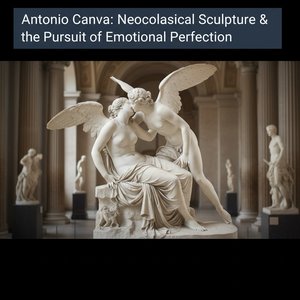
Antonio Canova: Scultura Neoclassica e la Ricerca della Perfezione Emotiva
Esplora la vita e le opere di Antonio Canova, il maestro del Neoclassicismo italiano. Approfondisci la sua tecnica, le committenze prestigiose e l'eredità artistica che continua ad ispirare. Scopri la Gipsoteca di Possagno.

I 10 Capolavori Bronzei che Hanno Rivoluzionato la Storia dell'Arte | OriginalUniqueArt
Esplora i 10 capolavori bronzei che hanno segnato la storia dell'arte! Da Rodin a Michelangelo, scopri le storie e le tecniche dietro queste sculture iconiche. Trova riproduzioni d'arte di alta qualità per decorare la tua casa con OriginalUniqueArt.com.

The Enduring Form: Exploring Themes & Techniques in Sculpture Across Historical Periods
Explore the rich history of sculpture from ancient masterpieces to contemporary innovations. Discover key techniques, influential artists & investment potential for discerning art collectors.


