Anteprima in scala reale
 Invia
Invia Condividi
 Dettagli opera
 Guida
Guida

 Scarica
 Simili
 Radiografia
 Slideshow
 Domande e risposte
 Statistiche
Walking Lion


 Espandi i dettagli
Giclée / Stampe d'arte
Stampa giclée o su tela di qualità museale, con produzione rapida e diverse opzioni di finitura. ( Acquista il dipinto realizzato a mano Passa all'immagine digitale)




P118B €10

P118H €10

P118W €10

P438Z €10

P508JH €12

P508YH €12

P805H €10

P805Z €10

P919BZ €10

P919G €10

P919XJ €10

P959ZH €10

P968JZ €12

W106C €8

W218G €10

W218JH €8

W218Y €10

W307PJ €10

W316G €10

W316PJ €8

W316Y €10

W398PJ €8

W4111J €10

W500HY €15

W500JH €15

W692G €12

W849H €8

W940BG €15

W953PJ €8




Scegli tra le nostre dimensioni predefinite, che rispettano le proporzioni originali dell'opera d'arte.

Inserisci la larghezza e l'altezza desiderate, per adattarle alla tua cornice o alla tua parete. Una stampa può essere solo ritagliata, mai resa più grande dell'immagine originale; pertanto, un formato con una forma differente comporterà la perdita di una parte dell'opera. Ti invieremo un mockup digitale da approvare prima di procedere con la stampa. L'immagine mostrata in questa pagina non rappresenta il ritaglio reale — solo il mockup lo mostra.
Consegna in tutto il mondo () in 2 settimane invece delle normali 4/5 settimane. (3 Novembre)

Spedizione espressa gratuita in tutto il mondo

Tela in lino di alta qualità

Assicurazione completa sulla spedizione

Garanzia di rimborso dei dazi doganali

Garanzia di fedeltà cromatica assoluta

Politica di reso entro 100 giorni (solo per difetti di fabbricazione)

Garanzia di rimborso al 100%

Offerta per acquisti multipli
 L'opzione vetro è disponibile solo per dimensioni inferiori a 110 cm

Walking Lion
Giclée / Stampe d'arte
Dimensioni riproduzione
-


Prezzo finale calcolato
€ 72
A Regal Presence: Deconstructing the Majesty of Barye’s Walking Lion
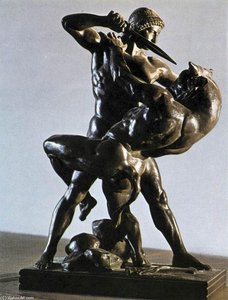
Antoine-Louis Barye's "Walking Lion," a bronze sculpture dating from the mid-19th century, isn’t merely a depiction of an animal; it’s a visceral embodiment of power, grace, and untamed wilderness. Born in Paris during a period of profound artistic transformation – the rise of Romanticism – Barye sought to move beyond the static formality of Neoclassical sculpture, instead capturing the dynamic energy and raw emotion inherent in the natural world. This particular piece, rendered with an almost palpable sense of movement, invites us into the heart of the lion’s spirit, a testament to Barye's revolutionary approach to animal representation.
The sculpture immediately commands attention through its sheer physicality. The bronze itself, meticulously cast and patinated to achieve a rich, burnished surface, speaks volumes about Barye’s mastery of lost-wax casting – a technique demanding both technical precision and artistic intuition. Notice the subtle variations in tone; the darker recesses of the musculature contrast beautifully with the highlights that accentuate the lion's powerful form. The texture is crucial: it’s not smooth or polished, but retains a tactile quality, hinting at the rough hide and formidable strength beneath. The wooden base, deliberately simple and rectangular, provides a grounding element, anchoring this embodiment of wildness within a contained space.
Capturing the Spirit of the Animalier
Barye’s work falls squarely within the burgeoning “animalier” movement – a trend that championed the study and representation of animals in sculpture. Prior to Barye, depictions of lions were often idealized or stylized, frequently serving as symbols of royalty or military might. However, Barye sought to capture the *essence* of the lion, its predatory instincts, its territoriality, and its inherent wildness. He achieved this through an intensely detailed anatomical study, meticulously rendering every muscle fiber, every ripple of fur, and every glint of light on the bronze surface. The pose itself – a deliberate stride forward, head held high – conveys a sense of confident authority and unwavering determination.
Consider the influence of Romanticism, which emphasized emotion, individualism, and the sublime power of nature. Barye’s lion embodies these ideals perfectly. It's not simply a beautiful animal; it’s a force of nature, a symbol of courage and resilience. The sculpture resonates with a primal energy, evoking a sense of awe and respect for the untamed wilderness.
Symbolism and Historical Context
The lion has long held significant symbolic weight across cultures – representing strength, nobility, justice, and vigilance. In ancient Egypt, it was associated with the sun god Ra; in Judeo-Christian tradition, it symbolizes Christ as “the Lion of Judah.” Barye’s sculpture taps into this rich tapestry of symbolism, reinforcing the lion's image as a creature of power and majesty. Furthermore, Barye’s work emerged during a period of significant social and political upheaval – the rise of nationalism, the Napoleonic Wars, and the burgeoning industrial revolution. His sculptures served as a powerful antidote to the rigid formality of classical art, offering instead a celebration of the natural world and its inherent beauty.
A Legacy in Bronze: Barye’s Enduring Influence
Antoine-Louis Barye remains one of the most celebrated sculptors of the 19th century. His pioneering work as an animalier fundamentally changed the way artists approached the representation of animals, paving the way for future generations of sculptors and artists. “Walking Lion” stands as a prime example of his genius – a captivating blend of technical skill, artistic vision, and profound understanding of the natural world. Today, reproductions of this iconic sculpture continue to inspire and delight, offering a tangible connection to a bygone era of artistic innovation and romantic fervor.
Domande e risposte
Cosa rappresenta "Walking Lion" di Antoine-Louis Barye e quale atmosfera trasmette?
"Walking Lion" di Antoine-Louis Barye ritrae bronze sculpture, lion, barye, animalier, power, grace, movement, con un'atmosfera Romantic. Il soggetto e l'atmosfera insieme descrivono l'opera.
Antoine-Louis Barye, autore di "Walking Lion", è conosciuto con altri nomi?
Altri nomi registrati per Antoine-Louis Barye, autore di "Walking Lion", includono Antoine Louis Barye, Barye.
Che tipo di opera è "Walking Lion"?
"Walking Lion" di Antoine-Louis Barye è classificato come WallArt. La categoria descrive la tipologia di opera d'arte dell'originale.
Biografia dell'artista
Antoine-Louis Barye: Il Padre della Scultura Animaliera
Antoine-Louis Barye, nato a Parigi il 24 settembre 1795, emerse come figura cardine nel mondo della scultura del XIX secolo. Non si limitò a rappresentare gli animali; li infuse di intensità drammatica e precisione anatomica senza precedenti, lanciando il genere dell'*animalier* – una focalizzazione dedicata alle forme animali – nell'ambito dell'arte fine. Il suo percorso iniziò non in uno studio di scultore, ma come apprendista orefiere, seguendo le orme del padre, e questo precoce addestramento instillò in lui un’attenzione meticolosa al dettaglio e una maestria tecnica che si sarebbero rivelate preziose per tutta la sua carriera. Affinò queste abilità sotto la guida di scultori come François-Joseph Bosio e Baron Antoine-Jean Gros, assorbendo principi classici pur sviluppando al contempo una sensibilità unicamente romantica. La sua istruzione formale all'École des Beaux-Arts fornì una solida base, ma l’incontro con il mondo vivente – in particolare gli animali ospitati nel Jardin des Plantes di Parigi intorno al 1823 – accese veramente la sua visione artistica.Dalla Oreficeria alla Scultura Animaliera: Lo Sviluppo di uno Stile Unico
La dedizione di Barye all'osservazione degli animali fu ossessiva. Non si limitava a guardare; studiava, disegnava e analizzava meticolosamente la loro anatomia, i loro movimenti e i loro comportamenti. Questo impegno per il realismo non era freddo o clinico, tuttavia; era infuso del fervore emotivo tipico del Romanticismo. Le prime opere, come “Milo di Crotana divorato da un leone” (1819) e “Ercole con il cinghiale Erymanthean” (c. 1820), create durante la sua formazione, presagivano il suo talento emergente per la composizione dinamica e la narrazione drammatica. Ma furono sculture come "Tigre che divora un coccodrillo Gaviale" (1831) – un rilievo in gesso monumentale che causò scompiglio al Salon – e “Leone che schiaccia un serpente” (1832), casto in bronzo, a stabilire veramente il suo stile distintivo. Queste non erano rappresentazioni statiche; erano momenti di potenza bruta congelati nel tempo, catturando la bellezza selvaggia della lotta per la sopravvivenza nella natura. Andò oltre la semplice imitazione per esprimere l'essenza stessa della vita animale – la loro forza, agilità e spirito indomito. Il suo lavoro risuonava con una crescente fascinazione del pubblico per l’esotico e il selvaggio, riflettendo un desiderio romantico di esperienze al di fuori dei confini della società civilizzata.Opere Chiave e Commissioni Monumentali
Nel corso della sua carriera, Barye produsse un'impressionante varietà di sculture, ognuna delle quali dimostrava la sua eccezionale abilità nel catturare la forma e il movimento degli animali. Oltre alle icone come “Tigre che divora un coccodrillo Gaviale” e “Leone che schiaccia un serpente”, capolavori come “Teseo e il Minotauro” (1843), “Ruggero e Angelica sull'ippogrifo” (1846), “Lapitha e Centauro” (1848) e “Giacinto che divora un coniglio” (1850) dimostrarono la sua versatilità e il suo potere immaginativo. Non si limitò a rappresentare incontri predatori; esplorò anche scene mitologiche, infondendole con la stessa energia dinamica e precisione anatomica che caratterizzavano i suoi studi sugli animali. Il suo talento si estendeva oltre le piccole sculture in bronzo; Barye ricevette commissioni prestigiose per opere monumentali, tra cui il “Leone della colonna di luglio”, un potente simbolo della resilienza francese, e sculture adorna le giardini delle Tuileries a Parigi. Questi progetti su larga scala dimostrarono la sua capacità di tradurre la sua visione artistica nell'arte pubblica, consolidando la sua reputazione come uno dei più grandi scultori di Francia.Influenze, Difficoltà e Significato Duraturo
Il lavoro di Barye fu una sintesi di diverse influenze. L’enfasi romantica sull’emozione e sull’individualità è palpabile nella tensione drammatica delle sue sculture. Allo stesso tempo, si ispirò all'arte classica, evidente nell'attenzione per la precisione anatomica e le forme idealizzate. Tuttavia, ciò che lo contraddistinse veramente fu il suo approccio scientifico all'osservazione – una diretta conseguenza delle innumerevoli ore trascorse a studiare gli animali al Jardin des Plantes. Nonostante abbia raggiunto un riconoscimento critico, la vita di Barye non fu priva di difficoltà. Lottò con problemi finanziari per gran parte della sua carriera, dovuti principalmente a una cattiva gestione degli affari. Una bancarotta nel 1848 lo costrinse a vendere i suoi modelli e le sue matrici, portando a un periodo in cui copie inferiori inondarono il mercato, danneggiando la sua reputazione. Trovò una certa stabilità come professore di disegno al Museo Nazionale di Storia Naturale nel 1854, ma fu solo postumo che il suo genio ricevette il dovuto riconoscimento completo. Oggi Antoine-Louis Barye è riconosciuto come il padre della scultura animaliera moderna. La sua influenza sulle generazioni successive di artisti è innegabile e le sue opere sono celebrate per la loro potenza, realismo e bellezza duratura. Ha elevato il genere dell'*animalier* da una nicchia a un'arte rispettata, lasciando un segno indelebile nella storia della scultura. *La sua eredità continua ad ispirare ammirazione e meraviglia tra collezionisti e musei di tutto il mondo.*
Antoine-Louis Barye
1796 - 1875 , Francia
Dettagli rapidi
- Artistic Movement Or Style: Romanticismo
- Artists Or Movements Influenced By This Artist: ['Scultori animali']
- Artists Who Influenced This Artist:
- Bosio
- Gros
- Date Of Birth: 24 settembre 1795
- Date Of Death: 25 giugno 1875
- Full Name: Antoine-Louis Barye
- Nationality: Francese
- Notable Artworks:
- Leone e serpente
- Tigre e coccodrillo
- Ercole con il daino
- Place Of Birth: Parigi, Francia
Articoli correlati

L'Anima del Bronzo: Storia, Tecnica della Cera Persa e Segreti per il Collezionista
Scopri i segreti della fusione a cera persa e la storia del bronzo tra maestri come Rodin. Approfondisci la tecnica e il valore dell'arte.

I 10 Capolavori Bronzei che Hanno Rivoluzionato la Storia dell'Arte | OriginalUniqueArt
Esplora i 10 capolavori bronzei che hanno segnato la storia dell'arte! Da Rodin a Michelangelo, scopri le storie e le tecniche dietro queste sculture iconiche. Trova riproduzioni d'arte di alta qualità per decorare la tua casa con OriginalUniqueArt.com.
The Enduring Legacy of Bronze Sculpture: A Collector's Guide to Form & Cultural Significance
Explore the rich history & enduring appeal of bronze sculpture with expert insights for collectors at OriginalUniqueArt. Learn about casting techniques, iconic artists, and collecting tips to build a discerning art collection.

I 10 Capolavori in Bronzo che Hanno Rivoluzionato la Storia dell'Arte | OriginalUniqueArt
Esplora i 10 capolavori in bronzo che hanno segnato la storia dell'arte! Da Michelangelo a Rodin, scopri le storie e le tecniche dietro queste statue iconiche. Trova riproduzioni artistiche di alta qualità per decorare casa tua con OriginalUniqueArt.com.

The Enduring Legacy of Bronze: A Historical & Artistic Exploration for the Collector
Explore the rich history & enduring appeal of bronze sculpture with expert insights for collectors at OriginalUniqueArt. Learn about casting techniques, iconic artists, collecting tips & contemporary interpretations.