

 Condividi
 Condividi
 Dettagli
 Guida stampabile

 Scarica
 Articoli simili
 Slideshow
 Statistiche
Untitled


 Leggi tutto
L'opera d'arte visualizzata in questa pagina è protetta dalle leggi sul diritto d'autore, il che significa che non possiamo legalmente creare o vendere una riproduzione identica. Tale protezione è garantita da accordi internazionali quali la Convenzione di Berna e dalle leggi nazionali, incluse quelle stabilite da Legge sul copyright degli Stati Uniti - Titolo 17. Tutti i diritti riservati. Le immagini presenti su questo sito sono protette da copyright e non possono essere riprodotte o utilizzate senza l'autorizzazione scritta di WahooArt.com o dei rispettivi proprietari del copyright.
Questo metodo è pienamente conforme alle normative sul diritto d'autore poiché non prevede la copia o la duplicazione dell'opera protetta. Si tratta invece di una rielaborazione creativa: un nuovo dipinto che trae ispirazione dall'originale, senza tuttavia esserne identico.
Giclée / Stampe d'arte
Stampa giclée o su tela di qualità museale, con produzione rapida e diverse opzioni di finitura. ( Ordina la riproduzione dipinta a mano Passa all'immagine digitale)




































Scegli tra le nostre dimensioni predefinite, che rispettano le proporzioni originali dell'opera d'arte.

Inserisci la larghezza e l'altezza desiderate, per adattarle alla tua cornice o alla tua parete. Una stampa può essere solo ritagliata, mai resa più grande dell'immagine originale; pertanto, un formato con una forma differente comporterà la perdita di una parte dell'opera. Ti invieremo un mockup digitale da approvare prima di procedere con la stampa. L'immagine mostrata in questa pagina non rappresenta il ritaglio reale — solo il mockup lo mostra.
Consegna in tutto il mondo () in 2 settimane invece delle normali 4/5 settimane. (22 Ottobre)

Spedizione espressa gratuita in tutto il mondo

Tela in lino di alta qualità

Assicurazione completa sulla spedizione

Garanzia di rimborso dei dazi doganali

Garanzia di perfetta fedeltà cromatica

Politica di reso entro 100 giorni (solo per difetti di fabbricazione)

Garanzia di rimborso al 100%

Sconto per acquisti multipli
 L'opzione vetro è disponibile solo per dimensioni inferiori a 110 cm

Untitled
Giclée / Stampe d'arte
Dimensioni della riproduzione
-


Prezzo totale
€ 70
The Ephemeral Encounter: A Dialogue of Presence and Absence
In the profound stillness of Alwar Balasubramaniam’s Untitled, viewers are invited into a contemplative space where the boundaries between existence and disappearance begin to blur. This evocative sculptural pairing presents a transient camaraderie between two busts, one a permanent shadow and the other a fleeting breath. The work serves as a poignant meditation on the nature of memory and the inevitable erosion of time. As one bust—crafted from the delicate, aromatic substance of camphor—slowly evaporates, it leaves behind crystalline traces upon the walls of its vitrine. This process mirrors the human condition: just as a life departs, leaving only the echoes of a voice or the grain of a photograph, the sculpture’s physical form vanishes, yet its essence settles into a new, beautiful state of being.
The artistry lies in the masterful tension between the sand-cast bust and the camphor portrait. The sand-cast figure acts as a frozen moment, a stoic witness to the passing of its counterpart. It is a portrait of permanence, much like a photograph that captures a likeness long after the subject has moved on. In contrast, the camphor bust, with its eroding features and softening edges, embodies the mortal struggle against aging and decay. Through this duality, Balasubramaniam explores the concept of the self-portrait not as an attempt at immortality, but as a confrontation with our own finitude.
Materiality and the Weight of Memory
Balasubramaniam’s technique is deeply rooted in his exploration of materiality. By utilizing substances that undergo physical transformation, he elevates the sculpture from a static object to a living performance of decay. The choice of camphor is particularly symbolic; its sublimation—turning directly from solid to gas—is a powerful metaphor for the soul's departure and the ephemeral nature of physical presence. This experimental approach to medium allows the artwork to breathe and change, ensuring that no two viewings are ever truly identical.
For the discerning collector or interior designer, this piece offers more than mere decoration; it provides a profound intellectual anchor for a curated space. The interplay of light and shadow within the glass vitrine creates a sense of depth and mystery, making it an ideal centerpiece for galleries or sophisticated residential environments that value conceptual depth. The sculpture’s ability to suggest void through matter makes it a captivating addition to any collection focused on contemporary abstraction and the philosophical exploration of the human form.
A Legacy of Reflection
The historical echoes within this work are unmistakable, drawing parallels to the introspective mastery of artists like Rembrandt. Just as Rembrandt looked into his mirrors to find the specter of death within his own aging features, Balasubramaniam uses the medium of the memorial bust to question the very idea of art as an eternal realm. In an era saturated with a constant flow of digital images, this work stands as a radical inquiry into what remains when the image itself fades. It is a hauntingly beautiful tribute to the traces we leave behind—the crystalline remnants of a life well-lived, etched into the very fabric of our surroundings.
Domande e risposte
Quali sono i diritti di riproduzione di "Untitled" presso il Devi Art Foundation?
"Untitled" di Alwar Balasubramaniam, conservata presso Devi Art Foundation, è ancora protetta dal diritto d'autore. Questo stato determina se sia possibile realizzare riproduzioni dell'immagine.
L'opera "Untitled" si trova nel paese del suo creatore?
Sì - l'opera è conservata nel paese d'origine dell'artista. "Untitled" è conservata in India, mentre Alwar Balasubramaniam è nato/a in India.
Quanto è forte il contrasto in "Untitled" di Alwar Balasubramaniam?
"Untitled" di Alwar Balasubramaniam mostra un contrasto Statement tra le sue zone chiare e scure.
Biografia dell'artista
Early Life and Artistic Beginnings
Alwar Balasubramaniam, known affectionately as Bala, was born in Tirunelveli, Tamil Nadu, India, in 1971. From a family steeped in artistic tradition—his father was also an artist—Bala’s formative years were marked by exposure to the visual arts from a young age. This early influence instilled within him a profound appreciation for materiality and form, shaping his lifelong dedication to sculptural practice and printmaking. He pursued formal education at Government College of Arts, Chennai, earning a Bachelor of Fine Arts degree in 1995. During this period, he honed foundational skills while simultaneously immersing himself in the exploration of diverse artistic mediums. Following graduation, Bala embarked on an independent creative journey, experimenting relentlessly with techniques and materials—a characteristic that would define his subsequent artistic endeavors.Sculptural Exploration and Material Engagement
Bala’s sculptural work is distinguished by its meticulous attention to detail and a fascination with the interplay between organic forms and geometric precision. Initially utilizing lithography, he skillfully incorporated natural elements like sand into his compositions, reflecting an early preoccupation with textural surfaces and geological processes. This approach continued in later projects where he experimented with laser burn marks and screen printing on paper—methods that underscore his willingness to push boundaries and explore innovative visual languages. Notable sculptures include *Under the Current* (2015), which captures the transformative effects of rainfall on stone landscapes, demonstrating Bala’s ability to translate natural phenomena into sculptural form. Furthermore, he developed a series of painterly works – *Wind Curve*, *Liquid Mountain*, and *Pulse* – utilizing subtle pigment manipulations to convey atmospheric conditions and spatial relationships. He has been recognized for his exploration of the human body as a central motif, investigating its relationship with space and materiality through casts and installations that challenge conventional notions of representation.Conceptual Frameworks: Light, Shadow, and Absence
Bala’s artistic vision centers on confronting fundamental dichotomies—light versus shadow, presence versus absence—and investigating the hidden dimensions of perception. Influenced by artists such as Honoré Daumier and Henri Matisse, he adopted a stylistic approach characterized by bold contrasts and expressive gestures. His sculptural explorations delve into concepts of materiality and spatial emptiness, mirroring his interest in capturing fleeting moments and conveying intangible sensations. Recurring motifs include casts of his own body—a deliberate gesture symbolizing selfhood and confronting the limitations of representation—and geometric forms that evoke notions of stability and dynamism simultaneously. The artist’s preoccupation with “nothing” – as he eloquently stated – reflects a belief that emptiness possesses inherent beauty, prompting viewers to reconsider conventional understandings of visual experience. This conceptual framework informs his work across various mediums, from sculpture to printmaking, demonstrating a consistent commitment to exploring the complexities of human perception and artistic expression.International Recognition and Exhibitions
Bala’s reputation grew steadily throughout the 2000s and beyond, culminating in widespread acclaim across continents. He was awarded the Joan Miro Foundation Prize in 2001, coinciding with a solo exhibition showcasing his groundbreaking sculptural explorations. Subsequent exhibitions included prominent venues such as The Metropolitan Museum of Art (MET), New York; The Phillips Collection, Washington DC; Guggenheim Museum, New York; Mori Art Museum, Tokyo Japan; Kiran Nadar Museum of Art (KNMA), India; Seattle Art Museum, Seattle Washington; École des Beaux Arts, Paris France; Essl Museum Austria; National Portrait Gallery Canberra Australia; 1st Singapore Biennale; and 18th Sydney Biennale. His work has been featured in publications by Talwar Gallery and Indigo Art Museum, cementing his position as a leading voice within contemporary Indian art.Recent Developments and Ongoing Artistic Pursuit
Currently, Bala’s sculptures are on display at The Metropolitan Museum of Art (MET), New York, specifically within the “Afterlives: Contemporary Art in the Byzantine Crypt” exhibition—a testament to his enduring commitment to artistic innovation and exploration. He continues to refine his craft, experimenting with new materials and techniques while maintaining a steadfast focus on conceptual themes rooted in materiality, natural phenomena, and the human condition. His ongoing work embodies a profound engagement with the world around him, prompting viewers to contemplate questions of perception, presence, and the elusive nature of reality—a legacy that ensures Bala’s contribution to art history will resonate for generations to come.
Alwar Balasubramaniam
1971 - , India
Informazioni rapide
- Artistic Movement Or Style: Contemporary Art
- Artists Or Movements Influenced By This Artist:
- Nasreen Mohamedi
- Rummana Hussain
- Artists Who Influenced This Artist:
- Honoré Daumier
- Henri Matisse
- Date Of Birth: Tamil Nadu, India (1971)
- Date Of Death: Living
- Full Name: Alwar Balasubramaniam
- Nationality: Indian
- Notable Artworks:
- Untitled
- Touch of Air, Traces of Time
- Place Of Birth: Chennai, India
Articoli correlati

I 10 Capolavori Bronzei che Hanno Rivoluzionato la Storia dell'Arte | OriginalUniqueArt
Esplora i 10 capolavori bronzei che hanno segnato la storia dell'arte! Da Rodin a Michelangelo, scopri le storie e le tecniche dietro queste sculture iconiche. Trova riproduzioni d'arte di alta qualità per decorare la tua casa con OriginalUniqueArt.com.
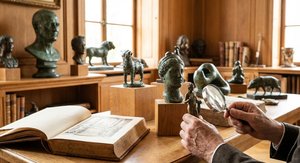
The Enduring Legacy of Bronze Sculpture: A Collector's Guide to Form & Cultural Significance
Explore the rich history & enduring appeal of bronze sculpture with expert insights for collectors at OriginalUniqueArt. Learn about casting techniques, iconic artists, and collecting tips to build a discerning art collection.

The Enduring Legacy of Bronze Sculpture: Technique, Symbolism & Cultural Impact
Explore the rich history & enduring appeal of bronze sculpture with expert insights for collectors. Learn about casting techniques, iconic artists, collecting tips & contemporary interpretations at OriginalUniqueArt.

The Enduring Form: Exploring Themes & Techniques in Sculpture Across Historical Periods
Explore the rich history of sculpture from ancient masterpieces to contemporary innovations. Discover key techniques, influential artists & investment potential for discerning art collectors.

I 10 Capolavori in Bronzo che Hanno Rivoluzionato la Storia dell'Arte | OriginalUniqueArt
Esplora i 10 capolavori in bronzo che hanno segnato la storia dell'arte! Da Michelangelo a Rodin, scopri le storie e le tecniche dietro queste statue iconiche. Trova riproduzioni artistiche di alta qualità per decorare casa tua con OriginalUniqueArt.com.