 Anteprima in scala reale
 Condividi
 Condividi
 Dettagli
 Guida stampabile

 Scarica
 Articoli simili
 Radiografia
 Slideshow
 Statistiche
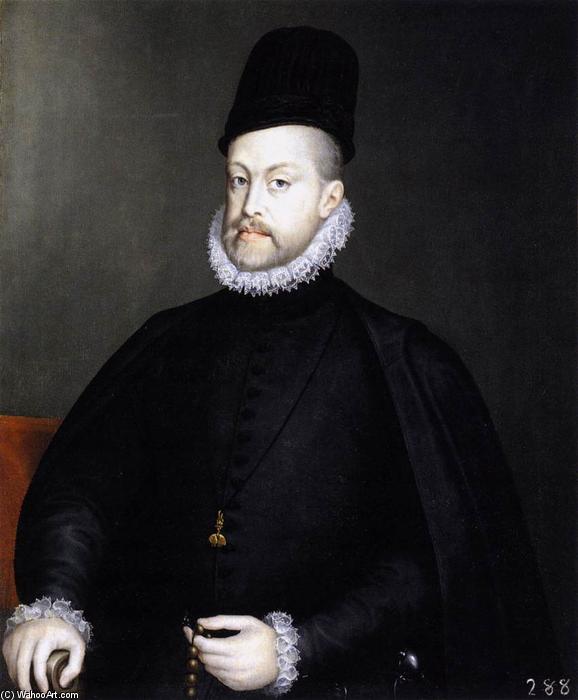
Philip II Holding a Rosary
 Oil On Canvas
- WallArt
- Renaissance
 1573
1573 88.0 x 72.0 cm
 Museo del Prado
 Leggi tutto
Giclée / Stampe d'arte
Stampa giclée o su tela di qualità museale, con produzione rapida e diverse opzioni di finitura. ( Ordina la riproduzione dipinta a mano Passa all'immagine digitale)




P118B $10

P118H $10

P118W $10

P438Z $10

P508JH $12

P508YH $12

P805H $10

P805Z $10

P919BZ $10

P919G $10

P919XJ $10

P959ZH $10

P968JZ $12

W106C $8

W218G $10

W218JH $8

W218Y $10

W307PJ $10

W316G $10

W316PJ $8

W316Y $10

W398PJ $8

W4111J $10

W500HY $15

W500JH $15

W692G $12

W849H $8

W940BG $15

W953PJ $8




Scegli tra le nostre dimensioni predefinite, che rispettano le proporzioni originali dell'opera d'arte.

È possibile inserire dimensioni personalizzate per adattare l'opera a una cornice o a uno spazio specifico. Se la dimensione selezionata non corrisponde alle proporzioni dell'immagine originale, procederemo al ritaglio dell'opera o all'estensione dell'immagine con un bordo specchiato o a tinta unita. Un mockup digitale ti verrà inviato per approvazione prima dell'inizio della produzione.
Si prega di notare che l'anteprima a schermo non riflette il ritaglio o l'estensione effettivi. Solo il mockup mostrerà accuratamente la composizione finale.
Sebbene siano disponibili dimensioni personalizzate, si raccomanda di selezionare una dimensione dall'elenco predefinito per preservare le proporzioni originali.
Consegna in tutto il mondo () in 2 settimane invece delle normali 4/5 settimane. (25 Settembre)

Spedizione espressa gratuita in tutto il mondo

Tela in lino di alta qualità

Assicurazione completa sulla spedizione

Garanzia di rimborso dei dazi doganali

Garanzia di perfetta fedeltà cromatica

Politica di reso entro 100 giorni (solo per difetti di fabbricazione)

Garanzia di rimborso al 100%

Sconto per acquisti multipli
 L'opzione vetro è disponibile solo per dimensioni inferiori a 110 cm

Philip II Holding a Rosary
Giclée / Stampe d'arte
Dimensioni della riproduzione
-


Prezzo totale
$ 80
The Majesty of Authority: Alonso Sánchez Coello’s ‘Philip II Holding a Rosary’
Alonso Sánchez Coello's “Philip II Holding a Rosary,” painted in 1573, is more than just a portrait; it’s a meticulously crafted embodiment of royal power and deeply rooted religious devotion within the turbulent landscape of late 16th-century Spain. The painting immediately commands attention with its dramatic lighting – a stark chiaroscuro emanating from the upper left corner that sculpts Philip II's face, highlighting his prominent nose, thoughtful gaze, and the weighty folds of his velvet doublet. This masterful use of light isn’t merely aesthetic; it serves to elevate the king, casting him in a position of solemn authority against a subtly rendered, almost impenetrable background.
Coello, working within the established traditions of Flemish objectivity and Venetian sensuality – a synthesis he uniquely embodied – has created an image that is both strikingly realistic and imbued with symbolic weight. The subject’s attire—the rich black velvet, the lace cuffs, the elaborate brooch— speaks volumes about his status as ruler of a vast empire, reflecting the opulence and grandeur associated with the Spanish court. Yet, it's the central element – the rosary held in his hand – that anchors the portrait to a profound spiritual dimension. This isn’t simply an accessory; it represents Philip II’s commitment to Catholicism, a cornerstone of his reign and a vital tool for maintaining control over both his subjects and the Church itself.
A Masterclass in Renaissance Technique
The painting's execution reveals Coello’s exceptional skill as a painter. He employs a meticulous approach, utilizing layered brushstrokes to build texture and depth – particularly evident in the fabric of the doublet and the intricate details of the beard. The use of oil paints allows for subtle gradations of color and a remarkable level of realism, capturing not just the likeness of Philip II but also his personality—a sense of quiet contemplation and regal bearing. The sharp lines defining the face and clothing are balanced by softer transitions in the drapery, creating a harmonious blend of precision and fluidity. The composition is carefully balanced, with the figure occupying the central vertical axis, reinforcing his dominance within the frame.
- Medium: Oil on Canvas
- Size: 88 x 72 cm
- Date: 1573
Historical Context and Royal Symbolism
To fully appreciate “Philip II Holding a Rosary,” it’s crucial to understand the historical context in which it was created. Spain under Philip II was at the height of its imperial power, yet also grappling with internal challenges – religious conflict, economic instability, and the looming threat of external enemies. The king's unwavering commitment to Catholicism served as both a unifying force and a justification for his expansive empire. The rosary itself became a potent symbol of this faith, representing Philip II’s piety and his role as protector of the Catholic Church.
Furthermore, the portrait reflects the prevailing artistic trends of the Renaissance – a renewed interest in classical ideals combined with a fascination with humanism and realism. Coello's work exemplifies this synthesis, creating an image that is both aesthetically pleasing and intellectually stimulating. The inclusion of details like the Golden Fleece emblem on his hat further reinforces his status as a powerful ruler, linking him to the legacy of past monarchs and the grandeur of the Spanish Empire.
A Timeless Portrait of Power and Faith
“Philip II Holding a Rosary” is more than just a historical document; it’s a compelling work of art that continues to resonate with viewers today. The painting's dramatic composition, masterful technique, and profound symbolism combine to create an image of enduring power and beauty. It offers a glimpse into the mind of one of Spain’s most influential monarchs and provides a poignant reflection on the intersection of faith, authority, and artistic expression. Reproductions of this iconic portrait remain highly sought after by collectors and interior designers alike, offering a chance to bring a touch of Renaissance majesty into any space.
Biografia dell'artista
Primi Anni e Formazione
- Nato: Benifaió, Spagna (1531)
- Trascorse l'infanzia vicino a Valencia fino alla morte del padre.
- Intorno al 1541/42, si trasferì in Portogallo per vivere con suo nonno, un nobile al servizio dei monarchi portoghesi.
- Studiò con Anthonis Mor (Antonio Moro) nelle Fiandre intorno al 1550.
- Ricevette il patrocinio di Antoine de Granville, vescovo di Arras, anch'egli mecenate di Mor.
Carriera alla Corte Spagnola
- Lavorò per la famiglia reale portoghese e successivamente per la corte di João Manuel, principe del Portogallo.
- Si trasferì alla corte spagnola di Filippo II nel 1555, su raccomandazione di Juana, sorella di Filippo II.
- Divenne Pittore di Corte nel 1560.
- Sposò Louisa Reyaltes, figlia di un argentiere, intorno al 1560/61.
- La sua figlia, Isabel Sánchez, divenne anch'essa pittrice e assistette nel suo laboratorio.
- Si trasferì con la corte a Toledo e si stabilì a Madrid nel 1561.
Stile Artistico e Influenze
- Stile: Combinò l'oggettività fiamminga con la sensualità veneziana.
- Influenze: Principalmente influenzato da Anthonis Mor e Tiziano.
- Apprese precisione da Mor.
- Incorporò i toni dorati veneziani, l'opera di fabbricazione generosa e l'uso della luce da Tiziano.
- Conosciuto per ritratti segnati dalla facilità di posa, dignità, sobrietà e calore del colore.
Opere Principali e Realizzazioni
- Produsse sia ritratti che dipinti religiosi.
- Le opere religiose erano convenzionali ma dimostrano uno stile austero.
- Ritratti notevoli:
- Filippo II che tiene un Rosario (1573)
- Ritratti dell'Infanta Isabella Clara Eugenia (1571)
- Serie di dipinti raffiguranti i figli di Filippo II.
- Doppio ritratto delle infante Isabella Clara Eugenia e Catalina Micaela (1568–9).
- Dipinse opere religiose per El Escorial.
- Produsse una veduta topografica del porto di Siviglia.
Eredità e Significato Storico
- La sua reputazione come ritrattista è stata complicata da numerose copie e imitazioni.
- Considerato una figura significativa nell'arte rinascimentale spagnola, in particolare per i suoi ritratti di corte.
- Il suo lavoro influenzò artisti successivi, tra cui Velázquez, riguardo alla rappresentazione delle texture come armature e drappeggi.
- Morì a Madrid l'8 agosto 1588.

Alonso Sánchez Coello
1531 - 1588 , Spagna
Informazioni rapide
- Artisti Influenti:
- Anthonis Mor
- Tiziano
- Artisti Influenzati:
- Juan Pantoja de la Cruz
- Felipe de Liaño
- Data Di Morte: 1588
- Data Di Nascita: circa 1531
- Luogo Di Nascita: Benifaió, Spagna
- Movimento Artistico: Rinascimento spagnolo
- Nazionalità: Iberica
- Nome Completo: Alonso Sánchez Coello
- Opere Notevoli:
- Filippo II con rosario
- Ritratto di una signora
- Isabella Clara Eugenia
- Don Giovanni d'Austria
- Caterina d'Austria
Articoli correlati
The Golden Age Reforged: Dramatic Realism & Religious Zeal in Spanish Baroque Art
Explore the dramatic world of Spanish Baroque art! Discover masters like Zurbarán & the powerful influence of religious zeal on painting techniques – a guide for collectors and enthusiasts.
José Gutiérrez Solana: A Chronicle of Spanish Society Through Expressionist Vision
Explore the captivating world of José Gutiérrez Solana, a pivotal Spanish Expressionist painter. Discover his haunting depictions of early 20th-century Spain, influenced by Goya & El Greco. Learn about his key works and lasting legacy.

Mastering the Shadows: A Journey Through the Chiaroscuro and Soul of Iconic Spanish Painting
Embark on a sophisticated exploration of Spanish art history, from the chiaroscuro mastery of Velázquez to the profound shadows of Goya. Discover how the dramatic light and emotional depth of Spain's greatest masters continue to inspire collectors and connoisseurs today.
Rafael de Penagos: A Study in Spanish Portraiture & Artistic Identity
Explore the life & art of Rafael de Penagos, a leading Spanish Art Deco illustrator. Discover his iconic 'Penagos Woman', commercial work, and lasting legacy. Learn about this pivotal figure in 20th-century Spanish art history.
I 25 Capolavori del Prado: Arte Spagnola e Decorazioni di Lusso per la Tua Casa
Esplora i 25 capolavori del Museo del Prado: Velázquez, Goya, El Greco e altri maestri spagnoli. Scopri storie, tecniche e colori che hanno reso queste opere immortali. Trova riproduzioni d'arte di alta qualità per la tua casa su OriginalUniqueArt.com!