 Anteprima in scala reale
 Condividi
 Condividi
 Dettagli
 Guida stampabile

 Scarica
 Articoli simili
 Radiografia
 Slideshow
 Statistiche
Philip II
 Oil
Oil- WallArt
- Spanish Renaissance
 1570
1570- Early Modern
 115.0 x 93.0 cm
 Pollok House
 Leggi tutto
Giclée / Stampe d'arte
Stampa giclée o su tela di qualità museale, con produzione rapida e diverse opzioni di finitura. ( Ordina la riproduzione dipinta a mano Passa all'immagine digitale)




P118B €10

P118H €10

P118W €10

P438Z €10

P508JH €12

P508YH €12

P805H €10

P805Z €10

P919BZ €10

P919G €10

P919XJ €10

P959ZH €10

P968JZ €12

W106C €8

W218G €10

W218JH €8

W218Y €10

W307PJ €10

W316G €10

W316PJ €8

W316Y €10

W398PJ €8

W4111J €10

W500HY €15

W500JH €15

W692G €12

W849H €8

W940BG €15

W953PJ €8




Scegli tra le nostre dimensioni predefinite, che rispettano le proporzioni originali dell'opera d'arte.

Inserisci la larghezza e l'altezza desiderate, per adattarle alla tua cornice o alla tua parete. Una stampa può essere solo ritagliata, mai resa più grande dell'immagine originale; pertanto, un formato con una forma differente comporterà la perdita di una parte dell'opera. Ti invieremo un mockup digitale da approvare prima di procedere con la stampa. L'immagine mostrata in questa pagina non rappresenta il ritaglio reale — solo il mockup lo mostra.
Consegna in tutto il mondo () in 2 settimane invece delle normali 4/5 settimane. (24 Ottobre)

Spedizione espressa gratuita in tutto il mondo

Tela in lino di alta qualità

Assicurazione completa sulla spedizione

Garanzia di rimborso dei dazi doganali

Garanzia di perfetta fedeltà cromatica

Politica di reso entro 100 giorni (solo per difetti di fabbricazione)

Garanzia di rimborso al 100%

Sconto per acquisti multipli
 L'opzione vetro è disponibile solo per dimensioni inferiori a 110 cm

Philip II
Giclée / Stampe d'arte
Dimensioni della riproduzione
-


Prezzo totale
€ 70
The Majesty of Sovereignty: A Glimpse into the Spanish Golden Age
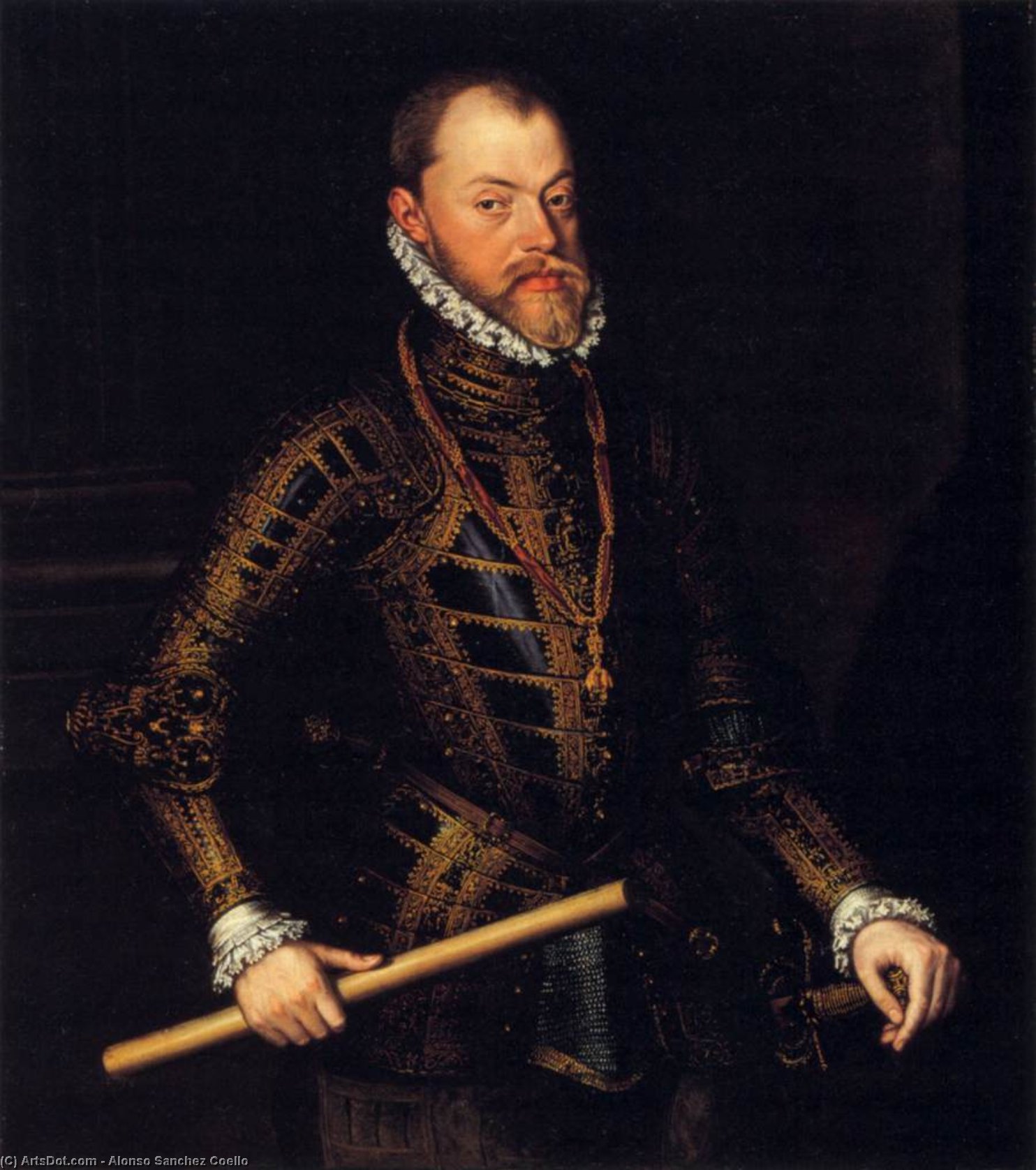
In the profound stillness of Alonso Sánchez Coello’s 1570 portrait, Philip II emerges not merely as a man, but as the very embodiment of imperial authority. To gaze upon this masterpiece is to step through a portal into the heart of the sixteenth-century Spanish Court, where every brushstroke serves to reinforce the divine right of kings. The subject stands with a commanding presence, his gaze steady and resolute, framed by the intricate textures of a period defined by opulence and rigid social hierarchy. As a premier court painter, Coello possessed the rare ability to capture the weight of a crown without the need for a literal diadem, using instead the subtle language of posture and attire to communicate power.
The composition is a masterclass in focused intensity. By utilizing a deep, somber background, Coello ensures that the viewer’s eye is immediately drawn to the luminous details of the monarch's personage. The play of light across the ruffled collar—a hallmark of Renaissance aristocratic fashion—creates a rhythmic interplay of shadow and brilliance, highlighting the meticulous craftsmanship of the textile. This technique, which blends the objective precision of the Flemish tradition with a certain Venetian warmth, allows the textures of the fabric and the sheen of the steel to feel almost tactile, inviting the observer to appreciate the material wealth of the era.
Symbolism and the Art of Presence
Every element within this portrait is a deliberate symbol of the Spanish Empire's zenith. The sword held by Philip II is far more than a mere accessory; it is a potent signifier of his role as the defender of the faith and the arbiter of justice across vast territories. It introduces an element of latent strength into the composition, suggesting that beneath the refined elegance of his suit lies the iron will required to govern a global superpower. The meticulous rendering of his beard and mustache further emphasizes a mature, seasoned leadership, projecting an image of stability and wisdom to both contemporary subjects and modern viewers alike.
For the discerning collector or interior designer, this piece offers more than just historical interest; it provides a profound emotional anchor for any space. The painting exudes a sense of timeless dignity and quiet confidence. When placed within a curated collection or as a focal point in a sophisticated study, the portrait commands respect and fosters an atmosphere of intellectual depth. It is a work that does not shout for attention but rather earns it through its sheer, understated gravity, making it an ideal selection for those looking to infuse their environment with the grandeur of classical European history.
A Legacy Captured in Oil
The technical brilliance of Alonso Sánchez Coello lies in his ability to balance the individual's humanity with the iconographic requirements of royalty. Through a sophisticated use of chiaroscuro, he sculpts the features of Philip II, giving the face a three-dimensional vitality that has endured for centuries. This mastery of light and shadow ensures that the portrait remains dynamic, shifting in character as the ambient light of a room changes throughout the day. It is this enduring quality—this ability to breathe life into the pigments—that makes a high-quality reproduction of this work such a captivating investment for lovers of fine art.
Owning a piece that echoes the splendor of the Spanish Golden Age allows one to participate in a long tradition of aesthetic appreciation. Whether you are drawn to the historical narrative of the Habsburg dynasty or the exquisite technical execution of the Renaissance masters, this portrait serves as a window into a world of unparalleled elegance. It is an invitation to surround oneself with the echoes of greatness, bringing the sophisticated soul of the sixteenth century into the contemporary home.
Domande e risposte
Dove posso acquistare una riproduzione dipinta a mano di "Philip II" di Alonso Sánchez Coello?
"Philip II" è disponibile come una riproduzione a olio dipinta a mano su tela di lino. L'ordine può essere effettuato nella sua pagina Riproduzione dipinta a mano, con la possibilità di scegliere tra diverse dimensioni.
L'immagine di "Philip II" di Alonso Sánchez Coello può essere riprodotta liberamente?
Lo stato del copyright per "Philip II" di Alonso Sánchez Coello: l'opera è di pubblico dominio - il suo copyright è scaduto. Ciò determina se sia possibile effettuare liberamente riproduzioni dell'immagine.
Per chi è un buon regalo "Philip II" di Alonso Sánchez Coello?
"Philip II" di Alonso Sánchez Coello è consigliato come regalo per Corporate Gift, specialmente per Focal. Una riproduzione dell'opera può essere offerta come dono.
Biografia dell'artista
Primi Anni e Formazione
- Nato: Benifaió, Spagna (1531)
- Trascorse l'infanzia vicino a Valencia fino alla morte del padre.
- Intorno al 1541/42, si trasferì in Portogallo per vivere con suo nonno, un nobile al servizio dei monarchi portoghesi.
- Studiò con Anthonis Mor (Antonio Moro) nelle Fiandre intorno al 1550.
- Ricevette il patrocinio di Antoine de Granville, vescovo di Arras, anch'egli mecenate di Mor.
Carriera alla Corte Spagnola
- Lavorò per la famiglia reale portoghese e successivamente per la corte di João Manuel, principe del Portogallo.
- Si trasferì alla corte spagnola di Filippo II nel 1555, su raccomandazione di Juana, sorella di Filippo II.
- Divenne Pittore di Corte nel 1560.
- Sposò Louisa Reyaltes, figlia di un argentiere, intorno al 1560/61.
- La sua figlia, Isabel Sánchez, divenne anch'essa pittrice e assistette nel suo laboratorio.
- Si trasferì con la corte a Toledo e si stabilì a Madrid nel 1561.
Stile Artistico e Influenze
- Stile: Combinò l'oggettività fiamminga con la sensualità veneziana.
- Influenze: Principalmente influenzato da Anthonis Mor e Tiziano.
- Apprese precisione da Mor.
- Incorporò i toni dorati veneziani, l'opera di fabbricazione generosa e l'uso della luce da Tiziano.
- Conosciuto per ritratti segnati dalla facilità di posa, dignità, sobrietà e calore del colore.
Opere Principali e Realizzazioni
- Produsse sia ritratti che dipinti religiosi.
- Le opere religiose erano convenzionali ma dimostrano uno stile austero.
- Ritratti notevoli:
- Filippo II che tiene un Rosario (1573)
- Ritratti dell'Infanta Isabella Clara Eugenia (1571)
- Serie di dipinti raffiguranti i figli di Filippo II.
- Doppio ritratto delle infante Isabella Clara Eugenia e Catalina Micaela (1568–9).
- Dipinse opere religiose per El Escorial.
- Produsse una veduta topografica del porto di Siviglia.
Eredità e Significato Storico
- La sua reputazione come ritrattista è stata complicata da numerose copie e imitazioni.
- Considerato una figura significativa nell'arte rinascimentale spagnola, in particolare per i suoi ritratti di corte.
- Il suo lavoro influenzò artisti successivi, tra cui Velázquez, riguardo alla rappresentazione delle texture come armature e drappeggi.
- Morì a Madrid l'8 agosto 1588.

Alonso Sánchez Coello
1531 - 1588 , Spagna
Informazioni rapide
- Artisti Influenti:
- Anthonis Mor
- Tiziano
- Artisti Influenzati:
- Juan Pantoja de la Cruz
- Felipe de Liaño
- Data Di Morte: 1588
- Data Di Nascita: circa 1531
- Luogo Di Nascita: Benifaió, Spagna
- Movimento Artistico: Rinascimento spagnolo
- Nazionalità: Iberica
- Nome Completo: Alonso Sánchez Coello
- Opere Notevoli:
- Filippo II con rosario
- Ritratto di una signora
- Isabella Clara Eugenia
- Don Giovanni d'Austria
- Caterina d'Austria
Articoli correlati

Mastering the Shadows: A Journey Through the Chiaroscuro and Soul of Iconic Spanish Painting
Embark on a sophisticated exploration of Spanish art history, from the chiaroscuro mastery of Velázquez to the profound shadows of Goya. Discover how the dramatic light and emotional depth of Spain's greatest masters continue to inspire collectors and connoisseurs today.
Diego Velázquez: Maestro dell'Età d'Oro Spagnola – Tecnica, Influenze e Ritrattistica di Corte
Esplora la vita e le opere di Diego Velázquez, il maestro del Barocco spagnolo. Analisi approfondita della sua tecnica innovativa, delle influenze artistiche e dei ritratti che hanno definito un'epoca. Scopri l'eredità di questo genio.
Rafael de Penagos: A Study in Spanish Portraiture & Artistic Identity
Explore the life & art of Rafael de Penagos, a leading Spanish Art Deco illustrator. Discover his iconic 'Penagos Woman', commercial work, and lasting legacy. Learn about this pivotal figure in 20th-century Spanish art history.
The Golden Age Reforged: Dramatic Realism & Religious Zeal in Spanish Baroque Art
Explore the dramatic world of Spanish Baroque art! Discover masters like Zurbarán & the powerful influence of religious zeal on painting techniques – a guide for collectors and enthusiasts.
I 25 Capolavori del Prado: Arte Spagnola e Decorazioni di Lusso per la Tua Casa
Esplora i 25 capolavori del Museo del Prado: Velázquez, Goya, El Greco e altri maestri spagnoli. Scopri storie, tecniche e colori che hanno reso queste opere immortali. Trova riproduzioni d'arte di alta qualità per la tua casa su OriginalUniqueArt.com!