

 Anteprima in scala reale
 Condividi
 Condividi
 Dettagli
 Guida stampabile

 Scarica
 Articoli simili
 Radiografia
 Slideshow
 Statistiche
Autumn Flowers


 Leggi tutto
Giclée / Stampe d'arte
Stampa giclée o su tela di qualità museale, con produzione rapida e diverse opzioni di finitura. ( Ordina la riproduzione dipinta a mano Passa all'immagine digitale)




P118B €10

P118H €10

P118W €10

P438Z €10

P508JH €12

P508YH €12

P805H €10

P805Z €10

P919BZ €10

P919G €10

P919XJ €10

P959ZH €10

P968JZ €12

W106C €8

W218G €10

W218JH €8

W218Y €10

W307PJ €10

W316G €10

W316PJ €8

W316Y €10

W398PJ €8

W4111J €10

W500HY €15

W500JH €15

W692G €12

W849H €8

W940BG €15

W953PJ €8




Scegli tra le nostre dimensioni predefinite, che rispettano le proporzioni originali dell'opera d'arte.

È possibile inserire dimensioni personalizzate per adattare l'opera a una cornice o a uno spazio specifico. Se la dimensione selezionata non corrisponde alle proporzioni dell'immagine originale, procederemo al ritaglio dell'opera o all'estensione dell'immagine con un bordo specchiato o a tinta unita. Un mockup digitale ti verrà inviato per approvazione prima dell'inizio della produzione.
Si prega di notare che l'anteprima a schermo non riflette il ritaglio o l'estensione effettivi. Solo il mockup mostrerà accuratamente la composizione finale.
Sebbene siano disponibili dimensioni personalizzate, si raccomanda di selezionare una dimensione dall'elenco predefinito per preservare le proporzioni originali.
Consegna in tutto il mondo () in 2 settimane invece delle normali 4/5 settimane. (4 Ottobre)

Spedizione espressa gratuita in tutto il mondo

Tela in lino di alta qualità

Assicurazione completa sulla spedizione

Garanzia di rimborso dei dazi doganali

Garanzia di perfetta fedeltà cromatica

Politica di reso entro 100 giorni (solo per difetti di fabbricazione)

Garanzia di rimborso al 100%

Sconto per acquisti multipli
 L'opzione vetro è disponibile solo per dimensioni inferiori a 110 cm

Autumn Flowers
Giclée / Stampe d'arte
Dimensioni della riproduzione
-


Prezzo totale
€ 69
A Portrait of a Moment: The Enigmatic Beauty of *Autumn Flowers*
Alfred Stevens’s *Autumn Flowers*, painted in 1867, isn't merely a depiction of a woman amidst flowers; it’s an exquisitely crafted meditation on stillness, light, and the subtle poetry of everyday life. At first glance, the painting presents a seemingly simple arrangement: a seated lady, her posture suggesting quiet contemplation, surrounded by a still-life tableau of fabrics, blossoms, and a delicately rendered table. Yet, beneath this surface lies a profound exploration of form, color, and the very essence of observation – a hallmark of Stevens’s unique artistic vision.
Stevens, a pivotal figure in 19th-century Belgian art, deliberately eschewed the prevailing trends of his time. Rejecting the fleeting effects of Impressionism's vibrant light and atmosphere, he instead focused on capturing an immutable quality – the frozen gesture, the fixed expression, the enduring presence of the subject. This deliberate choice is powerfully evident in *Autumn Flowers*. The woman’s hand, poised as if about to touch a flower, isn’t caught in motion; it's suspended, imbued with a sense of timelessness. Her gaze, directed slightly off-canvas, invites us into her private world, suggesting an inner life beyond the immediate scene.
The Language of Color and Texture: Stevens’s Masterful Technique
What immediately draws the eye is Stevens's extraordinary command of color and texture. He employs a remarkably restrained palette – primarily shades of grey, black, and muted browns – punctuated by flashes of pastel pink, chestnut brown, and the glossy sheen of the table cover. This deliberate limitation isn’t a sign of restraint but rather a strategic choice to emphasize form and light. The artist masterfully utilizes chiaroscuro, creating dramatic contrasts between light and shadow that sculpt the figures and objects with remarkable precision. Notice how the highlights on the woman's chignon and the delicate folds of her dress draw our attention while simultaneously deepening the shadows around her face, lending a sense of mystery and depth.
Stevens’s technique is equally noteworthy for its meticulous detail. He employs a smooth, almost polished surface – reminiscent of 17th-century Dutch masters like Rembrandt and Vermeer – achieved through careful layering of paint and the use of a knife to blend colors seamlessly. This creates an illusion of tactile reality, inviting us to reach out and touch the fabrics, feel the texture of the flowers, and appreciate the subtle variations in color and tone. The artist’s attention to detail extends beyond mere representation; it's a deliberate attempt to capture the *essence* of each element within the composition.
Symbolism and the Portrait of Modernity
Beyond its technical brilliance, *Autumn Flowers* is rich in symbolic meaning. The woman herself represents a type of modern femininity – poised, elegant, and seemingly detached from the bustle of Parisian life. Her attire, with its jet frills and flounces, speaks to the fashionable trends of the era while simultaneously conveying a sense of quiet dignity. The surrounding still-life elements—the fabrics, flowers, and table—are not merely decorative; they function as a carefully constructed visual language, hinting at themes of luxury, domesticity, and the fleeting beauty of life.
Stevens’s comparison to Gustave Vanzype – that the painting is a still life composed of the fabrics in which she is dressed and the things around her – reveals a deeper intention. He wasn't simply depicting a woman; he was creating a miniature world, a carefully orchestrated tableau that captures a specific moment in time and reflects the values and aesthetics of his era. The reference to Whistler’s ambition to “use colours to compete with the musician who uses sounds” underscores Stevens’s own desire to elevate color from mere decoration to an expressive element within the painting.
A Legacy of Stillness: Stevens's Enduring Appeal
*Autumn Flowers* stands as a testament to Alfred Stevens’s singular artistic vision. It is a painting that rewards careful observation, inviting us to linger and contemplate its subtle nuances. Its enduring appeal lies not in dramatic gestures or fleeting effects but in its quiet beauty, its masterful technique, and its profound exploration of the human condition. Reproductions of this captivating work offer a window into a bygone era, capturing the elegance and sophistication of 19th-century Parisian life while simultaneously reminding us of the timeless power of stillness and observation.
Domande e risposte
Posso vedere "Autumn Flowers" di Alfred Stevens sulla mia parete prima dell'acquisto?
"Autumn Flowers" dispone di un'anteprima in realtà aumentata: la pagina Anteprima AR dell'opera ti permette di visualizzarla nel tuo spazio tramite un dispositivo compatibile.
Quanti anni aveva Alfred Stevens quando ha creato "Autumn Flowers" nel 1867?
Alfred Stevens aveva 44 anni quando ha creato "Autumn Flowers" nel 1867. L'età è calcolata sulla base dell'anno di nascita dell'artista, 1823.
In che modo "Autumn Flowers" bilancia luci e ombre?
La luminosità di "Autumn Flowers" di Alfred Stevens è registrata come deep_shadow, con una luminanza di Dark.
Chi è l'artista dietro "Autumn Flowers"?
L'artista che ha creato "Autumn Flowers" è Alfred Stevens. L'opera è catalogata sotto il nome di Alfred Stevens.
In che anno è stata creata "Autumn Flowers" di Alfred Stevens?
"Autumn Flowers" di Alfred Stevens è stata creata nel 1867.
"Autumn Flowers" di Alfred Stevens è un ritratto, un paesaggio o una composizione quadrata?
"Autumn Flowers" di Alfred Stevens è una composizione in Portrait. Le proporzioni meritano di essere verificate prima di scegliere la dimensione della stampa.
Esistono opere simili a "Autumn Flowers"?
Le opere simili a "Autumn Flowers" sono elencate nella pagina Opere simili dell'opera.
Biografia dell'artista
Early Life and Training
Alfred Émile Léopold Joseph Victor Stevens (1823–1906), a Belgian painter of considerable renown, was born on May 11, 1823, in Brussels. His family possessed a deep connection to the visual arts; his elder brother, Joseph (1816–1892), and son Léopold (1866–1935), were both painters, while another brother Arthur (1825–99) served as an art dealer and critic. This familial heritage undoubtedly instilled in Stevens a formative appreciation for artistic expression from a young age. Artistic inclination blossomed early on, nurtured by the encouragement of his family and fueled by the vibrant artistic atmosphere of Brussels during the mid-nineteenth century. Stevens commenced his formal artistic education at the Académie Royale des Beaux-Arts in Brussels, where he received tutelage under François Navez, a prominent neo-classical painter whose stylistic principles profoundly impacted Stevens’ formative years. Navez championed idealized forms and harmonious compositions—elements that would become hallmarks of Stevens' oeuvre. Recognizing his talent and potential, Navez skillfully guided Stevens toward mastering the techniques of classical painting, preparing him for a distinguished artistic career. In 1843, Stevens relocated to Paris, joining his brother Joseph, establishing himself within the bustling Parisian art scene and gaining admittance to the École des Beaux-Arts. Although scholarly debate persists regarding whether he studied directly under Jean Auguste Dominique Ingres—a titan of neoclassical painting—Stevens’ early works undeniably bear the indelible stamp of Ingres' influence, particularly in their meticulous attention to detail and sculptural modeling.Rise to Prominence
Stevens’ artistic breakthrough arrived swiftly upon his debut at the Brussels Salon in 1851. His submission garnered him a third-class medal—a prestigious accolade recognizing excellence within the Belgian art community—and subsequently propelled him to considerable acclaim during the Paris Salon of 1853, securing him a second-class medal and cementing his position as a rising star amongst Parisian artists. The Salon’s discerning judges were captivated by Stevens' painting “Ce qu’on appelle le vagabondage” (Musée d’Orsay, Paris), which powerfully depicted the plight of impoverished Parisians—a subject that resonated deeply with Napoleon III and galvanized public opinion regarding social reform. This monumental undertaking demonstrated Stevens’ commitment to addressing pressing societal issues through artistic representation and solidified his reputation as a socially conscious artist. Stevens' artistic trajectory continued to ascend throughout the latter half of the nineteenth century, marked by consistent recognition and advancement within the French academic art movement. He received the Legion of Honor (Chevalier) from the French government in 1863—a testament to his contributions to French culture—and was elevated to Officer of the Legion of Honor in 1867—further acknowledging his artistic merit and scholarly accomplishments. Throughout his career, Stevens tirelessly pursued excellence, refining his technique and expanding his artistic vision while maintaining unwavering devotion to classical ideals.Notable Works and Legacy
Stevens’ artistic legacy resides primarily in his masterful depictions of women—particularly “La Dame en Rose” (Musées Royaux des Beaux-Arts de Belgique, Brussels), painted in 1866. This iconic portrait exemplifies Stevens' signature style: a harmonious blend of meticulous realism and elegant formalism. The painting skillfully captures the subtle nuances of feminine beauty while simultaneously incorporating Japanese decorative motifs—a stylistic choice that reflects Stevens’ fascination with Eastern art and culture. Furthermore, Stevens produced several preparatory sketches for “Le Panorama du Siècle,” commemorating the Franco-Prussian War, showcasing his versatility as an artist and demonstrating his ability to tackle ambitious artistic projects. His oeuvre includes "Dessin préparatoire au 'Panorama du siècle', 'L'Impératrice Joséphine et sa Cour," a testament to his dedication to capturing historical moments with precision and artistry. Stevens’ enduring influence can be discerned in the works of subsequent Belgian painters who embraced classical principles and sought to emulate his refined aesthetic sensibilities. His paintings continue to inspire admiration for their beauty, technical mastery, and profound engagement with human experience—a legacy that secures his place among Belgium's most celebrated artists. Stevens’ artistic style was profoundly shaped by Dutch Masters, whose emphasis on luminous color palettes and dramatic chiaroscuro techniques served as a cornerstone of Stevens’ artistic vocabulary. He skillfully adopted these stylistic innovations, elevating his paintings to levels of unparalleled grandeur and emotional depth—a testament to his intellectual curiosity and unwavering commitment to artistic excellence.
Alfred Stevens
1823 - 1906 , Belgio
Informazioni rapide
- Artistic Movement Or Style: Realismo Accademico
- Artists Who Influenced This Artist:
- Jean Auguste Dominique Ingres
- Maestri Olandesi
- Date Of Birth: 1823
- Date Of Death: 1906
- Full Name: Alfred Émile Léopold Stevens
- Nationality: Belga
- Notable Artworks:
- La Dame en Rose
- Visit to the Studio
- Dessin préparatoire au 'Panorama du siècle', 'L'Impératrice Joséphine et sa Cour
- Place Of Birth: Bruxelles, Belgio
Articoli correlati

Sir Alfred James Munnings: I 25 Capolavori che Celebrano la Bellezza del Cavallo e della Campagna Inglese
Esplora i 25 capolavori di Alfred James Munnings, pittore inglese celebrato per la sua arte equestre e i paesaggi rurali. Scopri storie, tecniche e colori unici. Stampe d'arte e riproduzioni su OriginalUniqueArt.com!

Alfred Stevens: Capturing Parisian Life with Intimate Realism & Symbolist Flair
Explore the captivating world of Alfred Stevens, a pioneer of intimate realism & Symbolist painting. Discover his elegant portraits of Parisian women and learn about his Dutch influences & lasting legacy. Art history insights at OriginalUniqueArt.
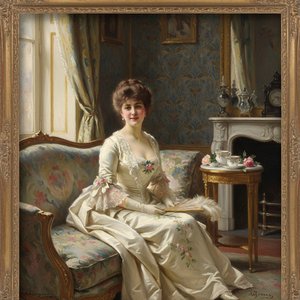
Alfred Stevens: Capturing Parisian Elegance & Fin-de-Siècle Intimacy
Discover the captivating world of Alfred Stevens, master of Parisian elegance & intimate portraiture. Explore his techniques, influences, and legacy – a prized collection for discerning art enthusiasts.

I 10 Capolavori del Realismo Romantico che hanno Incantato la Storia dell'Arte
Esplora l'emozione del Realismo Romantico attraverso 10 capolavori senza tempo. Scopri la storia di maestri come Constable e Friedrich e lasciati ispirare da opere iconiche per il tuo arredamento. Trova riproduzioni d'arte di qualità museale su OriginalUniqueArt.com.
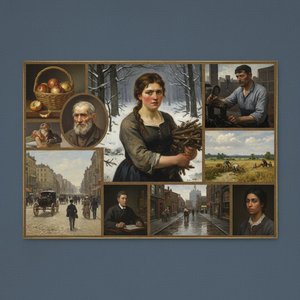
Realismo nell'Arte: I 10 Capolavori che Rivoluzionano la Percezione
Esplora i 10 capolavori del Realismo con OriginalUniqueArt.com! Da Courbet a Manet, scopri la storia e le tecniche di questi dipinti iconici. Trova riproduzioni d'arte di alta qualità per decorare casa tua. Scopri tutte le opere su OriginalUniqueArt.com