

 Anteprima in scala reale
 Condividi
 Condividi
 Dettagli
 Guida stampabile

 Scarica
 Articoli simili
 Radiografia
 Slideshow
 Statistiche
Renaissance Head


 Leggi tutto
Giclée / Stampe d'arte
Stampa giclée o su tela di qualità museale, con produzione rapida e diverse opzioni di finitura. ( Ordina la riproduzione dipinta a mano Passa all'immagine digitale)




































Scegli tra le nostre dimensioni predefinite, che rispettano le proporzioni originali dell'opera d'arte.

È possibile inserire dimensioni personalizzate per adattare l'opera a una cornice o a uno spazio specifico. Se la dimensione selezionata non corrisponde alle proporzioni dell'immagine originale, procederemo al ritaglio dell'opera o all'estensione dell'immagine con un bordo specchiato o a tinta unita. Un mockup digitale ti verrà inviato per approvazione prima dell'inizio della produzione.
Si prega di notare che l'anteprima a schermo non riflette il ritaglio o l'estensione effettivi. Solo il mockup mostrerà accuratamente la composizione finale.
Sebbene siano disponibili dimensioni personalizzate, si raccomanda di selezionare una dimensione dall'elenco predefinito per preservare le proporzioni originali.
Consegna in tutto il mondo () in 2 settimane invece delle normali 4/5 settimane. (26 Settembre)

Spedizione espressa gratuita in tutto il mondo

Tela in lino di alta qualità

Assicurazione completa sulla spedizione

Garanzia di rimborso dei dazi doganali

Garanzia di perfetta fedeltà cromatica

Politica di reso entro 100 giorni (solo per difetti di fabbricazione)

Garanzia di rimborso al 100%

Sconto per acquisti multipli
 L'opzione vetro è disponibile solo per dimensioni inferiori a 110 cm

Renaissance Head
Giclée / Stampe d'arte
Dimensioni della riproduzione
-


Prezzo totale
$ 80
The Renaissance Head: A Study in Emotion by Alexej von Jawlensky
This arresting portrait, tentatively dated 1913, offers a profound glimpse into the artistic vision of Alexej von Jawlensky – a figure profoundly ahead of his time. Far removed from the idealized beauty championed during the High Renaissance, this work embodies the raw emotional intensity that would come to define Expressionism. The image depicts a man’s face, partially obscured by a dark hat, rendered with an almost brutal directness. His eyes are closed, suggesting a state of deep contemplation or perhaps profound sorrow, while subtle makeup adds an element of theatricality and intrigue – a deliberate departure from naturalistic representation.
Jawlensky's masterful use of color is immediately striking. The dominant palette of black and blue creates a dramatic depth, punctuated by sharp contrasts that heighten the sense of drama and psychological tension. These colors weren’t chosen for their representational accuracy; instead, they were employed to evoke specific emotional responses – darkness hinting at hidden anxieties, blues suggesting melancholy or spiritual yearning. The deliberate lack of blending in his brushstrokes contributes to this effect, creating a textured surface that vibrates with energy.
A Portrait of the Zeitgeist: Jawlensky and the New Munich Circle
To fully appreciate “Renaissance Head,” it’s crucial to understand its context within the artistic landscape of early 20th-century Germany. Jawlensky was a central figure in the Neue Künstlervereinigung München (New Artist's Association), a group that actively challenged the conservative trends of the established art world. This circle, alongside figures like Kandinsky and Orphée, sought to express subjective experience through intensely personal artistic language – a reaction against the academic conventions dominating European art at the time. The influence of artists like Henri Matisse, with his bold use of color and simplified forms, is clearly evident in Jawlensky’s approach.
Furthermore, the subject himself, Alexander Sacharoff, was a key figure within Munich's avant-garde scene – a dancer known for his androgynous appearance and provocative performances. Jawlensky’s fascination with Sacharoff reflects a broader exploration of gender identity and human psychology that characterized much of Expressionist art. The portrait isn’t simply a likeness; it’s an investigation into the inner life of a complex individual.
Symbolism and Technique: A Masterclass in Restraint
Jawlensky's technique is defined by its remarkable restraint. He employed a limited palette, focusing on essential forms and avoiding superfluous detail. The strong outlines defining the man’s face are particularly significant – they create a sense of solidity and permanence, while simultaneously emphasizing the vulnerability inherent in the closed eyes. The use of particle board as a support, rather than traditional canvas, further contributes to the work's raw, almost sculptural quality.
Interestingly, research reveals that this particular piece, “Frauenkopf (Woman’s Head),” created around the same time, utilized Sacharoff as a model. This suggests a deliberate exploration of duality and perhaps a commentary on societal expectations surrounding gender roles – themes frequently explored by Jawlensky through his portraits. The painting's enduring power lies in its ability to evoke a profound sense of mystery and invite viewers to contemplate the complexities of human emotion.
Collecting this Masterpiece: A Reproduction for the Discerning Eye
OriginalUniqueArt offers meticulously hand-painted reproductions of Alexej von Jawlensky’s “Renaissance Head,” ensuring that you possess an authentic representation of this seminal work. Our skilled artisans replicate Jawlensky's distinctive style and color palette with exceptional accuracy, capturing the emotional intensity and technical brilliance of the original. This reproduction is more than just a print; it’s a tangible connection to one of the most important figures in 20th-century art – a piece that will undoubtedly enrich your collection and inspire contemplation for years to come.
Biografia dell'artista
Primi anni e formazione
Alexej von Jawlensky, nato Aleksej Georgievič Javlenskij il 25 marzo 1864 a Toržok, in Russia, fu un pittore russo naturalizzato tedesco, figura chiave dell'espressionismo tedesco. Proveniente da una famiglia di rigide tradizioni militari, la sua infanzia fu segnata da frequenti trasferimenti, stabilendosi infine a Mosca all’età di dieci anni. Dopo aver completato il servizio militare, sviluppò una forte passione per la pittura, frequentando l'Esposizione Mondiale di Mosca intorno al 1880. Grazie alle sue conoscenze sociali, ottenne un incarico a San Pietroburgo, dove studiò all'Accademia d'arte dal 1889 al 1896, conciliando lo studio con il servizio militare.Sviluppo artistico e influenze
Nel 1896, insieme a Marianne von Werefkin, si trasferì a Schwabing, il quartiere degli artisti di Monaco di Baviera, dove incontrò Vasilij Kandinskij e entrò a far parte della Neue Künstlervereinigung. Studiò sotto Anton Ažbe nella sua scuola privata. Le sue opere furono influenzate da Ferdinand Hodler, Jan Verkade e Paul Serusier, riflettendo i principi del nabismo e del sintetismo. Incontrò Marianne von Werefkin, una ricca artista che sostenne il suo lavoro fornendogli uno stile di vita confortevole.Stile e opere significative
- Il colore: Jawlensky si distinse per un uso personale del colore, steso a campiture larghe e piatte sulla scia di Matisse.
- Temi: Le sue opere esplorano temi come il ritratto, la natura morta e il paesaggio, spesso con una forte componente spirituale.
- Evoluzione stilistica: Il suo stile si evolse da composizioni ricche di colore a forme astratte e semplificate.
- Schokko con cappello rosso (1909)
- Ritratto di Alexander Sakharoff (1909)
- Turbante viola (1911)
- Teste mistiche: Meditazione (1912)
Il contributo al Blaue Reiter e l'eredità
Jawlensky fu un membro chiave del gruppo Der Blaue Reiter (Il Cavaliere Azzurro), fondato nel 1911 da Kandinskij e Franz Marc. Questo movimento artistico, che includeva anche Paul Klee e August Macke, promuoveva una nuova forma di espressione artistica basata sull'emozione e la spiritualità piuttosto che sulla rappresentazione realistica del mondo. Dopo essere stato espulso dalla Germania nel 1914, si trasferì in Svizzera, dove incontrò Emmy Scheyer, che promosse il suo lavoro negli Stati Uniti. La sua opera è oggi esposta in importanti musei di tutto il mondo, tra cui il Museum Ostwall a Dortmund e la Staedtische Galerie im Lenbachhaus a Monaco di Baviera. Morì a Wiesbaden, in Germania, il 15 marzo 1941. Il suo contributo all'espressionismo tedesco è riconosciuto come fondamentale per lo sviluppo dell'arte moderna.
Alexej von Jawlensky
1864 - 1941 , Russia
Informazioni rapide
- Artistic Movement Or Style: Espressionismo
- Artists Who Influenced This Artist:
- Ilya Repin
- Marianne von Werefkin
- Ferdinand Hodler
- Jan Verkade
- Paul Sérusier
- Date Of Birth: 13 marzo 1864
- Date Of Death: 1941
- Full Name: Alexej Georgewitsch von Jawlensky
- Nationality: Russo/Tedesco
- Notable Artworks:
- Testa Mistica: Meditazione
- Schokko con cappello rosso
- Ritratto di Alexander Sakharoff
- Turbante viola
- Place Of Birth (City And Country): Torzhok, Russia
Articoli correlati

Ivan Bilibin: A Synthesis of Folklore, Modernism & National Identity in Russian Illustration
Explore the enchanting world of Ivan Bilibin, a master Russian illustrator who synthesized folklore, Art Nouveau & national identity. Discover his iconic fairy tale illustrations and legacy with OriginalUniqueArt.
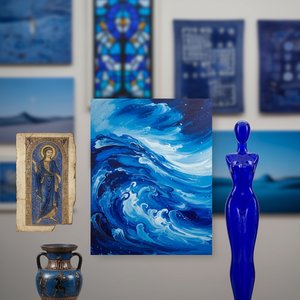
The Allure of Azure: Exploring the Symbolic & Aesthetic Depths of Blue in Art History
Explore the rich history of blue in art! Discover its symbolism, from ancient pigments to modern masterpieces by Kandinsky & Seurat. Uncover the psychological impact and cultural meanings behind this captivating hue.

I 10 Dipinti Più Famosi Dominati dal Nero: Maestri e Storie d'Arte
Esplora i 10 dipinti più iconici dominati dal nero, da Caravaggio a Munch. Scopri storie, tecniche e il potere espressivo di artisti come Rembrandt e Goya. Trova stampe d'arte di alta qualità per la tua casa su .

I 10 Dipinti Più Famosi Dominati dal Blu Ardesia: Storia, Arte e Decorazioni Raffinate
Esplora i 10 dipinti più iconici dominati dal blu ardesia! Scopri la storia, gli artisti e le tecniche dietro capolavori impressionisti e moderni. Trova riproduzioni artistiche di alta qualità per decorare casa con .

Serene Blue Backgrounds: Discover Soulful Art to Transform Your Space with Timeless Elegance
Transform your home with soulful blue art. From serene Monet impressions to modern textured sculptures, discover curated masterpieces designed to inspire calm. Explore expert art consultations and bespoke hand-painted reproductions to create your personal sanctuary.


