
 Anteprima in scala reale
 Invia
Invia Condividi
 Dettagli opera
 Guida
Guida

 Scarica
 Simili
 Radiografia
 Slideshow
 Domande e risposte
 Statistiche
Evening


 Espandi i dettagli
Giclée / Stampe d'arte
Stampa giclée o su tela di qualità museale, con produzione rapida e diverse opzioni di finitura. ( Acquista il dipinto realizzato a mano Passa all'immagine digitale)




P118B €10

P118H €10

P118W €10

P438Z €10

P508JH €12

P508YH €12

P805H €10

P805Z €10

P919BZ €10

P919G €10

P919XJ €10

P959ZH €10

P968JZ €12

W106C €8

W218G €10

W218JH €8

W218Y €10

W307PJ €10

W316G €10

W316PJ €8

W316Y €10

W398PJ €8

W4111J €10

W500HY €15

W500JH €15

W692G €12

W849H €8

W940BG €15

W953PJ €8




Scegli tra le nostre dimensioni predefinite, che rispettano le proporzioni originali dell'opera d'arte.

Inserisci la larghezza e l'altezza desiderate, per adattarle alla tua cornice o alla tua parete. Una stampa può essere solo ritagliata, mai resa più grande dell'immagine originale; pertanto, un formato con una forma differente comporterà la perdita di una parte dell'opera. Ti invieremo un mockup digitale da approvare prima di procedere con la stampa. L'immagine mostrata in questa pagina non rappresenta il ritaglio reale — solo il mockup lo mostra.
Consegna in tutto il mondo () in 2 settimane invece delle normali 4/5 settimane. (11 Novembre)

Spedizione espressa gratuita in tutto il mondo

Tela in lino di alta qualità

Assicurazione completa sulla spedizione

Garanzia di rimborso dei dazi doganali

Garanzia di fedeltà cromatica assoluta

Politica di reso entro 100 giorni (solo per difetti di fabbricazione)

Garanzia di rimborso al 100%

Offerta per acquisti multipli
 L'opzione vetro è disponibile solo per dimensioni inferiori a 110 cm

Evening
Giclée / Stampe d'arte
Dimensioni riproduzione
-


Prezzo finale calcolato
€ 73
Biografia dell'artista
Alexei Stepanov: A Pioneer of Impressionist Landscape Painting
Alexei Stepanovich Stepanov (1858 – 1923) stands as a significant figure in late nineteenth and early twentieth-century Russian art, particularly recognized for his contribution to the Peredvizhniki movement and his role as a formative teacher. Born into a noble family whose officers served valiantly during the Crimean War, Stepanov’s upbringing instilled within him a deep appreciation for observation and detail—qualities that would profoundly shape his artistic vision. Tragically orphaned at the tender age of six when his parents succumbed to illness, he was entrusted to the Moscow Orphanage for Children from Military Families, an institution founded by Count Razumovsky, providing him with a stable environment amidst challenging circumstances. His academic pursuits continued at Konstantin Surveying Institute where he honed his technical skills and secured a position as an official surveyor in 1879—a profession that would later inform his meticulous approach to landscape painting. From 1880 to 1883, Stepanov immersed himself in the teachings of Ilya Repin and Evgraf Sorokin at Moscow School of Painting, Sculpture and Architecture, fostering connections with fellow artists who would become lifelong collaborators. Notably, he befriended Leonid Sabaneyev, whose literary magazine Природа и охота showcased Stepanov’s artistic talent through over a hundred drawings between 1883 and 1895—a period marked by considerable stylistic experimentation. The pivotal moment in Stepanov's artistic trajectory arrived in 1888 when he joined the Peredvizhniki group, spearheaded by Repin and Vasily Surikov. This association propelled him into a vibrant artistic community dedicated to depicting Russian life with unflinching realism and capturing the beauty of the natural world. His painting “Moose Herd,” completed in that year, swiftly gained acclaim from Pavel Tretyakov—a testament to his ability to convey emotion through careful observation and masterful brushwork. Subsequently, Stepanov accepted an invitation to lecture at Moscow School of Fine Arts established by Anatoly Gunst, furthering his commitment to artistic education and nurturing the talents of future generations. He remained a professor until 1918, shaping the careers of artists like Sergey Gerasimov, Boris Ioganson, Pavel Korin, and Leonard Turzhansky—artists who would carry forward Stepanov’s legacy. A transformative journey to Europe in 1903 alongside Nikolai Medyntsev and his family exposed Stepanov to the influence of Impressionist painters such as Claude Monet and Pierre-Auguste Renoir. This experience solidified his stylistic preferences, emphasizing luminous color palettes and fleeting moments of light—characteristics that define many of his landscapes. His marriage to Medyntsev’s daughter, Lyudmila, provided him with a supportive home life allowing him to continue his artistic endeavors. Stepanov's enduring contribution to Russian art lies in his ability to synthesize realism with Impressionist aesthetics, resulting in evocative depictions of rural Russia that resonate with timeless beauty and convey profound emotional depth. He remains an important figure in the history of landscape painting and a symbol of Peredvizhniki’s dedication to portraying authentic life experiences.
Alexei Stepanov
1858 - 1923
Dettagli rapidi
- Artistic Movement Or Style: Peredvizhniki; Impressionism
- Artists Or Movements Influenced By This Artist: ['Impressionists']
- Artists Who Influenced This Artist:
- Illarion Pryanishnikov
- Evgraf Sorokin
- Date Of Birth: 1858
- Date Of Death: 1923
- Full Name: Alexei Stepanovich Stepanov
- Nationality: Russian
- Notable Artworks:
- Moose herd
- Morning greeti
- Place Of Birth: Moscow, Russia
Articoli correlati

I 10 Capolavori Impressionisti che Hanno Rivoluzionato il Paesaggio Pittorico
Esplora i 10 capolavori impressionisti che hanno rivoluzionato il paesaggio pittorico! Monet, Renoir e altri maestri catturati in stampe su tela di alta qualità. Trova l'arte perfetta per la tua casa su OriginalUniqueArt.com.

I 10 Capolavori Impressionisti che Hanno Rivoluzionato il Paesaggio Pittorico
Esplora i 10 capolavori impressionisti che hanno rivoluzionato il paesaggio pittorico! Monet, Renoir e altri maestri catturati in stampe su tela di alta qualità. Scopri la storia dell'arte e trova l'opera perfetta per arredare casa tua con OriginalUniqueArt.com.

I 25 capolavori di John Constable: l'essenza del paesaggio inglese
Scopri i 25 capolavori di John Constable e il Romanticismo inglese. Esplora la collezione su OriginalUniqueArt.com.
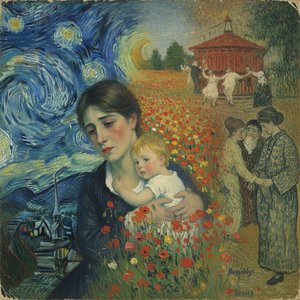
Capturing the Soul: The Most Emotionally Moving Impressionist and Post-Impressionist Masterpieces
Discover the profound emotional depth of Impressionist and Post-Impressionist masterpieces. Explore how legends like Monet, Van Gogh, and Gauguin captured light and soul through evocative landscapes and vibrant brushwork for a timeless connection to art history.

Cultivating Visions: A Historical Journey Through Rural Landscapes in Art
Explore the rich history of rural landscape painting with OriginalUniqueArt. Discover Impressionist masterpieces, key artists & movements. Find your perfect serene artwork and bring nature's beauty home.