 Anteprima in scala reale
 Invia
Invia Condividi
 Dettagli opera
 Guida
Guida

 Scarica
 Simili
 Radiografia
 Slideshow
 Q&A
Q&A Statistiche
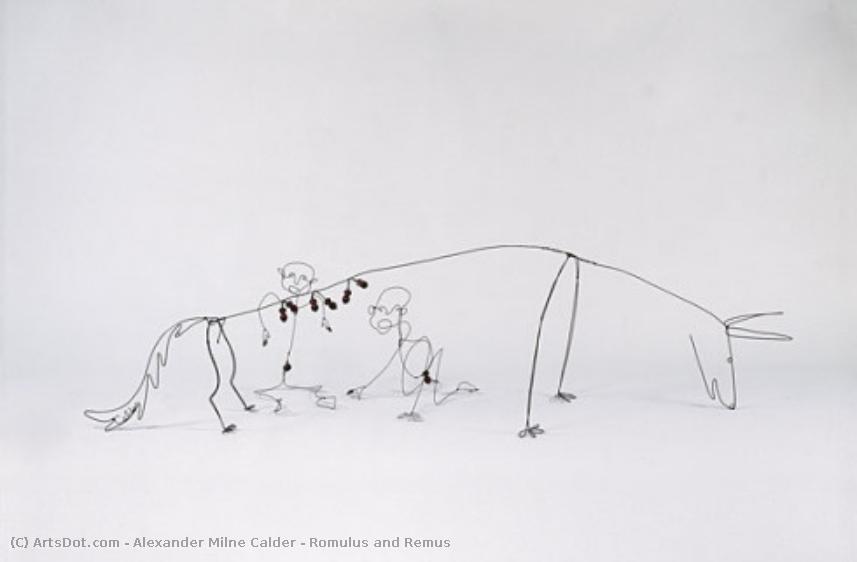
Romulus and Remus


 Espandi i dettagli
L'opera d'arte visualizzata in questa pagina è protetta dalle leggi sul diritto d'autore, il che significa che non possiamo legalmente creare o vendere una riproduzione identica. Tale protezione è garantita da accordi internazionali quali la Convenzione di Berna e dalle leggi nazionali, incluse quelle stabilite da Legge sul copyright degli Stati Uniti - Titolo 17. Tutti i diritti riservati. Le immagini presenti su questo sito sono protette da copyright e non possono essere riprodotte o utilizzate senza l'autorizzazione scritta di WahooArt.com o dei rispettivi proprietari del copyright.
Questo metodo è pienamente conforme alle normative sul diritto d'autore poiché non prevede la copia o la duplicazione dell'opera protetta. Si tratta invece di una rielaborazione creativa: un nuovo dipinto che trae ispirazione dall'originale, senza tuttavia esserne identico.
Giclée / Stampe d'arte
Stampa giclée o su tela di qualità museale, con produzione rapida e diverse opzioni di finitura. ( Acquista il dipinto realizzato a mano Passa all'immagine digitale)




P118B €10

P118H €10

P118W €10

P438Z €10

P508JH €12

P508YH €12

P805H €10

P805Z €10

P919BZ €10

P919G €10

P919XJ €10

P959ZH €10

P968JZ €12

W106C €8

W218G €10

W218JH €8

W218Y €10

W307PJ €10

W316G €10

W316PJ €8

W316Y €10

W398PJ €8

W4111J €10

W500HY €15

W500JH €15

W692G €12

W849H €8

W940BG €15

W953PJ €8




Scegli tra le nostre dimensioni predefinite, che rispettano le proporzioni originali dell'opera d'arte.

Inserisci la larghezza e l'altezza desiderate, per adattarle alla tua cornice o alla tua parete. Una stampa può essere solo ritagliata, mai resa più grande dell'immagine originale; pertanto, un formato con una forma differente comporterà la perdita di una parte dell'opera. Ti invieremo un mockup digitale da approvare prima di procedere con la stampa. L'immagine mostrata in questa pagina non rappresenta il ritaglio reale — solo il mockup lo mostra.
Consegna in tutto il mondo () in 2 settimane invece delle normali 4/5 settimane. (3 Novembre)

Spedizione espressa gratuita in tutto il mondo

Tela in lino di alta qualità

Assicurazione completa sulla spedizione

Garanzia di rimborso dei dazi doganali

Garanzia di fedeltà cromatica assoluta

Politica di reso entro 100 giorni (solo per difetti di fabbricazione)

Garanzia di rimborso al 100%

Offerta per acquisti multipli
 L'opzione vetro è disponibile solo per dimensioni inferiori a 110 cm

Romulus and Remus
Giclée / Stampe d'arte
Dimensioni riproduzione
-


Prezzo finale calcolato
€ 71
A Moment Frozen in Steel: Exploring Calder’s “Romulus and Remus”
Alexander Milne Calder's "Romulus and Remus," crafted in 1928, isn’t merely a sculpture; it’s a distilled essence of myth rendered in delicate wire. This piece, a testament to the artist’s pioneering approach to three-dimensional form, transcends its subject matter – the legendary founders of Rome – to become a profound meditation on beginnings, brotherhood, and the very act of creation itself. Calder, deeply influenced by Constructivism and early Modernism, sought to liberate sculpture from the constraints of traditional materials, embracing the inherent qualities of industrial wire as both medium and metaphor.
The sculpture’s stark simplicity is its most arresting feature. Two figures, rendered with astonishing grace despite their skeletal construction, stand beneath a subtly arching structure that evokes a horizon line or perhaps a stylized landscape. The color palette – a resolute black and white punctuated by subtle grays – amplifies the work's austerity, forcing the viewer to focus entirely on form and movement. The lines themselves are paramount; thin, almost impossibly delicate wires define every contour, creating an illusion of both fragility and strength. This deliberate reductionist approach mirrors Calder’s broader philosophy: to strip away the superfluous and reveal the fundamental elements of a subject.
The Poetics of Chance and Kinetic Form
Calder's work in this period – particularly his “Cirque Calder” series – exemplifies his fascination with chance and spontaneity. He didn’t meticulously plan every curve or angle; instead, he allowed the wire to guide him, embracing the unpredictable nature of the material. This process is vividly captured in "Romulus and Remus," where the figures appear to be caught mid-action, poised on the precipice of a narrative yet undefined. The slight wobble inherent in the sculpture’s construction – a subtle consequence of its wire composition – hints at a kinetic energy, suggesting that even stillness can hold a dynamic potential.
The technique itself is deceptively complex. Calder skillfully bent and assembled hundreds of individual wires, creating a surprisingly robust structure despite its delicate appearance. The varying thicknesses of the wire contribute to the sculpture’s textural richness, offering subtle shifts in sheen as light catches the metal. This careful manipulation of material speaks to Calder's mastery of his chosen medium – a testament to his ability to transform industrial components into objects of profound beauty and intellectual resonance.
Myth, Brotherhood, and the Dawn of Rome
The subject matter—the story of Romulus and Remus—is deeply rooted in Roman mythology. The legend of the twins suckled by a she-wolf is an enduring symbol of resilience, survival, and the founding of civilization. Calder’s sculpture doesn't simply depict this narrative; it captures its essence – the primal struggle for existence, the bond between brothers, and the birth of a new order. The wire itself can be interpreted as representing the threads that connect us to our past, shaping our present and influencing our future.
Created in 1928, “Romulus and Remus” stands as a pivotal work in Calder’s oeuvre, marking a significant shift towards abstraction while retaining a powerful connection to his artistic roots. It's a sculpture that invites contemplation, prompting viewers to consider the interplay of form, material, and narrative – a timeless meditation on the foundations of human experience.
Domande e risposte
"Romulus and Remus" di Alexander Milne Calder si trova nel paese d'origine dell'artista?
No - l'opera si trova all'estero. Il paese di nascita di Alexander Milne Calder è Regno Unito, mentre il museo che custodisce l'originale di "Romulus and Remus" si trova in Stati Uniti d'America.
Chi è l'autore e in che anno è stata realizzata "Romulus and Remus"?
L'autore di "Romulus and Remus" è Alexander Milne Calder e l'opera risale al 1928.
Dove posso trovare le statistiche relative a "Romulus and Remus" di Alexander Milne Calder?
La pagina Statistiche di "Romulus and Remus" di Alexander Milne Calder presenta le statistiche delle visite pubbliche: il numero di visite mensili di quest'opera, un confronto con le opere dell'artista più visualizzate e la provenienza dei visitatori.
Biografia dell'artista
Introduzione ad Alexander Milne Calder
Alexander Milne Calder era uno scultore scozzese-americano nato ad Aberdeen, in Scozia, nel 1846. È noto soprattutto per le sue sculture architettoniche del Philadelphia City Hall e sia suo figlio, Alexander Stirling Calder, che suo nipote, Alexander 'Sandy' Calder, divennero scultori importanti nel XX secolo.Primi anni e carriera
Alexander Milne Calder iniziò la sua carriera in Scozia, lavorando per lo scultore John Rhind mentre frequentava la Royal Academy di Edimburgo. Si trasferì a Londra e lavorò al Albert Memorial. Calder immigrò negli Stati Uniti nel 1868 e si stabilì a Philadelphia, dove studiò con Joseph A. Bailly e frequentò lezioni con Thomas Eakins alla Pennsylvania Academy of Fine Arts.Opere significative
Alcune delle opere più importanti di Alexander Milne Calder includono:- Philadelphia City Hall: un incarico che comprendeva più di 250 pezzi in marmo e bronzo, impiegando Calder per 20 anni per completarlo.
- William Penn: una colossale statua in bronzo destinata a coronare la torre del municipio.
- Figura indiana: una scultura antecedente alla sua installazione sul municipio.
- Portale sud e Portale ovest: illuminate con luci colorate, che mostrano l'attenzione di Calder per i dettagli.
Evoluzione artistica e influenze
Lo stile di Calder è fortemente legato all'architettura monumentale del XIX secolo, in particolare al movimento Beaux-Arts. La sua formazione presso la Pennsylvania Academy of Fine Arts sotto Eakins lo influenzò nella sua abilità tecnica e nel suo approccio realistico alla scultura. Tuttavia, il suo lavoro si distingue per l'uso innovativo di materiali come marmo e bronzo su larga scala, creando opere che integrano perfettamente architettura e arte. L’influenza del movimento Arts and Crafts è evidente nell'attenzione ai dettagli artigianali e nella funzionalità delle sue sculture.Eredità e significato storico
L'eredità di Alexander Milne Calder si estende oltre il suo lavoro stesso, poiché sia suo figlio che suo nipote divennero scultori di spicco. Le sue opere monumentali a Philadelphia City Hall sono un esempio significativo dell'arte pubblica americana del XIX secolo e testimoniano la sua capacità di creare opere d'arte su larga scala che integrano architettura e design urbano. Il suo contributo al mondo dell'arte può essere visto in vari musei, tra cui lo Smithsonian American Art Museum e la Galleria Civica d'Arte Moderna e Contemporanea di Torino. Per saperne di più su Alexander Milne Calder e il suo lavoro, visita https://OriginalUniqueArt.com/@/alexander-milne-calder o esplora la cronologia dell'arte Wahoo per una panoramica dettagliata della storia dell'arte. È importante notare che il lavoro di Alexander Milne Calder è stato riconosciuto e apprezzato da appassionati d'arte e studiosi, rendendolo una figura significativa nel mondo dell'arte. I suoi contributi continueranno ad essere celebrati e studiati per le generazioni a venire.
Alexander Milne Calder
1898 - 1976 , Regno Unito
Dettagli rapidi
- Artistic Movement Or Style: Beaux-Arts, Architettonico
- Artists Or Movements Influenced By This Artist:
- Alexander Stirling Calder
- Alexander 'Sandy' Calder
- Artists Who Influenced This Artist: ['John Rhind']
- Date Of Birth: 23 agosto 1846
- Date Of Death: 4 giugno 1923
- Full Name: Alexander Milne Calder
- Nationality: Scozzese-Americano
- Notable Artworks:
- Philadelphia City Hall
- William Penn (statua)
- Figura Indiana
- Portale Sud e Ovest
- Place Of Birth (City And Country): Aberdeen, Regno Unito
Articoli correlati

I 10 Capolavori in Bronzo che Hanno Rivoluzionato la Storia dell'Arte | OriginalUniqueArt
Esplora i 10 capolavori in bronzo che hanno segnato la storia dell'arte! Da Michelangelo a Rodin, scopri le storie e le tecniche dietro queste statue iconiche. Trova riproduzioni artistiche di alta qualità per decorare casa tua con OriginalUniqueArt.com.
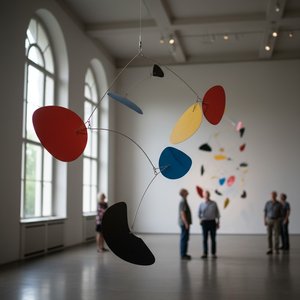
Alexander Calder: Scultura Cinetica, Arte Mobile e la Poetica del Caso – Un’Esplorazione
Esplora l'universo di Alexander Calder: dalle origini ingegneristiche alla rivoluzionaria scultura cinetica e mobile. Approfondimenti sulla poetica del caso e l'eredità artistica di un maestro del modernismo.

The Enduring Form: Exploring Themes & Techniques in Sculpture Across Historical Periods
Explore the rich history of sculpture from ancient masterpieces to contemporary innovations. Discover key techniques, influential artists & investment potential for discerning art collectors.

L'Architettura del Volume: Evoluzione Tecnica e Valore Storico della Scultura
Scopri l'evoluzione tecnica della scultura tra marmo e bronzo. Esplora la storia delle forme con i nostri esperti.

I 10 Capolavori Bronzei che Hanno Rivoluzionato la Storia dell'Arte | OriginalUniqueArt
Esplora i 10 capolavori bronzei che hanno segnato la storia dell'arte! Da Rodin a Michelangelo, scopri le storie e le tecniche dietro queste sculture iconiche. Trova riproduzioni d'arte di alta qualità per decorare la tua casa con OriginalUniqueArt.com.


