
 Anteprima in scala reale
 Invia
Invia Condividi
 Dettagli opera
 Guida
Guida

 Scarica
 Simili
 Radiografia
 Slideshow
 Domande e risposte
 Statistiche
Triumphal Arch (detail)


 Espandi i dettagli
Giclée / Stampe d'arte
Stampa giclée o su tela di qualità museale, con produzione rapida e diverse opzioni di finitura. ( Acquista il dipinto realizzato a mano Passa all'immagine digitale)




P118B €10

P118H €10

P118W €10

P438Z €10

P508JH €12

P508YH €12

P805H €10

P805Z €10

P919BZ €10

P919G €10

P919XJ €10

P959ZH €10

P968JZ €12

W106C €8

W218G €10

W218JH €8

W218Y €10

W307PJ €10

W316G €10

W316PJ €8

W316Y €10

W398PJ €8

W4111J €10

W500HY €15

W500JH €15

W692G €12

W849H €8

W940BG €15

W953PJ €8




Scegli tra le nostre dimensioni predefinite, che rispettano le proporzioni originali dell'opera d'arte.

Inserisci la larghezza e l'altezza desiderate, per adattarle alla tua cornice o alla tua parete. Una stampa può essere solo ritagliata, mai resa più grande dell'immagine originale; pertanto, un formato con una forma differente comporterà la perdita di una parte dell'opera. Ti invieremo un mockup digitale da approvare prima di procedere con la stampa. L'immagine mostrata in questa pagina non rappresenta il ritaglio reale — solo il mockup lo mostra.
Consegna in tutto il mondo () in 2 settimane invece delle normali 4/5 settimane. (7 Novembre)

Spedizione espressa gratuita in tutto il mondo

Tela in lino di alta qualità

Assicurazione completa sulla spedizione

Garanzia di rimborso dei dazi doganali

Garanzia di fedeltà cromatica assoluta

Politica di reso entro 100 giorni (solo per difetti di fabbricazione)

Garanzia di rimborso al 100%

Offerta per acquisti multipli
 L'opzione vetro è disponibile solo per dimensioni inferiori a 110 cm

Triumphal Arch (detail)
Giclée / Stampe d'arte
Dimensioni riproduzione
-


Prezzo finale calcolato
€ 72
A Window into Renaissance Grandeur: Decoding Albrecht Dürer’s “Triumphal Arch”
Albrecht Dürer's "Triumphal Arch," a monumental woodcut print completed in 1515, stands as an unparalleled testament to the artistic fervor of the German Renaissance. More than just a decorative image—it’s a meticulously crafted symbol laden with historical references and imbued with profound emotional resonance. Examining this masterpiece reveals not only Dürer's mastery of engraving technique but also his deep engagement with humanist ideals and the visual language of heraldry, offering invaluable insight into the intellectual currents shaping Europe at the time.The Anatomy of Symbolism: Eagles, Lions, and Banner Text
At first glance, “Triumphal Arch” presents a breathtaking panorama of architectural grandeur—a stylized representation of Maximilian I’s archway commemorating his victory over Bohemia and Hungary. However, beneath this surface lies a complex tapestry of symbolic elements designed to convey specific meanings. Dominating the composition is an eagle, perched atop the arch, representing imperial authority and divine providence – a motif frequently employed in heraldic imagery to assert royal prestige. Below it are lions, symbolizing courage and vigilance, flanking the archway, reinforcing themes of strength and protection. Crucially, banners bearing Latin inscriptions (“Halt!”) proclaim victory and command attention, anchoring the image within its historical context as a celebration of imperial triumph.Engraving Technique: Hatching and Cross-hatching – Capturing Texture and Depth
Dürer’s genius lies not merely in his conceptual vision but also in his unparalleled execution—specifically, his masterful use of engraving technique. The printmaker meticulously incised lines into a copper plate using specialized tools, creating an image that is remarkably detailed despite its monochrome palette. The artist skillfully employed hatching and cross-hatching to simulate textures – the smooth plumage of the eagle’s feathers, the rough fur of the lions' coats, and the intricate ornamentation of the architectural elements—creating a palpable sense of three-dimensional space. This technique demanded immense precision and patience, reflecting Dürer’s unwavering commitment to realism within an idealized framework.Renaissance Ideals Embodied: Proportion and Hierarchy
“Triumphal Arch” exemplifies the Renaissance preoccupation with classical ideals of proportion and hierarchy—concepts championed by artists like Leonardo da Vinci and Michelangelo. The composition adheres to a strict pyramidal structure, guiding the viewer’s eye upwards towards the eagle, establishing a visual hierarchy that underscores its importance as a symbol of imperial power. Furthermore, Dürer's meticulous attention to detail—evident in every line and pattern—mirrors the humanist belief in observing and understanding the natural world with scientific rigor. This careful rendering contributes to the overall impression of dignified grandeur and intellectual contemplation.A Legacy of Artistic Innovation: Influence Beyond Its Time
Albrecht Dürer’s “Triumphal Arch” transcends its immediate historical context, securing its place as a cornerstone of Renaissance art history and inspiring generations of artists to come. His innovative engraving technique—particularly his pioneering use of hatching and cross-hatching—established new standards for textural representation and profoundly impacted printmaking practice. Moreover, the image’s symbolic richness continues to resonate today, serving as a powerful reminder of the enduring power of visual storytelling and the ability of art to convey complex ideas about power, virtue, and human achievement. Its meticulous detail and masterful composition remain an exemplar of Renaissance artistic excellence.Domande e risposte
Qual è la luminosità di "Triumphal Arch (detail)" di Albrecht Dürer?
La luminanza rilevata per "Triumphal Arch (detail)" di Albrecht Dürer è Luminous.
A quale fase della carriera di Albrecht Dürer corrisponde la data del 1515 di "Triumphal Arch (detail)"?
Data la sua datazione al 1515, "Triumphal Arch (detail)" rientra nel Mature Renaissance di Albrecht Dürer.
"Triumphal Arch (detail)" di Albrecht Dürer è di pubblico dominio?
Per quanto riguarda il copyright, "Triumphal Arch (detail)" è di pubblico dominio - il copyright è scaduto.
Biografia dell'artista
Albrecht Dürer: Vita e Eredità
Primi Anni di Vita e Formazione
Albrecht Dürer, una figura dominante del Rinascimento tedesco, nacque il 21 maggio 1471 a Norimberga, in Germania. Suo padre, Albrecht Dürer il Vecchio, era un orefice di successo, ed è all'interno di questo ambiente artistico che l'inclino verso l'arte cominciò a fiorire. A tredici anni, iniziò la sua apprendistato con Michael Wolgemut, un artista leader a Norimberga, acquisendo competenze fondamentali in pittura, disegno e tecniche di xilografia. Un autoritratto creato nel 1484, conservato all'Albertina di Vienna, fornisce prove notevoli del suo talento precoce.
Ascesa alla Promozione e Sviluppo Artistico
Entro i suoi vent’anni, Dürer si era affermato come maestro incisore, ottenendo riconoscimento in tutta Europa. Intraprese viaggi in Italia, dove incontrò le opere dei maestri rinascimentali come Raffaello, Giovanni Bellini e Leonardo da Vinci. Queste interazioni hanno profondamente influenzato il suo stile artistico, portandolo a integrare motivi e tecniche classiche nel suo estetica nordica.
Opere Chiave e Stile Artistico
L'opera di Dürer comprende una vasta gamma di media, tra cui dipinti, incisioni, xilografie e scritti teorici. Alcune delle sue opere più celebrate includono:
- La Serie dell’Apocalisse (1498): Una collezione di quattordici xilografie che illustrano il Libro Apocalittico, mostrando la sua abilità in questo mezzo nonostante i suoi elementi stilistici gotici.
- Melencolia I (1514): Forse la sua incisione più enigmatica, Melencolia I continua ad essere un soggetto di intenso studio e interpretazione accademica.
- San Geremia nello Studio (1514): Un'abile incisione che dimostra il comando eccezionale di Dürer della prospettiva, del dettaglio e della rappresentazione simbolica.
Lo stile di Dürer è caratterizzato da un realismo meticoloso, da una precisa disegno e da una profonda comprensione dell'anatomia e della prospettiva. Era anche un pioniere nell'uso dell'acquario come mezzo indipendente.
Contributi Teorici
Oltre alla sua pratica artistica, Dürer ha apportato contributi significativi alla teoria dell’arte. Ha scritto diversi trattati sulla geometria, la proporzione e l’anatomia umana, tra cui Quattro Libri della Proporzione Umana (1528). Questi scritti dimostrano la sua convinzione nelle fondamenta matematiche dell'arte e il suo impegno per stabilire un approccio scientifico alla creazione artistica.
Eredità e Significato Storico
L’impatto di Albrecht Dürer sul mondo dell’arte è innegabile. Ha colmato il divario tra le tradizioni europee del nord e gli ideali del Rinascimento italiano, introducendo motivi classici nell'arte del nord mantenendo al contempo il suo carattere distintivo. I suoi trattati teorici hanno contribuito ad elevare lo status degli artisti e a stabilire un nuovo quadro intellettuale per la pratica artistica. Rimane una figura fondamentale nella storia dell’arte, ispirando generazioni di artisti con la sua abilità tecnica, lo spirito innovativo e la visione profonda.
Influenze
- Michael Wolgemut
- Leonardo da Vinci
- Raffaello
- Giovanni Bellini
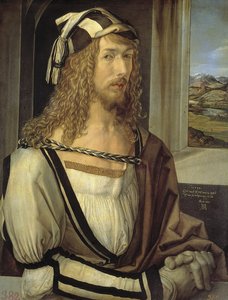
Albrecht Dürer
1471 - 1528 , Italia
Dettagli rapidi
- Artisti Influenti:
- Michael Wolgemut
- Raffaello
- Giovanni Bellini
- Leonardo da Vinci
- Data Di Nascita: 21 maggio 1471
- Luogo Di Nascita: Norimberga, Italia
- Movimento Artistico: Rinascimento tedesco
- Nazionalità: Tedesca
- Nome Completo: Albrecht Dürer
- Opere Notevoli:
- Serie dell’Apocalisse
- Melencolia I
- San Geremia nello studio
Articoli correlati

Albrecht Dürer: Innovazione Rinascimentale tra Arte, Scienza e l'Introspezione dell'Autoritratto
Esplora la vita e le opere di Albrecht Dürer, genio del Rinascimento tedesco. Analisi approfondite su xilografie, autoritratti e l'innovativo connubio tra arte, scienza e spiritualità. Scopri l'eredità di questo maestro.
German Renaissance Unlocked: The Bold Precision and Iconic Mastery of Albrecht Dürer Reimagined
Discover the bold precision of the German Renaissance. Explore the legendary mastery of Albrecht Dürer through expert art history insights and premium, hand-painted reproductions designed to bring iconic Northern Renaissance detail into your modern collection.
I 25 Capolavori di Albrecht Dürer: Il Genio del Rinascimento
Scopri i 25 capolavori di Albrecht Dürer e il genio del Rinascimento. Esplora la collezione su OriginalUniqueArt.com.

25 Capolavori da non perdere al British Museum di Londra
Scopri i 25 capolavori del British Museum, da Michelangelo a Da Vinci. Esplora la collezione su OriginalUniqueArt.com.

I 10 Capolavori dell'Incisione che Hanno Rivoluzionato l'Arte | OriginalUniqueArt
Esplora i 10 capolavori dell'incisione che hanno segnato la storia dell'arte! Dürer, Rembrandt, Goya e altri maestri. Scopri tecniche uniche e storie affascinanti. Stampe d'arte di alta qualità per decorare casa con stile su OriginalUniqueArt.com


