
 Anteprima in scala reale
 Invia
Invia Condividi
 Dettagli opera
 Guida
Guida

 Scarica
 Simili
 Radiografia
 Slideshow
 Q&A
Q&A Statistiche
The Lone Scout


 Espandi i dettagli
Giclée / Stampe d'arte
Stampa giclée o su tela di qualità museale, con produzione rapida e diverse opzioni di finitura. ( Acquista il dipinto realizzato a mano Passa all'immagine digitale)




P118B €10

P118H €10

P118W €10

P438Z €10

P508JH €12

P508YH €12

P805H €10

P805Z €10

P919BZ €10

P919G €10

P919XJ €10

P959ZH €10

P968JZ €12

W106C €8

W218G €10

W218JH €8

W218Y €10

W307PJ €10

W316G €10

W316PJ €8

W316Y €10

W398PJ €8

W4111J €10

W500HY €15

W500JH €15

W692G €12

W849H €8

W940BG €15

W953PJ €8




Scegli tra le nostre dimensioni predefinite, che rispettano le proporzioni originali dell'opera d'arte.

Inserisci la larghezza e l'altezza desiderate, per adattarle alla tua cornice o alla tua parete. Una stampa può essere solo ritagliata, mai resa più grande dell'immagine originale; pertanto, un formato con una forma differente comporterà la perdita di una parte dell'opera. Ti invieremo un mockup digitale da approvare prima di procedere con la stampa. L'immagine mostrata in questa pagina non rappresenta il ritaglio reale — solo il mockup lo mostra.
Consegna in tutto il mondo () in 2 settimane invece delle normali 4/5 settimane. (1 Novembre)

Spedizione espressa gratuita in tutto il mondo

Tela in lino di alta qualità

Assicurazione completa sulla spedizione

Garanzia di rimborso dei dazi doganali

Garanzia di fedeltà cromatica assoluta

Politica di reso entro 100 giorni (solo per difetti di fabbricazione)

Garanzia di rimborso al 100%

Offerta per acquisti multipli
 L'opzione vetro è disponibile solo per dimensioni inferiori a 110 cm

The Lone Scout
Giclée / Stampe d'arte
Dimensioni riproduzione
-


Prezzo finale calcolato
€ 71
The Lone Scout: A Vision of American Symbolism
Albert Pinkham Ryder’s “The Lone Scout,” painted in 1885, is more than just a depiction of a rider on horseback; it's a deeply resonant exploration of solitude, discovery, and the untamed spirit of the American West. Housed within the Fine Arts Museums of San Francisco, this oil-on-canvas masterpiece stands as a pivotal work in Ryder’s oeuvre and a significant example of American Symbolism and Tonalism – movements that sought to capture not just visual reality but also emotional atmosphere and subjective experience.
Ryder, born in New Bedford, Massachusetts, possessed an intensely private and often eccentric personality. His early life was steeped in the maritime traditions of his hometown, a landscape of rugged coastlines and bustling harbors that undoubtedly informed his artistic sensibilities. However, it was his relocation to New York City in the late 1860s, amidst his brother’s burgeoning hotel business, that provided him with access to a vibrant cultural scene – an exposure that would profoundly shape his artistic development. Influenced by the Barbizon School in France and the Hague School in Holland, Ryder developed a distinctive style characterized by bold colors, expressive brushstrokes, and a masterful manipulation of light and shadow. “The Lone Scout” exemplifies this approach, eschewing photographic realism in favor of an evocative portrayal of mood and feeling.
A Landscape of Dreams: Composition and Technique
The painting’s composition immediately draws the viewer into its dreamlike quality. A solitary figure, clad in a dark coat and turban-like head covering, dominates the left side of the frame, perched atop a powerful horse that surges forward across an expansive, undulating landscape. The background is dominated by a vast, turbulent sky – a swirling vortex of blues, grays, and hints of violet – suggesting both immensity and impending change. Ryder’s technique is particularly noteworthy; he employs loose, gestural brushstrokes to create a sense of movement and dynamism, while simultaneously utilizing tonal variations to establish depth and atmosphere. The colors are rich and saturated, yet subtly muted, contributing to the painting's overall mood of quiet contemplation.
Ryder’s use of light is particularly striking. It isn’t a bright, direct illumination but rather a diffused glow that seems to emanate from an unseen source, casting long shadows and highlighting key elements within the composition. This technique creates a sense of mystery and invites the viewer to actively participate in interpreting the scene.
Symbolism and Narrative
“The Lone Scout” is rich with symbolic meaning. The solitary figure on horseback represents exploration, both physical and spiritual – a journey into the unknown. The vast landscape symbolizes the challenges and opportunities of the American frontier, while the turbulent sky hints at the unpredictable nature of life itself. Some art historians interpret the scout as an allegory for the pioneer spirit, embodying the courage and resilience required to forge a new path in a challenging environment. Ryder himself often imbued his paintings with personal symbolism, drawing inspiration from literature, mythology, and his own emotional experiences.
Interestingly, “The Lone Scout” was created during a period of significant social and cultural change in America – the late 19th century, a time marked by westward expansion, industrialization, and increasing urbanization. Ryder’s painting can be seen as a reflection of these broader societal trends, capturing both the allure and the anxieties associated with this era of transformation.
A Legacy of Mystique
Albert Pinkham Ryder remains one of America's most enigmatic and beloved artists. “The Lone Scout” stands as a testament to his unique vision and artistic genius – a painting that continues to captivate viewers with its evocative atmosphere, symbolic depth, and masterful technique. Reproductions of this iconic work offer an accessible way to experience the power and beauty of Ryder’s art, bringing a touch of American Symbolism into any space. For those seeking to delve deeper into Ryder's life and work, resources such as Wikipedia and OriginalUniqueArt.com provide valuable insights into his artistic journey.
Domande e risposte
Qual è il formato di stampa consigliato per "The Lone Scout" – che dimensioni e quale orientamento?
Per "The Lone Scout", la configurazione di stampa consigliata è un formato Medium con orientamento Portrait.
"The Lone Scout" di Albert Pinkham Ryder è un ritratto, un paesaggio o una composizione quadrata?
"The Lone Scout" di Albert Pinkham Ryder ha un formato Portrait. Il formato descrive le proporzioni della composizione.
È possibile riprodurre legalmente l'opera "The Lone Scout" di Albert Pinkham Ryder, conservata presso Musei di Belle Arti di San Francisco?
L'originale "The Lone Scout" si trova presso Musei di Belle Arti di San Francisco e l'opera è di pubblico dominio - il copyright è scaduto.
Biografia dell'artista
Primi anni e formazione
Albert Pinkham Ryder, pittore statunitense, nacque il 19 marzo 1847 a New Bedford, Massachusetts. I suoi primi anni sono avvolti nel mistero, ma si sa che iniziò a dipingere paesaggi fin da giovane. Nel 1867 o 1868, la famiglia Ryder si trasferì a New York City, dove il fratello di Albert gestiva l'Hotel Albert, un punto di riferimento del Greenwich Village.Sviluppo artistico e influenze
La prima formazione artistica di Ryder avvenne con il pittore William Edgar Marshall a New York. Dal 1870 al 1873 e poi dal 1874 al 1875, studiò alla National Academy of Design, dove espose il suo primo dipinto nel 1873 e conobbe l'artista Julian Alden Weir, che divenne un amico per tutta la vita. Nel 1877, Ryder intraprese il primo dei suoi quattro viaggi in Europa, studiando la scuola barbizon francese e la scuola dell'Aia olandese, esperienze che influenzarono profondamente il suo lavoro.Stile artistico e opere notevoli
Lo stile distintivo di Ryder è caratterizzato da forme ampie, a volte indistinte, o figure stilizzate immerse in un paesaggio onirico o marino. Le sue scene sono spesso illuminate da una luce solare fioca o da una luna splendente che filtra attraverso nuvole inquietanti. Tra le opere notevoli si annovera *Misty Moonlight* (Crystal Bridges Museum of American Art, Bentonville, Stati Uniti), ispirata ai ricordi della sua infanzia sulla costa di New Bedford, Massachusetts.Gli ultimi anni e l'eredità
Dopo il 1900, la creatività di Ryder diminuì drasticamente. Trascorse il resto della sua vita a rivedere dipinti esistenti, morendo il 28 marzo 1917. Una mostra commemorativa del suo lavoro fu tenuta al Metropolitan Museum of Art di New York nel 1918. Nonostante il passare del tempo, la reputazione artistica di Ryder è rimasta intatta grazie al suo stile unico e lungimirante.- Visualizza le opere di Albert Pinkham Ryder su OriginalUniqueArt
- Acquista riproduzioni d'arte museale di dipinti famosi
- Esplora la Cape Ann Historical Association (Stati Uniti) e la sua collezione d'arte su OriginalUniqueArt

Albert Pinkham Ryder
1847 - 1917 , Stati Uniti d'America
Dettagli rapidi
- Artisti Influenti:
- Barbizon School
- Hague School
- Artisti Influenzati: ['Jackson Pollock']
- Data Di Nascita: 19 marzo 1847
- Luogo Di Nascita: New Bedford, USA
- Movimento Artistico: Tonalismo e Simbolismo
- Nazionalità: Americana
- Nome Completo: Albert Pinkham Ryder
- Opere Notevoli: ['Misty Moonlight']
Articoli correlati

Realismo Americano: 10 Capolavori che Hanno Definito un'Epoca | OriginalUniqueArt
Esplora i 10 capolavori del Realismo Americano con OriginalUniqueArt. Scopri Andrew Wyeth, Edward Hopper e George Bellows. Quadri iconici, storie uniche e riproduzioni di alta qualità per la tua casa. Esplora la collezione online!

Albert Bierstadt: Luce, Paesaggio e l'Ideale Americano – Un Viaggio nell'Epica della Frontiera
Esplora l'arte di Albert Bierstadt, il pittore che ha immortalato la bellezza del West americano. Analisi approfondita della sua tecnica, stile e impatto sulla storia dell'arte.

Grant Wood e il Regionalismo Americano: Identità, Mito e Paesaggio Rurale
Esplora il Regionalismo Americano con Grant Wood e i suoi capolavori. Analisi approfondita di 'American Gothic', contesto storico, influenze artistiche e l'eredità di questo movimento iconico. Scopri la vera essenza dell'arte rurale americana.
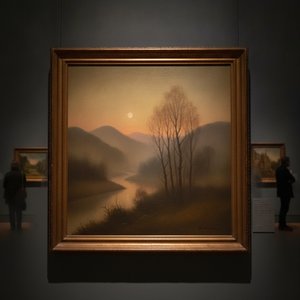
Tonalism Explained: The Art of Mood, Mist, and Masterful Color in Landscape Painting
Discover the evocative world of Tonalism. Explore how masters like Whistler and Tryon used mist, shadow, and subtle color to capture profound mood and atmosphere in landscape art. An expert guide for fine art enthusiasts and collectors.
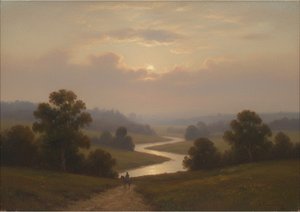
Atmospheric Visions: Exploring Tonalism in American Painting
Explore the captivating world of American Tonalism! Discover its history, key artists like Whistler & Inness, techniques, and lasting influence on art. Expert insights for collectors & enthusiasts.


