Anteprima in scala reale
 Condividi
 Condividi
 Dettagli
 Guida stampabile

 Scarica
 Articoli simili
 Radiografia
 Slideshow
 Statistiche
Evening Peace


 Leggi tutto
Giclée / Stampe d'arte
Stampa giclée o su tela di qualità museale, con produzione rapida e diverse opzioni di finitura. ( Ordina la riproduzione dipinta a mano Passa all'immagine digitale)




P118B $10

P118H $10

P118W $10

P438Z $10

P508JH $12

P508YH $12

P805H $10

P805Z $10

P919BZ $10

P919G $10

P919XJ $10

P959ZH $10

P968JZ $12

W106C $8

W218G $10

W218JH $8

W218Y $10

W307PJ $10

W316G $10

W316PJ $8

W316Y $10

W398PJ $8

W4111J $10

W500HY $15

W500JH $15

W692G $12

W849H $8

W940BG $15

W953PJ $8




Scegli tra le nostre dimensioni predefinite, che rispettano le proporzioni originali dell'opera d'arte.

È possibile inserire dimensioni personalizzate per adattare l'opera a una cornice o a uno spazio specifico. Se la dimensione selezionata non corrisponde alle proporzioni dell'immagine originale, procederemo al ritaglio dell'opera o all'estensione dell'immagine con un bordo specchiato o a tinta unita. Un mockup digitale ti verrà inviato per approvazione prima dell'inizio della produzione.
Si prega di notare che l'anteprima a schermo non riflette il ritaglio o l'estensione effettivi. Solo il mockup mostrerà accuratamente la composizione finale.
Sebbene siano disponibili dimensioni personalizzate, si raccomanda di selezionare una dimensione dall'elenco predefinito per preservare le proporzioni originali.
Consegna in tutto il mondo () in 2 settimane invece delle normali 4/5 settimane. (25 Settembre)

Spedizione espressa gratuita in tutto il mondo

Tela in lino di alta qualità

Assicurazione completa sulla spedizione

Garanzia di rimborso dei dazi doganali

Garanzia di perfetta fedeltà cromatica

Politica di reso entro 100 giorni (solo per difetti di fabbricazione)

Garanzia di rimborso al 100%

Sconto per acquisti multipli
 L'opzione vetro è disponibile solo per dimensioni inferiori a 110 cm

Evening Peace
Giclée / Stampe d'arte
Dimensioni della riproduzione
-


Prezzo totale
$ 80
A Moment Suspended in Time: The Allure of Evening Peace
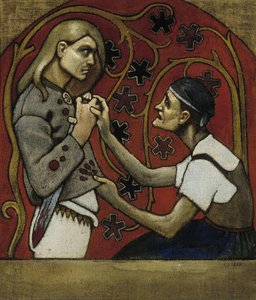
To gaze upon Akseli Gallen-Kallela's Evening Peace is to step across the threshold and into a deeply personal sanctuary. This painting captures more than just a scene; it encapsulates a profound state of being—the quietude that settles over the world as day yields gently to dusk. The composition centers on a solitary figure seated upon the rustic porch of a wooden cabin, an image steeped in the romanticism of rural life. He is depicted in a moment of contemplative repose, pipe smoke curling upwards like ephemeral thoughts against the deepening greens of the surrounding forest. It is a tableau vivant of introspection, inviting the viewer to slow their own hurried pace and simply breathe with the man.
The Resonance of Finnish Landscape and Spirit
Understanding this work requires an appreciation for its context: late 19th-century Finland, a time when national identity was being fiercely woven into art. Gallen-Kallela himself was more than just a painter; he was a visual chronicler of the Finnish soul. While his training exposed him to the grand currents of European art in Paris, his heart remained tethered to the rugged beauty and deep folklore of his homeland. Here, in Evening Peace, that connection is palpable. The forest background is not merely decorative foliage; it possesses a tangible weight, suggesting ancient roots and enduring mystery. The cabin itself feels less like architecture and more like an extension of the wilderness—a humble shelter against the vastness of nature.
Technique and Atmosphere: Mastering the Quietude
Gallen-Kallela’s mastery is evident in his handling of light and shadow. Notice how the fading daylight interacts with the wood grain of the porch and the deep, cool tones filtering through the trees. The technique employed allows for an almost palpable sense of atmosphere; one can almost smell the damp earth and taste the faint smoke. The brushwork, while detailed enough to render the texture of the rough-hewn wood and the man's clothing, remains subordinate to the overall mood. It is a study in tonal harmony, where every shade contributes to that overarching feeling of profound, undisturbed peace.
Symbolism of Solitude and Reflection
The symbolism within Evening Peace is rich for the contemplative collector. The solitary figure smoking his pipe embodies the universal human need for moments of pause—a necessary withdrawal from the clamor of modern existence. The forest represents the subconscious, the wild depths of self, while the porch acts as the liminal space between civilization and nature, between wakefulness and dream. For those who find solace in quiet contemplation, this piece serves as a visual anchor, a reminder that true richness is often found not in grand spectacle, but in the simple act of watching the world settle into its nightly rhythm.
Bringing Serenity Home: Decorating with Timeless Calm
For the discerning decorator or art lover seeking to infuse a space with enduring tranquility, this reproduction offers unparalleled depth. Imagine this piece gracing a study, a reading nook, or a master bedroom—a focal point that immediately recalibrates the room's energy. Its rustic elegance complements both traditional wood interiors and modern minimalist spaces that crave an infusion of soulful narrative. Owning Evening Peace is not merely acquiring art; it is curating a permanent atmosphere of gentle reflection for your most cherished moments.
Biografia dell'artista
La Vita e l'Opera di Akseli Gallen-Kallela
Akseli Gallen-Kallela, nato Axel Waldemar Gallén a Pori, Finlandia, il 26 aprile 1865, è stato una figura centrale nell’arte finlandese. La sua vita fu segnata da un'evoluzione artistica che lo portò a diventare uno dei più importanti illustratori del Kalevala, il poema epico nazionale finlandese, e un esponente di spicco del Romanticismo Nazionale.
Primi Anni e Formazione
Nato in una famiglia di lingua svedese, Gallen-Kallela inizialmente adottò il nome Axel Waldemar Gallén. Successivamente, nel 1907, finnicizzò il suo cognome in Gallen-Kallela, sottolineando la sua identità finlandese. La sua formazione artistica iniziò precocemente con lezioni di disegno e studi presso scuole d'arte a Helsinki. Nel 1884 si trasferì a Parigi per studiare all’Académie Julian e all'Atelier Cormon, dove affinò le sue tecniche pittoriche e sviluppò un interesse per l'arte moderna.
Il Periodo del Kalevala e il Romanticismo Nazionale
Il periodo più significativo della sua carriera fu dedicato all'illustrazione del Kalevala. Gallen-Kallela si immerse nelle storie epiche, traducendole in dipinti potenti ed evocativi che catturavano l’essenza del folklore finlandese. Opere come “La Difesa del Sampo” (1897), "Lèmminkäinen's Mother" (1893) e “La Maledizione di Kullervo” (1893) sono esempi emblematici di questo periodo, caratterizzati da una forte componente simbolica e un’interpretazione romantica del mito. Il suo lavoro contribuì in modo significativo alla costruzione dell'identità nazionale finlandese, celebrando la cultura e le tradizioni del paese.
Evoluzione Artistica e Influenze
Oltre al periodo dedicato al Kalevala, l’opera di Gallen-Kallela si evolse nel tempo. Influenzato dall'Art Nouveau e da viaggi in Italia, il suo stile divenne più libero e sperimentale. Si dedicò anche alla pittura di paesaggi e ritratti, esplorando nuove tecniche e soggetti. La sua casa, Kalela, progettata da lui stesso, divenne un centro artistico e culturale, riflettendo la sua visione eclettica e il suo amore per l'arte.
Eredità e Significato Storico
Akseli Gallen-Kallela morì a Stoccolma il 7 marzo 1931, lasciando un’eredità artistica di inestimabile valore. Le sue illustrazioni del Kalevala sono diventate parte integrante del patrimonio culturale finlandese, e la sua opera continua ad ispirare artisti e appassionati d'arte in tutto il mondo. Il suo contributo al Romanticismo Nazionale ha contribuito a definire l’identità artistica della Finlandia, rendendolo una figura chiave nella storia dell’arte finlandese.
- Musei dove ammirare le sue opere:
- Ateneum Art Museum (Helsinki, Finlandia)
- Suomen Kansallisgalleria (Finnish National Gallery)
- Opere significative:
- La Difesa del Sampo
- Lèmminkäinen's Mother
- Kullervo’s Curse
- Great Black Woodpecker
- The Fratricide

Akseli Gallen-Kallela
1865 - 1931 , Finlandia
Informazioni rapide
- Data Di Nascita: 26 aprile 1865
- Luogo Di Nascita: Pori, Finlandia
- Movimento Artistico: Romanticismo nazionale
- Nazionalità: Finlandese
- Nome Completo: Akseli Gallen-Kallela
- Opere Notevoli:
- La difesa del Sampo
- Lemminkäinen's mother
- Kullervo's curse
Articoli correlati

John Constable: I 25 Capolavori che Celebrano la Bellezza della Campagna Inglese
Esplora i 25 capolavori di John Constable, il maestro del Romanticismo inglese. Paesaggi suggestivi, luce naturale e colori vibranti ti aspettano. Acquista riproduzioni d'arte di alta qualità su OriginalUniqueArt.com e porta la bellezza della campagna inglese nella tua casa.
Evoking Nature's Sublime: A Comprehensive Exploration of 19th-Century Landscape Painting
Explore the captivating world of 19th-century landscape painting! Discover renowned artists like Friedrich & Monet, key movements, and find the perfect artwork to bring nature's serenity into your home. Expert insights at OriginalUniqueArt.

Katsushika Hokusai: Le 25 Opere Più Iconiche per Amare l'Arte Giapponese
Esplora le 25 opere più iconiche di Katsushika Hokusai, maestro dell'ukiyo-e. Scopri la storia dietro 'La Grande Onda', il Monte Fuji e altre stampe giapponesi senza tempo. Trova riproduzioni d'arte di alta qualità per decorare la tua casa su OriginalUniqueArt.com.

I 10 Capolavori del Paesaggio Romantico: Arte, Storia e Decorazioni di Lusso
Esplora i 10 capolavori del Paesaggio Romantico con OriginalUniqueArt.com! Caspar David Friedrich, Turner e altri maestri: storia, tecnica e colori che definiscono un'epoca. Trova riproduzioni d'arte di lusso per la tua casa. Scopri la collezione completa online!

Evocations of Place: A Historical Journey Through Landscape Art
Explore the rich history of landscape art with OriginalUniqueArt. Discover renowned artists, movements like Impressionism & Romanticism, and expert guidance for collecting timeless pieces. Find your perfect serene escape today!