

 Anteprima in scala reale
 Condividi
 Condividi
 Dettagli
 Guida stampabile

 Scarica
 Articoli simili
 Radiografia
 Slideshow
 Statistiche
Amorous Shepherds
 Olio su tela
- Opere da parete
- Baroque
 1690
1690- Early Modern
 46.0 x 38.0 cm
 Staatliche Museen zu Berlin
 Leggi tutto
Giclée / Stampe d'arte
Stampa giclée o su tela di qualità museale, con produzione rapida e diverse opzioni di finitura. ( Ordina la riproduzione dipinta a mano Passa all'immagine digitale)




P118B $10

P118H $10

P118W $10

P438Z $10

P508JH $12

P508YH $12

P805H $10

P805Z $10

P919BZ $10

P919G $10

P919XJ $10

P959ZH $10

P968JZ $12

W106C $8

W218G $10

W218JH $8

W218Y $10

W307PJ $10

W316G $10

W316PJ $8

W316Y $10

W398PJ $8

W4111J $10

W500HY $15

W500JH $15

W692G $12

W849H $8

W940BG $15

W953PJ $8




Scegli tra le nostre dimensioni predefinite, che rispettano le proporzioni originali dell'opera d'arte.

È possibile inserire dimensioni personalizzate per adattare l'opera a una cornice o a uno spazio specifico. Se la dimensione selezionata non corrisponde alle proporzioni dell'immagine originale, procederemo al ritaglio dell'opera o all'estensione dell'immagine con un bordo specchiato o a tinta unita. Un mockup digitale ti verrà inviato per approvazione prima dell'inizio della produzione.
Si prega di notare che l'anteprima a schermo non riflette il ritaglio o l'estensione effettivi. Solo il mockup mostrerà accuratamente la composizione finale.
Sebbene siano disponibili dimensioni personalizzate, si raccomanda di selezionare una dimensione dall'elenco predefinito per preservare le proporzioni originali.
Consegna in tutto il mondo () in 2 settimane invece delle normali 4/5 settimane. (26 Settembre)

Spedizione espressa gratuita in tutto il mondo

Tela in lino di alta qualità

Assicurazione completa sulla spedizione

Garanzia di rimborso dei dazi doganali

Garanzia di perfetta fedeltà cromatica

Politica di reso entro 100 giorni (solo per difetti di fabbricazione)

Garanzia di rimborso al 100%

Sconto per acquisti multipli
 L'opzione vetro è disponibile solo per dimensioni inferiori a 110 cm

Amorous Shepherds
Giclée / Stampe d'arte
Dimensioni della riproduzione
-


Prezzo totale
$ 80
An Embrace in Verdant Shadows: Exploring Amorous Shepherds
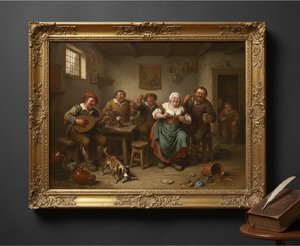
To gaze upon Adriaen van der Werff's Amorous Shepherds is to step directly into a moment suspended between pastoral bliss and burgeoning passion. This captivating work, dating from 1690, transports the viewer into a deeply intimate woodland setting. The central tableau features a man kneeling with profound devotion, holding up his beloved in an embrace that speaks volumes without uttering a single word. It is a scene steeped in the rich, evocative tradition of genre painting, yet elevated by Van der Werff's unparalleled technical mastery.
The composition draws the eye immediately to the central couple, their connection palpable even across the centuries. They are enveloped by nature—a backdrop of dense trees and dappled light that speaks of secrecy and shared moments away from the world’s gaze. Yet, it is not merely a portrait of romance; the presence of other figures subtly woven into the foreground and background suggests a community witnessing, or perhaps simply existing alongside, this profound connection.
The Mastery of Dutch Baroque Technique
Van der Werff, a titan of the Dutch Baroque, utilized his skill to achieve an almost tangible sense of atmosphere. His technique is characterized by a breathtaking command of chiaroscuro—the dramatic interplay between light and shadow. Notice how the light seems to emanate from within the scene itself, selectively illuminating the tender gestures and rich textures of the figures' drapery while allowing the surrounding forest to recede into mysterious, velvety darkness. This masterful handling of illumination does more than just model form; it heightens the emotional drama, suggesting that this moment is sacred, almost illuminated by divine grace.
His attention to detail, honed through years studying costume and drapery, gives every fold of fabric and every leaf on the surrounding foliage a lifelike verisimilitude. This meticulous craftsmanship ensures that even in reproduction, the depth and richness of Van der Werff's original vision remain strikingly apparent.
Symbolism and the Pastoral Ideal
The shepherd motif itself carries layers of symbolism. In art history, shepherds often represent innocence, rustic virtue, or the soul guided by love. Here, however, the overt passion suggests a transcendence of mere pastoral simplicity. The forest setting acts as a liminal space—a place outside of societal rules where pure emotion can flourish unchecked. The embrace itself is an allegory for devotion, perhaps even mirroring mythological tales of divine love rediscovered in nature’s quiet corners. It invites contemplation on the nature of true connection versus fleeting fancy.
Bringing Intimate Drama Home
For the collector or designer seeking to infuse a space with history and profound emotion, Amorous Shepherds offers an unparalleled focal point. The piece balances its overt romanticism with the quiet dignity of Baroque artistry. Reproducing this work allows one to curate an atmosphere—a sense of timeless intimacy and cultivated taste. Whether placed in a drawing-room corner or within a gallery setting, it serves as a sophisticated conversation starter, inviting viewers to pause, breathe, and contemplate the enduring power captured by Van der Werff’s brush.
Biografia dell'artista
Il Maestro della Grazia Meticolosa: La Vita di Adriaen van der Werff
Nel grande arazzo dell'Età dell'Oro olandese, pochi fili brillano con una lucentezza così levigata come l'opera di Adriaen van der Werff. Nato all'Aia nel 1659, Van der Werff emerse da una stirpe di talento artistico, essendo figlio di un pittore, il che gli fornì un'introduzione precoce e intima alle sfumature della luce e della forma. I suoi anni formativi furono plasmati dal rigoroso apprendistato sotto Eglon van der Neer, un maestro del costume e del panneggio la cui influenza è ancora visibile nelle squisite trame setose che definiscono le composizioni mature di Van der Werff. Questa formazione iniziale gli instillò una devozione alla precisione, trasformando il suo pennello in uno strumento capace di catturare le transizioni più delicate della pelle e dei tessuti.
Con il progredire della sua carriera, Van der Werff andò oltre la mera perizia tecnica per raggiungere un livello di profondità psicologica che incantò l'aristocrazia europea. Insieme a suo fratello e allievo, Pieter van der Werft, stabilì uno studio formidabile a Rotterdam. La sua ascesa all'interno della comunità artistica fu segnata dalla guida della Gilda di San Luca, una posizione di immenso prestigio che gli permise di attirare l'attenzione dei più influenti mecenati dell'epoca. La sua opera divenne un ponte tra il realismo crudo dei precedenti maestri olandesi e le sensibilità raffinate ed eleganti del nascente movimento Rococò.
Una Sinfonia di Luce e Mito
La vera magia dell'opera di Van der Werff risiede nella sua capacità di infondere vita nelle narrazioni mitologiche e bibliche dell'antichità. Egli non si limitava a illustrare storie; le metteva in scena con un'intensità drammatica che utilizzava il chiaroscuro per evocare emozioni profonde. In opere come 'Lot e le sue figlie', si può ammirare il magistrale intreccio di ombre e luci, dove ogni tremolio di candela serve ad accentuare la tensione e il peso simbolico della scena. Le sue tele fungono spesso da finestre su un mondo di eleganza classica, dove la forma umana è resa con una perfezione porcellanata che appare allo stesso tempo eterea e tangibilmente presente.
Il suo repertorio tecnico era straordinariamente diversificato, permettendogli di muoversi tra diverse modalità di ritrattistica e pittura narrativa:
- Grandiosità Mitologica: Le sue raffigurazioni di dei ed eroi utilizzavano spesso composizioni monumentali per trasmettere potere e grazia.
- Ritrattistica Intima: In opere come il suo 'Autoritratto', dimostrò un'onestà incrollabile, catturando la fiducia e il carattere del soggetto attraverso dettagli meticolosi.
- Genere e Raggruppamenti: Capolavori come 'Bambini che giocano davanti a un gruppo di Ercole' mostrano la sua capacità di fondere la tenerezza domestica con l'imponente presenza della scultura classica, creando una narrazione stratificata in cui l'innocenza incontra l'antichità.
Eredità e Significato Storico
L'influenza di Adriaen van der Werff si estese ben oltre i confini dei Paesi Bassi. La sua reputazione di "fine painter" gli valse il patrocinio dei più alti ranghi della nobiltà europea, tra cui Giovanni Guglielmo, l'Elettore Palatino, e l'illustre Anna Maria Luisa de' Medici. L'incarico di opere monumentali per la corte fiorentina rimane una testimonianza del suo status di figura internazionale dell'era Barocca. La sua capacità di soddisfare i gusti sofisticati della famiglia Medici consolidò la sua eredità come un artista capace di coniugare la precisione settentrionale con l'eleganza meridionale.
In definitiva, l'importanza di Van der Werff risiede nel suo ruolo di figura di transizione. Egli prese gli elementi fondamentali del realismo olandese — l'ossessione per la consistenza, la luce e la verità — ed li elevò in un linguaggio cortese e raffinato che avrebbe influenzato la traiettoria dell'arte del XVIII secolo. Sebbene l'era dei grandi Maestri Olandesi debba infine lasciare il posto a nuovi movimenti, il mondo luminoso e levigato creato da Van der Werff rimane un monumento duraturo alle vette dell'arte barocca.

Adriaen Van Der Werff
1659 - 1722 , Paesi Bassi
Informazioni rapide
- Artistic Movement Or Style: Baroque
- Artists Or Movements Influenced By This Artist: ['Dutch Masters']
- Artists Who Influenced This Artist: ['Eglon van der Neer']
- Date Of Birth: The Hague, Netherlands (1659)
- Date Of Death: Rotterdam, 1722
- Full Name: Adriaen van der Werff
- Nationality: Dutch
- Notable Artworks:
- SAINTE MADELEINE MEDITANT DANS LA SOLITUDE
- ADAM ET EVE
- SARAH PRESENTE AGAR A ABRAHAM
- Place Of Birth: The Hague
Articoli correlati
Adriaen van Ostade: A Master of Dutch Genre Painting & Social Commentary
Explore the life & work of Adriaen van Ostade, a leading Dutch Golden Age painter. Discover his realistic genre scenes, social commentary, and lasting influence on art history. Learn more at OriginalUniqueArt.

Ugo van der Goes: Devozione, Innovazione e la Profondità Psicologica della Pittura Fiamminga del Primo Rinascimento
Esplora la vita e le opere di Ugo van der Goes, maestro del Rinascimento fiammingo. Analisi approfondita dell'Altare Portinari, delle sue innovazioni tecniche e dell'impatto sulla storia dell'arte.

I 10 Capolavori del Rinascimento Netherlandese: Arte, Storia e Decorazioni di Lusso
Esplora i 10 capolavori del Rinascimento Netherlandese: Jan van Eyck, Rogier van der Weyden e altri maestri fiamminghi. Scopri la storia, le tecniche e il simbolismo di questi dipinti iconici. Riproduzioni d'arte di lusso su OriginalUniqueArt.com.

I 10 Capolavori del Barocco Olandese che Hanno Definito un'Epoca | OriginalUniqueArt
Esplora i 10 capolavori del Barocco olandese con OriginalUniqueArt. Scopri Rembrandt, Vermeer e altri maestri. Quadri antichi, luce intensa e storie affascinanti per decorare la tua casa con arte di qualità museale. Esplora la collezione online!

Rembrandt van Rijn: I 25 Capolavori Immortali da Ammirare | OriginalUniqueArt
Esplora i 25 capolavori di Rembrandt van Rijn, da 'La Ronda di Notte' ai suoi intensi autoritratti. Scopri la storia, le tecniche e l'arte barocca del maestro olandese. Riproduzioni di alta qualità su OriginalUniqueArt.com.


