

 Anteprima in scala reale
 Condividi
 Condividi
 Dettagli
 Guida stampabile

 Scarica
 Articoli simili
 Radiografia
 Slideshow
 Statistiche
Triptych
 Oil On Panel
- Northern Renaissance
 64.0 x 49.0 cm
 Groeningemuseum
 Leggi tutto
Riproduzione a olio fatta a mano
Olio su tela dipinto a mano nelle tue dimensioni e con la tua cornice, realizzato su ordinazione dai nostri artisti. ( Passa alle stampe Passa all'immagine digitale)




P118B €10

P118H €10

P118W €10

P438Z €10

P508JH €12

P508YH €12

P805H €10

P805Z €10

P919BZ €10

P919G €10

P919XJ €10

P959ZH €10

P968JZ €12

W106C €8

W218G €10

W218JH €8

W218Y €10

W307PJ €10

W316G €10

W316PJ €8

W316Y €10

W398PJ €8

W4111J €10

W500HY €15

W500JH €15

W692G €12

W849H €8

W940BG €15

W953PJ €8




Scegli tra le nostre dimensioni predefinite, che rispettano le proporzioni originali dell'opera d'arte.

Inserisci la larghezza e l'altezza di cui hai bisogno, per adattarle alla tua cornice o alla tua parete. Trattandosi di un'opera dipinta a mano, in caso di dimensioni con una forma differente, l'artista può dipingere un po' più oltre i bordi dell'immagine o ritagliare leggermente — la scelta spetta a te. Ti invieremo un mockup digitale da approvare prima che la pittura abbia inizio. L'immagine mostrata in questa pagina non rappresenta il risultato reale — solo il mockup lo fa.
Dopo l'ordine, il team di OriginalUniqueArt.com contatterà il cliente via e-mail per ricevere le istruzioni e fornirà un'anteprima del mockup
Consegna in tutto il mondo () in 3/4 settimane anziché nelle normali 5 settimane. (23 Ottobre). Nessun compromesso sulla qualità.

Spedizione espressa gratuita in tutto il mondo

Tela in lino di alta qualità

Assicurazione completa sulla spedizione

Garanzia di rimborso dei dazi doganali

Garanzia di perfetta fedeltà cromatica

Politica di reso entro 100 giorni (solo per difetti di fabbricazione)

Garanzia di rimborso al 100%

Sconto per acquisti multipli
 L'opzione vetro è disponibile solo per dimensioni inferiori a 110 cm

Triptych
Tecnica di riproduzione
Dimensioni della riproduzione
-


Prezzo totale
€ 264
The Enigmatic Beauty of Adriaen Isenbrant’s Triptych
Adriaen Isenbrant's "Triptych," currently housed within the hallowed halls of the Groeninge Museum in Bruges, Belgium, is not merely a painting; it’s an invitation into a world steeped in Northern Renaissance mystery and profound emotional resonance. Often described as a “Pseudo-Mostaert,” a label born from decades of scholarly debate surrounding his elusive artistic identity, Isenbrant nevertheless left behind a legacy of captivating works that continue to intrigue art historians and captivate viewers alike. This particular triptych, measuring a modest 64 x 49 centimeters, offers a poignant glimpse into the artist’s skill, his understanding of light and shadow, and the deeply spiritual atmosphere he sought to evoke.
The central panel immediately draws the eye with its depiction of a woman – likely Mary, given the iconography – cradling a child. Dressed in a vibrant red robe, she exudes an almost otherworldly serenity. Her gaze is gentle, directed downwards towards the infant, conveying a sense of profound love and protection. To her left stands a man, clad in blue, gesturing with a deliberate grace; his posture suggests guidance or perhaps even a quiet admonishment. On the right, another figure, similarly robed in red, observes the scene with an expression that is both contemplative and slightly distant. This carefully constructed tableau isn’t simply a narrative scene; it's a complex interplay of relationships, hinting at familial bonds, spiritual devotion, and the subtle tensions inherent within human connection.
A Masterclass in Northern Renaissance Technique
Isenbrant’s technique is characterized by a remarkable sensitivity to detail and an astute manipulation of light. The painting is executed in oil on panel, a medium that allowed for rich colors and nuanced gradations – particularly evident in the folds of the robes and the textures of the landscape backdrop. Notice how he employs *chiaroscuro*—the dramatic contrast between light and dark—to sculpt forms and create a sense of depth. The muted earth tones of the background, punctuated by the striking reds and blues of the figures’ garments, contribute to the painting's overall atmosphere of solemnity and introspection. The brushwork is remarkably controlled, yet retains a palpable sense of movement and life – a hallmark of the Northern Renaissance style.
The panel dimensions are significant; they suggest a work intended for private devotion, perhaps a devotional piece within a wealthy household. The scale allows for intimate contemplation, fostering a connection between the viewer and the depicted scene. The meticulous rendering of the landscape—trees, buildings, and distant horizons—grounds the narrative in a tangible reality while simultaneously hinting at something beyond the earthly realm.
Symbolism and Spiritual Depth
Beyond its aesthetic qualities, “Triptych” is laden with symbolic meaning. The central image of the mother and child is, of course, a cornerstone of Christian iconography, representing humility, sacrifice, and divine grace. The man’s gesture invites interpretation – does he offer counsel, or perhaps a warning? The figure on the right could represent an observer, a guardian angel, or even a reflection of the viewer's own spiritual journey. The landscape itself is not merely decorative; it evokes a sense of timelessness and connection to the divine.
Considering Isenbrant’s shadowy biography, the painting’s ambiguity only adds to its allure. It invites viewers to project their own interpretations onto the scene, fostering a deeply personal engagement with the artwork. The triptych's structure—with its three panels—further enhances this sense of layered meaning, suggesting that truth is not always readily apparent and that spiritual understanding requires contemplation and reflection.
A Timeless Treasure: Reproduction Possibilities
Reproductions of Adriaen Isenbrant’s “Triptych” offer a remarkable opportunity to bring this captivating artwork into your home or office. High-quality hand-painted reproductions meticulously recreate the artist's nuanced technique and atmospheric depth, capturing the painting’s emotional power with stunning accuracy. Whether you seek an authentic homage to a masterpiece or a beautiful addition to your interior design scheme, a reproduction of this triptych is sure to be a treasured possession for years to come.
Domande e risposte
Qual è la dimensione di stampa consigliata per "Triptych" di Adriaen Isenbrant?
La dimensione di stampa consigliata per "Triptych" di Adriaen Isenbrant è Medium.
Quali sono i diritti di riproduzione di "Triptych" presso il Groeningemuseum?
L'originale "Triptych" si trova presso Groeningemuseum e l'opera è di pubblico dominio - il suo copyright è scaduto.
Cosa rappresenta "Triptych" e quale atmosfera trasmette?
"Triptych" mostra triptych, virgin mary, family, figures, landscape, renaissance, religious, e l'atmosfera che ne deriva è Calm.
Biografia dell'artista
A Shadowy Master of Bruges: Unraveling the Enigma of Adriaen Isenbrant
Adriaen Isenbrant, or Ysenbrandt as he is sometimes known, remains one of the most elusive figures in Northern Renaissance painting. Born around 1490, likely in Haarlem, his life unfolded amidst the burgeoning artistic climate of Bruges, yet a definitive body of work attributable solely to his hand continues to tantalize and frustrate art historians. Documentary evidence suggests he was a successful and respected artist, deeply embedded within the guild system and enjoying patronage from wealthy merchants and traders—a testament to the dynamism of Bruges during its golden age—but concrete links between this thriving workshop leader and surviving artworks remain stubbornly scarce. This has led to decades of scholarly debate, with Isenbrant variously proposed as the author of works previously attributed to Gerard David and Jan Mostaert — earning him the moniker “Pseudo-Mostaert” — or even dismissed as a convenient label for a collective of anonymous artists.Life and Guild Affiliations in a Flourishing City
Isenbrant’s documented life begins in 1510, when he established himself as a burgher of Bruges. He swiftly ascended within the city's artistic community, becoming a master in both the painters’ guild of St. Luke and the goldsmiths’ guild of St. Elooi that same year. This dual membership speaks to the interconnectedness of crafts during the period and suggests Isenbrant possessed a versatile skillset. Over the following decades, he repeatedly held positions of responsibility within the guilds — serving nine times as a “deacon” (vinder) and twice as governor (treasurer) — demonstrating his standing among his peers. His workshop flourished in the Korte Vlaminckstraat, strategically located near those of Gerard David and Hans Memling, placing him at the heart of Bruges’ artistic activity. The city itself was a magnet for wealth and refinement; its thriving merchant class eager to commission diptychs, portraits, and devotional pieces that reflected their status and piety. Isenbrant catered primarily to this private clientele, though he also produced works without specific commissions, indicating a robust demand for his art. Legal records from 1534 reveal the scale of his operation — a suit brought against Jan van Eyck (not the celebrated Jan van Eyck) for failing to deliver paintings Isenbrant had ordered for completion. He even acted as an agent in Bruges for Adriaan Provoost, further solidifying his position within the artistic network.Artistic Influences and a Conservative Style
The influence of Gerard David is perhaps the most consistently cited element in discussions surrounding Isenbrant’s style. David’s compositional strategies—particularly the use of panoramic landscapes—and meticulous attention to detail are frequently echoed in works tentatively attributed to Isenbrant, suggesting a period of direct or indirect mentorship. However, unlike David’s increasingly refined and expressive approach, Isenbrant’s work — as it is tentatively identified — tends towards a more conservative aesthetic rooted in the traditions of Early Netherlandish painting. This manifests in meticulous detail, a restrained emotional palette, and a focus on precise rendering rather than dramatic innovation. The paintings attributed to him often depict religious subjects—the *Seven Sorrows of the Virgin* being particularly prominent—and devotional scenes intended for private contemplation. While possessing technical skill, these works lack the groundbreaking experimentation seen in some of his contemporaries. Some scholars suggest this deliberate adherence to tradition was a strategic choice, catering to the tastes of a conservative clientele who favored familiarity and piety over stylistic novelty. He was believed by Georges Hulin de Loo to be the same person as the anonymous Master of the Seven Sorrows of the Virgin or Pseudo-Mostaert. Other art historians doubt that any works can be reliably attributed to him, and the number of paintings attributed to him by major museums has been in decline for many decades. ## Major Achievements and Legacy Despite the pervasive uncertainty surrounding his oeuvre—the absence of securely documented paintings—Adriaen Isenbrant nevertheless achieved considerable renown during his lifetime. His workshop produced a prolific output of religious artworks, contributing significantly to Bruges’ artistic heritage and bolstering its reputation as a center for devotional painting. The *Seven Sorrows of the Virgin*, housed in both the St. Mary Magdalene Church in Bruges and the Groeningemuseum, stands as Isenbrant’s undisputed masterpiece—a testament to his mastery of technique and compositional vision. Its serene beauty and masterful depiction of sorrowful figures exemplify the stylistic conventions of the period while simultaneously demonstrating Isenbrant’s ability to synthesize influences from both David and Memling. Furthermore, Isenbrant served as a respected guild official, overseeing matters of administration and upholding standards of excellence within St. Luke’s Guild—a role that underscores his commitment to artistic integrity and civic responsibility. Although the precise scope of his artistic output remains elusive, Adriaen Isenbrant nonetheless cemented his place in art history as one of the most prominent figures of Bruges’ artistic milieu during its zenith—a legacy preserved through scholarly research and celebrated by connoisseurs worldwide. ## Further Research & Attribution Challenges The enduring fascination with Isenbrant stems not only from his undeniable skill but also from the fundamental difficulty inherent in definitively attributing works to him. Georges Hulin de Loo, a pioneering art historian, championed the attribution of several paintings previously ascribed to David and Mostaert to Isenbrant—a controversial stance that continues to fuel debate among scholars today. Many researchers now contend that “Isenbrant” represents a collective designation for a group of artworks sharing stylistic similarities rather than the product of a single artist’s hand—a perspective supported by meticulous stylistic analysis and corroborated by comparative studies. Documents reveal that Isenbrant engaged in export trade, sending paintings to Spain—indicating an international reputation—yet these specific works have not been identified with certainty. Despite the pervasive uncertainty surrounding his oeuvre, Adriaen Isenbrant nonetheless cemented his place in art history as one of the most prominent figures of Bruges’ artistic milieu during its zenith—a legacy preserved through scholarly research and celebrated by connoisseurs worldwide.
Adriaen Isenbrant
1580 - 1551 , Paesi Bassi
Informazioni rapide
- Artistic Movement Or Style: Northern Renaissance
- Artists Who Influenced This Artist: ['Gerard David']
- Date Of Birth: c. 1490
- Date Of Death: 1551
- Full Name: Adriaen Isenbrant
- Nationality: Dutch
- Notable Artworks:
- The Virgin and Child Enthroned
- St. Mary Magdalene Reading
- Place Of Birth: Haarlem, Netherlands
Articoli correlati

The Enduring Power of Painting: A Historical & Contemporary Exploration of Form and Emotion
Explore the rich history & enduring techniques of oil painting with OriginalUniqueArt. Discover masterpieces, learn about art collecting, and find authentic handmade reproductions crafted by skilled artists.

The Enduring Legacy of Oil on Canvas: Technique, History & Aesthetic Impact
Explore the rich history & techniques of oil painting – from Renaissance masters to Impressionism. Discover pigments, layering methods, and why this timeless medium endures. Expert insights for artists & art enthusiasts.
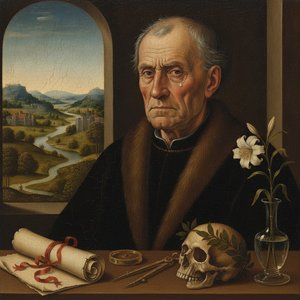
The Northern Renaissance: A Masterclass in Hyper-Realism, Oil Innovation, and Symbolic Depth
Explore the profound mastery of Northern Renaissance art. Discover the technical brilliance of Flemish oil painting, the intricate symbolism of Bosch and Bruegel, and the revolutionary realism that redefined European art history through an expert historical lens.

L'Eredità Duratura della Pittura a Olio: Tecnica, Storia e Pratica Contemporanea
Esplora la storia affascinante e le tecniche della pittura a olio. Scopri come i maestri hanno creato capolavori senza tempo e come questa arte vive oggi. : riproduzioni di alta qualità e consulenza esperta.

Oil on Canvas: A Historical & Technical Exploration of a Timeless Artistic Medium
Explore the rich history & enduring techniques of oil painting on canvas. Discover the science behind its longevity, conservation practices, and contemporary relevance. Expert insights for art enthusiasts.

