
 Anteprima in scala reale
 Invia
Invia Condividi
 Dettagli opera
 Guida
Guida

 Scarica
 Simili
 Radiografia
 Slideshow
 Q&A
Q&A Statistiche
The master of drinking

- 39.0 x 52.0 cm


 Espandi i dettagli
Giclée / Stampe d'arte
Stampa giclée o su tela di qualità museale, con produzione rapida e diverse opzioni di finitura. ( Acquista il dipinto realizzato a mano Passa all'immagine digitale)




P118B €10

P118H €10

P118W €10

P438Z €10

P508JH €12

P508YH €12

P805H €10

P805Z €10

P919BZ €10

P919G €10

P919XJ €10

P959ZH €10

P968JZ €12

W106C €8

W218G €10

W218JH €8

W218Y €10

W307PJ €10

W316G €10

W316PJ €8

W316Y €10

W398PJ €8

W4111J €10

W500HY €15

W500JH €15

W692G €12

W849H €8

W940BG €15

W953PJ €8




Scegli tra le nostre dimensioni predefinite, che rispettano le proporzioni originali dell'opera d'arte.

Inserisci la larghezza e l'altezza desiderate, per adattarle alla tua cornice o alla tua parete. Una stampa può essere solo ritagliata, mai resa più grande dell'immagine originale; pertanto, un formato con una forma differente comporterà la perdita di una parte dell'opera. Ti invieremo un mockup digitale da approvare prima di procedere con la stampa. L'immagine mostrata in questa pagina non rappresenta il ritaglio reale — solo il mockup lo mostra.
Consegna in tutto il mondo () in 2 settimane invece delle normali 4/5 settimane. (1 Novembre)

Spedizione espressa gratuita in tutto il mondo

Tela in lino di alta qualità

Assicurazione completa sulla spedizione

Garanzia di rimborso dei dazi doganali

Garanzia di fedeltà cromatica assoluta

Politica di reso entro 100 giorni (solo per difetti di fabbricazione)

Garanzia di rimborso al 100%

Offerta per acquisti multipli
 L'opzione vetro è disponibile solo per dimensioni inferiori a 110 cm

The master of drinking
Giclée / Stampe d'arte
Dimensioni riproduzione
-


Prezzo finale calcolato
€ 71
A Glimpse into the Heart of Flemish Revelry
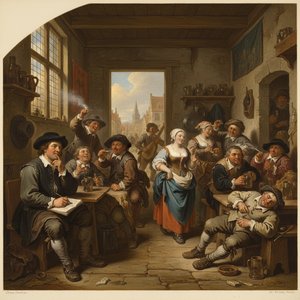
In the intimate, dimly lit corners of a 17th-century tavern, Adriaen Brouwer captures a moment of raw, uninhibited human connection in his masterpiece, The Master of Drinking. This evocative oil on panel painting serves as a window into the boisterous soul of the Flemish Baroque era, transporting the viewer directly into a scene of communal joy and spirited conviviality. The composition centers around a rustic dining table, where a group of at least nine individuals are gathered in various states of engagement. Some figures lean forward in animated conversation, while others sit back, perhaps momentarily lost in the heady atmosphere of the gathering. Through his masterful command of the genre, Brouwer does not merely depict a meal; he captures the very essence of camaraderie, where the clinking of bottles and the low hum of voices create a palpable sense of life.
The technical brilliance of this work lies in Brouwer’s sophisticated use of chiaroscuro. By manipulating light and shadow, the artist breathes three-dimensional depth into the room, allowing the flickering candlelight or dim ambient glow to sculpt the faces and gestures of his subjects. This dramatic lighting is a hallmark of the Baroque style, used here to heighten the emotional intensity of the scene. The shadows are not merely dark spaces but are rich with mystery, pushing the brightly lit figures toward the foreground and drawing the observer into the circle of friends. Every brushstroke contributes to a sense of texture—from the rough grain of the wooden table to the glint of light on glass bottles—making the atmosphere feel heavy with the scent of ale and the warmth of shared laughter.
The Art of the Everyday: Symbolism and Legacy
Beyond its surface-level depiction of a social gathering, The Master of Drinking resonates with the profound themes of 17th-century genre painting. Brouwer was a pioneer in elevating the "low" subjects of peasant life and tavern scenes to the level of high art. In this piece, the simple presence of bottles and shared food acts as a symbol of the fleeting nature of earthly pleasures—a common motif in Baroque thought. Yet, there is no sense of mourning here; instead, there is an unapologetic celebration of the present moment. The painting invites collectors and enthusiasts to contemplate the beauty found in the mundane, suggesting that true artistry lies in the ability to find the extraordinary within the ordinary rhythms of human existence.
For the discerning interior designer or art collector, a high-quality reproduction of this work offers more than just decoration; it provides a focal point of historical depth and emotional warmth. The earthy tones and dramatic composition make it an ideal centerpiece for spaces that value character and storytelling, such as a private library, a sophisticated study, or a dining room designed for hosting. Owning a piece inspired by Brouwer’s legacy means bringing a fragment of the Dutch and Flemish Golden Age into the modern home—a timeless reminder of the enduring power of human connection and the vibrant, messy, and beautiful reality of life.
Domande e risposte
"The master of drinking" di Adriaen Brouwer è un'opera dai toni chiari o scuri?
I valori rilevati per "The master of drinking" di Adriaen Brouwer sono: luminosità deep_shadow, luminanza Dark.
"The master of drinking" di Adriaen Brouwer è di pubblico dominio?
Per quanto riguarda il copyright, "The master of drinking" è di pubblico dominio - il copyright è scaduto.
Quale tecnica è stata utilizzata per "The master of drinking" di Adriaen Brouwer?
Adriaen Brouwer ha utilizzato la tecnica del Oil On Panel per "The master of drinking". La tecnica definisce la natura materica dell'opera originale.
Biografia dell'artista
Primi Anni e Formazione
- Nato: Oudenarde, Belgio (1605/1635)
- Morto: 1638
- Suo padre era un disegnatore di arazzi.
- Adriaen Brouwer affrontò difficoltà fin dalla giovane età; la morte del padre all'età di 15 anni lo costrinse a lasciare la casa.
Sviluppo Artistico e Pittura di Genere
- Brouwer divenne noto per le sue vivide rappresentazioni della vita quotidiana, in particolare scene con contadini, soldati e gente comune.
- Fu un innovatore chiave nella pittura di genere – arte che ritrae scene dalla vita ordinaria.
- I suoi dipinti spesso raffiguravano bere, fumare, giocare a carte e altre attività delle classi inferiori.
- Opere notevoli includono "Poveri Gente che Bevono in una Taverna", "Piccoli Proprietari che Giocano a Carte", "Il Fumatore", "La Schlachtfest", "La Rissa", "Paesaggio Lunare", "Contadino Ubriaco in una Taverna", "Contadini che giocano a carte in una taverna" e "Bevitori nel cortile".
Influenze e Stile Artistico
- Primitivi Fiamminghi: L'opera di Brouwer fu influenzata dal realismo dettagliato dei pittori fiamminghi primitivi.
- Arte Barocca: I suoi dipinti spesso incorporavano un'illuminazione drammatica ed emozioni intense, caratteristiche dell'arte barocca.
- Il suo stile fondeva il realismo con un senso dell'umorismo e una vivace osservazione.
Eredità e Influenza
- L'opera di Brouwer influenzò significativamente le generazioni successive di pittori fiamminghi e olandesi.
- Contribuì a stabilire la pittura di genere come forza importante nell'arte del XVII secolo.
- David Teniers il Giovane fu tra gli artisti che trassero ispirazione dall'approccio innovativo di Brouwer nel ritrarre la vita quotidiana.
Significato Storico
- I dipinti di Brouwer offrono preziose informazioni sui costumi sociali e sulle routine quotidiane della Flanders e della Repubblica Olandese del XVII secolo.
- Il suo focus sulle persone comuni elevò la pittura di genere, contribuendo alla sua crescente popolarità e importanza nel mondo dell'arte.
- Le sue opere sono conservate in musei come il Koninklijk Museum voor Schone Kunsten ad Anversa, Belgio.

Adriaen Brouwer
1635 - 1638 , Belgio
Dettagli rapidi
- Artistic Movement Or Style: Barocco, pittura di genere
- Artists Or Movements Influenced By This Artist: ['David Teniers il Giovane']
- Artists Who Influenced This Artist: ['Primitivi fiamminghi']
- Date Of Birth: 1605 (circa)
- Date Of Death: 1638
- Full Name: Adriaen Brouwer
- Nationality: Fiammingo
- Notable Artworks:
- Poveri che bevono in taverna
- Piccoli proprietari a carte
- Il fumatore
- Lo Schlachtfest
- La rissa
- Paesaggio illuminato dalla luna
- Contadino ubriaco in taverna
- Contadini che giocano a carte
- Bevitori nel cortile
- Place Of Birth: Oudenarde, Belgio
Articoli correlati
David Teniers il Giovane: Vita Quotidiana e Commento Sociale nella Fiandra Barocca
Esplora la vita e l'opera di David Teniers il Giovane, maestro della pittura fiamminga barocca. Analisi approfondita dei suoi temi, stile unico e ruolo come pittore di corte. Scopri l'eredità di questo genio dell'arte.

Flemish Baroque: The Ultimate Masterclass in Dramatic Light, Opulent Detail, and Visual Impact
Discover the breathtaking drama of Flemish Baroque art. Explore the mastery of Rubens and Van Dyck through an expert lens, focusing on chiaroscuro, opulent detail, and the emotional intensity that defines this legendary era of visual impact.

Mastering Drama and Light: A Definitive Guide to the Flemish Baroque Art Movement
Explore the dramatic brilliance of the Flemish Baroque movement. Discover how masters like Peter Paul Rubens utilized chiaroscuro and dynamic composition to redefine art history through light, shadow, and unparalleled emotion.

The Visceral Stage: Exploring Dramatic Narratives & Emotional Intensity in Baroque Art
Explore the dramatic world of Baroque art! Discover iconic masters like Caravaggio & Rembrandt, their techniques, and the movement's lasting impact. Expert insights for collectors & enthusiasts at OriginalUniqueArt.

The Dramatic Flourish: Exploring the Baroque Movement's Enduring Legacy in Art History
Explore the dramatic world of Baroque art! Discover iconic artists like Caravaggio & Rubens, defining techniques, and its lasting impact on art history. Expert insights for collectors & enthusiasts at OriginalUniqueArt.


