Anteprima in scala reale
 Condividi
 Condividi
 Dettagli
 Guida stampabile

 Scarica
 Articoli simili
 Radiografia
 Slideshow
 Statistiche
German Atelierwand
 Oil On Canvas
- WallArt
- Realism
 1872
1872 111.0 x 79.0 cm
 Hamburger Kunsthalle
 Leggi tutto
Riproduzione a olio fatta a mano
Olio su tela dipinto a mano nelle tue dimensioni e con la tua cornice, realizzato su ordinazione dai nostri artisti. ( Passa alle stampe Passa all'immagine digitale)




P118B $10

P118H $10

P118W $10

P438Z $10

P508JH $12

P508YH $12

P805H $10

P805Z $10

P919BZ $10

P919G $10

P919XJ $10

P959ZH $10

P968JZ $12

W106C $8

W218G $10

W218JH $8

W218Y $10

W307PJ $10

W316G $10

W316PJ $8

W316Y $10

W398PJ $8

W4111J $10

W500HY $15

W500JH $15

W692G $12

W849H $8

W940BG $15

W953PJ $8




Scegli tra le nostre dimensioni predefinite, che rispettano le proporzioni originali dell'opera d'arte.

È possibile inserire dimensioni personalizzate per adattare l'opera a una cornice o a uno spazio specifico. Se la dimensione selezionata non corrisponde alle proporzioni dell'immagine originale, provvederemo a ritagliare l'opera o a estendere il dipinto con elementi aggiuntivi dipinti a mano. Un mockup digitale ti sarà inviato per approvazione prima dell'inizio della produzione.
Si prega di notare che l'anteprima a schermo non riflette il ritaglio o l'estensione effettivi. Solo il mockup mostrerà accuratamente la composizione finale.
Sebbene siano disponibili dimensioni personalizzate, consigliamo di selezionare una dimensione dall'elenco predefinito per preservare le proporzioni originali.
Dopo l'ordine, il team di OriginalUniqueArt.com contatterà il cliente via e-mail per ricevere le istruzioni e fornirà un'anteprima del mockup
Consegna in tutto il mondo () in 3/4 settimane anziché nelle normali 5 settimane. (25 Settembre). Nessun compromesso sulla qualità.

Spedizione espressa gratuita in tutto il mondo

Tela in lino di alta qualità

Assicurazione completa sulla spedizione

Garanzia di rimborso dei dazi doganali

Garanzia di perfetta fedeltà cromatica

Politica di reso entro 100 giorni (solo per difetti di fabbricazione)

Garanzia di rimborso al 100%

Sconto per acquisti multipli
 L'opzione vetro è disponibile solo per dimensioni inferiori a 110 cm

German Atelierwand
Tecnica di riproduzione
Dimensioni della riproduzione
-


Prezzo totale
$ 575
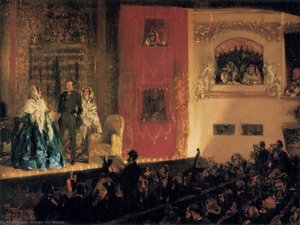
A Chaotic Symphony of Faces: Unpacking Adolph von Menzel’s “German Atelierwand”
Adolph von Menzel's "German Atelierwand" (1872) isn’t merely a painting; it’s an immersive experience, a visual plunge into the depths of human consciousness. Immediately arresting, the work confronts the viewer with a densely packed tableau – a swirling vortex of hundreds of faces emerging from a suffocatingly dark background. It's a scene that simultaneously evokes claustrophobia and overwhelming presence, hinting at both judgment and profound melancholy. Menzel, a master of realism and a keen observer of his time, doesn’t offer easy answers or comforting narratives; instead, he presents us with a raw, unsettling exploration of mortality, power, and the burden of history.
The painting's genesis lies within Menzel’s own studio – specifically, a wall in his workshop. This intimate setting lends an air of vulnerability to the scene, suggesting that these faces aren’t merely representations but fragments of the artist’s own psyche and perhaps reflections on the artistic process itself. The sheer number of portraits, ranging from recognizable historical figures to distorted, almost grotesque visages, creates a sense of collective memory, a chaotic archive of human experience.
Expressionist Roots in a Realist Framework
While firmly rooted in the tenets of German Realism – Menzel’s meticulous attention to detail and his commitment to portraying life as he saw it – “German Atelierwand” exhibits characteristics that foreshadow Expressionism. The fractured lines, the jarring juxtapositions of light and shadow, and the overwhelming emotional intensity all point towards a desire to convey inner turmoil rather than simply depict external reality. Menzel’s use of impasto—thickly applied paint—further amplifies this effect, creating a tactile surface that vibrates with energy and contributes significantly to the painting's unsettling atmosphere.
The technique itself is masterful. Menzel employs a layered approach, building up the composition through countless glazes and brushstrokes. This creates a remarkable sense of depth and movement, as if the faces are constantly shifting and merging within the darkness. The color palette—dominated by deep reds, browns, and ochres—reinforces this feeling of gloom and foreboding, punctuated only by the stark highlights that illuminate certain features, drawing our attention to their anguish or perhaps their silent judgment.
Symbolism and Historical Weight
Beyond its immediate visual impact, “German Atelierwand” is rich in symbolic potential. The dark background can be interpreted as representing the unknown, the void of death, or perhaps the collective unconscious. The faces themselves are not simply individuals; they embody a multitude of historical figures, memories, and anxieties. Some scholars have suggested that Menzel was alluding to the concept of “damned souls” – a common theme in medieval art—while others see echoes of the Nuremberg Trials and the weight of past injustices. The inclusion of plaster casts, particularly the headless torso, adds another layer of complexity, hinting at themes of mortality, fragmentation, and the ephemeral nature of beauty.
The painting’s creation coincided with a period of significant social and political upheaval in Germany, marked by rising nationalism and anxieties about the future. Menzel's work reflects these concerns, offering a powerful meditation on the human condition amidst times of uncertainty. It is a testament to his ability to capture not just the outward appearance of reality but also the underlying currents of emotion and thought that shape our experience.
A Timeless Masterpiece: Reproduction Possibilities
“German Atelierwand” remains a profoundly moving and intellectually stimulating work of art. OriginalUniqueArt offers meticulously crafted, hand-painted reproductions that faithfully capture Menzel’s original vision—the dramatic lighting, the intricate detail, and the overwhelming emotional intensity. These reproductions provide an exceptional opportunity to bring this iconic masterpiece into your home or office, allowing you to contemplate its enduring power and symbolism for years to come.
Biografia dell'artista
Una Vita Dedicata all'Arte (1815-1905)
Adolph Friedrich Erdmann von Menzel, un artista realista tedesco, ha lasciato un segno indelebile nel mondo dell’arte con i suoi disegni, acquerelli e dipinti. Nato a Breslau, in Slesia (oggi Wrocław, Polonia), l'8 dicembre 1815, la vita di Menzel fu una testimonianza della sua dedizione alla cattura dell'essenza della realtà attraverso la sua arte.Primi Anni e Formazione
Il padre di Menzel, un litografo, inizialmente voleva che suo figlio diventasse professore. Tuttavia, la passione per l’arte di Adolph prevalse, portandolo a studiare brevemente all'Accademia d'Arte di Berlino nel 1833. Successivamente, divenne autodidatta, affinando le sue capacità attraverso una pratica instancabile. Si dedicò allo studio della stampa litografica ereditata dal padre, sviluppando un’abilità eccezionale nella riproduzione e nell'incisione.Realizzazioni Artistiche Significative
- Iron Rolling Mill (1872-1875): Un capolavoro che mostra la sua acuta osservazione e maestria artigianale, ritraendo con dettagli minuziosi il processo industriale.
- The Market-Place at Verona: Una testimonianza della sua capacità di catturare l'atmosfera della vita quotidiana, immortalando un vivace mercato italiano.
- German Kanzelpredigt in der Pfarrkirche zu Innsbruck (1857): Un esempio sorprendente della sua padronanza tecnica e compositiva, esposto nella collezione del museo Hugo Fischer a Bühl, Germania.
- Il Concerto del Flauto a Sanssouci (schizzo) (1848): Uno schizzo affascinante che mostra l'eleganza aristocratica e un accenno alla pennellata impressionista, offrendo uno sguardo sulla vita sociale del XIX secolo.
- L’esposizione dei caduti di marzo: Un'opera realista potente che cattura il dolore e la memoria della rivoluzione berlinese del 1848.
Influenze, Sviluppo Artistico e Significato Storico
Menzel fu influenzato dall'arte francese e inglese, come si evince dalle sue opere di genere, tra cui "The French Window" e "The Palace Garden of Prince Albert". Il suo stile realista si concentrava sulla rappresentazione accurata della realtà, spesso con un occhio per i dettagli storici e sociali. Menzel fu particolarmente apprezzato per le sue rappresentazioni di eventi storici prussiani, che contribuirono a plasmare l'identità nazionale tedesca. La sua abilità nel combinare realismo e narrazione storica lo rese una figura chiave nell’arte del XIX secolo. Edgar Degas ammirò profondamente il suo lavoro, definendolo "il più grande maestro vivente" e copiando le sue opere come tributo al suo talento. Menzel si distinse per la sua capacità di combinare l'osservazione diretta con una profonda comprensione della storia e della cultura del suo tempo.Eredità e Riconoscimento Postumo
La reputazione postuma di Menzel fu in gran parte costruita sul suo lavoro grafico e sui suoi dipinti informali. Le sue opere sono oggi esposte in importanti musei tedeschi, tra cui il Museo Georg Schäfer e la Städelsche Galerie im Lenbachhaus. La sua influenza si estende ben oltre i confini della Germania, avendo ispirato generazioni di artisti con la sua dedizione alla precisione, al realismo e all'abilità tecnica.
Adolph von Menzel
1815 - 1905 , Polonia
Informazioni rapide
- Artistic Movement Or Style: Realismo tedesco
- Artists Or Movements Influenced By This Artist: ['Degas']
- Artists Who Influenced This Artist: ['Edgar Degas']
- Date Of Birth: 8 dicembre 1815
- Date Of Death: 9 febbraio 1905
- Full Name: Adolph Friedrich Erdmann von Menzel
- Nationality: Tedesco
- Notable Artworks:
- Iron Rolling Mill (1872-1875)
- The Market-Place at Verona
- German Kanzelpredigt in Innsbruck
- Place Of Birth (City And Country): Breslau, Polonia
Articoli correlati
Fritz von Uhde: Bridging Realism & Symbolism in Late 19th-Century German Painting
Explore the captivating world of Fritz von Uhde, a pivotal German painter bridging Realism & Symbolism. Discover his plein-air techniques, religious themes, and influence on modern art. Learn about this fascinating artist at OriginalUniqueArt.

I 10 Capolavori del Realismo Romantico che hanno Incantato la Storia dell'Arte
Esplora l'emozione del Realismo Romantico attraverso 10 capolavori senza tempo. Scopri la storia di maestri come Constable e Friedrich e lasciati ispirare da opere iconiche per il tuo arredamento. Trova riproduzioni d'arte di qualità museale su OriginalUniqueArt.com.

Adolph von Menzel: Realismo, Società Prussiana e la Cronaca Pittorica di un'Epoca in Trasformazione
Esplora la vita e l'opera di Adolph von Menzel, maestro del realismo tedesco. Analisi approfondite della sua cronaca pittorica della società prussiana ottocentesca e delle sue tecniche innovative.

Anton von Werner: Pittore Imperiale, Testimone Storico e l'Identità Tedesca in Evoluzione
Esplora la vita e le opere di Anton von Werner, pittore imperiale tedesco e testimone chiave della storia prussiana. Analisi approfondite, contesto storico e l'eredità artistica di un maestro del realismo.

The Evocative Embrace of Reality: Exploring Romantic Realism in 19th-Century Painting
Explore the captivating world of Romantic Realism! Discover key artists like Courbet & Millet, masterpieces, and the social context behind this influential art movement. Expert insights for collectors at OriginalUniqueArt.