() ·

Un dipinto creato per te, a mano

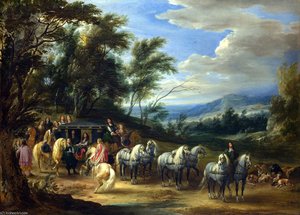
Battle

Riproduzione a olio fatta a mano

Olio su tela dipinto a mano nelle tue dimensioni e con la tua cornice, realizzato su ordinazione dai nostri artisti. ( Passa alle stampe Passa all'immagine digitale)

Descrizione del reperto

A dramatic Baroque painting by Adam Frans van der Meulen depicting an intense cavalry battle. Witness the chaos and heroism of war with stunning detail and vibrant colors.

Biografia dell'artista

Scopri Adam Frans van der Meulen (1632-1690), pittore fiammingo celebre per le sue scene di battaglia e paesaggi che immortalano i trionfi militari di Luigi XIV. Un artista chiave nell'immagine del 'Re Sole'.

da ·

Capitolo 1

Di che dimensioni dovrebbe essere?

Scorri per cambiare la dimensione; l'immagine a sinistra mostra la cornice nella sua larghezza reale. Le proporzioni dell'originale vengono mantenute.

Formato standard
su misura
CM
INCH

Scegli tra le nostre dimensioni predefinite, che rispettano le proporzioni originali dell'opera d'arte.

larghezza
altezza

Inserisci la larghezza e l'altezza desiderate, per adattarle alla tua cornice o alla tua parete. Trattandosi di un'opera dipinta a mano, in caso di dimensioni con un formato differente, l'artista può estendere leggermente il dipinto oltre i bordi dell'immagine o ritagliare una piccola parte — la scelta spetta a te. Ti invieremo un mockup digitale da approvare prima che la realizzazione abbia inizio. L'immagine mostrata in questa pagina non rappresenta il risultato finale — solo il mockup lo fa.

Capitolo 2

Come desideri che venga consegnato?

Scegli il tipo di bordo per la tela tesa

Scegli la tua cornice

Corner sample of the WhiteWrap canvas edge finish, stretched on legno massello bars
Bianco €1
Corner sample of the BlurSideWrap canvas edge finish, stretched on legno massello bars
Bordi sfumati €1
Corner sample of the ExtendedWrap canvas edge finish, stretched on legno massello bars
Bordi estesi €1
Corner sample of the P118B picture frame: polistirene stampato, 5 cm wide and 3 cm thick
P118B €10
Corner sample of the P118H picture frame: polistirene stampato, 5 cm wide and 3 cm thick
P118H €10
Corner sample of the P118W picture frame: polistirene stampato, 5 cm wide and 3 cm thick
P118W €10
Corner sample of the P438Z picture frame: polistirene stampato, 5.5 cm wide and 3.5 cm thick
P438Z €10
Corner sample of the P508JH picture frame: polistirene stampato, 7 cm wide and 3.5 cm thick
P508JH €12
Corner sample of the P508YH picture frame: polistirene stampato, 7 cm wide and 3.5 cm thick
P508YH €12
Corner sample of the P805H picture frame: polistirene stampato, 5 cm wide and 3.5 cm thick
P805H €10
Corner sample of the P805Z picture frame: polistirene stampato, 5 cm wide and 3.5 cm thick
P805Z €10
Corner sample of the P919BZ picture frame: polistirene stampato, 7 cm wide and 3.5 cm thick
P919BZ €10
Corner sample of the P919G picture frame: polistirene stampato, 7 cm wide and 3.5 cm thick
P919G €10
Corner sample of the P919XJ picture frame: polistirene stampato, 7 cm wide and 3.5 cm thick
P919XJ €10
Corner sample of the P959ZH picture frame: polistirene stampato, 5 cm wide and 3 cm thick
P959ZH €10
Corner sample of the P968JZ picture frame: polistirene stampato, 6 cm wide and 4 cm thick
P968JZ €12
Corner sample of the W106C picture frame: legno massello, 5 cm wide and 3 cm thick
W106C €8
Corner sample of the W218G picture frame: legno massello, 5 cm wide and 3 cm thick
W218G €10
Corner sample of the W218JH picture frame: legno massello, 5 cm wide and 3 cm thick
W218JH €8
Corner sample of the W218Y picture frame: legno massello, 5 cm wide and 3 cm thick
W218Y €10
Corner sample of the W307PJ picture frame: legno massello, 6 cm wide and 3 cm thick
W307PJ €10
Corner sample of the W316G picture frame: legno massello, 6 cm wide and 3 cm thick
W316G €10
Corner sample of the W316PJ picture frame: legno massello, 6 cm wide and 3 cm thick
W316PJ €8
Corner sample of the W316Y picture frame: legno massello, 6 cm wide and 3 cm thick
W316Y €10
Corner sample of the W398PJ picture frame: legno massello, 5 cm wide and 3 cm thick
W398PJ €8
Corner sample of the W4111J picture frame: legno massello, 6.5 cm wide and 3.5 cm thick
W4111J €10
Corner sample of the W500HY picture frame: legno massello, 7 cm wide and 5 cm thick
W500HY €15
Corner sample of the W500JH picture frame: legno massello, 7 cm wide and 5 cm thick
W500JH €15
Corner sample of the W692G picture frame: legno massello, 8 cm wide and 4 cm thick
W692G €12
Corner sample of the W849H picture frame: legno massello, 5 cm wide and 3 cm thick
W849H €8
Corner sample of the W940BG picture frame: legno massello, 7.5 cm wide and 4.5 cm thick
W940BG €15
Corner sample of the W953PJ picture frame: legno massello, 6 cm wide and 3.5 cm thick
W953PJ €8
Corner sample of the H24-GOLD picture frame: legno intagliato e gessato, 10 cm wide and 6 cm thick
H24-GOLD €30
Corner sample of the H24-SILVER picture frame: legno intagliato e gessato, 10 cm wide and 6 cm thick
H24-SILVER €30
Corner sample of the H36-GOLD picture frame: legno intagliato e gessato, 15 cm wide and 6.5 cm thick
H36-GOLD €45
Corner sample of the H36-SILVER picture frame: legno intagliato e gessato, 15 cm wide and 6.5 cm thick
H36-SILVER €45
Anteprima cornice
Con cornice

Cornice: . Dimensioni complessive con cornice: .

Capitolo 3

Chi lo dipinge, e dovrebbe cambiare qualcosa?

Esempi di ciò che può essere modificato: Sostituire il volto con la foto del cliente; Aggiungere un animale domestico (ad es. sostituire il gatto con un cane); Inserire un messaggio nascosto nello sfondo; Cambiare il paesaggio o gli elementi dello sfondo.
Dopo l'ordine, il team di OriginalUniqueArt.com invierà un'e-mail al cliente per le istruzioni e fornirà un'anteprima del mockup

Consegna in tutto il mondo () in 3/4 settimane anziché nelle normali 5 settimane. (4 Novembre). Nessun compromesso sulla qualità.

Capitolo 4

Le ultime rifiniture

Una targhetta, come quella di un museo?

Dettagli della targhetta in bronzo inciso

This elegant plaque features the artist's name and the title of the artwork, finely engraved for a timeless presentation.

It is made from bronze with a refined, elegant finish. The text is precisely laser-engraved for a sharp and permanent result. Measuring 9x2 cm, the plaque is compact yet easy to read. It's built to be durable and scratch-resistant, offering a professional, museum-quality look. Mounting is simple thanks to the included adhesive backing.

Dettagli della targhetta in acrilico trasparente

The plaque includes essential engraved details such as the artist's name, the title of the artwork, the date it was created, the type of media used-like oil on canvas or watercolor-a brief description of the piece, and a QR code that links to the complete artwork information.

It is crafted from clear acrylic, offering a sleek, modern appearance. The text is UV-engraved in black to ensure strong visual contrast. With a size of 10x15 cm, it ensures optimal readability. It comes equipped with two metal hooks for secure wall mounting. The plaque is designed to be weather-resistant, making it suitable for various environments, and it includes interactive features that work seamlessly with smartphone scanning.

Dettagli della targhetta in acrilico nero

This elegant plaque includes engraved information such as the artist's name, the title of the artwork, the date it was created, the type of media used (like oil on canvas or watercolor), a short description of the artwork, and a QR code for quick access to more information.

The plaque itself is made from refined black acrylic with a premium finish. The text is laser-engraved in white for high contrast and readability. Its size is 10x15 cm, designed to be easy to read. It comes with two metal hooks for professional mounting. The design is sleek and fits any interior style. It is also weather-resistant and durable, with built-in digital integration for mobile compatibility.

Una vernice protettiva?

Quando ti serve?

Capitolo 5

Il tuo dipinto, esattamente come lo hai ordinato

Battle

Tecnica di riproduzione

Dimensioni riproduzione

-

Artisti di alto livello

Maggiore dettaglio, finezza e tempi di produzione dedicati

-

Cornice per riproduzione

-

-

Per opere d'arte o riproduzioni con un lato superiore a 105 cm (circa 41 pollici), la cornice verrà spedita in forma di kit smontato. Questo metodo garantisce una consegna sicura e previene danni durante il trasporto.

Montaggio professionale richiesto - non è un prodotto fai-da-te.
Il kit deve essere assemblato e la tela tesa da un esperto cornice professionista, utilizzando colla per legno (non inclusa), una pinza per tendere la tela e morsetti per mantenere i listelli in squadra durante l'asciugatura della colla. Un montaggio errato o una tensione non uniforme della tela possono danneggiare permanentemente l'opera d'arte e non sono coperti dalla nostra garanzia.

  • Tutte le barre in legno massello sono incluse, tagliate con precisione alle dimensioni corrette.

  • Da assemblare con le viti fornite e con la colla per legno per gli incastri degli angoli, che non è inclusa e dovrà essere reperita dal vostro corniceio.

  • Sono necessari strumenti professionali non inclusi: una pinza tendicanvas (tenditore) e dei morsetti per mantenere i listelli in squadra durante l'asciugatura della colla.

Importante:
Gli incastri d'angolo richiedono colla per legno, i listelli devono essere mantenuti in posizione con dei morsetti finché la colla non è completamente asciutta, e il tensionamento della tela sulla cornice assemblata richiede una pinza per tendere la tela. Nessuno di questi strumenti è incluso nel kit. Si prega di consultare un incorniciatore professionista esperto prima di ordinare questa misura.

Didascalia

-

-

Vernice protettiva

Vernice lucida (esalta i colori, protegge da luce e umidità)

-

Personalizza la mia opera

Esempi di personalizzazione: sostituire il volto con una foto del cliente; aggiungere un animale domestico (ad esempio, sostituire un gatto con un cane); inserire un messaggio nascosto nello sfondo; cambiare il paesaggio o gli elementi dello sfondo.

-

Consegna rapida

Consegna in tutto il mondo () in 3/4 settimane anziché nelle normali 5 settimane. (4 Novembre). Nessun compromesso sulla qualità.

-

Spedizione espressa

Spedizione in tutto il mondo () in 5 settimane. (11 Novembre).

Spedizione inclusa

Prezzo finale calcolato

€ 268

Prezzo totale € 268

L'opzione vetro è disponibile solo per dimensioni inferiori a 110 cm

Incluso in ogni ordine

  • Spedizione espressa gratuita in tutto il mondo
  • Tela in lino di alta qualità
  • Assicurazione completa sulla spedizione
  • Garanzia di rimborso dei dazi doganali
  • Garanzia di fedeltà cromatica assoluta
  • Politica di reso entro 100 giorni (solo per difetti di fabbricazione)
  • Garanzia di rimborso al 100%
  • Offerta per acquisti multipli

The Canvas of Conflict: An Overview

Adam Frans van der Meulen’s “Battle,” painted in 1657, isn't merely a depiction of warfare; it’s a meticulously crafted tableau of power, chaos, and the calculated grandeur of Louis XIV’s France. This monumental oil-on-canvas, currently residing within the hallowed halls of The Hermitage Museum in St. Petersburg, transcends the simple act of recording a battle – it's an active participant in shaping a royal image, a visual testament to military prowess commissioned by the ‘Sun King’ himself. Measuring 121 x 172 cm, the painting immediately commands attention with its dynamic composition and dramatic use of light and shadow, transporting the viewer directly into the heart of the fray.

Van der Meulen, a pivotal figure in the artistic service of Louis XIV, skillfully blended realism with propagandistic intent. He wasn’t simply an observer; he was a designer of spectacle, translating battlefield victories into opulent tapestries and, crucially, this arresting painting. The scene unfolds as a carefully orchestrated drama – a swirling vortex of charging cavalry, clashing swords, and the desperate struggles of infantrymen, all set against a backdrop of a strategically rendered landscape. The sheer scale of the work, combined with its intense detail, speaks to the importance placed on projecting an image of strength and dominance during this period.

A Baroque Symphony of Movement and Detail

The painting’s style firmly anchors it within the Baroque era – a movement characterized by dramatic intensity, elaborate ornamentation, and a heightened sense of realism. Van der Meulen masterfully employs chiaroscuro, the technique of strong contrasts between light and dark, to sculpt the figures and create a palpable sense of depth and immediacy. The foreground explodes with activity: horses rearing in panic, soldiers locked in brutal hand-to-hand combat, their armor gleaming under the simulated sunlight. The artist’s brushwork is remarkably loose and energetic in these areas, mirroring the frenetic energy of the battle itself – a deliberate choice to convey the chaos and urgency of the scene.

Conversely, the background landscape—trees silhouetted against a stormy sky, distant buildings hinting at a fortified town—is rendered with greater control and precision. This contrast serves to emphasize the central action while simultaneously establishing a sense of scale and strategic context. Van der Meulen’s attention to detail is astonishing; you can almost feel the grit beneath your feet, hear the clash of steel, and smell the smoke of battle. The meticulous depiction of armor, weaponry, and horse harnesses speaks not only to his artistic skill but also to his deep understanding of military equipment and tactics.

Symbolism and Royal Propaganda

Beyond its immediate visual impact, “Battle” is laden with symbolic meaning. The composition itself—a tightly packed mass of figures engaged in a decisive struggle—represents the overwhelming power of the French army under Louis XIV. The heroic postures of the mounted officers, often depicted as unflinching and resolute, reinforce the king’s image as a fearless leader. The inclusion of specific details – such as the royal standard prominently displayed – further solidifies this message of authority and legitimacy.

Furthermore, the painting's creation was intrinsically linked to Louis XIV’s ambition to establish France as the dominant power in Europe. By commissioning works like “Battle,” Van der Meulen played a crucial role in shaping public perception of the king and his reign – transforming military victories into symbols of national pride and imperial glory. The painting, therefore, functions not just as an artistic achievement but also as a powerful instrument of propaganda.

A Legacy of Power and Artistic Skill

“Battle” by Adam Frans van der Meulen stands as a remarkable testament to the artist’s skill and his service to the French monarchy. It's a dynamic, emotionally charged depiction of war that transcends its historical context, offering viewers a glimpse into the world of 17th-century military strategy and royal ambition. Reproductions of this masterpiece continue to captivate audiences today, serving as reminders of the enduring power of art to shape perceptions and immortalize moments in history. Its dramatic composition, masterful use of light and shadow, and meticulous attention to detail make it a truly exceptional work of Baroque art.

Domande e risposte

Cosa rappresenta "Battle" di Adam Frans van der Meulen e quale atmosfera trasmette?

"Battle" di Adam Frans van der Meulen ritrae battle, war, soldiers, cavalry, chaos, action, 17th century, painting, con un'atmosfera Dramatic. Il soggetto e l'atmosfera insieme descrivono l'opera.

Qual è la luminosità di "Battle" di Adam Frans van der Meulen?

"Battle" di Adam Frans van der Meulen ha una luminanza di Dark. La luminanza descrive quanta luce sembrano riflettere i colori.

Cosa rappresenta "Battle" di Adam Frans van der Meulen?

I temi presenti in "Battle" di Adam Frans van der Meulen includono battle, war, soldiers, cavalry, chaos, action, 17th century, painting, elementi che insieme sintetizzano il soggetto dell'opera.

Maggiori informazioni su questo dipinto

Anteprima in scala reale Anteprima in AR Passa alle stampe Passa all'immagine digitale Invia
Dettagli opera Guida Aggiungi ai preferiti Scarica Simili Radiografia Slideshow Domande e risposte Statistiche

In numeri

  • 1657l'anno in cui è stata dipinta
  • 29cornici tra cui scegliere
  • dimensioni standard, nelle proprie proporzioni
  • 5settimane per la realizzazione e la consegna
Adam Frans van der Meulen

Adam Frans van der Meulen

1632 - 1690, Belgio

Informazioni rapide su Adam Frans van der Meulen

  • Artistic Movement Or Style: Barocco
  • Artists Or Movements Influenced By This Artist:
    • Karel Breydel
    • Jean-Baptiste Martin
  • Artists Who Influenced This Artist: ['Peter Snayers']
  • Date Of Birth: 11 gennaio 1632
  • Date Of Death: 1690
  • Full Name: Adam Frans van der Meulen
  • Nationality: Fiammingo
  • Notable Artworks:
    • Il Nuovo Château a Saint-Germain
    • Luigi XIV a Charleroi
    • L’arrivo di Luigi XIV a Chambord
  • Place Of Birth: Bruxelles, Belgio

Biografia dell'artista

Adam Frans van der Meulen: Una Vita al Servizio del 'Re Sole'

  • Nato: Bruxelles, Belgio (1632)
  • Morto: 1690

Adam Frans van der Meulen, o Adam-François van der Meulen, fu un pittore e disegnatore fiammingo rinomato per le sue rappresentazioni di campagne militari e conquiste. Nato a Bruxelles l'11 gennaio 1632, divenne una figura significativa sia nella storia dell'arte fiamminga che francese, noto soprattutto per il suo ruolo nel plasmare l'immagine di Luigi XIV come il 'Re Sole'.

Primi Anni e Formazione

Van der Meulen era il figlio maggiore di sette figli nati da Pieter van der Meulen, un notaio, e Maria van Steenwegen. La sua prima formazione artistica iniziò nel 1651 quando si registrò presso la Gilda di San Luca di Bruxelles come allievo di Peter Snayers, un importante pittore di Anversa specializzato in scene di battaglia, attacchi a convogli, civili e scene di caccia. Questo apprendistato si rivelò cruciale, ponendo le basi per la sua futura carriera.

Diventando maestro della gilda nel 1651, Van der Meulen produsse inizialmente opere che rispecchiavano quelle del suo mentore Snayers – principalmente schermaglie di cavalleria e raffigurazioni di corti a cavallo. La sua abilità nel ritrarre i cavalli guadagnò rapidamente riconoscimento, attirando l'attenzione dalla Francia.

Servizio a Luigi XIV: Propagandista e Progettista di Arazzi

Nel 1664, Van der Meulen fu chiamato a Parigi da Jean-Baptiste Colbert, il potente Soprintendente degli Edifici, delle Arti e delle Manifatture. Colbert gli affidò il compito di immortalare i successi militari di Luigi XIV attraverso una serie di arazzi – un elemento chiave nell'immagine propagandistica del re. Charles Le Brun, il pittore di corte e direttore della neonata Manifattura dei Gobelins, incaricò Van der Meulen di assistere in questo ambizioso progetto.

  • Serie di Arazzi: Van der Meulen contribuì significativamente a diverse serie di arazzi, tra cui "La Storia del Re", che raffigurava conquiste militari.
  • Collaborazioni: Collaborò frequentemente con altri artisti fiamminghi come Adriaen Frans Boudewijns e Abraham Genoels, che assistettero nella progettazione del paesaggio e della incisione.
  • Serie delle Residenze Reali: Van der Meulen lavorò anche alla serie "Maison Royales" ('Residenze Reali'), mostrando vari palazzi di Luigi XIV.

Il suo stipendio annuale alla Manifattura dei Gobelins aumentò costantemente, riflettendo la sua crescente importanza. Accompagnò Luigi XIV durante le campagne militari nelle Fiandre e in Borgogna, documentando meticolosamente gli eventi attraverso disegni che in seguito informarono i suoi dipinti.

Stile Artistico e Influenza

Lo stile artistico di Van der Meulen era caratterizzato da:

  • Scene di Battaglia Dinamiche: Le sue raffigurazioni di battaglie erano note per la loro energia e il dettaglio, catturando il caos e la grandezza della guerra.
  • Accurati Ritratti Equini: Possedeva un'eccezionale capacità di ritrarre i cavalli con realismo ed eleganza, un'abilità che gli valse notevole plauso.
  • Scopo Propagandistico: Il suo lavoro serviva uno scopo propagandistico chiaro, glorificando il regno e i successi militari di Luigi XIV.

L'influenza di Van der Meulen si estese oltre la sua produzione artistica. Influenzò significativamente lo sviluppo della pittura militare in Francia, stabilendo uno stile che enfatizzava il realismo e l'azione drammatica. I suoi progetti per gli arazzi contribuirono anche alla fioritura della produzione di arazzi durante il regno di Luigi XIV.

Carriera Successiva ed Eredità

La carriera di Van der Meulen prosperò in Francia. Ricevette numerosi onori, tra cui:

  • Privilegio Reale: Gli fu concesso un privilegio reale nel 1669 per poter far incidere le sue opere.
  • Peintre Ordinaire du Roi: Fu nominato "Pittore Ordinario del Re" nel 1673.
  • Académie Royale de Peinture et de Sculpture: Ammesso alla Royal Academy of Painting and Sculpture senza dover presentare un'opera di ammissione, a testimonianza del suo status.

Continuò a ricoprire posizioni importanti all'interno dell'accademia fino alla sua morte nel 1690. L'eredità di Adam Frans van der Meulen si basa sul suo significativo contributo all'arte militare francese e sul suo ruolo nel plasmare l'immagine di Luigi XIV come il potente 'Re Sole'. Le sue raffigurazioni dettagliate di battaglie, paesaggi e vita di corte forniscono preziose informazioni sull'epoca e continuano a essere ammirate per il loro merito artistico.

Informazioni rapide

  • Artistic style: Baroque
  • Notable elements: Dynamic battle scene
  • Influences: Van der Meulen
  • Subject or theme: Military conflict
  • Location: The Hermitage (St. Petersburg)

Quiz d'arte

Per ogni domanda è presente una sola risposta corretta.

Domanda 1:
What is the primary subject depicted in Adam Frans van der Meulen’s ‘Battle’?
Domanda 2:
In which museum is Adam Frans van der Meulen’s ‘Battle’ currently housed?
Domanda 3:
What artistic style is most prominently displayed in ‘Battle’?
Domanda 4:
The painting utilizes a dynamic composition, characterized by what specific element?
Domanda 5:
Adam Frans van der Meulen’s work is particularly notable for its role in what historical context?