The Soul of the City: The Life and Legacy of Raphael Soyer
In the bustling, often indifferent landscape of twentieth-century New York, few artists captured the quiet, melancholic pulse of urban humanity as tenderly as Raphael Soyer. Born in 1899 in Borisoglebsk, Russia, Soyer’s journey was one defined by migration, resilience, and an unwavering commitment to the representational truth. Alongside his identical twin brother, Moses, Raphael was raised in a household where intellect and artistry were paramount. His father, Abraham, a Hebrew scholar and teacher, fostered an environment of deep academic pursuit that would later provide the intellectual scaffolding for Raphael’s social commentary. The family's flight from Russian oppression in 1912 brought them to the United States, eventually settling in the Bronx, where the gritty, vibrant energy of New York would become the primary protagonist in Soyer’s life and work.
Soyer’s artistic evolution was deeply rooted in the pedagogical traditions of the great American institutions. His early training at Cooper Union’s Free Schools—where he forged a lifelong bond with fellow artist Chaim Gross—served as a vital gateway to the professional art world. As he progressed through the National Academy of Design and the Art Students League of New York, studying under masters like Guy Pene du Bois and Boardman Robinson, Soyer began to absorb the spirit of the Ashcan School. This movement, which rejected the polished idealism of previous eras in favor of the raw, unvarntle reality of street life, became the cornerstone of his aesthetic. He learned to look past the grand monuments of the city to find the profound stories hidden within its crowded subway stations, dim cafes, and lonely apartments.
A Canvas of Empathy and Urban Realism
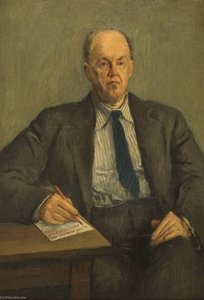
The work of Raphael Soyer is characterized by a unique blend of Social Realism and a deeply personal, almost psychological intimacy. While many of his contemporaries focused on the political upheaval of the era through broad strokes of protest, Soyer found his strength in the individual. His canvases often feature portraits of friends, family, and strangers alike, rendered with a sensitivity that captures both their physical presence and their internal struggles. There is a recurring sense of melancholy in his depictions of New York life—a quiet loneliness that permeates his urban scenes, suggesting the isolation that can exist even within a teeming metropolis.
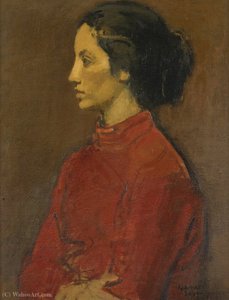
His technical mastery allowed him to navigate various mediums, from the structured precision of his drawings and prints to the emotive fluidity of his watercolors and oil paintings. In works such as Two Girls or The Flowered Skirt, one can observe his ability to use muted earth tones and thoughtful brushwork to evoke atmosphere and emotion. His subjects—often female nudes or working-class citizens—are never mere objects of study; they are vessels of human experience. Through his relentless investigation of these themes, Soyer created a visual record of the American Scene that is as much about the internal landscape of the soul as it is about the external landscape of the city.
Historical Significance and Artistic Integrity
As the art world shifted toward abstraction and more experimental, non-representational forms in the mid-twentieth century, Soyer remained a steadfast advocate for the power of the figure and the recognizable world. This stance occasionally placed him at odds with the burgeoning avant-garde, yet it was precisely this artistic integrity that preserved the human element in his oeuvre. He refused to abandon the narrative potential of the portrait or the social weight of the urban scene, ensuring that his work remained a bridge between the classical traditions of the past and the modern realities of his time.
Today, Raphael Soyer is remembered not merely as a painter of New York, but as a chronicler of the human condition. His legacy resides in his ability to find dignity in the ordinary and beauty in the somber. To look upon a Soyer painting is to encounter the faces of a bygone era—faces that reflect the aspirations, disappointments, and enduring resilience of the urban spirit. His contributions to American Social Realism continue to resonate, offering a poignant reminder of the profound stories etched into the very fabric of our shared humanity.
Gyakran Ismételt Kérdések
Létezik-e teljes lista Raphael Soyer műពី listája?
Raphael Soyer minden alkotása a ez a weboldal oldalán megtekinthető az alkotó Összes műalkotás oldalán.
Kereshetem Raphael Soyer műveit kulcsszavak alapján is?
Raphael Soyer művei kulcsszavakra bontva is felfedezhetők a művész Kulcsszavak alapján oldalán. Minden kulcsszó a hozzá tartozó alkotásokat gyűjti össze.
Hol találhatók Raphael Soyer művei szín szerinti csoportosítással?
A Színspektrum index oldalon Raphael Soyer műveit szín szerint csoportosítva találhatja.
Milyen más neveken ismert Raphael Soyer?
Raphael Soyer a következő más néven is ismert: Raphael Schoar, Raphael Zalman Soyer.
Hol és 어느 해 született Raphael Soyer?
Raphael Soyer Belgorod városban született, 1899 évben.
Hol találhatók statisztikák Raphael Soyer műveire vonatkozóan?
Raphael Soyer műveire vonatkozó statisztikusok a művész Statisztika oldalán érhetőek el.
Honnan származik Raphael Soyer?
Raphael Soyer Oroszország-ban született.
Van-e elérhető 3D virtuális túra Raphael Soyer művei között?
Raphael Soyer 3D Múzeum egy olyan oldal, amely a művész alkotásait mutatja be egy virtuális, háromdimenziós galériában.