Michael Erhart portréja

A 4 legnevezesebb Michael Erhart festmény, egy galériaválaszték

Frissítve: november 2026 · rangsorolva népszerűségi pontszámunk alapján (minden mű keresései, látogatásai és megrendelései alapján) · 4 mű Michael Erhart alkotása a katalógusunkban

Röviden

Michael Erhart hagyatékából a leghíresebb alkotás Ravensburg Madonna of Mercy (1480), amely a Berlin városi Berlin Állami Múzeumai gyűjteményében található. Röviddel ezután követik őket Altarpiece (central section) (1493) és The Libyan Sibyl (1469). Katalógusunkban 4 mű található Michael Erhart alkotótól; a galéria megőrizte a világ által leginkább csodált 4 darabot, melyeket a dátummal, a múzeummal és a történetükkel együtt mutatunk be.

1442 – 1522 A legtöbb mű: Benedictine Abbey Church

Michael Erhart legjobb 10 festménye: a galéria válogatása

1
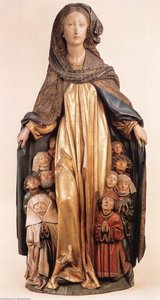
Ravensburg Madonna of Mercy (1480) (1889) -ja Michael Erhart

Ravensburg Madonna of Mercy

1480 · Wood · Berlin Állami Múzeumai, Berlin

In the quiet presence of this 1480 sculpture, one feels the weight of late Gothic devotion. The Ravensburg Madonna of Mercy is a work of profound stillness, carved from wood and brought to life through the delicate application of polychromy. The central figure of the Virgin Mary rises with a verticality that draws the eye upward, her form draped in heavy, meticulously detailed clothing. She is surrounded by smaller figures,…

2
Altarpiece (central section) (1493) (1889) -ja Michael Erhart

Altarpiece (central section)

1493 · Tempera On Panel · Benedictine Abbey Church, Blaubeuren

Gold leaf clings to the carved wood, catching the light like a sudden sunbeam in a dim cathedral. In this central panel, the Virgin Mary stands upon a silvered sickle moon, her form a pillar of quiet grace. Beside her, the infant Jesus rests, a small weight of divinity held within the curve of her arm. The architecture behind them recedes into a structured, gilded depth, creating a space that…

3
The Libyan Sibyl (1469) (1889) -ja Michael Erhart

The Libyan Sibyl

1469 · Sculpture · Cathedral, Ulm

The Libyan Sibyl emerges from the shadows of history, a figure carved with profound intent by the hands of Michael Erhart. This work, titled The Libyan Sibyl, exists as a presence within the sacred space of the Ulm Cathedral in Ulm. It is a creation of oak, a material that holds the weight of the centuries within its grain. The wood carries the marks of a sculptor who understood how…

4
Altarpiece (1493) (1889) -ja Michael Erhart

Altarpiece

1493 · Wood · Benedictine Abbey Church, Blaubeuren

A silvered sickle moon supports the Virgin Mary, a pale crescent caught in the stillness of the carved wood. She holds the infant Jesus, a small weight of divinity resting against the curve of her arm. Around them, the architecture recedes into a structured, gilded depth, creating a space that feels both solid and celestial. The light catches the gold leaf, turning the background into a luminous, reflective void that…

A témák, amelyek Michael Erhart figyelmét meghúzták

A négy leggyakorobban előforduló téma ebben az eredeti művekben, mindegyik a legkiválóbb példájával.

A műemlékek, amelyek Michael Erhart eredeti műveit őrzik

A 3 olyan múzeum, amely a legtöbb ezen az oldalon szereplő festményet őrzi.

Múzeum Város Michael Erhart művei Ebből a listából származó festmények
Benedictine Abbey Church, BlaubeurenBenedictine Abbey Church Blaubeuren 2 Altarpiece (central section), Altarpiece
Berlin Állami Múzeumai, BerlinBerlin Állami Múzeumai Berlin 1 Ravensburg Madonna of Mercy
Cathedral, UlmCathedral Ulm 1 The Libyan Sibyl

Michael Erhart évtizede folgtva: az eredeti művek, amelyek meghatározzák az egyes korzakot

Művek évtizedenként

Váassz ki egy évtizedet, hogy megnézhesd az azt meghatározó eredetiműveket.

Gyűjtői kérdések Michael Erhart festményeivel kapcsolatban

Melyik művel a(z) Michael Erhart a leghíresebb?Fedje fel a választ

Ravensburg Madonna of Mercy (1480), Berlin Állami Múzeumai, Berlin. Ezután Altarpiece (central section) (1493) és The Libyan Sibyl (1469) következik.

Hány éves volt Michael Erhart, amikor a Ravensburg Madonna of Mercy készült?Fedje fel a választ

38 éves: Ravensburg Madonna of Mercy 1480-ből származik, Michael Erhart pedig 1442-ben született.

Hány festményet hagyott hátra Michael Erhart?Fedje fel a választ

Katalógusunkban 4 mű található Michael Erhart alkotótól, 1469 és 1493 év közötti időszakból.

Mely múzeumokban állnak Michael Erhart remekművei?Fedje fel a választ

Leginkább Benedictine Abbey Church (Blaubeuren), Berlin Állami Múzeumai (Berlin) és Cathedral (Ulm) található. A fenti múzeumi táblázatban mindegyik felsorolásra került.

Mely években festette Michael Erhart leghíresebb műveit?Fedje fel a választ

1490s alatt: a jelen laphonon található 4 műből 2 készült ebben az időszakban, köztük Altarpiece (central section).

Mikszétek az első és az utolsó híres eredeti műve a(z) Michael Erhart alkotótól?Fedje fel a választ

Ezen az oldalon a leghitelesebb The Libyan Sibyl (1469), a legutóbbi pedig Altarpiece (central section) (1493).

Milyen témaköröket választott leggyakrabban Michael Erhart?Fedje fel a választ

Woman (3), Child (2) és Architecture (2), a jelen oldalon található 4 műművészeti alkotás között.

Melyik technikát alkalmazta leggyakrabban Michael Erhart?Fedje fel a választ

Wood, a jelen oldalon található 4 műből 2 darab esetén.

Mely Michael Erhart művei láthatóak a Benedictine Abbey Church kiállتításán?Fedje fel a választ

Altarpiece (central section) és Altarpiece: a Benedictine Abbey Church, Blaubeuren 2 művet őrzi ezen az oldalon.

Michael Erhart: életmű és életút

The Sculptural Legacy of Michael Erhart

In the heart of the late Gothic era, within the bustling artistic hub of Ulm, Michael Erhart emerged as a master whose hands breathed life into wood and stone. Born around 1460, Erhart was not merely a craftsman but a pivotal figure in the transition between the medieval devotion of the Middle Ages and the burgeoning humanism of the Renaissance. His life’s work serves as a profound testament to the enduring power of regional German craftsmanship, standing alongside the giants of his age even as he carved a distinct path through the spiritual and aesthetic shifts of the 15th and 16th centuries.

Erhart's artistic journey was deeply rooted in the traditions of his predecessors. His formative years were shaped by the rigorous mentorship of Jörg Syrlin the Elder, a renowned sculptor whose workshop acted as a crucible for innovation. Under Syrlin’s guidance, Erhart mastered the intricate complexities of Gothic carving and the vibrant art of polychromy. This foundation allowed him to contribute significantly to the monumental decorations of the Ulm Cathedral, where his work on choir stalls and altars showcased an unparalleled ability to blend structural grandeur with delicate, emotive detail. His style was a sophisticated synthesis, drawing inspiration from the masterful techniques of Nikolaus Gerhaert while infusing them with a unique, expressive dynamism.

Mastery of Form and Spiritual Expression

The essence of Erhart’s oeuvre lies in its ability to evoke deep spiritual contemplation through physical form. Unlike the more static and rigid sculptures of earlier Gothic periods, Erhart’s figures possess a palpable sense of movement and emotional depth. His works often feature a remarkable interplay of light and shadow, achieved through masterful carving that captures the flowing drapery of robes and the subtle nuances of facial expressions. This expressive dynamism allowed his religious iconography to resonate with the faithful, transforming cold materials into vessels of divine narrative.

His technical prowess is perhaps most evident in works such as the Ravensburg Madonna of Mercy and his magnificent altarpieces. In these pieces, one can observe:

  • Intricate Detail: A meticulous approach to texture, from the delicate folds of fabric to the fine features of holy figures.
  • Symbolic Richness: The use of gold leaf and complex architectural settings to convey theological truths and celestial majesty.
  • Humanist Influence: An emerging focus on naturalism and human emotion that signaled the approaching Renaissance spirit.

A Lasting Impact on German Art

Beyond his individual masterpieces, Michael Erhart played a crucial role in fostering a vibrant artistic lineage. His workshop was more than a place of production; it was an educational sanctuary that attracted apprentices and disseminated his distinctive style throughout Bavaria and beyond. The Erhart name became synonymous with excellence, as his sons, Gregor and Bernhard Erhart, continued his legacy, further cementing the family's influence on German sculpture. Through this lineage, the techniques of Ulm were preserved and evolved, bridging the gap between the late medieval tradition and the new era of artistic exploration.

Today, Erhart is remembered not just as a sculptor of religious icons, but as a vital link in the evolution of European art. His ability to harmonize the rigid conventions of the Gothic style with the emerging warmth of humanism ensures his place in history. As we look upon his surviving works, we see more than mere relics of the past; we witness the moment when the spiritual intensity of the Middle Ages began to embrace the profound humanity of the Renaissance.