Kim Jong-gun: A North Korean Artistic Voice
Early Life and Background
- Born in Pyongyang, Democratic People's Republic of Korea (North Korea) in 1982, Kim Jong-gun’s life is intertwined with the complex political and cultural landscape of his nation.
- Details regarding his early artistic training remain limited due to the closed nature of North Korean society. However, it is understood he received formal art education within the state system.
- Family Context: It’s important to note that this Kim Jong-gun is distinct from the Supreme Leader of North Korea, sharing only a name. This distinction is crucial when researching his work and biography.
Artistic Style and Themes
- Kim Jong-gun’s artistic style leans towards representational painting, focusing on capturing realistic depictions of everyday life and the natural world.
- Common Themes: His works frequently feature landscapes, still lifes, and scenes portraying ordinary people engaged in daily activities. These themes often reflect a romanticized view of North Korean society.
- His paintings demonstrate technical skill and attention to detail, showcasing a traditional approach to painting techniques.
Influences and Artistic Development
- Socialist Realism: Kim Jong-gun’s work is heavily influenced by the principles of Socialist Realism, an artistic style prevalent in communist states. This influence manifests in his focus on portraying idealized images of workers, farmers, and the beauty of the homeland.
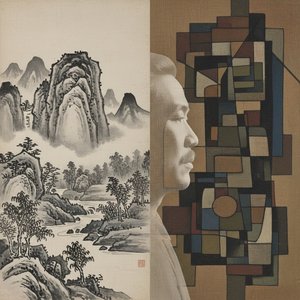
- Traditional Korean Painting: Elements of traditional Korean painting techniques, such as ink wash painting (sumukhwa) and meticulous brushwork, can be observed in his landscapes and still lifes.
- Political Context: The artistic direction within North Korea is heavily guided by state ideology. Kim Jong-gun’s work likely reflects the aesthetic preferences and political directives of the Workers' Party of Korea.
Notable Works
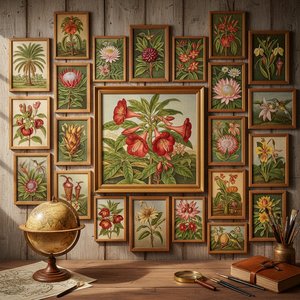
- Wild Grapes: A representative example of his still life paintings, showcasing detailed rendering of natural forms.
- Piling: Demonstrates his ability to capture scenes from daily labor and the working class.
- While a comprehensive catalog of his works is unavailable due to limited access to North Korean art collections, these pieces offer insight into his artistic style.
Historical Significance and Cultural Context
- Representation of DPRK Art: Kim Jong-gun’s work provides a glimpse into the state-sponsored art produced in North Korea, offering valuable insights into the country's cultural values and ideological priorities.
- His paintings contribute to the broader understanding of how art is used as a tool for propaganda and social control within authoritarian regimes.
- Limited Exposure: Due to restrictions on artistic expression and international exchange, Kim Jong-gun’s work remains relatively unknown outside of North Korea. His inclusion in platforms like OriginalUniqueArt.com helps broaden access to this unique perspective.
Kérdések és válaszok
Hol találhatók Kim Jong-gun alkotásai színpaletta szerint csoportosítva?
Kim Jong-gun műveinek keresése egy adott színpalettában a művész Színpaletták alapján oldalán lehetséges.
Hol tekinthetném meg Kim Jong-gun műveit hangulat alapján csoportosítva?
A művész Hangulatok szobája oldala Kim Jong-gun alkotásait hangulat alapján csoportosítva mutatja be.
Kereshetem Kim Jong-gun műveit kulcsszavak alapján is?
Kim Jong-gun művei kulcsszavakra bontva is felfedezhetők a művész Kulcsszavak szerint oldalán, ahol minden kulcsszó a hozzá tartozó alkotásokat gyűjti össze.