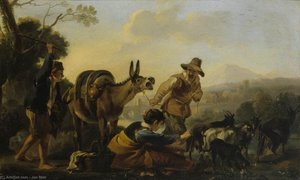
Jan Miel portréja

A 71 legnevesebbebb Jan Miel festmény, mindegyik egyedistens

Frissítve: november 2026 · rangsorolva népszerűségi pontszámunk alapján (minden mű keresései, látogatásai és megrendelései alapján) · 71 mű Jan Miel alkotása a katalógusunkban

Röviden

Scene from the Life of Tramps (Lazzaroni) (1650) az a Jan Miel festmény, amely a legtöbb tekintetet felvonja; az eredeti mű a Hermitaeus-múzeum gyűjteményében található, Szentpétervár. Ezután a tekintet Hunters at Rest (1650) és Carnival Entertainment (1635) elemre irányul. A Jan Miel 71 műve közül a katalógusunkban megtalálható 71 legnépesebb alkotás, melyeket az év, a múzeum és az örökévalóságának okai kísérnek.

1599 – 1663, Beveren Baroque A legtöbb mű: Hermitaeus-múzeum

A galéria szemével: Jan Miel legjobb 10 festménye

1
Scene from the Life of Tramps (Lazzaroni) (1650) (1889) -ja Jan Miel

Scene from the Life of Tramps (Lazzaroni)

1650 · Oil On Canvas · Hermitaeus-múzeum, Szentpétervár

A heavy, ochre light settles over the crumbling stone of ancient ruins. Here, the shadows are thick and deep, swallowing the corners of a chaotic street scene. Figures move through the haze of smoke and dust, their bodies caught in a sudden, sharp glare of sun. A man gestures with urgency, his hands carving shapes into the air, while others sit in the dirt, anchored by the weight of their…

2
Hunters at Rest (1650) (1889) -ja Jan Miel

Hunters at Rest

1650 · Oil On Canvas · Hermitaeus-múzeum, Szentpétervár

is an oil on canvas painting by the Flemish artist Jan Miel. Created about 1650, the work captures a quiet moment within a pastoral scene. It depicts a hunting party finding respite amidst the landscape. The scene is anchored by the presence of horses and the sturdy silhouette of a fortified tower.

3
Carnival Entertainment (1635) (1889) -ja Jan Miel

Carnival Entertainment

1635 · Oil On Canvas · Bavári Állami Festırménygyűjtemények, Munchen

In "Carnival Entertainment" by Jan Miel, we find ourselves amidst a dense and dynamic urban scene. The composition is crowded, capturing a street festival where a large group of figures occupies the foreground and middle ground. These individuals—musicians, dancers, and various onlookers—are arranged to create a sense of constant movement. The perspective is a ground-level view, which provides a palpable sense of depth through the careful layering of people and…

4
Sine Cerere et Baccho Friget Venus (1645) (1889) -ja Jan Miel

Sine Cerere et Baccho Friget Venus

1645 · Oil

The oil painting titled Sine Cerere et Baccho Friget Venus presents a mythological scene of abundance. Jan Miel rendered this work in 1645. It captures a moment where classical deities gather amidst the symbols of harvest and intoxication. The figures exist within a lush, Baroque-style arrangement of life and plenty.

5
The Veneration of St. Lambert (1648) (1889) -ja Jan Miel

The Veneration of St. Lambert

1648 · Oil On Canvas · Fitzwilliam Museum

The air in the grand, classical space feels heavy with the scent of incense and the weight of sudden grief. In the center of this dramatic scene, St. Lambert lies in repose, his body a pale, still anchor amidst a sea of movement. Above him, the celestial realm breaks through the gloom; an angel descends with fluid, sweeping drapery that seems to catch a wind from another world. The light…

6
Soothsayer at an inn (1644) (1889) -ja Jan Miel

Soothsayer at an inn

1644 · Oil

The air at the roadside inn feels heavy with the scent of dust and old stone. Under a rugged stone archway, a group of travelers huddles in a moment of quiet tension. A woman in a garment of lapis blue leans toward a man, her presence a cool contrast to the earthy ochre and deep crimson that define the crowd. He is the soothsayer, a figure caught in the flickering…

7
Two hunters resting in a landscape (the standing hunter is a woman in men's clothes) (1639) (1889) -ja Jan Miel

Two hunters resting in a landscape (the standing hunter is a woman in men's clothes)

1639 · Oil On Canvas · New York Historical Society, New York

The scene unfolds within the oil on canvas work titled Two hunters resting in a landscape (the standing hunter is a woman in men's clothes). This composition emerges from the hand of Jan Miel, a painter who brings a sense of immediate life to the quietude of the hunt. The work is dated 1639, capturing a specific moment of stillness amidst the natural world.

8
Three peasants having fun with music and dance (1639) (1889) -ja Jan Miel

Three peasants having fun with music and dance

1639 · Oil On Panel · Rafael Valls Limited, City of Westminster

Three peasants having fun with music and dance by Jan Miel presents a lively genre scene centered on three figures engaged in rhythmic activity. The composition is dynamic, utilizing an intimate perspective that places the viewer in close proximity to the subjects. Within this shallow space, the central figure is captured mid-motion, a choice that establishes a sense of rhythmic movement throughout the scene. To the left of the main…

9
The Travelers' Dinner. Peasants Eating Near an Inn or Resting (1650) (1889) -ja Jan Miel

The Travelers' Dinner. Peasants Eating Near an Inn or Resting

1650 · Oil On Canvas

The Travelers' Dinner. Peasants Eating Near an Inn or Resting is a genre painting by Jan Miel. This work emerged around 1650, a period when the artist was active within the artistic circles of the seventeenth century. The canvas captures a specific slice of rural life through the eyes of a painter who understood the weight of stone and the texture of coarse cloth.

10
An Italianate Landscape with Peasants Dancing (1650) (1889) -ja Jan Miel

An Italianate Landscape with Peasants Dancing

1650 · Oil On Canvas · Nostell Priory, Wakefield

We are looking at An Italianate Landscape with Peasants Dancing, a work by Jan Miel. This piece dates to about 1650, a period when the artist was deeply engaged with the stylistic shifts occurring within the Italian Baroque. It is a significant example of how Miel navigated the transition from the gritty, everyday observations of the Bamboccianti to more expansive, classical compositions.

Jan Miel híres festményei, 11 és 71 között

11Falcon hunters in front of an inn in a ruin (1650) (1889) -ja Jan MielFalcon hunters in front of an inn in a ruin1650 12The beggar (1650) (1889) -ja Jan MielThe beggar1650 13Barber and roulette players (1650) (1889) -ja Jan MielBarber and roulette players1650 14Military resting with a fortune teller (1650) (1889) -ja Jan MielMilitary resting with a fortune teller1650 15Carnival parade in Rome (1660) (1889) -ja Jan MielCarnival parade in Rome1660 16Hannibal's dream (1661) (1889) -ja Jan MielHannibal's dream1661 17Figures in the vicinity of architectural ruins (1650) (1889) -ja Jan MielFigures in the vicinity of architectural ruins1650 18The gathering of the hunters (1660) (1889) -ja Jan MielThe gathering of the hunters1660 · Galleria Sabauda 19Boar hunt (1660) (1889) -ja Jan MielBoar hunt1660 · Velúriai Királyi Palota 20Bear hunt (1659) (1889) -ja Jan MielBear hunt1659 · Velúriai Királyi Palota 21Diana the Huntress (1658) (1889) -ja Jan MielDiana the Huntress1658 · Velúriai Királyi Palota 22Adoration of the Shepherds (1650) (1889) -ja Jan MielAdoration of the Shepherds1650 · Pushkin állami művészeti múzeum 23Serenade with dancers and musician (1650) (1889) -ja Jan MielSerenade with dancers and musician1650 24The Race of the Berber Horses in Rome (1664) (1889) -ja Jan MielThe Race of the Berber Horses in Rome1664 25Traveling theatre (1700) (1889) -ja Jan MielTraveling theatre1700 26Harbour (1652) (1889) -ja Jan MielHarbour1652 · Hermitaeus-múzeum 27La curea - curée - con corte Regale, Carlo Emanuele II e Franesca d (1661) (1889) -ja Jan MielLa curea - curée - con corte Regale, Carlo Emanuele II e Franesca d1661 · Velúriai Királyi Palota 28Dance in the Trattoria (1647) (1889) -ja Jan MielDance in the Trattoria1647 · Academy of Fine Arts Vienna 29LE BARBIER NAPOLITAIN (1889) -ja Jan MielLE BARBIER NAPOLITAINLouvre Múzeum 30St John the Baptist Preaching in the Desert (1889) -ja Jan MielSt John the Baptist Preaching in the DesertNationalmuseum 31The Arch of Constantine in Rome (1648) (1889) -ja Jan MielThe Arch of Constantine in Rome1648 · Barber Institute of Fine Arts 32Scene in front of a tavern (1638) (1889) -ja Jan MielScene in front of a tavern1638 · Varsói Nemzeti Múzeum 33Figures Feasting at a Fair in Prati, Outside the Walls of Rome, with the Saint Peter's Basilica and Monte Mario Beyond (1650) (1889) -ja Jan MielFigures Feasting at a Fair in Prati, Outside the Walls of Rome, with the Saint Peter's Basilica and Monte Mario Beyond1650 34Deer hunt (1661) (1889) -ja Jan MielDeer hunt1661 · Velúriai Királyi Palota 35The death of the deer (1660) (1889) -ja Jan MielThe death of the deer1660 · Velúriai Királyi Palota 36The Courtyard of Palazzo Nardini in Rome (1650) (1889) -ja Jan MielThe Courtyard of Palazzo Nardini in Rome1650 · Palazzo Barberini 37Hunters at Rest (1889) -ja Jan MielHunters at RestMuseo del Prado 38Architectural Landscape (1638) (1889) -ja Jan MielArchitectural Landscape1638 · Hermitaeus-múzeum 39Carnival Time in Rome (1653) (1889) -ja Jan MielCarnival Time in Rome1653 · Museo del Prado 40The snack (1889) -ja Jan MielThe snackMuseo del Prado 41Cottage with inhabitants (1889) -ja Jan MielCottage with inhabitantsMuseo del Prado 42The local Barber (1889) -ja Jan MielThe local BarberMuseo del Prado 43Popular scene (1889) -ja Jan MielPopular sceneMuseo del Prado 44The Flight into Egypt (1889) -ja Jan MielThe Flight into EgyptStatens Museum for Kunst 45Soldiers Resting (1889) -ja Jan MielSoldiers RestingNationalmuseum 46Peasants Resting (1889) -ja Jan MielPeasants RestingNationalmuseum 47Hunters Resting (1889) -ja Jan MielHunters RestingNationalmuseum 48Fox hunting (1889) -ja Jan MielFox huntingVelúriai Királyi Palota 49Jugglers passing – Carnival (1889) -ja Jan MielJugglers passing – CarnivalVarsói Nemzeti Múzeum 50MARCHAND D'ESCARGOTS (1889) -ja Jan MielMARCHAND D'ESCARGOTS 51Road in the Roman Campagna (1889) -ja Jan MielRoad in the Roman CampagnaHermitaeus-múzeum 52PAYSAGE AVEC FIGURES (1889) -ja Jan MielPAYSAGE AVEC FIGURES 53Maraudeurs italiens Une halte (autre titre) (1889) -ja Jan MielMaraudeurs italiens Une halte (autre titre) 54Pastorale avec bergère endormie (1889) -ja Jan MielPastorale avec bergère endormie 55The fugitive Erminia asks a fellow countryman for admission (1889) -ja Jan MielThe fugitive Erminia asks a fellow countryman for admission 56A Dózsa Társaság (1660) (1889) -ja Jan MielA Dózsa Társaság1660 · Château de Versailles 57The vihuela player (1889) -ja Jan MielThe vihuela playerMuseo del Prado 58LA DINEE DES VOYAGEURS (1889) -ja Jan MielLA DINEE DES VOYAGEURSLouvre Múzeum 59Genre Scene (1650) (1889) -ja Jan MielGenre Scene1650 · Hermitaeus-múzeum 60Landscape with herders (1889) -ja Jan MielLandscape with herdersMuseo del Prado 61LA HALTE MILITAIRE (1889) -ja Jan MielLA HALTE MILITAIRELouvre Múzeum 62Landscape with a Battle between Two Rams (1640) (1889) -ja Jan MielLandscape with a Battle between Two Rams1640 · Metropolitan Művészeti Múzeum 63Hunters at Rest (1889) -ja Jan MielHunters at RestHermitaeus-múzeum 64Shepherds and herd in a mountainous landscape (1889) -ja Jan MielShepherds and herd in a mountainous landscapeMusée Calvet 65Carnival in the Piazza Colonna, Rome (1889) -ja Jan MielCarnival in the Piazza Colonna, RomeWadsworth Atheneum 66Roman Lime Kiln with Peasants Gambling (1889) -ja Jan MielRoman Lime Kiln with Peasants Gambling 67Italian Peasants outside a Tavern (1889) -ja Jan MielItalian Peasants outside a TavernRoyal Collection 68Un savetier (1889) -ja Jan MielUn savetier 69The bowls players (1889) -ja Jan MielThe bowls players 70LE MENDIANT (1889) -ja Jan MielLE MENDIANTLouvre Múzeum 71Charlatan (1889) -ja Jan MielCharlatanHermitaeus-múzeum

Jan Miel híres festményei, korszakonként

A témák, amelyek Jan Miel figyelmét meghúzták

A négy leggyakorobban előforduló téma ebben az eredeti művekben, mindegyik a legkiválóbb példájával.

A műemlékek, amelyek Jan Miel eredeti műveit őrzik

A 8 olyan múzeum, amely a legtöbb ezen az oldalon szereplő festményet őrzi.

Múzeum Város Jan Miel művei Ebből a listából származó festmények
Hermitaeus-múzeum, SzentpétervárHermitaeus-múzeum Szentpétervár 8 Scene from the Life of Tramps (Lazzaroni), Hunters at Rest, Harbour
Museo del Prado, MadridMuseo del Prado Madrid 8 Hunters at Rest, Carnival Time in Rome, The snack
Velúriai Királyi Palota, Venaria RealeVelúriai Királyi Palota Venaria Reale 7 Boar hunt, Bear hunt, Diana the Huntress
Louvre Múzeum, PárizsLouvre Múzeum Párizs 4 LE BARBIER NAPOLITAIN, LA DINEE DES VOYAGEURS, LA HALTE MILITAIRE
Nationalmuseum, StockholmNationalmuseum Stockholm 4 St John the Baptist Preaching in the Desert, Soldiers Resting, Peasants Resting
Varsói Nemzeti Múzeum, VarsóVarsói Nemzeti Múzeum Varsó 2 Scene in front of a tavern, Jugglers passing – Carnival
Bavári Állami Festırménygyűjtemények, MunchenBavári Állami Festırménygyűjtemények Munchen 1 Carnival Entertainment
Fitzwilliam MuseumFitzwilliam Museum 1 The Veneration of St. Lambert

Jan Miel évtizedekig: egy egyedi eredeti mű minden évtizedben

Művek évtizedenként

Váassz ki egy évtizedet, hogy megnézhesd az azt meghatározó eredetiműveket.

Jan Miel festményei: kérdések a galériának

Mi a leghíresebb műve Jan Mielnek?Fedje fel a választ

Scene from the Life of Tramps (Lazzaroni) (1650), Hermitaeus-múzeum, Szentpétervár. Ezután Hunters at Rest (1650) és Carnival Entertainment (1635) következik.

Milyen életkorában alkotta meg Jan Miel a(z) Scene from the Life of Tramps (Lazzaroni) műszt?Fedje fel a választ

51 éves: Scene from the Life of Tramps (Lazzaroni) 1650-ből származik, Jan Miel pedig 1599-ben született.

Melyik tíz festménye Jan Miel a leghíresebb?Fedje fel a választ

Scene from the Life of Tramps (Lazzaroni), Hunters at Rest, Carnival Entertainment, Sine Cerere et Baccho Friget Venus, The Veneration of St. Lambert, Soothsayer at an inn, Two hunters resting in a landscape (the standing hunter is a woman in men's clothes), Three peasants having fun with music and dance, The Travelers' Dinner. Peasants Eating Near an Inn or Resting és An Italianate Landscape with Peasants Dancing. A fenti rangsor a művek évszamarát és a múzeumát jelzi.

Hány mű alkotása ismert Jan Miel nevében?Fedje fel a választ

Katalógusunkban 71 mű található Jan Miel alkotótól, 1635 és 1661 év közötti időszakból.

Hol tekinthetők meg a leghíresebb Jan Miel eredetijeit?Fedje fel a választ

Leginkább Hermitaeus-múzeum (Szentpétervár), Museo del Prado (Madrid) és Velúriai Királyi Palota (Venaria Reale) található. A fenti múzeumi táblázatban mindegyik felsorolásra került.

Melyik időszakban alkotta Jan Miel a leghíresebb festményeit?Fedje fel a választ

1650s alatt: a jelen laphonon található 71 műből 18 készült ebben az időszakban, köztük Scene from the Life of Tramps (Lazzaroni).

Melyik híres Jan Miel festmény a legkorábbi, és melyik a legutóbb készült?Fedje fel a választ

Ezen az oldalon a leghitelesebb Carnival Entertainment (1635), a legutóbbi pedig Hannibal's dream (1661).

Milyen témakörket kedvelt Jan Miel?Fedje fel a választ

People (21), Landscape (15) és Architecture (14), a jelen oldalon található 71 műművészeti alkotás között.

Milyen anyagokkal festett leggyakrabban Jan Miel?Fedje fel a választ

Oil On Canvas, a jelen oldalon található 71 műből 34 darab esetén.

Mely művészeti irányba tartozik Jan Miel műve?Fedje fel a választ

Baroque, ezen az oldalon található eredetiek alapján.

Milyen Jan Miel eredeti műveket láthatok a Hermitaeus-múzeum kiállításaiban?Fedje fel a választ

Scene from the Life of Tramps (Lazzaroni), Hunters at Rest és Harbour: a Hermitaeus-múzeum, Szentpétervár 8 művet őrzi ezen az oldalon.

Jan Miel: a művész portréja

Jan Miel: A híd a holland realizmus és a barokk pompásága között

Jan Miel (1599–1663) a xvii. század művészeti tájában meghatározó alakként áll fent, testét hítozva a flamandra hagyományok és az olasz innováció lenyűgöző találkozásának. Bár születési helyét Antwerpen vagy ’s-Hertogenbosch is megnevezheti, Belgium Beverenében született művész korai élete viszonylag sötétben 못한, így életrajzi részletei ritkák maradnak. A tudományos kutatásokból azonban egy olyan lenyűgöző művészeti utazás rajzolódik ki, amelyet stilisztikai fejlődés és olyan kollaboratív törekvések jellemeztek, amelyek végleg rögzítették helyét Róma és Torino vibráló kulturális környezetében.

Formálódó éveit elsősorban Antwerpenben töltötte, ahol olyan neves flamandra mesterek hatásait szívta magába, mint Anthony van Dyck. Bár képzése pontos körvonala elérhetetlen marad, kétségtelenül mély elismerést ébresztett benne a precíz megfigyelés és a kifinomult technika iránt – tulajdonságok, amelyek későbbi életművének meghatározó elemei lettek. A klasszikus rajztudásban és a portretúra alapozása olyan esszenciális eszköztárral ruházta fel, amely később képes volt meghaladni a regionális határokat is.

A római átalakulás és a Bamboccianti szellemiség

Miel 1636 körül Rómaに való megérkezése fordulópontot jelentett művészeti pályáján. Gyorsan csatlakozott a Bentvueghels nevű befolyásos társuláshoz, amely a Föld örök városában élő holland és flamandra művészek közössége volt. E testvériségben vette fel emlékezetes becenevet is: „bieco”, ami egy jellegzetes szúró tekintetét tükrözte – egy olyan karakterisztika, amely később művészneve szinonimává vált. Ez a társasági hálózat mély kapcsolatokat teremtett egy szélesebb művészeti közösségen belül, amelyet Pieter van Laer Bamboccianti stílusa mélyen meghatározott.

Ez a mozgalom Róma és környezetének alsóbb rétegeinek mindennapi életét volt feladatul tűzőtt, elkerülve a magasrenesszáns művészet idealizált pompáját egy sokkal kézzelfoghatóbb és közvetlenebb ábrázolás érdekében. Miel teljes szívvel magába fogadta ezt a trendet, lenyűgöző műgenre alkotásokkal, amelyek a városi létezés szellemét ragadták meg figyelemre méltó realizmussal és érzékenységgel. Műveiben gyakran megjelentek:

  • Élettel teli utcai jelenetek utazókkal, kereskedőkkel és munkásokkal.
  • A fény mesteri használata, amely a római sikátorok poros, napsütötte hangulatát idézi meg.
  • Az emberi érzelmek finom kölcsönhatása a zsúfolt, kaotikus környezetben.
  • A textúrák – az anyagok, a kő és a föld – aprólékos figyelme.

Evolució a klasszicizmus és a udvari fenség felé

Pályafutása előrehaladtával Miel művészeti víziója jelentős metamorfózisán ment keresztül. Bár továbbra is a műgenre alkotások mestere maradt, elmozdult a Bamboccianti stílus nyers realizmusától, és inkább klasszicizáló történelmi festmények irányába fordult. Ez a váltás az európai művészet szélesebb körű trendjét tükrözte, ahol a barokk nyers energiáját egyre inkább felváltotta a rend, a nemesség és a klasszikus alegória iránti vágy.

Ez az evolúció végül tekintélyes megbízásokhoz vezetett, legkiemelkedebben pedig Savoj trónбороja, II. Bertalan (Charles Emanuel II) udvari művészeként szolgált. Torinoi udvari szolgálatában Miel munkássága formálisabb és pompásabb karaktert öltött fel. Korábbi római jeleneteinek intimitása áldozta fel magát nagyobb skálájú és összetettebb kompozícióknak, amelyek királyi mecénása hatalmát és presztízsét voltak hivatottak tükrözni. Ez a korszak képviseli szakmai eredménye csúcspontját, ahol részletgazdag flamandra gyökerei találkoztak az európai arisztokrácia által követelt nagyszabású, áramló narratívákkal.

Jan Miel történelmi jelentősége abban rejlik, hogy képes volt navigálni ezen különálló világok között. Olyan művész volt, aki képes volt szépséget találni egy római utcai gyermek szerény küzdelmeiben és méltóságot az ősi epikus történetekben is. Áthidalva a szakadékot hetente realizmusa és a déli klasszicizmus dramatikus közötti, Miel maradandót hagyott a xvii. századi kanonban, biztosítva örökségét a barokk kor valódi kosmopolitájaként.