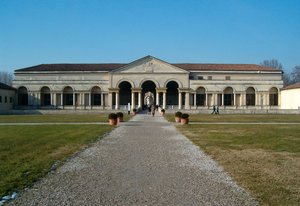
Giulio Romano portréja

A 100 legnevesebbebb Giulio Romano festmény, mindegyik egyedistens

Frissítve: november 2026 · rangsorolva népszerűségi pontszámunk alapján (minden mű keresései, látogatásai és megrendelései alapján) · 114 mű Giulio Romano alkotása a katalógusunkban

Röviden

Mennyezet: A istenek gyűlée Jupiter trónja körül (1532) az a Giulio Romano festmény, amely a legtöbb tekintetet felvonja. Ezután a tekintet View of the Sala dei Giganti (vault and south wall) (1526) és Tapestry with Playing Putti (1545) elemre irányul. A Giulio Romano 114 műve közül a katalógusunkban megtalálható 100 legnépesebb alkotás, melyeket az év, a múzeum és az örökévalóságának okai kísérnek.

1499 – 1546, Róma Manierizmus A legtöbb mű: Palazzo del Tè

A galéria szemével: Giulio Romano legjobb 10 festménye

1
Mennyezet: A istenek gyűlée Jupiter trónja körül (1532) (1889) -ja Giulio Romano

Mennyezet: A istenek gyűlée Jupiter trónja körül

1532 · Freskó

Mennyezet: A istenek gyűlée Jupiter trónja körül egy jelentős fresco, melyet Giulio Romano alkotott. Az 1532-ben megvalósult mű a mantovai Palazzo del Tè-ben található Sala dei Giganti mennyezetét díszíti. Ez a monumentális dekoráció tükrözi a művész klasszikus harmónától, a magyar reneszánstól, a mannerizmus kifejező feszültségéig való távolodását.

2
View of the Sala dei Giganti (vault and south wall) (1526) (1889) -ja Giulio Romano

View of the Sala dei Giganti (vault and south wall)

1526 · Fresco · Palazzo del Tè, Mantova

To gaze upon this magnificent fresco, View of the Sala dei Giganti (vault and south wall), is to step directly into the vibrant heart of the High Renaissance. Painted in 1526 by the masterful hand of Giulio Romano, this work transcends mere decoration; it is a profound narrative tapestry woven from human drama, natural vitality, and divine symbolism. The scene explodes with life, drawing the viewer into a monumental gathering…

3
Tapestry with Playing Putti (1545) (1889) -ja Giulio Romano

Tapestry with Playing Putti

1545 · Tapestry · Museo Poldi Pezzoli, Milán

To gaze upon this depiction of a tapestry with playing putti is to step directly into an idealized moment plucked from the heart of the Italian Renaissance. It is more than just a painting; it is a captured breath of youthful exuberance, rendered with the masterful touch characteristic of Giulio Romano. The scene unfolds as a vibrant pastoral tableau, where several cherubic figures—the beloved putti—engage in playful revelry. Their presence…

4
Allegory of the Virtues of Federico II Gonzaga (1531) (1889) -ja Giulio Romano

Allegory of the Virtues of Federico II Gonzaga

1531 · Fresco · J. Paul Getty Múzeum, Los Angeles

To stand before an image like the Allegory of the Virtues of Federico II Gonzaga is to step directly into the vibrant, intellectual heart of the Italian High Renaissance transitioning into Mannerism. This monumental work, executed in 1531 by Giulio Romano, is far more than a mere depiction of figures; it is a carefully orchestrated philosophical statement rendered in pigment and plaster. The scene unfolds with an almost theatrical richness,…

5
The Lovers (1525) (1889) -ja Giulio Romano

The Lovers

1525 · Oil On Canvas · Hermitaeus-múzeum, Szentpétervár

Giulio Romano’s “The Lovers,” painted around 1525, isn't merely a depiction of intimacy; it’s a meticulously crafted tableau brimming with symbolism and echoing the complex currents of the High Renaissance. Born Giulio Pippi in Rome around 1499, Romano swiftly ascended through the ranks of Raphael’s studio, absorbing the master’s classical ideals while simultaneously forging his own distinctive Mannerist style – a style characterized by heightened emotion, distorted forms, and an…

6
Adoration of the Shepherds (detail) (1535) (1889) -ja Giulio Romano

Adoration of the Shepherds (detail)

1535 · Oil · Louvre Múzeum, Párizs

This detail from 1535 captures a fragment of a larger religious narrative, focusing on the human response to a divine presence. A central figure, distinguished by a large staff topped with a cross, anchors the composition. The arrangement of figures creates a sense of depth through overlapping forms and varying scales, drawing the eye from the immediate foreground into a complex, crowded space. The composition avoids the static balance of…

7
The Birth of Bacchus (1533) (1889) -ja Giulio Romano

The Birth of Bacchus

1533 · Acrylic On Canvas · J. Paul Getty Múzeum, Los Angeles

Giulio Romano's "The Birth of Bacchus," a monumental charcoal and chalk drawing from 1533, isn’t merely a depiction of a mythological scene; it’s a visceral exploration of human drama, a raw sketch brimming with energy and symbolic weight. Born Giulio Pippi in Rome around 1499, Romano emerged as a pivotal figure within the waning embers of the High Renaissance, swiftly absorbing the influence of Raphael while forging his own distinctive…

8
Flaying of Marsyas (1525) (1889) -ja Giulio Romano

Flaying of Marsyas

1525 · Oil On Canvas · Louvre Múzeum, Párizs

Giulio Romano’s “Flaying of Marsyas” isn't merely a depiction of a mythological punishment; it’s a visceral embodiment of struggle, humiliation, and the brutal intersection of divine power and mortal defiance. Painted in 1525-35 during his tenure as court artist for Duke Federico Gonzaga of Mantua, this monumental fresco – now meticulously reproduced on canvas – plunges the viewer directly into the heart of Ovid’s *Metamorphoses*. The story itself is a…

9
Victory, Janus, Chronos, and Gaea (1532) (1889) -ja Giulio Romano

Victory, Janus, Chronos, and Gaea

1532 · Acrylic On Canvas · J. Paul Getty Múzeum, Los Angeles

A Tapestry of Time and Transformation: Giulio Romano’s “Victory, Janus, Chronos, and Gaea” Giulio Romano's "Victory, Janus, Chronos, and Gaea," painted in 1532-1534 during his illustrious tenure as court artist for Federico II Gonzaga of Mantua, is more than just a visually arresting fresco; it’s a profound meditation on the cyclical nature of time, the duality of existence, and the very essence of Roman mythology. Born Giulio Pippi in Rome…

10
View of the Palazzo del Tè (1526) (1889) -ja Giulio Romano

View of the Palazzo del Tè

1526 · Acrylic On Canvas · Palazzo del Tè, Mantova

A Vision of Renaissance Grandeur: Exploring Giulio Romano’s Palazzo del Té Giulio Romano's *View of the Palazzo del Té* stands as a testament to the zenith of Mannerist art and architectural ambition—a project conceived by Federico Gonzaga, Duke of Mantua, between 1526 and 1534. More than just a building, it embodies an entire worldview: a deliberate rejection of linear perspective and idealized beauty in favor of dramatic illusionism and psychological…

Giulio Romano híres festményei, 11 és 100 között

11Evangelist symbols (1522) (1889) -ja Giulio RomanoEvangelist symbols1522 · Kunsthistorisches Museum 12View of the Salone dei Cavalli (1526) (1889) -ja Giulio RomanoView of the Salone dei Cavalli1526 13The Old Woman and Vulcan, Tribute to Apollo (1526) (1889) -ja Giulio RomanoThe Old Woman and Vulcan, Tribute to Apollo1526 14Nude Child with Open Arms (1889) -ja Giulio RomanoNude Child with Open ArmsGalleria degli Uffizi 15The Holy Family (1520) (1889) -ja Giulio RomanoThe Holy Family1520 · J. Paul Getty Múzeum 16An Allegory of Immortality (1540) (1889) -ja Giulio RomanoAn Allegory of Immortality1540 · Detroit Institute of Arts 17The Holy Family, St John with a small Bird in his Hand (1530) (1889) -ja Giulio RomanoThe Holy Family, St John with a small Bird in his Hand1530 · Statens Museum for Kunst 18The Holy Family with the Infant Saint John the Baptist (1520) (1889) -ja Giulio RomanoThe Holy Family with the Infant Saint John the Baptist1520 · Scottish National Gallery 19Madonna and Child with the Infant St. John (1516) (1889) -ja Giulio RomanoMadonna and Child with the Infant St. John1516 20The Virgin and Child (1518) (1889) -ja Giulio RomanoThe Virgin and Child1518 · Apsley House 21Tarquin and Lucretia (1536) (1889) -ja Giulio RomanoTarquin and Lucretia1536 · Palazzo Ducale 22'The Horse ''Morel favorito''' (1526) (1889) -ja Giulio Romano'The Horse ''Morel favorito'''1526 23St. John the Baptist in the Wilderness (1520) (1889) -ja Giulio RomanoSt. John the Baptist in the Wilderness1520 24Nurture of Jupiter (1533) (1889) -ja Giulio RomanoNurture of Jupiter1533 · Blickling Hall 25Group of three lictors (1530) (1889) -ja Giulio RomanoGroup of three lictors1530 · Varsói Nemzeti Múzeum 26Tapestry Cartoon: Two Heads from the Massacre of the Innocents (1522) (1889) -ja Giulio RomanoTapestry Cartoon: Two Heads from the Massacre of the Innocents1522 · Scottish National Gallery 27Bacchus and Ariadne (1530) (1889) -ja Giulio RomanoBacchus and Ariadne1530 · Statens Museum for Kunst 28Vertumnus and Pomona (1530) (1889) -ja Giulio RomanoVertumnus and Pomona1530 · Statens Museum for Kunst 29Female nude, half figure (1527) (1889) -ja Giulio RomanoFemale nude, half figure1527 30Vaulted ceiling (8) (1526) (1889) -ja Giulio RomanoVaulted ceiling (8)1526 31Fresco on the east wall (detail) (1532) (1889) -ja Giulio RomanoFresco on the east wall (detail)1532 32View of the Sala di Psiche (west wall) (1526) (1889) -ja Giulio RomanoView of the Sala di Psiche (west wall)1526 33Fresco on the south wall (detail) (9) (1532) (1889) -ja Giulio RomanoFresco on the south wall (detail) (9)1532 34Jupiter Seducing Olympias (1526) (1889) -ja Giulio RomanoJupiter Seducing Olympias1526 35Self-portrait (1540) (1889) -ja Giulio RomanoSelf-portrait1540 36Tomb of Pietro Strozzi (1529) (1889) -ja Giulio RomanoTomb of Pietro Strozzi1529 · Sant'Andrea 37Virgin and Child with the Infant St John (1523) (1889) -ja Giulio RomanoVirgin and Child with the Infant St John1523 · Galleria Borghese 38Façade (1526) (1889) -ja Giulio RomanoFaçade1526 · Palazzo del Tè 39The Madonna and Child with Saint John the Baptist (1522) (1889) -ja Giulio RomanoThe Madonna and Child with Saint John the Baptist1522 · Walters Art Museum 40The Fall of the Gigants from Mount Olympus (1889) -ja Giulio RomanoThe Fall of the Gigants from Mount Olympus 41Chariot of the Sun (1526) (1889) -ja Giulio RomanoChariot of the Sun1526 42Frieze (detail) (1532) (1889) -ja Giulio RomanoFrieze (detail)1532 43Hunting Scene (1527) (1889) -ja Giulio RomanoHunting Scene1527 44Hunting Scene (1527) (1889) -ja Giulio RomanoHunting Scene1527 45Polyphemus (1526) (1889) -ja Giulio RomanoPolyphemus1526 46Ceiling decoration (detail) (12) (1527) (1889) -ja Giulio RomanoCeiling decoration (detail) (12)1527 47View of the Sala di Psiche (north and east walls) (1526) (1889) -ja Giulio RomanoView of the Sala di Psiche (north and east walls)1526 48View of the Sala di Psiche (south wall) (1526) (1889) -ja Giulio RomanoView of the Sala di Psiche (south wall)1526 49Psyche's Second Task (River Deity) (1526) (1889) -ja Giulio RomanoPsyche's Second Task (River Deity)1526 50Vaulted ceiling (detail) (10) (1526) (1889) -ja Giulio RomanoVaulted ceiling (detail) (10)1526 51Vaulted ceiling (detail) (18) (1526) (1889) -ja Giulio RomanoVaulted ceiling (detail) (18)1526 52Psyche Appealing in Vain to Juno (1526) (1889) -ja Giulio RomanoPsyche Appealing in Vain to Juno1526 53Portrait of a Woman (detail) (1531) (1889) -ja Giulio RomanoPortrait of a Woman (detail)1531 · Royal Collection 54View of the Sala dei Giganti (south and west walls) (1532) (1889) -ja Giulio RomanoView of the Sala dei Giganti (south and west walls)1532 55View of the Sala dei Giganti (south wall) (1532) (1889) -ja Giulio RomanoView of the Sala dei Giganti (south wall)1532 56The Prisoners (1527) (1889) -ja Giulio RomanoThe Prisoners1527 57View of the Sala di Psiche (east wall) (1526) (1889) -ja Giulio RomanoView of the Sala di Psiche (east wall)1526 58Vault: The Assembly of Gods around Jupiter's Throne (detail) (1532) (1889) -ja Giulio RomanoVault: The Assembly of Gods around Jupiter's Throne (detail)1532 59Ceiling decoration (detail) (11) (1527) (1889) -ja Giulio RomanoCeiling decoration (detail) (11)1527 60Fresco on the north wall (detail) (1532) (1889) -ja Giulio RomanoFresco on the north wall (detail)1532 61Vaulted ceiling (detail) (17) (1526) (1889) -ja Giulio RomanoVaulted ceiling (detail) (17)1526 62Vaulted ceiling (detail) (19) (1526) (1889) -ja Giulio RomanoVaulted ceiling (detail) (19)1526 63Emperor Alexander (1532) (1889) -ja Giulio RomanoEmperor Alexander1532 64Coat-of-arms (1532) (1889) -ja Giulio RomanoCoat-of-arms1532 65View of the Sala dei Giganti (west wall) (1532) (1889) -ja Giulio RomanoView of the Sala dei Giganti (west wall)1532 66River Landscape with Springs (1526) (1889) -ja Giulio RomanoRiver Landscape with Springs1526 67View of the Salone dei Cavalli (1526) (1889) -ja Giulio RomanoView of the Salone dei Cavalli1526 68Fresco on the south wall (detail) (1532) (1889) -ja Giulio RomanoFresco on the south wall (detail)1532 69Vaulted ceiling (detail) (16) (1526) (1889) -ja Giulio RomanoVaulted ceiling (detail) (16)1526 70Tribute to Apollo (1526) (1889) -ja Giulio RomanoTribute to Apollo1526 71Vaulted ceiling (1526) (1889) -ja Giulio RomanoVaulted ceiling1526 72View of the Sala dei Giganti (north wall) (1532) (1889) -ja Giulio RomanoView of the Sala dei Giganti (north wall)1532 73View of the Sala dei Giganti (east wall) (1532) (1889) -ja Giulio RomanoView of the Sala dei Giganti (east wall)1532 74Ceiling decoration (1527) (1889) -ja Giulio RomanoCeiling decoration1527 75Cupid and Psyche (1526) (1889) -ja Giulio RomanoCupid and Psyche1526 76Design for a Saltcellar (1524) (1889) -ja Giulio RomanoDesign for a Saltcellar1524 77Fresco on the south wall (detail) (12) (1532) (1889) -ja Giulio RomanoFresco on the south wall (detail) (12)1532 78Fresco on the north wall (detail) (1532) (1889) -ja Giulio RomanoFresco on the north wall (detail)1532 79Mars Chasing Adonis from Venus's Pavilion (1526) (1889) -ja Giulio RomanoMars Chasing Adonis from Venus's Pavilion1526 80Vault: The Assembly of Gods around Jupiter's Throne (detail) (1532) (1889) -ja Giulio RomanoVault: The Assembly of Gods around Jupiter's Throne (detail)1532 81Fresco on the south wall (detail) (10) (1532) (1889) -ja Giulio RomanoFresco on the south wall (detail) (10)1532 82The Old Woman and Vulcan (1526) (1889) -ja Giulio RomanoThe Old Woman and Vulcan1526 83Ceiling (detail) (1526) (1889) -ja Giulio RomanoCeiling (detail)1526 84Tribute to Apollo (1526) (1889) -ja Giulio RomanoTribute to Apollo1526 85Ajax Defends Patroclus's Corps (1538) (1889) -ja Giulio RomanoAjax Defends Patroclus's Corps1538 · Palazzo Ducale 86View of the Sala di Troia (10) (1536) (1889) -ja Giulio RomanoView of the Sala di Troia (10)1536 87View of the Sala di Troia (12) (1538) (1889) -ja Giulio RomanoView of the Sala di Troia (12)1538 88Ajax Defends Patroclus's Corps (1538) (1889) -ja Giulio RomanoAjax Defends Patroclus's Corps1538 89View of the Sala di Troia (11) (1536) (1889) -ja Giulio RomanoView of the Sala di Troia (11)1536 90Façade and courtyard view (1526) (1889) -ja Giulio RomanoFaçade and courtyard view1526 · Palazzo del Tè 91Monteluce madonna (1889) -ja Giulio RomanoMonteluce madonna 92Venus and Vulcan (1889) -ja Giulio RomanoVenus and Vulcan 93Satyr and Boy (1889) -ja Giulio RomanoSatyr and Boy 94Copy after Giulio Romano (1536) (1889) -ja Giulio RomanoCopy after Giulio Romano1536 · Cleveland Museum of Art 95Virgin with the Child (1520) (1889) -ja Giulio RomanoVirgin with the Child1520 · Galleria degli Uffizi 96Triumph of Titus and Vespasian (1537) (1889) -ja Giulio RomanoTriumph of Titus and Vespasian1537 · Louvre Múzeum 97Study for the Holy Family (1518) (1889) -ja Giulio RomanoStudy for the Holy Family1518 · Louvre Múzeum 98Banquet of Cupid and Psyche (1889) -ja Giulio RomanoBanquet of Cupid and PsychePalazzo del Tè 99Saint Mary Magdalene borne by Angels (1889) -ja Giulio RomanoSaint Mary Magdalene borne by AngelsNational Gallery 100The Circumcision (1889) -ja Giulio RomanoThe CircumcisionLouvre Múzeum

Giulio Romano híres festményei, korszakonként

A témák, amelyek Giulio Romano figyelmét meghúzták

A négy leggyakorobban előforduló téma ebben az eredeti művekben, mindegyik a legkiválóbb példájával.

A műemlékek, amelyek Giulio Romano eredeti műveit őrzik

A 8 olyan múzeum, amely a legtöbb ezen az oldalon szereplő festményet őrzi.

Múzeum Város Giulio Romano művei Ebből a listából származó festmények
Palazzo del Tè, MantovaPalazzo del Tè Mantova 6 View of the Sala dei Giganti (vault and south wall), View of the Palazzo del Tè, Façade
Louvre Múzeum, PárizsLouvre Múzeum Párizs 6 Adoration of the Shepherds (detail), Flaying of Marsyas, Triumph of Titus and Vespasian
J. Paul Getty Múzeum, Los AngelesJ. Paul Getty Múzeum Los Angeles 5 Allegory of the Virtues of Federico II Gonzaga, The Birth of Bacchus, Victory, Janus, Chronos, and Gaea
Statens Museum for Kunst, KoppenhágaStatens Museum for Kunst Koppenhága 3 The Holy Family, St John with a small Bird in his Hand, Bacchus and Ariadne, Vertumnus and Pomona
Galleria degli Uffizi, TarunaGalleria degli Uffizi Taruna 2 Nude Child with Open Arms, Virgin with the Child
Scottish National Gallery, EdinburghScottish National Gallery Edinburgh 2 The Holy Family with the Infant Saint John the Baptist, Tapestry Cartoon: Two Heads from the Massacre of the Innocents
Palazzo Ducale, MantovaPalazzo Ducale Mantova 2 Tarquin and Lucretia, Ajax Defends Patroclus's Corps
Royal Collection, LondonRoyal Collection London 2 Portrait of a Woman (detail)

Giulio Romano évtizedekig: egy egyedi eredeti mű minden évtizedben

Művek évtizedenként

Váassz ki egy évtizedet, hogy megnézhesd az azt meghatározó eredetiműveket.

Giulio Romano festményei: kérdések a galériának

Mi a leghíresebb műve Giulio Romanonek?Fedje fel a választ

Mennyezet: A istenek gyűlée Jupiter trónja körül (1532). Ezt követi View of the Sala dei Giganti (vault and south wall) (1526) és Tapestry with Playing Putti (1545).

Milyen életkorában alkotta meg Giulio Romano a(z) Mennyezet: A istenek gyűlée Jupiter trónja körül műszt?Fedje fel a választ

33 éves: Mennyezet: A istenek gyűlée Jupiter trónja körül 1532-ből származik, Giulio Romano pedig 1499-ben született.

Melyik tíz festménye Giulio Romano a leghíresebb?Fedje fel a választ

Mennyezet: A istenek gyűlée Jupiter trónja körül, View of the Sala dei Giganti (vault and south wall), Tapestry with Playing Putti, Allegory of the Virtues of Federico II Gonzaga, The Lovers, Adoration of the Shepherds (detail), The Birth of Bacchus, Flaying of Marsyas, Victory, Janus, Chronos, and Gaea és View of the Palazzo del Tè. A fenti rangsor a művek évszamarát és a múzeumát jelzi.

Hány mű alkotása ismert Giulio Romano nevében?Fedje fel a választ

Katalógusunkban 114 mű található Giulio Romano alkotótól, 1516 és 1545 év közötti időszakból.

Hol tekinthetők meg a leghíresebb Giulio Romano eredetijeit?Fedje fel a választ

Leginkább Palazzo del Tè (Mantova), Louvre Múzeum (Párizs) és J. Paul Getty Múzeum (Los Angeles) található. A fenti múzeumi táblázatban mindegyik felsorolásra került.

Melyik időszakban alkotta Giulio Romano a leghíresebb festményeit?Fedje fel a választ

1520s alatt: a jelen laphonon található 100 műből 50 készült ebben az időszakban, köztük View of the Sala dei Giganti (vault and south wall).

Melyik híres Giulio Romano festmény a legkorábbi, és melyik a legutóbb készült?Fedje fel a választ

Ezen az oldalon a leghitelesebb Madonna and Child with the Infant St. John (1516), a legutóbbi pedig Tapestry with Playing Putti (1545).

Milyen témakörket kedvelt Giulio Romano?Fedje fel a választ

Figures (28), People (23) és Woman (21), a jelen oldalon található 100 műművészeti alkotás között.

Milyen anyagokkal festett leggyakrabban Giulio Romano?Fedje fel a választ

Fresco, a jelen oldalon található 100 műből 58 darab esetén.

Mely művészeti irányba tartozik Giulio Romano műve?Fedje fel a választ

Manierizmus, ezen az oldalon található eredetiek alapján.

Milyen Giulio Romano eredeti műveket láthatok a Palazzo del Tè kiállításaiban?Fedje fel a választ

View of the Sala dei Giganti (vault and south wall), View of the Palazzo del Tè és Façade: a Palazzo del Tè, Mantova 5 művet őrzi ezen az oldalon.

Giulio Romano: a művész portréja

A Roman Beginning and Apprenticeship Under a Master

Giulio Romano, born Giulio Pippi around 1499 in Rome, emerged during a period of immense artistic ferment – a time when the Renaissance was reaching its zenith but also beginning to shift and transform. Details surrounding his early life remain somewhat elusive, shrouded in the mists of historical record, yet it’s clear he swiftly entered the orbit of Raphael, arguably the most celebrated painter of the High Renaissance. This apprenticeship proved pivotal, not merely providing him with technical skills, but fundamentally shaping his artistic vision and laying the foundation for his future stylistic explorations. He wasn't simply a studio assistant; Giulio rapidly became an indispensable collaborator, contributing significantly to projects of immense scale and importance – notably the decoration of the Vatican Stanze, those magnificent rooms commissioned by Popes Julius II and Leo X. His hand is readily identifiable in *The Fire in the Borgo*, where he assisted Raphael in depicting a dramatic scene of miraculous intervention, capturing the intensity and dynamism that would become hallmarks of his own work. Following Raphael’s untimely death in 1520, Giulio inherited responsibility for completing numerous unfinished commissions, including the ambitious decoration of Villa Madama for Cardinal Giuliano de' Medici – a project that demanded both artistic skill and administrative prowess. This early exposure to large-scale projects, the pressures of aristocratic patronage, and the challenges of bringing disparate visions together instilled within him a confidence and ambition that would define his later career, pushing him beyond mere imitation and toward a distinctly original style.

The Birth of Mannerism: A Departure from Classical Harmony

While Giulio Romano remained deeply rooted in the Renaissance tradition – admiring the clarity, balance, and idealized beauty of its classical foundations – his artistic trajectory soon diverged significantly from the prevailing emphasis on harmonious proportions and serene compositions. He became a key figure in the development of Mannerism – a style characterized by an exquisite artificiality, a heightened sense of elegance, and often unsettling distortions of form. This wasn’t a rejection of Renaissance ideals entirely, but rather a deliberate exploration of their limits, a conscious decision to push beyond the constraints of *natura* and embrace a more subjective, expressive approach. He was profoundly influenced by Michelangelo's powerful figures – their muscularity, dramatic gestures, and dynamic compositions – as well as a broader climate of artistic experimentation within Rome at the time. Giulio began to incorporate asymmetry, tension, and emotional intensity into his work, creating images that were both captivating and unsettling. His drawings, in particular, reveal this shift—characterized by elongated figures, complex spatial arrangements, and a masterful use of line that anticipates the expressive distortions of later Mannerist artists. He sought to evoke emotion and intellectual engagement rather than simply representing reality with fidelity.

Mantua’s Master: Palazzo Te and Architectural Innovation

In 1524, Giulio Romano received an extraordinary invitation – a summons from Federico Gonzaga, Duke of Mantua, to become court painter and architect. This marked a transformative moment in his career, providing him with unprecedented creative freedom and the resources necessary to realize his ambitious visions. He essentially became responsible for all artistic activity within the duchy, overseeing not only paintings and frescoes but also architectural projects, garden designs, and even theatrical productions. His most celebrated achievement during this period is undoubtedly Palazzo Te, an extraordinary suburban villa that stands as a testament to his innovative genius. The palace’s interiors are adorned with illusionistic frescoes of breathtaking complexity and psychological depth – a dazzling display of *trompe-l'oeil* techniques designed to create the impression of vastness and limitless space. The *Sala dei Giganti* (Hall of the Giants), for example, depicts a chaotic battle between gods and giants, engulfing the viewer in a swirling vortex of figures and architectural fragments—a scene that is both visually stunning and profoundly unsettling. Beyond Palazzo Te, Giulio undertook significant renovations to Mantua’s ducal palace and cathedral, leaving an indelible mark on the city's urban landscape. He wasn't simply decorating existing structures; he was reshaping them, imbuing them with a new sense of grandeur and sophistication.

Legacy and Lasting Influence

Giulio Romano died in Mantua in 1546, leaving behind a legacy that extended far beyond Italy’s borders. His drawings were highly prized by collectors throughout Europe, and engravings based on his work – particularly those by Marcantonio Raimondi – played a crucial role in disseminating Italian artistic styles to a wider audience. He was so renowned after his death that he is the only “modern” artist mentioned by William Shakespeare in *Pericles*, a testament to his widespread renown. His influence can be seen in the works of numerous subsequent artists, who adopted his dynamic compositions, elongated figures, and expressive use of color—artists like Bronzino and Parmigianino. While Mannerism eventually gave way to other stylistic movements, Giulio Romano’s contributions remain essential to understanding the evolution of Western art. He represents a pivotal moment – a transition from the harmonious ideals of the High Renaissance to the more complex and emotionally charged aesthetic of the late 16th century. His work continues to captivate and challenge viewers today, reminding us of the power of art to both reflect and shape our understanding of the world.