Text size

() ·

A painting made for you, by hand

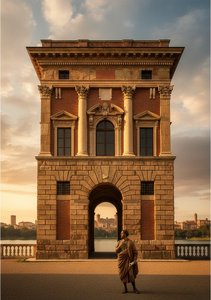
Façade and courtyard view

Kézzel készített olajfestmény reprodukció

Kézzel festett olajvastú vászon, az Ön által választott méretben és keretben, művészeink készítik meglévőre. ( Váltás nyomtatványra Áttérés digitális képre)

A gyűjtemény leírása

Experience Giulio Romano's 'Façade and Courtyard View,' a captivating 1526 fresco depicting the Gonzaga palace in Mantua. Admire its Mannerist style, architectural details & masterful illusionism.

A művész életrajza

Giulio Romano (1499-1546) a reneszánsz manierista festő és építész, a Palazzo Te freskóival és innovatív architektúrájával ismert. A Vatikáni Stanzákban is dolgozott, és a palástot a kortárs művészek befolyásolta.

from ·

Chapter 1

How large should it be?

Slide to change the size; the picture on the left shows the frame at its real width. The proportions of the original are kept.

Standard méret
egyedi méretű
CM
INCH

Válasszon előre meghatározott méreteink közül, amelyek megfelelnek a műalkotás eredeti arányainak.

szélesség
magasság

Írja be a kívánt szélességet és magasságot, hogy illeszkedjen a keretéhez vagy a falához. Mivel ez kézzel festett alkotás, egy eltérő formájú méret esetén a művész akár festhet is valamivel többet a kép körül, vagy korolathat is belőle — az Ön döntésének megfelelően. A festés megkezdése előtt küldünk egy digitális tervezetet jóváhagyásra. Az oldalon látható kép nem tartalmazza a végeredményt — csak a tervezet mutatja meg a valódi eredményt.

Chapter 2

How should it arrive?

Choose the edges of the stretched canvas

Choose your frame

Corner sample of the WhiteWrap canvas edge finish, stretched on tömörfa bars
White Ft1
Corner sample of the BlurSideWrap canvas edge finish, stretched on tömörfa bars
Blurside Ft1
Corner sample of the ExtendedWrap canvas edge finish, stretched on tömörfa bars
Extended Ft1
Corner sample of the P118B picture frame: formázott polisztirol, 5 cm wide and 3 cm thick
P118B Ft10
Corner sample of the P118H picture frame: formázott polisztirol, 5 cm wide and 3 cm thick
P118H Ft10
Corner sample of the P118W picture frame: formázott polisztirol, 5 cm wide and 3 cm thick
P118W Ft10
Corner sample of the P438Z picture frame: formázott polisztirol, 5.5 cm wide and 3.5 cm thick
P438Z Ft10
Corner sample of the P508JH picture frame: formázott polisztirol, 7 cm wide and 3.5 cm thick
P508JH Ft12
Corner sample of the P508YH picture frame: formázott polisztirol, 7 cm wide and 3.5 cm thick
P508YH Ft12
Corner sample of the P805H picture frame: formázott polisztirol, 5 cm wide and 3.5 cm thick
P805H Ft10
Corner sample of the P805Z picture frame: formázott polisztirol, 5 cm wide and 3.5 cm thick
P805Z Ft10
Corner sample of the P919BZ picture frame: formázott polisztirol, 7 cm wide and 3.5 cm thick
P919BZ Ft10
Corner sample of the P919G picture frame: formázott polisztirol, 7 cm wide and 3.5 cm thick
P919G Ft10
Corner sample of the P919XJ picture frame: formázott polisztirol, 7 cm wide and 3.5 cm thick
P919XJ Ft10
Corner sample of the P959ZH picture frame: formázott polisztirol, 5 cm wide and 3 cm thick
P959ZH Ft10
Corner sample of the P968JZ picture frame: formázott polisztirol, 6 cm wide and 4 cm thick
P968JZ Ft12
Corner sample of the W106C picture frame: tömörfa, 5 cm wide and 3 cm thick
W106C Ft8
Corner sample of the W218G picture frame: tömörfa, 5 cm wide and 3 cm thick
W218G Ft10
Corner sample of the W218JH picture frame: tömörfa, 5 cm wide and 3 cm thick
W218JH Ft8
Corner sample of the W218Y picture frame: tömörfa, 5 cm wide and 3 cm thick
W218Y Ft10
Corner sample of the W307PJ picture frame: tömörfa, 6 cm wide and 3 cm thick
W307PJ Ft10
Corner sample of the W316G picture frame: tömörfa, 6 cm wide and 3 cm thick
W316G Ft10
Corner sample of the W316PJ picture frame: tömörfa, 6 cm wide and 3 cm thick
W316PJ Ft8
Corner sample of the W316Y picture frame: tömörfa, 6 cm wide and 3 cm thick
W316Y Ft10
Corner sample of the W398PJ picture frame: tömörfa, 5 cm wide and 3 cm thick
W398PJ Ft8
Corner sample of the W4111J picture frame: tömörfa, 6.5 cm wide and 3.5 cm thick
W4111J Ft10
Corner sample of the W500HY picture frame: tömörfa, 7 cm wide and 5 cm thick
W500HY Ft15
Corner sample of the W500JH picture frame: tömörfa, 7 cm wide and 5 cm thick
W500JH Ft15
Corner sample of the W692G picture frame: tömörfa, 8 cm wide and 4 cm thick
W692G Ft12
Corner sample of the W849H picture frame: tömörfa, 5 cm wide and 3 cm thick
W849H Ft8
Corner sample of the W940BG picture frame: tömörfa, 7.5 cm wide and 4.5 cm thick
W940BG Ft15
Corner sample of the W953PJ picture frame: tömörfa, 6 cm wide and 3.5 cm thick
W953PJ Ft8
Corner sample of the H24-GOLD picture frame: faragott fa gesszóval, 10 cm wide and 6 cm thick
H24-GOLD Ft30
Corner sample of the H24-SILVER picture frame: faragott fa gesszóval, 10 cm wide and 6 cm thick
H24-SILVER Ft30
Corner sample of the H36-GOLD picture frame: faragott fa gesszóval, 15 cm wide and 6.5 cm thick
H36-GOLD Ft45
Corner sample of the H36-SILVER picture frame: faragott fa gesszóval, 15 cm wide and 6.5 cm thick
H36-SILVER Ft45

Moulding: . Overall size with the frame: .

Chapter 3

Who paints it, and should anything change?

Examples of what can be changed: Replace face with customer photo; Add pet (e.g., replace cat with dog); Include hidden message in background; Change background landscape or elements.
After order, OriginalUniqueArt.com team will email client for instructions and provide a mockup preview

Világszerte elérhető szállítás () 3-4 hét alatt a szokásos 5 hét helyett. (1 november). A minőség nem kérdőjelezhető.

Chapter 4

The finishing touches

A nameplate, as in a museum?

A gravírozott bronztábla részletei

This elegant plaque features the artist's name and the title of the artwork, finely engraved for a timeless presentation.

It is made from bronze with a refined, elegant finish. The text is precisely laser-engraved for a sharp and permanent result. Measuring 9x2 cm, the plaque is compact yet easy to read. It's built to be durable and scratch-resistant, offering a professional, museum-quality look. Mounting is simple thanks to the included adhesive backing.

Átlátszó akril tábla részletei

The plaque includes essential engraved details such as the artist's name, the title of the artwork, the date it was created, the type of media used-like oil on canvas or watercolor-a brief description of the piece, and a QR code that links to the complete artwork information.

It is crafted from clear acrylic, offering a sleek, modern appearance. The text is UV-engraved in black to ensure strong visual contrast. With a size of 10x15 cm, it ensures optimal readability. It comes equipped with two metal hooks for secure wall mounting. The plaque is designed to be weather-resistant, making it suitable for various environments, and it includes interactive features that work seamlessly with smartphone scanning.

Fekete akril tábla részletei

This elegant plaque includes engraved information such as the artist's name, the title of the artwork, the date it was created, the type of media used (like oil on canvas or watercolor), a short description of the artwork, and a QR code for quick access to more information.

The plaque itself is made from refined black acrylic with a premium finish. The text is laser-engraved in white for high contrast and readability. Its size is 10x15 cm, designed to be easy to read. It comes with two metal hooks for professional mounting. The design is sleek and fits any interior style. It is also weather-resistant and durable, with built-in digital integration for mobile compatibility.

A protective varnish?

When do you need it?

Chapter 5

Your painting, as you ordered it

Façade and courtyard view

Reprodukciós technika

Reprodukció mérete

-

Kiváló mesterművész

Nagyobb részletesség, finomság és bővített gyártási idő

-

Reprodukció keretezése

-

-

A bármely oldalsó méretét túlszálaló 105 cm (kb. 41 hüvelyk) meghaladó műalkotások vagy reprodukciók esetében a keret összeszerelhető készletként, szétszerelve kerül szállításra. Ez a módszer biztosítja a biztonságos szállítást, és megakadályozza a szállítás során fellépő sérüléseket.

Szakmész összeszerelést igényel – ez nem DIY (önösszeszerelhető) termék.
A készletet egy tapasztalt keretező szakembernek kell összeszerelnie és a vásznat feszítenie kell, fa ragasztó (nem tartalmazza a csomag), vásznfeszítő fogó és szorítók használatával, amelyek a ragasztó száradásáig a keretrészeket egymáshoz vuôngjba tartják. A helytelen összeszerelés vagy a nem egyenletes vásznfeszítés maradandó károsíthatja a műalkotást, és ez nem része a garanciánknak.

  • A készlet tartalmazza az összes tömörfa rudat, pontosan méretre vágva.

  • A mellékelt csavarokkal, valamint a sarokszerekhez szükséges faütő ragasztóval kell összeszerelnie (ez nem tartalmazható a csomagban), így a keretrendezőnek külön kell beszereznie.

  • A csomag nem tartalmazza a szükséges professzionális eszközöket: egy vászonfeszítőt és klipseket a rácsok vízszintes tartásához a ragasztó megszáradásáig.

Fontos:
A sarokcsatlakozásokhoz fánylagra van szükség, a keretrudakat szorítókapcsokkal kell rögzíteni, amíg a rag teljesen meg nem szárad, a kész keretre feszített vászonhoz pedig vászonfeszítő fogat szükséges. Ezek egyike sem található meg a készletben. Kérjük, rendelés előtt győződjön meg róla, hogy rendelkezik tapasztalt keretező szakemberrel.

Névtábla

-

-

Védőréteg (Lakk)

Fényes lakk (intenzívabb színek, védelem a fény és a nedvesség hatása ellen)

-

Műalkotásom egyedi igényre szabása

Példák a módosíthatóságra: az arc kicserélése az ügyfél fotójára; háziállat hozzáadása (pl. macska helyett kutya); rejtett üzenet elhelyezése a háttérben; a háttér tájainak vagy elemeinek megváltoztatása.

-

Sürgős

Világszerte szóló szállítás () mindössze 3-4 hét alatt, a szokásos 5 hét helyett. (1 november). A minőség nem kérdőjelezhető.

-

Express szállítás

Világszerte elérhető szállítás területre 5 héten belül. (8 november).

A szállítás díja tartalmazza

Összesített ár

Ft 98242

Összesített ár Ft 98242

Az üvegkeretes opció csak 110 cm alatti méretben érhető el

Included with every order

  • Ingyenes globális expressz szállítás
  • Prémium minőségű len vászon
  • Teljes körű szállítási biztosítás
  • Vámvisszatérítési Garancia
  • Hiteles színarányosság garancia
  • 100 napos visszaküldési lehetőség (csak hibás termékek esetén)
  • 100% pénzvisszatérítési garancia
  • Több darab vásárlásakor kedvezmény

A Frozen Moment of Renaissance Grandeur: Exploring Giulio Romano’s “Façade and Courtyard View”

Giulio Romano's "Façade and Courtyard View," painted in 1526, isn’t merely a depiction of architecture; it’s a meticulously crafted illusion, a testament to the burgeoning Mannerist style that challenged the established harmony of the High Renaissance. This remarkable work, now available as a stunning reproduction, offers a captivating glimpse into the world of Federico II Gonzaga and his court in Mantua – a realm where art, architecture, and theatrical spectacle converged with breathtaking ambition. The image itself presents a carefully constructed dialogue between two perspectives: a monochrome, almost ghostly view of an older building alongside a vibrant, color-infused representation of its restored state. This juxtaposition immediately invites contemplation on the passage of time, the nature of preservation, and the enduring power of artistic vision.

The original painting, housed in the Palazzo Te, Mantua, was conceived as part of a larger decorative program for the villa’s expansive grounds. Romano, having been summoned to Mantua by Federico Gonzaga after his time with Raphael in Rome, quickly established himself as the court's principal artist and architect. The palazzo itself—a sprawling complex of interconnected buildings, gardens, and fountains—became a showcase for Romano’s innovative style, blending classical influences with a distinctly Mannerist sensibility. “Façade and Courtyard View” captures this spirit perfectly, demonstrating Romano’s mastery of illusionistic painting and his willingness to push the boundaries of artistic convention.

Mannerism: A Dance of Distortion and Drama

To understand "Façade and Courtyard View," one must grasp the essence of Mannerism. Emerging in the wake of Raphael’s death, it rejected the balanced proportions and serene idealism of the High Renaissance in favor of a more subjective, emotionally charged approach. Mannerist artists sought to create works that were unsettling, ambiguous, and often deliberately distorted – a deliberate departure from the classical ideals of beauty and harmony. Romano embraced this aesthetic with gusto, employing techniques such as elongated figures, exaggerated poses, vibrant colors, and complex spatial arrangements. The painting’s monochrome top image immediately establishes this sense of unease, hinting at decay and neglect, while the color rendition offers a stark contrast – a carefully staged restoration that attempts to recapture a lost grandeur.

Notice how Romano utilizes *trompe-l'oeil* techniques—the art of creating an illusion of three-dimensionality on a two-dimensional surface. The rusticated masonry, with its rough, uneven texture, contrasts sharply with the smooth, polished surfaces of the pilasters and windows. This deliberate juxtaposition creates a dynamic visual tension, drawing the viewer’s eye to specific details and inviting them to question what is real and what is merely an illusion. The subtle shifts in perspective between the two images further enhance this effect, suggesting that we are witnessing not just a building but also a carefully constructed narrative.

Symbolism and the Gonzaga Court

The Palazzo Te itself was designed as a lavish pleasure palace for Federico II Gonzaga, reflecting his wealth, power, and refined taste. The “Façade and Courtyard View” is therefore deeply intertwined with the symbolism of the Gonzaga court. The building’s elaborate decoration—including frescoes depicting mythological scenes, allegorical figures, and portraits of Federico’s ancestors—served to reinforce his authority and celebrate his lineage. The choice of a monochrome image for the older façade suggests a sense of loss and decline, while the color rendition of the restored building symbolizes the Gonzaga family's continued patronage of the arts and their commitment to preserving the legacy of Mantua.

The inclusion of both images—the weathered facade and its vibrant restoration—is particularly significant. It speaks to the cyclical nature of time, the impermanence of beauty, and the enduring human desire to recapture the past. It’s a poignant reminder that art, like memory, can be both cherished and reconstructed.

Bringing Romano's Vision Home

A high-quality reproduction of “Façade and Courtyard View” offers a unique opportunity to bring this extraordinary work into your own space. Whether adorning a formal dining room or a study, this image will serve as a constant source of inspiration—a reminder of the power of artistic vision, the beauty of Mannerist style, and the enduring legacy of Giulio Romano. It’s more than just a painting; it's a portal to a bygone era, a testament to the artistry and ambition of the Gonzaga court.

Kérdések és válaszok

Mennyire népszerű a "Façade and courtyard view" a Mannerist Painting irányzatban?

A „Façade and courtyard view”, Giulio Romano alkotása a Recognized kategóriába tartozik, és a Mannerist Painting irányzat részeként tekinthető.

Milyen technikával és milyen stílusban készült a "Façade and courtyard view"?

A „Façade and courtyard view”, Giulio Romano alkotása egyesíti a Acrylic On Canvas technikát a Mannerist Painting stílussal. A technika és a művészeti irány a mű elkészítésének módját és stílusát jellemzi.

Megtekinthető „Façade and courtyard view”, Giulio Romano alkotása a saját falamon vásárlás előtt?

A „Façade and courtyard view”, Giulio Romano alkotása mű kiterjesztett valóság technológiával, egy kompatibilis eszközön keresztül, a mű Kiterjesztett valóság előnézet oldalán megtekinthető a saját falán is.

More about this painting

Megtekintés AR előnézet Váltás nyomtatványra Áttérés digitális képre Küldés
Részletek Útmutató Kedvencekhez ad Letöltés Hasonló darabok X-ray felvétel Diavetítés Q&A Statisztika

In numbers

  • 1526the year it was painted
  • 29frames to choose from
  • standard sizes, in its own proportions
  • 5weeks to paint and deliver it
Giulio Romano

Giulio Romano

1499 - 1546, Olaszország

Quick facts about Giulio Romano

  • Artistic Movement Or Style: Mannerizmus
  • Artists Or Movements Influenced By This Artist: ['Mannerist művészek']
  • Artists Who Influenced This Artist:
    • Raphael
    • Michelangelo
  • Date Of Birth: c. 1499
  • Date Of Death: 1546
  • Full Name: Giulio Romano
  • Nationality: Olasz
  • Notable Artworks:
    • Palazzo Te
    • Fire in Borgo
    • Villa Madama
  • Place Of Birth: Róma, Olaszország

A művész életrajza

A Roman Beginning and Apprenticeship Under a Master

Giulio Romano, born Giulio Pippi around 1499 in Rome, emerged during a period of immense artistic ferment – a time when the Renaissance was reaching its zenith but also beginning to shift and transform. Details surrounding his early life remain somewhat elusive, shrouded in the mists of historical record, yet it’s clear he swiftly entered the orbit of Raphael, arguably the most celebrated painter of the High Renaissance. This apprenticeship proved pivotal, not merely providing him with technical skills, but fundamentally shaping his artistic vision and laying the foundation for his future stylistic explorations. He wasn't simply a studio assistant; Giulio rapidly became an indispensable collaborator, contributing significantly to projects of immense scale and importance – notably the decoration of the Vatican Stanze, those magnificent rooms commissioned by Popes Julius II and Leo X. His hand is readily identifiable in *The Fire in the Borgo*, where he assisted Raphael in depicting a dramatic scene of miraculous intervention, capturing the intensity and dynamism that would become hallmarks of his own work. Following Raphael’s untimely death in 1520, Giulio inherited responsibility for completing numerous unfinished commissions, including the ambitious decoration of Villa Madama for Cardinal Giuliano de' Medici – a project that demanded both artistic skill and administrative prowess. This early exposure to large-scale projects, the pressures of aristocratic patronage, and the challenges of bringing disparate visions together instilled within him a confidence and ambition that would define his later career, pushing him beyond mere imitation and toward a distinctly original style.

The Birth of Mannerism: A Departure from Classical Harmony

While Giulio Romano remained deeply rooted in the Renaissance tradition – admiring the clarity, balance, and idealized beauty of its classical foundations – his artistic trajectory soon diverged significantly from the prevailing emphasis on harmonious proportions and serene compositions. He became a key figure in the development of Mannerism – a style characterized by an exquisite artificiality, a heightened sense of elegance, and often unsettling distortions of form. This wasn’t a rejection of Renaissance ideals entirely, but rather a deliberate exploration of their limits, a conscious decision to push beyond the constraints of *natura* and embrace a more subjective, expressive approach. He was profoundly influenced by Michelangelo's powerful figures – their muscularity, dramatic gestures, and dynamic compositions – as well as a broader climate of artistic experimentation within Rome at the time. Giulio began to incorporate asymmetry, tension, and emotional intensity into his work, creating images that were both captivating and unsettling. His drawings, in particular, reveal this shift—characterized by elongated figures, complex spatial arrangements, and a masterful use of line that anticipates the expressive distortions of later Mannerist artists. He sought to evoke emotion and intellectual engagement rather than simply representing reality with fidelity.

Mantua’s Master: Palazzo Te and Architectural Innovation

In 1524, Giulio Romano received an extraordinary invitation – a summons from Federico Gonzaga, Duke of Mantua, to become court painter and architect. This marked a transformative moment in his career, providing him with unprecedented creative freedom and the resources necessary to realize his ambitious visions. He essentially became responsible for all artistic activity within the duchy, overseeing not only paintings and frescoes but also architectural projects, garden designs, and even theatrical productions. His most celebrated achievement during this period is undoubtedly Palazzo Te, an extraordinary suburban villa that stands as a testament to his innovative genius. The palace’s interiors are adorned with illusionistic frescoes of breathtaking complexity and psychological depth – a dazzling display of *trompe-l'oeil* techniques designed to create the impression of vastness and limitless space. The *Sala dei Giganti* (Hall of the Giants), for example, depicts a chaotic battle between gods and giants, engulfing the viewer in a swirling vortex of figures and architectural fragments—a scene that is both visually stunning and profoundly unsettling. Beyond Palazzo Te, Giulio undertook significant renovations to Mantua’s ducal palace and cathedral, leaving an indelible mark on the city's urban landscape. He wasn't simply decorating existing structures; he was reshaping them, imbuing them with a new sense of grandeur and sophistication.

Legacy and Lasting Influence

Giulio Romano died in Mantua in 1546, leaving behind a legacy that extended far beyond Italy’s borders. His drawings were highly prized by collectors throughout Europe, and engravings based on his work – particularly those by Marcantonio Raimondi – played a crucial role in disseminating Italian artistic styles to a wider audience. He was so renowned after his death that he is the only “modern” artist mentioned by William Shakespeare in *Pericles*, a testament to his widespread renown. His influence can be seen in the works of numerous subsequent artists, who adopted his dynamic compositions, elongated figures, and expressive use of color—artists like Bronzino and Parmigianino. While Mannerism eventually gave way to other stylistic movements, Giulio Romano’s contributions remain essential to understanding the evolution of Western art. He represents a pivotal moment – a transition from the harmonious ideals of the High Renaissance to the more complex and emotionally charged aesthetic of the late 16th century. His work continues to captivate and challenge viewers today, reminding us of the power of art to both reflect and shape our understanding of the world.

Gyors információk

  • Medium: Fresco
  • Notable elements or techniques: Classical architecture, rustication, pilasters
  • Movement: Mannerism
  • Influences: Raphael
  • Artistic style: Dramatic, illusionistic

Művészeti kvíz

Minden kérdésre csak egy helyes válasz létezik.

Kérdés 1:
What is the primary contrast depicted in the image between the two photographs?
Kérdés 2:
Which historical period is most closely associated with the artistic style represented in this image?
Kérdés 3:
The top photograph, depicting a dilapidated building, suggests what about the structure's history?
Kérdés 4:
Who is the artist credited with creating the fresco depicted in the color photograph?
Kérdés 5:
What does the image primarily illustrate about architectural preservation?
Fedezze fel a műalkotásokat témák, stílusok és jellemzők szerint csoportosítva.