David Cox portréja

A 100 legnevezesebb David Cox festmény, egy galériaválaszték

Frissítve: november 2026 · rangsorolva népszerűségi pontszámunk alapján (minden mű keresései, látogatásai és megrendelései alapján) · 498 mű David Cox alkotása a katalógusunkban

Röviden

David Cox hagyatékából a leghíresebb alkotás Going to the Hayfield (1850). Röviddel ezután követik őket George IV Embarking for Scotland at Greenwich (1823) és Going to the Hayfield (1849). Katalógusunkban 498 mű található David Cox alkotótól; a galéria megőrizte a világ által leginkább csodált 100 darabot, melyeket a dátummal, a múzeummal és a történetükkel együtt mutatunk be.

1783 – 1859, Birmingham Romanticism A legtöbb mű: Birmingham Museum and Art Gallery

David Cox legjobb 10 festménye: a galéria válogatása

1
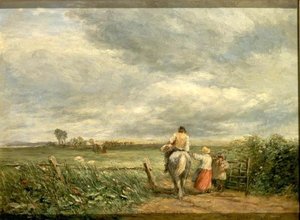
Going to the Hayfield (1850) (1889) -ja David Cox

Going to the Hayfield

1850 · Watercolor

The scene unfolds in "Going to the Hayfield," a work created by the artist David Cox. In this 1849 composition, the quiet rhythms of rural life take center stage. Figures move through the landscape, their presence tied to the seasonal tasks of the countryside. The air feels heavy with the atmosphere of a specific afternoon, capturing a moment of simple, everyday activity within the English landscape.

2
George IV Embarking for Scotland at Greenwich (1823) (1889) -ja David Cox

George IV Embarking for Scotland at Greenwich

1823 · Watercolor

The watercolor depicts a bustling maritime scene at Greenwich, centered on the ceremonial embarkation of George IV for Scotland. Numerous vessels occupy the water, some positioned near the shore and others further out. These boats carry various figures, and several are adorned with flags. On the banks, crowds of people gather to observe the event, some standing near the water's edge while others remain further back. A horse is visible…

3
Going to the Hayfield (1849) (1889) -ja David Cox

Going to the Hayfield

1849 · Oil On Canvas · Birmingham Museum and Art Gallery, Birmingham

David Cox's "Going to the Hayfield," painted in 1849, isn’t merely a landscape; it’s a carefully constructed distillation of Romantic sensibility and a profound connection to the English countryside. This evocative piece, now beautifully reproduced, transports us to a specific moment – a quiet afternoon as figures journey towards a hayfield bathed in the diffused light of an overcast sky. Cox, a pivotal figure bridging the gap between earlier landscape…

4
Rhyl Sands (1854) (1889) -ja David Cox

Rhyl Sands

1854 · Oil On Canvas · Tate Gallery, London

David Cox’s “Rhyl Sands,” painted in 1854, isn't merely a depiction of a beach; it’s a carefully constructed evocation of the Romantic spirit – a yearning for the sublime beauty and untamed power of nature. Cox, a pivotal figure within the Birmingham School of watercolourists, masterfully captures a fleeting moment along the Welsh coast, imbuing the scene with an atmosphere of both tranquility and dramatic intensity. The painting transports us…

5
Study of a Dog (1840) (1889) -ja David Cox

Study of a Dog

1840 · Watercolor

In this intimate watercolor study, titled Study of a Dog, the viewer encounters a quiet moment of observation. The subject is a single dog, an animal captured in a state of repose. David Cox, a British artist who lived from 1783 to 1859, brings a sense of immediacy to this piece. The work emerges from the 1840s, a period when the artist's hand moved with increasing freedom. It belongs to…

6
The Skylark (1849) (1889) -ja David Cox

The Skylark

1849 · Oil On Canvas · Birmingham Museum and Art Gallery, Birmingham

In the vast tapestry of English landscape painting, few works capture the ephemeral beauty of the countryside with as much soul as David Cox’s The Skylark. Created in 1849, this masterpiece serves as a profound window into a serene, pastoral era, inviting the viewer to pause and breathe in the quietude of the rural landscape. The painting presents a sprawling field of grass that stretches toward a distant, hazy horizon,…

7
Storm off the Coast, Hastings (1813) (1889) -ja David Cox

Storm off the Coast, Hastings

1813 · Oil · Birmingham Museum and Art Gallery, Birmingham

There is a certain gravity in how the sky meets the sea in this 1813 work. The composition draws the eye along a diagonal path, moving from the heavy, dark presence of the cliffs in the foreground toward a lighter, mist-filled horizon. It is a scene of movement and tension, where the elements of sea, sky, and stone are caught in a moment of profound unrest. The palette relies on…

8
The Old Bridge at Bridgnorth, Shropshire (1809) (1889) -ja David Cox

The Old Bridge at Bridgnorth, Shropshire

1809 · Watercolor

The watercolor painting titled The Old Bridge at Bridgnorth, Shropshire, captures a quiet moment in the English countryside. Created by David Cox in 1809, the work presents a view of a small town nestled along the curves of a river. The scene focuses on the architecture of the bridge as it spans the water, anchoring the landscape within its natural setting.

9
Cornfield (1814) (1889) -ja David Cox

Cornfield

1814 · Watercolor

The air feels heavy and damp, thick with the scent of wet earth and the promise of rain. In this hazy landscape, a vast cornfield stretches toward a soft, clouded horizon, its breadth emphasized by long, horizontal strokes of ochre and muted green. Figures move through the middle ground, their forms softened by the mist, tending to a cart pulled by horses. There is a rhythmic, slow quality to their…

10
Near the Pont d'Arcole, Paris (1829) (1889) -ja David Cox

Near the Pont d'Arcole, Paris

1829 · Watercolor

The scene unfolds in the heart of a bustling Parisian street, captured in the work titled Near the Pont d'Arcole, Paris. This watercolor painting brings us into a moment of urban life, where the architecture of the city meets the movement of its people. The artist, David Cox, directs our gaze toward the structures and the atmosphere of the streets near the Pont d'Arcole.

A David Cox válogatás folytatódik: 11 – 100

11Pont Neuf from the Quai de l'Ecole, Paris (1829) (1889) -ja David CoxPont Neuf from the Quai de l'Ecole, Paris1829 12Place du Palais Royal, Paris (1829) (1889) -ja David CoxPlace du Palais Royal, Paris1829 · Birmingham Museum and Art Gallery 13The Welsh Funeral (1848) (1889) -ja David CoxThe Welsh Funeral1848 · Birmingham Museum and Art Gallery 14Untitled (AQTKGL) (1853) (1889) -ja David CoxUntitled (AQTKGL)1853 15The Cross Roads (1850) (1889) -ja David CoxThe Cross Roads1850 · Birmingham Museum and Art Gallery 16Rhyl Sands (1854) (1889) -ja David CoxRhyl Sands1854 · Birmingham Museum and Art Gallery 17Scene in a Lane (1858) (1889) -ja David CoxScene in a Lane1858 18Beach Scene Sunrise (1820) (1889) -ja David CoxBeach Scene Sunrise1820 · Yale Center for British Art 19Fishing off Hastings (1810) (1889) -ja David CoxFishing off Hastings1810 · Yale Center for British Art 20The Junction of the Severn and the Wye with Chepstow in the Distance (1830) (1889) -ja David CoxThe Junction of the Severn and the Wye with Chepstow in the Distance1830 · Yale Center for British Art 21The Wyndcliff, River Wye (1842) (1889) -ja David CoxThe Wyndcliff, River Wye1842 · Birmingham Museum and Art Gallery 22German Der Strand von Rhyl (1854) (1889) -ja David CoxGerman Der Strand von Rhyl1854 · Manchester Art Gallery 23Left at a Girls' School (1812) (1889) -ja David CoxLeft at a Girls' School1812 · Birmingham Museum and Art Gallery 24Lake Scene, North Wales (1811) (1889) -ja David CoxLake Scene, North Wales1811 · Birmingham Museum and Art Gallery 25A View of Westminster Bridge, Looking West towards Lambeth Palace and Westminster Abbey (1811) (1889) -ja David CoxA View of Westminster Bridge, Looking West towards Lambeth Palace and Westminster Abbey1811 26In Windsor Park (1807) (1889) -ja David CoxIn Windsor Park1807 27Westminster from Lambeth (1813) (1889) -ja David CoxWestminster from Lambeth1813 28Sunset, Hastings: Beached Fishing Vessels (1811) (1889) -ja David CoxSunset, Hastings: Beached Fishing Vessels1811 29Gipsies on Dulwich Common (1808) (1889) -ja David CoxGipsies on Dulwich Common1808 · Birmingham Museum and Art Gallery 30Pastoral Scene in Herefordshire (1820) (1889) -ja David CoxPastoral Scene in Herefordshire1820 31Lugg Meadows, near Hereford (1817) (1889) -ja David CoxLugg Meadows, near Hereford1817 32Tour d'Horloge, Rouen (1829) (1889) -ja David CoxTour d'Horloge, Rouen1829 33The Opening of the New London Bridge (1831) (1889) -ja David CoxThe Opening of the New London Bridge1831 34St. Mary's Church and the Shire Hall, Warwick (1828) (1889) -ja David CoxSt. Mary's Church and the Shire Hall, Warwick1828 35Place St. Barthélemy, Rouen (1829) (1889) -ja David CoxPlace St. Barthélemy, Rouen1829 36Carthage: Aeneas and Achates (1825) (1889) -ja David CoxCarthage: Aeneas and Achates1825 37Junction of the Severn and the Wye with a Rainbow (1827) (1889) -ja David CoxJunction of the Severn and the Wye with a Rainbow1827 38Dockyard - Building a Sloop (1823) (1889) -ja David CoxDockyard - Building a Sloop1823 39Still LIfe: Basket, Foxgloves, Clothes and Other Objects (1823) (1889) -ja David CoxStill LIfe: Basket, Foxgloves, Clothes and Other Objects1823 · Birmingham Museum and Art Gallery 40A View of the Pavillon de Flore and the Tuileries from the Seine, Notre Dame, Paris (1829) (1889) -ja David CoxA View of the Pavillon de Flore and the Tuileries from the Seine, Notre Dame, Paris1829 41Hay on Wye (1824) (1889) -ja David CoxHay on Wye1824 42Porte St. Denis, Paris (1829) (1889) -ja David CoxPorte St. Denis, Paris1829 43Pirates' Isle (1826) (1889) -ja David CoxPirates' Isle1826 44Pavillon de Flore, Tuileries, Paris (1830) (1889) -ja David CoxPavillon de Flore, Tuileries, Paris1830 45St. Eustache, Paris (1829) (1889) -ja David CoxSt. Eustache, Paris1829 46Handsworth Old Church, Birmingham (1828) (1889) -ja David CoxHandsworth Old Church, Birmingham1828 47Ulverston Sands (1835) (1889) -ja David CoxUlverston Sands1835 · Birmingham Museum and Art Gallery 48Crossing Lancaster Sands (1835) (1889) -ja David CoxCrossing Lancaster Sands1835 49Street in Beauvais (1832) (1889) -ja David CoxStreet in Beauvais1832 50The Pont des Arts with the Louvre and Tuileries from the Quai Conti (1838) (1889) -ja David CoxThe Pont des Arts with the Louvre and Tuileries from the Quai Conti1838 51The Long Gallery, Hardwick Hall, Derbyshire (1839) (1889) -ja David CoxThe Long Gallery, Hardwick Hall, Derbyshire1839 52The Poplar Avenue, after Hobbema (1835) (1889) -ja David CoxThe Poplar Avenue, after Hobbema1835 53The Long Gallery, Hardwick Hall, Derbyshire (1839) (1889) -ja David CoxThe Long Gallery, Hardwick Hall, Derbyshire1839 54Going Out Hawking (1838) (1889) -ja David CoxGoing Out Hawking1838 55Peace and War: Lympne Church and Castle (1838) (1889) -ja David CoxPeace and War: Lympne Church and Castle1838 · Birmingham Museum and Art Gallery 56A Terrace, with Figures, Haddon Hall (1834) (1889) -ja David CoxA Terrace, with Figures, Haddon Hall1834 · Birmingham Museum and Art Gallery 57Windermere during the Regatta (1832) (1889) -ja David CoxWindermere during the Regatta1832 58Rhaiadr Cwm, North Wales (1836) (1889) -ja David CoxRhaiadr Cwm, North Wales1836 59Pass of Llanberis, Caernarvonshire, Wales (1836) (1889) -ja David CoxPass of Llanberis, Caernarvonshire, Wales1836 60The Long Gallery, Hardwick Hall, Derbyshire (1839) (1889) -ja David CoxThe Long Gallery, Hardwick Hall, Derbyshire1839 · Chatsworth House 61Crossing Lancaster Sands (1840) (1889) -ja David CoxCrossing Lancaster Sands1840 62View near Bettws-y-Coed (1846) (1889) -ja David CoxView near Bettws-y-Coed1846 · Birmingham Museum and Art Gallery 63On Lancaster Sands, Low Tide (1840) (1889) -ja David CoxOn Lancaster Sands, Low Tide1840 64Vale of Clwyd (1848) (1889) -ja David CoxVale of Clwyd1848 65Near Knaresborough (1844) (1889) -ja David CoxNear Knaresborough1844 66A Welsh Road (1846) (1889) -ja David CoxA Welsh Road1846 67The Vale of Dolwyddelan (1846) (1889) -ja David CoxThe Vale of Dolwyddelan1846 68A Country Track Leading to Harlech Castle (1842) (1889) -ja David CoxA Country Track Leading to Harlech Castle1842 69Carreg Cennan Castle (1844) (1889) -ja David CoxCarreg Cennan Castle1844 70Cottage Interior (1840) (1889) -ja David CoxCottage Interior1840 · Birmingham Museum and Art Gallery 71Outskirts of a Wood, with Gypsies (1843) (1889) -ja David CoxOutskirts of a Wood, with Gypsies1843 72Vale of Clwyd (1846) (1889) -ja David CoxVale of Clwyd1846 73Going to the Hayfield (1853) (1889) -ja David CoxGoing to the Hayfield1853 · Yale Center for British Art 74On the Medway (1850) (1889) -ja David CoxOn the Medway1850 75Horses Drinking (1855) (1889) -ja David CoxHorses Drinking1855 76A Mountain Torrent (1850) (1889) -ja David CoxA Mountain Torrent1850 77Flying the Kite (1853) (1889) -ja David CoxFlying the Kite1853 78On Carrington Moss, Cheshire (1851) (1889) -ja David CoxOn Carrington Moss, Cheshire1851 79Mountain Heights, Cader Idris (1850) (1889) -ja David CoxMountain Heights, Cader Idris1850 80Penman Bach (1852) (1889) -ja David CoxPenman Bach1852 81The Night Train (1849) (1889) -ja David CoxThe Night Train1849 82Vale of Clwyd (1849) (1889) -ja David CoxVale of Clwyd1849 83The Challange (1853) (1889) -ja David CoxThe Challange1853 84Peat Gatherers (1850) (1889) -ja David CoxPeat Gatherers1850 85Kenilworth Castle (1857) (1889) -ja David CoxKenilworth Castle1857 · Birmingham Museum and Art Gallery 86Darley Churchyard (1858) (1889) -ja David CoxDarley Churchyard1858 87On the Moors, near Bettws-y-Coed (1856) (1889) -ja David CoxOn the Moors, near Bettws-y-Coed1856 88Crossing the Moor (1858) (1889) -ja David CoxCrossing the Moor1858 89Stepping Stones, Bettws-y-Coed (1857) (1889) -ja David CoxStepping Stones, Bettws-y-Coed1857 90Clouds (1857) (1889) -ja David CoxClouds1857 91Moonlight Landscape (1850) (1889) -ja David CoxMoonlight Landscape1850 · Yale Center for British Art 92The Night Train (1849) (1889) -ja David CoxThe Night Train1849 · City Art Gallery 93Midday Rest (1889) -ja David CoxMidday Rest 94The Thames At Battersea (1889) -ja David CoxThe Thames At Battersea 95Returning Home (1889) -ja David CoxReturning Home 96Lancaster Sands 1 (1889) -ja David CoxLancaster Sands 1 97A Child With A Dog, Outside A Cottage (1889) -ja David CoxA Child With A Dog, Outside A Cottage 98The Jetty, Calais (1889) -ja David CoxThe Jetty, Calais 99Young Welsh Girl (1889) -ja David CoxYoung Welsh Girl 100In The Hayfield 1 (1889) -ja David CoxIn The Hayfield 1

David Cox híres festményei, korszakonként

A témák, amelyek David Cox figyelmét meghúzták

A négy leggyakorobban előforduló téma ebben az eredeti művekben, mindegyik a legkiválóbb példájával.

A műemlékek, amelyek David Cox eredeti műveit őrzik

A 6 olyan múzeum, amely a legtöbb ezen az oldalon szereplő festményet őrzi.

Múzeum Város David Cox művei Ebből a listából származó festmények
Birmingham Museum and Art Gallery, BirminghamBirmingham Museum and Art Gallery Birmingham 54 Going to the Hayfield, The Skylark, Storm off the Coast, Hastings
Yale Center for British Art, New HavenYale Center for British Art New Haven 6 Beach Scene Sunrise, Fishing off Hastings, The Junction of the Severn and the Wye with Chepstow in the Distance
Tate Gallery, LondonTate Gallery London 1 Rhyl Sands
Manchester Art Gallery, ManchesterManchester Art Gallery Manchester 1 German Der Strand von Rhyl
Chatsworth House, BakewellChatsworth House Bakewell 1 The Long Gallery, Hardwick Hall, Derbyshire
City Art Gallery, BirminghamCity Art Gallery Birmingham 1 The Night Train

David Cox évtizede folgtva: az eredeti művek, amelyek meghatározzák az egyes korzakot

Művek évtizedenként

Váassz ki egy évtizedet, hogy megnézhesd az azt meghatározó eredetiműveket.

Gyűjtői kérdések David Cox festményeivel kapcsolatban

Melyik művel a(z) David Cox a leghíresebb?Fedje fel a választ

Going to the Hayfield (1850). Ezt követi George IV Embarking for Scotland at Greenwich (1823) és Going to the Hayfield (1849).

Hány éves volt David Cox, amikor a Going to the Hayfield készült?Fedje fel a választ

67 éves: Going to the Hayfield 1850-ből származik, David Cox pedig 1783-ben született.

Melyek a tíz leghíresebb David Cox festmény?Fedje fel a választ

Going to the Hayfield, George IV Embarking for Scotland at Greenwich, Going to the Hayfield, Rhyl Sands, Study of a Dog, The Skylark, Storm off the Coast, Hastings, The Old Bridge at Bridgnorth, Shropshire, Cornfield és Near the Pont d'Arcole, Paris. A fenti rangsor a művek évszamarát és a múzeumát jelzi.

Hány festményet hagyott hátra David Cox?Fedje fel a választ

Katalógusunkban 498 mű található David Cox alkotótól, 1807 és 1858 év közötti időszakból.

Mely múzeumokban állnak David Cox remekművei?Fedje fel a választ

Leginkább Birmingham Museum and Art Gallery (Birmingham), Yale Center for British Art (New Haven) és Tate Gallery (London) található. A fenti múzeumi táblázatban mindegyik felsorolásra került.

Mely években festette David Cox leghíresebb műveit?Fedje fel a választ

1850s alatt: a jelen laphonon található 100 műből 24 készült ebben az időszakban, köztük Going to the Hayfield.

Mikszétek az első és az utolsó híres eredeti műve a(z) David Cox alkotótól?Fedje fel a választ

Ezen az oldalon a leghitelesebb In Windsor Park (1807), a legutóbbi pedig Scene in a Lane (1858).

Milyen témaköröket választott leggyakrabban David Cox?Fedje fel a választ

Landscape (13), Sky (10) és British countryside (8), a jelen oldalon található 100 műművészeti alkotás között.

Melyik technikát alkalmazta leggyakrabban David Cox?Fedje fel a választ

Watercolor, a jelen oldalon található 100 műből 13 darab esetén.

Mely művészeti irányba tartozik David Cox?Fedje fel a választ

Romanticism, ezen az oldalon található eredetiek alapján.

Mely David Cox művei láthatóak a Birmingham Museum and Art Gallery kiállتításán?Fedje fel a választ

Going to the Hayfield, The Skylark és Storm off the Coast, Hastings: a Birmingham Museum and Art Gallery, Birmingham 18 művet őrzi ezen az oldalon.

David Cox: életmű és életút

Early Life and Training

David Cox, a name now synonymous with the evocative beauty of British landscape painting, was born on April 29th, 1783, in Deritend – a suburb of Birmingham – into a family deeply rooted in the city’s industrial heart. His father, Joseph Cox, was a skilled blacksmith and whitesmith, supplying vital components to the burgeoning Birmingham gun trade; a testament to the region's manufacturing prowess. His mother, however, possessed a remarkable distinction: she hailed from a farming background but had received an unusually thorough education, imbuing David with a sharp intellect and a strong character – qualities that would profoundly shape his artistic journey. The early years of his life were marked by a grounding in practical skills; he initially enrolled at the academy of Joseph Barber in Great Charles Street, where he found himself amongst fellow students, Charles Barber and William Radclyffe. This formative period exposed him to the fundamentals of art, laying the groundwork for his future endeavors. Crucially, at the age of fifteen, Cox became apprenticed to Albert Fielder, a Birmingham painter specializing in the delicate art of portrait miniatures and decorative paintings – often adorning snuffboxes and other luxurious objects. This apprenticeship proved invaluable, providing him with essential technical skills and an understanding of meticulous detail, a characteristic that would later inform his approach to landscape painting. It was during this time that he developed a keen eye for color and composition, absorbing the techniques of a seasoned craftsman.

Career Development & Artistic Journey

The year 1804 marked a significant turning point in David Cox’s life: he moved to London, seeking new opportunities and a broader artistic landscape. There, he married his landlord's daughter, Mary Ragg – a union that provided him with stability and companionship. However, it was a trip to Wales in 1805, undertaken alongside Charles Barber, that truly ignited his artistic spirit. This journey proved transformative, exposing him to the dramatic beauty of the Welsh countryside – its rugged mountains, verdant valleys, and ever-changing light. It became the genesis of numerous sketching tours throughout his lifetime, profoundly influencing his distinctive style. Cox’s early career was characterized by a dedication to detailed watercolor landscapes, often depicting rural scenes and architectural subjects with remarkable precision. He initially earned a living as a drawing master, instructing young gentlemen in the art of draughtsmanship – a role that honed his observational skills and deepened his understanding of artistic principles. Colonel Hon. H. Windsor became one of his first pupils in 1808, further solidifying Cox’s position within London's artistic circles. His early works were admired for their meticulous detail and skillful rendering of light and shadow, establishing him as a promising talent.

Artistic Style & Influences

Cox’s artistic style underwent a remarkable evolution over the course of his career. Initially focused on precise topographical depictions – aiming to capture landscapes with unwavering accuracy – he gradually embraced a more expressive and atmospheric approach. This shift reflects a growing interest in capturing not just what was *seen*, but also what was *felt* by nature. His work demonstrates an undeniable affinity for the Dutch landscape painters of the 17th century, particularly their masterful use of light and color to evoke mood and atmosphere. He was deeply influenced by artists like Jacob van Ruisdael and Jan van Goyen, whose techniques he meticulously studied. Furthermore, Cox possessed a keen observation of nature, reminiscent of Constable – another pivotal figure in British landscape painting. He became renowned for his loose brushwork, vibrant colors, and ability to capture the fleeting effects of light and weather. This mastery of color and texture allowed him to create paintings that were both visually stunning and emotionally resonant. His later oil paintings, particularly those depicting dramatic skies and atmospheric conditions, are considered groundbreaking achievements in British art.

Major Achievements & Legacy

David Cox’s artistic output was prodigious, spanning over three hundred works painted in oil during the latter half of his career. These paintings, now recognized as “one of the greatest, but least recognised, achievements of any British painter,” represent a remarkable testament to his dedication and skill. He consistently exhibited at the Royal Academy from 1805 until his death in 1859, gaining recognition for his unique vision and technical prowess. Cox’s work is characterized by its emotional depth, atmospheric intensity, and masterful use of color. His paintings capture not just the beauty of the British countryside but also the spirit of a changing nation. He played a pivotal role in establishing British landscape painting as a distinct genre, moving away from purely topographical representations towards more expressive and emotional interpretations of nature. Cox’s legacy extends far beyond his individual works; he profoundly influenced subsequent generations of landscape artists, shaping the course of British art for decades to come. His paintings continue to be admired for their beauty, sensitivity, and enduring appeal, serving as a powerful reminder of the transformative power of art.

Historical Significance

David Cox is recognized as an early precursor to Impressionism. While he predates the movement’s formal emergence in France, his emphasis on capturing fleeting atmospheric effects – particularly the shifting qualities of light and color – and his loose, expressive brushwork anticipated many of the techniques later adopted by the Impressionists. His work demonstrated a willingness to prioritize subjective experience over strict realism, paving the way for a more emotionally resonant approach to landscape painting. He played a crucial role in establishing British landscape painting as a distinct genre, moving away from purely topographical representations towards more expressive and emotional interpretations of nature. Cox’s paintings are not merely depictions of scenery; they are windows into the soul of the English countryside – capturing its beauty, its drama, and its enduring spirit. His work continues to be studied and admired for its profound insights into the human experience and its lasting contribution to the history of art.