Megtekintés
 Küldés
 Megosztás
 Részletek

 Letöltés
 Hasonló darabok
 X-ray felvétel
 Diavetítés
Huntsman and Dogs
 Olajfestmény vászonon
- Falfeliratok és faldekoráció
- American Luminism
 1891
1891- 19. század
 Philadelphia Art Múzeum
 Összes részlet megjelenítése
Giclée / Műnyomat
Múzeumi minőségű giclée vagy vászonnyomat, gyors gyártással és rugalmas finomítási lehetőségekkel. ( Kézzel festett másolat rendelése Kép letöltése)




































Válasszon előre meghatározott méreteink közül, amelyek megfelelnek a műalkotás eredeti arányainak.

Megadhat saját méreteket is egy konkrét kerethez vagy helyszínhez igazítva. Amennyiben a kiválasztott méret nem egyezik az eredeti kép arányokkal, a műalkotást le fogjuk vágni, vagy kiegészítjük a képet tükrözött vagy egyszínű szélekkel. A gyártás megkezdése előtt egy digitális tervezetet küldünk jóváhagyásra.
Kérjük, vegye figyelembe, hogy a képernyőn látható előnézet nem tükrözi a tényleges levágást vagy kiegészítést. Csak a tervezet mutatja pontosan a végső kompozíciót.
Bár az egyedi méretek is elérhetőek, az eredeti arányok megőrzése érdekében azt javasoljuk, hogy válasszon a előre meghatározott listából származó méretet.
Világszerte történő kiszállítás területére mindössze 2 hét alatt, a szokásos 4-5 hét helyett. (19 augusztus)

Ingyenes globális expressz szállítás

Prémium minőségű len vászon

Teljes körű szállítási biztosítás

Vámvisszatérítési Garancia

Hiteles színpontosság garancia

60 napos visszaküldési lehetőség (csak hibás termékek esetén)

100% pénzvisszatérítési garancia

Több darab vásárlása esetén kedvezmény
 Az üvegkeretes opció csak 110 cm alatti méretben érhető el

Huntsman and Dogs
Giclée / Műnyomat
Reprodukció mérete
-


Összesített ár
$ 80
Gyűjthető leírása
A Moment of Anticipation: Unveiling Winslow Homer’s “Huntsman and Dogs”
Winslow Homer's 1891 oil painting, *Huntsman and Dogs*, is more than just a depiction of a hunting scene; it’s a powerful evocation of the American wilderness and the quiet intensity of man’s relationship with nature. This masterpiece, currently residing at the Philadelphia Museum of Art, showcases Homer's exceptional ability to capture both the physical reality and the emotional undercurrents of rural life.Descriptive Overview: A Scene Steeped in Atmosphere
The painting presents a solitary huntsman, positioned centrally with his back turned to the viewer, completely absorbed in the moment before or after a hunt. He stands amidst a dense woodland setting, accompanied by a pack of dogs – some attentively focused, others ranging further afield. The composition is masterful; Homer doesn’t reveal the hunter's face, instead inviting us to share his perspective and experience the anticipation and thrill of the chase *through* the posture of both man and animal. The landscape itself—rolling hills fading into an overcast sky—plays a crucial role, contributing to a sense of vastness and untamed beauty.Artistic Style & Technique: A Masterclass in Oil Painting
*Huntsman and Dogs* exemplifies Homer’s mature style – a departure from his earlier illustrative work towards a more robust and painterly approach. The painting is characterized by the substantial weight and texture of the oil paint, applied with loose, expressive brushstrokes. This technique creates a palpable sense of depth and realism, particularly in rendering the fur of the dogs and the foliage of the trees. Homer’s use of color is restrained yet effective; muted tones dominate, reflecting the natural palette of the woodland environment, while subtle variations capture the diffused light filtering through the overcast sky. The work leans towards Realism with a touch of Romanticism in its celebration of nature's grandeur and the inherent drama of the hunt.Historical Context & Homer’s Evolution
Winslow Homer (1836-1910) began his career as a commercial illustrator before dedicating himself to fine art. While renowned for his marine paintings, *Huntsman and Dogs* demonstrates his versatility and mastery of terrestrial scenes. This painting falls within the period of his studio works – pieces characterized by complex compositions and meticulous detail, contrasting with the spontaneity of his watercolor studies created during his travels. The late 19th century saw a growing interest in American identity and the romanticization of rural life; Homer’s work tapped into this sentiment, offering authentic depictions of everyday experiences.Symbolism & Emotional Resonance
Beyond its surface depiction, *Huntsman and Dogs* carries symbolic weight. The hunter embodies human skill and mastery over nature, while the dogs represent loyalty, companionship, and instinct. The painting evokes a sense of quiet contemplation, inviting viewers to reflect on themes of wilderness, self-reliance, and the enduring bond between humans and animals. There’s an inherent tension in the scene – a feeling of anticipation mixed with respect for the power of the natural world. The hunter's anonymity allows us to project our own emotions onto the figure, making the experience deeply personal.Bringing Homer Home: OriginalUniqueArt.com Reproductions
For art enthusiasts and collectors seeking to enrich their spaces with timeless beauty, OriginalUniqueArt.com offers meticulously crafted, handmade oil painting reproductions of *Huntsman and Dogs*. These high-quality replicas capture the nuances of Homer’s brushwork and color palette, allowing you to experience the emotional impact of this masterpiece in your own home.- Explore “Huntsman and Dogs” at OriginalUniqueArt.com: /art/list/?Filter=8BX2LP-Winslow-Homer-Huntsman-and-Dogs
- Learn more about Winslow Homer: https://en.wikipedia.org/wiki/Winslow_Homer
A művész életrajza
A Brush with the American Spirit: The Life and Art of Winslow Homer
Winslow Homer, born in Boston in 1836, wasn’t sculpted by the traditional European art academies that shaped so many of his contemporaries. Instead, he emerged from a distinctly American experience, one rooted in practicality and observation. His journey began not with grand historical canvases, but as a commercial illustrator at the tender age of twelve for Harper's Weekly. This early apprenticeship was formative, honing an exceptional ability to capture scenes with clarity and detail – skills that would become hallmarks of his mature work. He wasn’t learning perspective in Paris; he was learning to *see* America, its people, and its unfolding story. The bustling streets of Boston, the quiet dignity of rural New England life, these were his first subjects, rendered with a precision born of necessity for the demands of print media. This foundation allowed him to transition into painting, initially in watercolor, before fully embracing the expressive potential of oil paints.Early Life and Artistic Beginnings
Homer’s childhood was marked by a close relationship between his parents—Charles Savage Homer, a merchant with restless ambitions, and Henrietta Maria Benson Homer, a gifted amateur watercolorist who instilled in him a lifelong appreciation for artistic observation. His father's entrepreneurial spirit propelled him to seek fortune abroad, leaving young Winslow largely under his mother’s tutelage. From Cambridge, Massachusetts, where he attended school, Homer developed an early fascination with drawing and sketching—skills that would prove invaluable throughout his career. He began honing his craft by copying the works of established artists, gaining experience in mastering technique and capturing visual impressions. This formative period instilled in him a disciplined approach to artmaking that would characterize his later work. His mother’s encouragement fostered his artistic talent and nurtured his innate sensitivity to beauty—traits that would become integral to Homer's distinctive style.The Civil War Years: Witnessing History Through Art
The American Civil War profoundly impacted Homer’s artistic vision, transforming him from a painter of idyllic landscapes into a chronicler of the brutal realities of conflict. As a war correspondent for Harper’s Weekly, he documented the daily lives of soldiers and civilians—not grand battles or strategic maneuvers—but rather the quiet moments of grief, resilience, and human suffering amidst chaos. This experience instilled in him an unwavering commitment to portraying truthfulness and empathy—values that would permeate his paintings throughout his life. Homer eschewed romanticized depictions of heroism, focusing instead on capturing the psychological impact of war on ordinary people. His sketches for Harper’s Weekly are considered singular examples of wartime reporting, demonstrating his remarkable ability to convey emotion through visual imagery. The Civil War served as a catalyst for Homer's artistic evolution, prompting him to explore themes of trauma and vulnerability—themes that would become central to his oeuvre.A Master of Watercolor and Oil: Exploring Diverse Techniques
Homer’s artistic versatility extended beyond watercolor; he excelled in oil painting, achieving remarkable textural depth and luminosity through a technique rooted in direct observation from nature. He embraced the expressive potential of oil paints while retaining the fluidity and spontaneity characteristic of watercolor—a duality that defined his distinctive style. Homer's studio was located primarily in New York City, yet he frequently traveled to Pennsylvania, the Catskills, and Gloucester, Maine, drawing inspiration from these varied landscapes. These excursions fueled his creativity and informed his artistic vision, resulting in paintings that captured both grandeur and intimacy. He meticulously built up layers of paint—often applying them with a palette knife—creating surfaces rich in texture and color—a technique that distinguishes Homer’s work from many of his contemporaries. His masterful handling of light—particularly the dramatic effects achieved during Maine summers—became a hallmark of his artistic style.Legacy: An Icon of American Realism
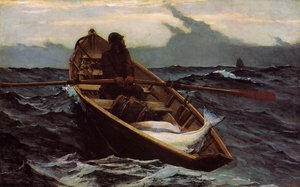
Winslow Homer stands as one of America's most celebrated painters, recognized for his unflinching portrayal of the human condition and his profound engagement with the natural world. His paintings—particularly *The Gulf Stream*, *Breezing Up (A Fair Wind)*, and *Innocence*—remain enduring symbols of American artistic achievement. Homer’s influence extended beyond his own time, inspiring subsequent generations of artists who sought to capture the spirit of their nation with similar honesty and conviction. He rejected academic conventions in favor of a direct painting approach—a stylistic choice that cemented his place as a pioneer of American Realism. His legacy is defined by his ability to convey emotion through visual imagery—to communicate profound truths about human experience without resorting to sentimentality or embellishment. Homer’s enduring appeal lies in his unwavering commitment to portraying the beauty and complexity of America—a commitment that continues to resonate with audiences today. He remains a pivotal figure in the history of American art, ensuring his place as one of its most influential voices.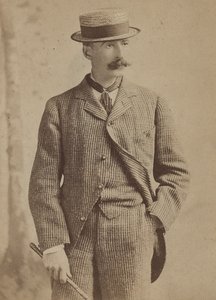
Winslow Homer
1836 - 1910 , Egyesült Államok
A művészről röviden
- Artistic Movement Or Style: Amerikai Realizmus
- Artists Or Movements Influenced By This Artist: ['Amerikai festők']
- Artists Who Influenced This Artist:
- Barbizon Schule
- Courbet
- Millet
- Date Of Birth: Feb 24, 1836
- Date Of Death: Sept 29, 1910
- Full Name: Winslow Homer
- Nationality: Amerikai
- Notable Artworks:
- Breezing Up
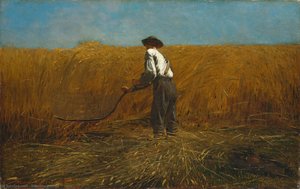
- A Szántóföldi Gyűjtő
- A Gulf Stream
- Place Of Birth: Boston, USA
Kapcsolódó cikkek
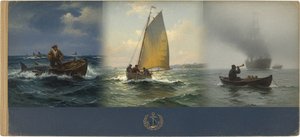
Winslow Homer 25 Mesterműve: Az Amerikai Tájkép Lelkét Megragadó Festmények
Fedezze fel Winslow Homer 25 legikonikusabb művét! Olajfestményei, akvarelljei az amerikai tájkép és tengerpartok lélegzetelállító szépségét ábrázolják. Művészeti reprodukciók galéria minőségben a OriginalUniqueArt.com-on. Explore the full collection online!

Az amerikai realizmus 10 ikonikus remekműve – festmények otthonra a OriginalUniqueArt kínálatából
Fedezze fel az amerikai realizmus 10 legikonikusabb remekművét! Ismerje meg Andrew Wyeth, Edward Hopper és más festők történetét. Múzeumi minőségű reprodukciók otthonra a OriginalUniqueArt kínálatából – inspiráló faliképek és dekorációk online.

A mesterek másolása: A galéria-minőségű olajfestmények létrehozásának folyamata – Brushstroke by brushstroke
Galéria-minőségű olajfestmény másolatok kézzel festve, a mesterek technikáival! Pontos reprodukciók, egyedi rendelés, prémium minőség. Biztonságos vásárlás és szakértői tanácsadás a OriginalUniqueArt-on!

Az Első Vázlattól a Tartós Örökségig: Az Olajfestmény Reprodukció Készítésének Részletes Utazása
Fedezze fel az olajfestmény reprodukció művészetét a OriginalUniqueArt-tal! Kézműves alkotások, klasszikus technikák és egyedi megrendelések. Minőségi vászonképek élethű részletekkel – örökéletű emlékek otthonába vagy irodájába!
A digitális festmények és fotónyomatok új korszakának előnyei a hagyományos művészettől: Esztétikai érték, tartósság és érzelmi rezonancia
Fedezze fel a digitális festészet és fotónyomatok új világát! Prémium minőségű alkotások, egyedi rendelés, kínai festészeti inspiráció. Szakértői tanácsadással segítünk tökéletes műalkotást találni otthonába vagy ajándékba.