

 Előnézet
 Megosztás
 Megosztás
 Részletek
 Útmutató

 Letöltés
 Hasonló darabok
 X-ray felvétel
 Diavetítés
 Statisztika
Scene from Macbeth


 Tovább olvasom
Vásároljon nagy felbontású, javított digitális képet, amely minőségében messze felülmúlja az online előnézetet.
Minden fájlt szakembereink a legmodernebb eszközök és precíz, kézi retusálás segítségével készítenek el aprólékosan. Gondoskodunk arról, hogy minden kép kivételes tisztasággal, pontos színhelyességgel és részletgazdag finomsággal rendelkezzen.
A végleges fájl 72 órán belül e-mailben megérkezik, professzionális, szerkesztői és nyomtatási környezetbe optimalizálva az azonnali használathoz. Ez ugyanaz a minőség, amelyben a legmeghatározóbb tervezőstúdiók, kiadók és galériák is megbízhatnak.
Digitális kép
Töltsön le nagy felbontású fájlt személyes kiállításokhoz, nyomtatáshoz és kreatív projektekhez. ( Váltás nyomtatványra Kézzel festett másolat vásárlása)
Minden digitális kép rendeléséhez tartozó extrák
Szakértői digitális kézbesítés, garantáltan
Amikor a OriginalUniqueArt.com szolgáltatást választja, nem csupán egy képet kap – professzionálisan felmagasított digitális műalkotást kap, amely precizitással készült, és amelyet megelégsedési gwarancia tesz biztoslássá. Az alábbiakban automatikusan minden benne 】

Gyors e-mail teslimítés
A nagy felbontású digitális képmásolatát a megrendelést követő 72 órán belül e-mailben elküldjük Önnek – azonnal használható formátumban.

MI-alapú digitális képjavítás
Műve professzionális módon kerül optimalizálásra fejlett mesterséges intelligencia eszközök és manuális szerkesztés segítségével, biztosítva a maximális részletességet, tisztaságot és színpontosságot.

Örök életű ingyenes újradatás
Véletlenül törölted vagy elvesztetted a fájlodat? Ne aggódj – bármikor ingyen újra megküldjük neked.

Nincs importköltség – soha
Élvezze műalkotásait azonnal, vám, illeték vagy szállítási költség nélkül – a digitális letöltések mindig adamentesek.

Színpontosság garantálása
Professzionális eszközök és színkezelés segítségével garantáljuk, hogy digitális képe a lehető legpontosabban tükrözze az eredeti színeket.

100 napos elégedettségi garancia
Ha nemມີ elégedett a digitális képével, 100 napon belül felülvizsgáljuk vagy 100% visszatérítjük az amountot – kérdés बिना.

100% Pénzvisszatérítési garancia
Nem tetszett a vásárlás? 100 napon belül teljes visszatérítést garantálunk a digitális fájl megvételétől számítva – kérdés nélkül.

Tömegrendelési kedvezmények
Vásároljon 3 képet, spóroljon 10%-et - Vásároljon 5-öt, spóroljon 15%-et - Vásároljon 10+ képet, spóroljon 20%-at. Kiváló kreatív projektekhez, galériákhoz és ügynökségekhez.
A Vision Steeped in Light and Shadow
In the vast tapestry of American landscape painting, few threads are as delicately woven as those spun by William Trost Richards. While many of his contemporaries in the Hudson River School sought to capture the overwhelming grandeur and theatrical scale of the untamed wilderness, Richards turned his gaze toward a more intimate, almost scientific pursuit of truth. His masterpiece, “Scene from Macbeth,” painted circa 1850, serves as a breathtaking testament to this philosophy. It is a work that transcends mere topography, offering instead a window into a world where the boundaries between the natural landscape and human psychological drama dissolve into a singular, luminous experience.
The painting presents a hauntingly beautiful tableau, centered around three figures poised against the backdrop of a moonlit mountain range. The composition is masterfully balanced; on the left, a figure draped in a striking red robe provides a warm, visceral anchor to the scene, contrasting sharply with the two figures clad in somber black. As they gaze upward toward the heavens, the viewer is drawn into their shared moment of awe or trepidation. This arrangement does more than just depict characters; it invites us to participate in the tension of the narrative, feeling the weight of the atmosphere and the silent anticipation that hangs in the nocturnal air.
The Alchemy of Luminism and Romanticism
Technically, “Scene from Macbeth” is a triumph of light manipulation. Richards utilized a sophisticated blend of watercolor and oil to achieve what can only be described as an almost photographic clarity, yet one infused with the ethereal qualities of Luminism. Through subtle gradations of tone and color, he captures the way moonlight filters through a heavy, cloud-filled sky, casting soft shadows and creating a sense of atmospheric haze. This technique allows the mountains to recede into a dreamlike distance, while the foreground figures retain a tactile, grounded presence.
The stylistic essence of the piece lies in its duality. While Richards’ precision reflects his training under the German artist Paul Weber and his dedication to observational realism, the subject matter is deeply rooted in Romanticism. By choosing a scene inspired by Shakespeare’s most turbulent tragedy, Richards taps into the era's fascination with mythology, fate, and the psychological depths of the human soul. The dramatic sky, filled with swirling clouds that catch the lunar glow, acts as an emotional mirror to the internal conflicts inherent in the Macbeth legend, making the landscape itself a character in the drama.
An Enduring Presence for the Discerning Collector
For the art lover or the interior designer, “Scene from Macbeth” offers much more than visual beauty; it provides an emotional atmosphere. The painting possesses a profound spiritual resonance, making it an ideal centerpiece for spaces designed for contemplation and quiet sophistication. Its palette—a sophisticated interplay of deep nocturnal blues, silvery moonlight, and the singular, piercing crimson of the robe—allows it to integrate seamlessly into both classical and contemporary environments.
Owning a high-quality reproduction of this work means bringing a piece of American art history into one's personal sanctuary. It is a conversation starter that speaks of meticulous craftsmanship, literary depth, and an unwavering appreciation for the natural world. Whether placed in a library, a study, or a grand living hall, Richards’ vision continues to evoke a sense of wonder, reminding us that even in the darkest shadows, there is a light that reveals the profound mysteries of existence.
Gyakran Ismételt Kérdések
Erős fény-árnyék kontrasztot mutat-e a "Scene from Macbeth"?
A "Scene from Macbeth" fény-sötét kontrasztja Bold értéket mutat. A kontraszt azt írja le, mennyire térnek el egymástól a világos és sötét részek.
Milyen motívumok jelennek meg a(z) „Scene from Macbeth”, William Trost Richards alkotása alkotásban?
A "Scene from Macbeth" alkotás tárgyai: people, figures, moonlit sky, mountains, clouds, red robe, black clothing.
Hol vásárolhatok egy nyomtatványt a(z) „Scene from Macbeth”, William Trost Richards alkotása alkotásból?
A „Scene from Macbeth”, William Trost Richards alkotása nyomata közvetlenül a következő oldalon rendelhető meg: Minőségi műalkotás nyomat: minőségi giclée nyomat pamutvászonon vagy archiváló vászonpapíron.
Művész életrajza
A Meticulous Vision of Nature: The Life and Art of William Trost Richards
William Trost Richards, born in Philadelphia on November 14, 1833, occupies a unique position within the pantheon of American landscape painters. He wasn’t driven by the dramatic flourishes or romanticized ideals that characterized many of his contemporaries within the Hudson River School; instead, Richards pursued an almost scientific fidelity to nature, rendering scenes with a precision and detail that bordered on photographic realism. His early life provided a foundation for this distinctive approach. While formally educated at Central High School in Philadelphia, it was his apprenticeship between 1850 and 1855 with the German artist Paul Weber, combined with work as a designer of ornamental metalwork, that instilled within him a dedication to meticulous craftsmanship and observation. This blend of artistic training and practical skill would become the hallmark of his mature style. He wasn’t simply painting what he *felt* about nature; he was painstakingly documenting what he *saw*.From European Influences to American Shores
Richards's artistic journey took him to Europe in 1853, alongside fellow painters William Stanley Haseltine and Alexander Lawrie. This period proved formative, exposing him to the Düsseldorf School of painting—renowned for its detailed landscapes. The Düsseldorf School’s emphasis on meticulous observation, tonal modeling, and a focus on capturing atmospheric effects profoundly influenced Richards's approach to landscape painting. Upon his return to America, Richards began forging a path distinctly his own. He exhibited at the Pennsylvania Academy of Fine Arts from 1852 until 1905, gaining recognition within the Philadelphia art community. His first major public exhibition came in 1858 with a show organized by Albert Bierstadt in New Bedford, Massachusetts, aligning him, albeit loosely, with the Hudson River School tradition. However, even then, his work stood apart. While others sought to capture the sublime grandeur of nature, Richards focused on its intricate details—the texture of rocks, the play of light on water, the delicate structure of foliage. He was particularly drawn to the detailed studies of geological formations and plant life that were characteristic of German landscape painting.The White Mountains and Coastal Reveries
Perhaps Richards is best known for his watercolor views of the White Mountains of New Hampshire. These works, created during summers spent on the East Coast following his European sojourn, are remarkable for their almost clinical accuracy. He didn’t attempt to impose a romantic narrative onto the landscape; he simply presented it as it was—a complex interplay of geological formations, vegetation, and atmospheric conditions. Richards meticulously documented every ridge, every boulder, every patch of moss, striving for an unparalleled level of realism. Many of these watercolors now reside in the collection of the Metropolitan Museum of Art, testament to their enduring artistic merit and demonstrating his mastery of capturing subtle tonal variations and textures. Later in his career, Richards shifted his focus almost exclusively to coastal scenes, particularly along the shores of New Jersey, Maine, and Rhode Island. These paintings reveal a deep fascination with the ocean’s rhythms—the relentless crashing of waves, the shifting patterns of light on the water's surface, the subtle gradations of color in the sky. He built a house in Jamestown, Rhode Island, in 1881, where he lived and worked until his death, fully immersed in the maritime world that became his primary subject matter. These coastal works are characterized by their dynamic compositions and masterful rendering of light and water.A Legacy of Precision and Observation
William Trost Richards passed away on November 8, 1905, in Newport, Rhode Island, leaving behind a body of work that continues to captivate viewers with its meticulous detail and unwavering commitment to realism. His influence can be seen in the works of later artists who embraced a more objective approach to landscape painting. He rejected the romanticism often associated with the Hudson River School, prioritizing factual accuracy and a profound understanding of natural forms. Richards’s paintings are held in numerous prestigious museums across the United States, including the National Gallery, the Saint Louis Art Museum, and the Smithsonian American Art Museum, ensuring that his legacy will endure for generations to come. His daughter, Anna Richards Brewster, also followed in his footsteps as a painter, further extending the family’s artistic contribution. His rejection of romanticism, his insistence on factual accuracy, and his masterful technique set him apart as a unique voice within American art history. *He wasn't interested in creating idealized visions of nature; he wanted to capture its essence with uncompromising honesty.*Exploring Further
- Discover more of Richards’s work at online art databases like OriginalUniqueArt.com.
- Delve deeper into his life and career through resources such as Wikipedia and the Smithsonian Archives of American Art.
- Explore works by artists influenced by Richards, such as Enrique Arrigoni and his daughter Anna Richards Brewster.
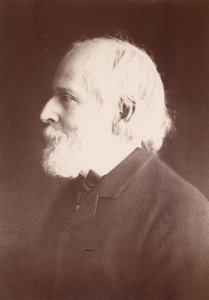
William Trost Richards
1833 - 1905 , Egyesült Államok
Rövid tények
- Artistic Movement Or Style: Hudson River School
- Artists Or Movements Influenced By This Artist: ['Anna Richards Brewster']
- Artists Who Influenced This Artist:
- Paul Weber
- Albert Bierstadt
- Date Of Birth: November 14, 1833
- Date Of Death: November 8, 1905
- Full Name: William Trost Richards
- Nationality: Amerikai
- Notable Artworks:
- Lago Avernus
- Woodland Landscape
- Place Of Birth: Philadelphia, USA