
 Megtekintés
 Küldés
 Megosztás
 Részletek
 Útmutató

 Letöltés
 Hasonló darabok
 X-ray felvétel
 Diavetítés
 Kérdések és válaszok
 Statisztika
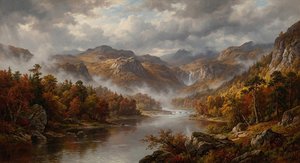
Indian Summer


 Összes részlet megjelenítése
Giclée / Műnyomat
Múzeumi minőségű giclée vagy vászonnyomat, gyors gyártással és rugalmas finomítási lehetőségekkel. ( Kézzel festett másolat rendelése Áttérés digitális képre)




P118B Ft10

P118H Ft10

P118W Ft10

P438Z Ft10

P508JH Ft12

P508YH Ft12

P805H Ft10

P805Z Ft10

P919BZ Ft10

P919G Ft10

P919XJ Ft10

P959ZH Ft10

P968JZ Ft12

W106C Ft8

W218G Ft10

W218JH Ft8

W218Y Ft10

W307PJ Ft10

W316G Ft10

W316PJ Ft8

W316Y Ft10

W398PJ Ft8

W4111J Ft10

W500HY Ft15

W500JH Ft15

W692G Ft12

W849H Ft8

W940BG Ft15

W953PJ Ft8




Válasszon előre meghatározott méreteink közül, amelyek megfelelnek a műalkotás eredeti arányainak.

Írja be a keretének vagy a falának megfelelő szélességet és magasságot. A nyomatot csak le lehet vágni, soha nem tehető nagyobbá, mint az eredeti kép, így egy eltérő alakú méretnél a kép egy része elveszik. Mielőtt bármit kinyatintanánk, küldünk egy digitális próbamodellt jóváhagyásra. Az oldalon látható kép nem tartalmazza a valós levágást — ezt csak a próbamodell mutatja meg.
Világszerte történő kiszállítás területére mindössze 2 hét alatt, a szokásos 4-5 hét helyett. (9 november)

Ingyenes globális expressz szállítás

Prémium minőségű len vászon

Teljes körű szállítási biztosítás

Vámvisszatérítési Garancia

Hiteles színarányosság garancia

100 napos visszaküldési lehetőség (csak hibás termékek esetén)

100% pénzvisszatérítési garancia

Több darab vásárlásakor kedvezmény
 Az üvegkeretes opció csak 110 cm alatti méretben érhető el

Indian Summer
Giclée / Műnyomat
Reprodukció mérete
-


Összesített ár
Ft 26397
A Serene Encounter with Nature's Golden Hour
In the quietude of William Trost Richards’ Indian Summer, the viewer is invited into a world where time seems to decelerate, held in the gentle embrace of a late-season afternoon. This exquisite oil on canvas serves as more than just a landscape; it is a window into a moment of profound tranquility. The composition unfolds with a masterful balance of elements, where the rugged textures of scattered rocks meet the liquid smoothness of a calm, reflective water surface. At the heart of this pastoral scene, a solitary man sits nestled near the roots of an ancient tree, his posture suggesting a deep, meditative connection to the earth. This quietude is punctuated by the subtle presence of other figures and a loyal dog, adding a layer of lived experience and companionship to the landscape. It is a scene that captures the very essence of leisure, where the boundaries between humanity and the natural world softly dissolve.
Richards, a distinguished figure associated with both the Hudson River School and the American Pre-Raphaelite movement, employs a technique defined by an almost scientific devotion to detail. Unlike some of his contemporaries who sought the dramatic and the sublime through sweeping, turbulent vistas, Richards found majesty in the minute. His brushwork is meticulous, capturing the way light filters through autumnal foliage and how shadows pool amongst the stones. The color palette is rich and vibrant, utilizing the warmth of an "Indian Summer" to bathe the scene in a golden, nostalgic glow. This precision does not feel clinical; rather, it breathes life into every leaf and ripple, creating a hyper-realistic texture that invites the eye to wander through the greenery and linger upon the water's edge.
For the discerning collector or interior designer, Indian Summer offers a sophisticated emotional resonance that transcends mere decoration. The painting embodies a sense of peace and stability, making it an ideal centerpiece for spaces designed for reflection, such as a study, a library, or a serene sitting room. Its historical significance lies in its ability to bridge the gap between romanticism and realism, offering a nostalgic glimpse into a vanished era of American landscape appreciation. To possess a high-quality reproduction of this masterpiece is to bring a piece of the Hudson River School's legacy into the modern home—a constant reminder of the enduring beauty found in nature's most quiet, golden moments.
Kérdések és válaszok
Hol vásárolhatom meg „Indian Summer”, William Trost Richards alkotása digitális képét?
A „Indian Summer”, William Trost Richards alkotása digitális képét a következő oldalon vásárolhatja meg: Digitális alkotás: magas felbontású digitális kép letöltése.
Hol vásárolható „Indian Summer”, William Trost Richards alkotása kézzel festett másolata?
A „Indian Summer”, William Trost Richards alkotása kézzel festett másolataival a ez a weboldal oldalon találkozhat, kézzel festett olajfesték reprodukció lino vászonon formában, melyet a(z) Kézzel festett másolat oldalon lehet megrendelni.
Milyen tónus felé hajlik a "Indian Summer"?
A Ochre to Sepia árnyalat áthatárolja a „Indian Summer”, William Trost Richards alkotása alkotást.
A művész életrajza
A Meticulous Vision of Nature: The Life and Art of William Trost Richards
William Trost Richards, born in Philadelphia on November 14, 1833, occupies a unique position within the pantheon of American landscape painters. He wasn’t driven by the dramatic flourishes or romanticized ideals that characterized many of his contemporaries within the Hudson River School; instead, Richards pursued an almost scientific fidelity to nature, rendering scenes with a precision and detail that bordered on photographic realism. His early life provided a foundation for this distinctive approach. While formally educated at Central High School in Philadelphia, it was his apprenticeship between 1850 and 1855 with the German artist Paul Weber, combined with work as a designer of ornamental metalwork, that instilled within him a dedication to meticulous craftsmanship and observation. This blend of artistic training and practical skill would become the hallmark of his mature style. He wasn’t simply painting what he *felt* about nature; he was painstakingly documenting what he *saw*.From European Influences to American Shores
Richards's artistic journey took him to Europe in 1853, alongside fellow painters William Stanley Haseltine and Alexander Lawrie. This period proved formative, exposing him to the Düsseldorf School of painting—renowned for its detailed landscapes. The Düsseldorf School’s emphasis on meticulous observation, tonal modeling, and a focus on capturing atmospheric effects profoundly influenced Richards's approach to landscape painting. Upon his return to America, Richards began forging a path distinctly his own. He exhibited at the Pennsylvania Academy of Fine Arts from 1852 until 1905, gaining recognition within the Philadelphia art community. His first major public exhibition came in 1858 with a show organized by Albert Bierstadt in New Bedford, Massachusetts, aligning him, albeit loosely, with the Hudson River School tradition. However, even then, his work stood apart. While others sought to capture the sublime grandeur of nature, Richards focused on its intricate details—the texture of rocks, the play of light on water, the delicate structure of foliage. He was particularly drawn to the detailed studies of geological formations and plant life that were characteristic of German landscape painting.The White Mountains and Coastal Reveries
Perhaps Richards is best known for his watercolor views of the White Mountains of New Hampshire. These works, created during summers spent on the East Coast following his European sojourn, are remarkable for their almost clinical accuracy. He didn’t attempt to impose a romantic narrative onto the landscape; he simply presented it as it was—a complex interplay of geological formations, vegetation, and atmospheric conditions. Richards meticulously documented every ridge, every boulder, every patch of moss, striving for an unparalleled level of realism. Many of these watercolors now reside in the collection of the Metropolitan Museum of Art, testament to their enduring artistic merit and demonstrating his mastery of capturing subtle tonal variations and textures. Later in his career, Richards shifted his focus almost exclusively to coastal scenes, particularly along the shores of New Jersey, Maine, and Rhode Island. These paintings reveal a deep fascination with the ocean’s rhythms—the relentless crashing of waves, the shifting patterns of light on the water's surface, the subtle gradations of color in the sky. He built a house in Jamestown, Rhode Island, in 1881, where he lived and worked until his death, fully immersed in the maritime world that became his primary subject matter. These coastal works are characterized by their dynamic compositions and masterful rendering of light and water.A Legacy of Precision and Observation
William Trost Richards passed away on November 8, 1905, in Newport, Rhode Island, leaving behind a body of work that continues to captivate viewers with its meticulous detail and unwavering commitment to realism. His influence can be seen in the works of later artists who embraced a more objective approach to landscape painting. He rejected the romanticism often associated with the Hudson River School, prioritizing factual accuracy and a profound understanding of natural forms. Richards’s paintings are held in numerous prestigious museums across the United States, including the National Gallery, the Saint Louis Art Museum, and the Smithsonian American Art Museum, ensuring that his legacy will endure for generations to come. His daughter, Anna Richards Brewster, also followed in his footsteps as a painter, further extending the family’s artistic contribution. His rejection of romanticism, his insistence on factual accuracy, and his masterful technique set him apart as a unique voice within American art history. *He wasn't interested in creating idealized visions of nature; he wanted to capture its essence with uncompromising honesty.*Exploring Further
- Discover more of Richards’s work at online art databases like OriginalUniqueArt.com.
- Delve deeper into his life and career through resources such as Wikipedia and the Smithsonian Archives of American Art.
- Explore works by artists influenced by Richards, such as Enrique Arrigoni and his daughter Anna Richards Brewster.
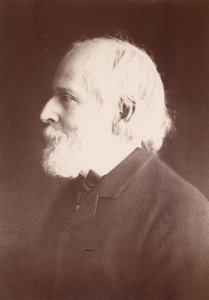
William Trost Richards
1833 - 1905 , Egyesült Államok
Rövid információk
- Artistic Movement Or Style: Hudson River School
- Artists Or Movements Influenced By This Artist: ['Anna Richards Brewster']
- Artists Who Influenced This Artist:
- Paul Weber
- Albert Bierstadt
- Date Of Birth: November 14, 1833
- Date Of Death: November 8, 1905
- Full Name: William Trost Richards
- Nationality: Amerikai
- Notable Artworks:
- Lago Avernus
- Woodland Landscape
- Place Of Birth: Philadelphia, USA
Kapcsolódó cikkek

American Romanticism: Capturing the Soul of the Wild Frontier through the Hudson River School
Explore the profound beauty of American Romanticism. Discover how the Hudson River School captured the wild frontier through masterful landscapes, exploring the legacy of legends like Thomas Cole and Asher Durand in this deep dive into art history.
Robert Spencer: Luminism, Narrative & the American Landscape Tradition
Explore the captivating world of Luminism & the Hudson River School with our expert analysis. Discover the history, artists, and enduring beauty of 19th-century American landscape painting. Find museum-quality reproductions at OriginalUniqueArt.
The Sublime Landscape: Exploring the Hudson River School Movement
Explore the captivating world of the Hudson River School! Discover the history, artists, and defining characteristics of this iconic American art movement. Learn about Romanticism's influence & find inspiration for your collection.
Capturing the American Spirit: A Journey Through Iconic Landscapes and the Legacy of the Hudson River School
Explore the profound beauty of American art history. From the Hudson River School to iconic landscapes, discover a curated journey through the masterpieces that defined a nation's spirit and the enduring legacy of American Romanticism.
A Hudson River Iskola 10 Mesterműve: Tájképfestészet és Amerika Lelke – OriginalUniqueArt
Fedezze fel a Hudson River Iskola 10 legikonikusabb műalkotását! Frederic Church, Thomas Cole és más amerikai festők romantikus tájképei. Vászonkép másolatok, faliképek otthonába – OriginalUniqueArt.com kínálatából. Explore the full collection online!