

 Előnézet
 Megosztás
 Megosztás
 Részletek
 Útmutató

 Letöltés
 Hasonló darabok
 X-ray felvétel
 Diavetítés
 Statisztika
Memories
 Oil On Canvas
- WallArt
- Impressionist Painting
 1910
1910- 19th Century
 93.0 x 128.0 cm
 Tovább olvasom
Giclée / Műnyomat
Múzeumi minőségű giclée vagy vászonnyomat, gyors gyártással és rugalmas finomítási lehetőségekkel. ( Kézzel festett másolat vásárlása Áttérés digitális képre)




P118B Ft10

P118H Ft10

P118W Ft10

P438Z Ft10

P508JH Ft12

P508YH Ft12

P805H Ft10

P805Z Ft10

P919BZ Ft10

P919G Ft10

P919XJ Ft10

P959ZH Ft10

P968JZ Ft12

W106C Ft8

W218G Ft10

W218JH Ft8

W218Y Ft10

W307PJ Ft10

W316G Ft10

W316PJ Ft8

W316Y Ft10

W398PJ Ft8

W4111J Ft10

W500HY Ft15

W500JH Ft15

W692G Ft12

W849H Ft8

W940BG Ft15

W953PJ Ft8




Válasszon előre meghatározott méreteink közül, amelyek megfelelnek a műalkotás eredeti arányainak.

Írja be a keretének vagy a falának megfelelő szélességet és magasságot. A nyomatot csak le lehet vágni, soha nem tehető nagyobbá, mint az eredeti kép, így egy eltérő alakú méretnél a kép egy része elveszik. Mielőtt bármit kinyatintanánk, küldünk egy digitális próbamodellt jóváhagyásra. Az oldalon látható kép nem tartalmazza a valós levágást — ezt csak a próbamodell mutatja meg.
Világszerte történő kiszállítás területére mindössze 2 hét alatt, a szokásos 4-5 hét helyett. (23 október)

Ingyenes globális expressz szállítás

Prémium minőségű len vászon

Teljes körű szállítási biztosítás

Vámvisszatérítési Garancia

Tökéletes színarányosság garancia

100 napos visszaküldési garancia (csak gyártási hibás termékek esetén)

100% pénzvisszatérítési garancia

Több darab vásárlásakor kedvezmény
 Az üvegkeretes opció csak 110 cm alatti méretben érhető el

Memories
Giclée / Műnyomat
Reprodukció méretei
-


Összesített ár
Ft 25565
Memories: A Window into an Impressionist Soul
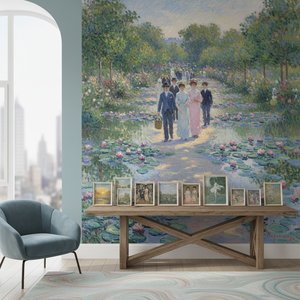
William Merritt Chase’s “Memories,” painted in 1910, is more than just a portrait; it's a carefully constructed moment of quiet contemplation rendered with the delicate touch that defined the American Impressionist movement. Measuring 93 x 128 cm, this oil on canvas invites us into the intimate world of a woman lost in thought, a scene brimming with subtle details and imbued with a profound sense of peace. The painting’s current residence at the Munson-Williams-Proctor Institute of Art ensures its continued accessibility to art lovers across the United States.
- Subject: A solitary woman seated at a desk, engaged in an activity that suggests deep concentration and introspection.
- Style: Pure Impressionism – characterized by loose brushstrokes, a focus on capturing fleeting moments of light and color, and a rejection of traditional academic techniques.
- Size: 93 x 128 cm - A substantial scale that allows for detailed observation and immersion in the scene.
The Language of Light and Color
Chase’s masterful use of color is central to “Memories”’ emotional impact. The muted palette – dominated by soft blues, greens, and browns – creates a sense of tranquility and nostalgia. Notice how the diffused light, likely inspired by Chase's studies in Europe, gently illuminates the woman’s form and the objects surrounding her. This isn't a harsh, direct illumination; it’s a subtle wash that evokes a feeling of warmth and intimacy. The artist employs broken color – applying small strokes of pure pigment side-by-side rather than blending them – to create shimmering effects and heighten the sense of light and atmosphere. The white of her dress isn't stark but subtly tinted, contributing to the overall softness.
A Study in Composition and Symbolism
Beyond the technical brilliance, “Memories” is rich with symbolic elements. The woman’s posture – slightly hunched over her desk, a book and papers before her – speaks of intellectual pursuit and perhaps even melancholy. The carefully arranged objects—the books, the chair, the scattered papers—suggest an organized mind wrestling with complex thoughts. These aren't merely props; they are integral to the narrative, adding layers of meaning to the scene. The composition itself is balanced and harmonious, guiding the viewer’s eye naturally across the canvas.
Historical Context and Legacy
"Memories" reflects a pivotal moment in American art history – the rise of Impressionism following Chase's time spent studying with artists like Monet and Renoir in Europe. William Merritt Chase was a key figure in establishing this movement in America, capturing the essence of everyday life with an unprecedented sensitivity to light and color. His work, alongside that of Sargent and Cassatt, helped shape American artistic identity. A reproduction of “Memories” offers a tangible connection to this rich heritage, allowing you to experience the beauty and innovation of Chase’s vision within your own space.
Gyakran Ismételt Kérdések
Melyik történelmi korszakból származik a „Memories”, William Merritt Chase alkotása?
„Memories”, William Merritt Chase alkotása történelmi korszaka 19th Century. Ez a klasszifikáció meghatározza a mű helyét a művészettörténetben.
Milyen felhasználásra ajánlott a "Memories" nyomata?
A „Memories” nyomtatvány ajánlott felhasználása: Reflective.
Mikor és milyen anyagokból készült a "Memories"?
A "Memories" alkotása 1910-ben készült, Oil On Canvas technikával.
A művész életrajza
A Life Painted in Light: The World of William Merritt Chase
William Merritt Chase, a name synonymous with the blossoming of American Impressionism, was more than just a painter; he was a pivotal force in shaping the nation’s artistic identity at the turn of the 20th century. Born on November 1, 1849, in the humble surroundings of Williamsburg (later Nineveh), Indiana, Chase's journey from rural beginnings to becoming a celebrated artist and influential educator is a testament to his unwavering dedication and innate talent. His early life was marked by a familial relocation to Indianapolis in 1861, where he initially assisted in his father’s business ventures. However, even amidst these practical obligations, the seeds of artistic passion were sown, nurtured by studies with local instructors Barton S. Hays and Jacob Cox. This foundational training ignited a desire for further exploration, leading him briefly into naval service before ultimately gravitating towards the vibrant art scene of New York City in 1869. There, under the tutelage of Joseph Oriel Eaton at the National Academy of Design, and later Lemuell Wilmarth, a student of Jean-Léon Gérôme, Chase began to hone his skills, laying the groundwork for a career that would redefine American painting. A temporary financial setback forced a move to Saint Louis in 1870, but even this challenge proved fruitful, allowing him to establish himself within the local art community and gain recognition for his burgeoning talent.From Academic Roots to Impressionistic Brilliance
Chase’s artistic development was not a sudden leap into Impressionism, but rather a gradual evolution informed by rigorous academic training and extensive travels abroad. A crucial turning point came with his extended sojourn in Munich beginning in 1872, where he studied at the Academy of Fine Arts under Alexander von Wagner and Karl von Piloty. This period instilled in him a mastery of traditional techniques and a penchant for dramatic compositions, yet it was during a subsequent visit to Venice with fellow American artists Frank Duveneck and John Twachtman that Chase began to embrace a more liberated approach to painting. Inspired by the luminous light and vibrant colors of the Italian landscape, he started experimenting with looser brushwork and a heightened sensitivity to atmospheric effects. He found himself drawn to the works of masters like Peter Paul Rubens and Frans Hals, absorbing their dynamic energy and masterful use of color. This exposure significantly influenced his later style, particularly in his depictions of urban scenes and portraits. Upon his return to New York in 1878, Chase fully embraced Impressionistic principles, capturing fleeting moments of modern life with an energetic and captivating style. Works like Keying Up – The Court Jester (1876), exhibited to critical acclaim at the Boston Art Club and Philadelphia Centennial Exposition, showcased his ability to convey movement and personality through bold brushstrokes and a dynamic composition. He continued to explore diverse subjects—striking portraits such as Portrait of Virginia Gerson, evocative landscapes like Gowanus Bay (aka Misty Day, Gowanus Bay), and scenes depicting the vibrancy of urban life, including Alice Fernandez. Other notable works include “A Friendly Call,” “A Study in Curves,” and “Terrace at the Mall, Central Park.”The Educator: Shaping a Generation of Artists
Beyond his accomplishments as a painter, William Merritt Chase left an indelible mark on American art through his dedication to teaching. Recognizing the need for innovative art education, he founded the Chase School in New York City in 1896, which later evolved into Parsons The New School for Design. This institution became a breeding ground for artistic talent, emphasizing direct observation, technical proficiency, and creative experimentation. Unlike many of his contemporaries who favored rigid academic instruction, Chase encouraged his students to develop their individual voices and explore diverse styles. He held teaching positions at the Pennsylvania Academy of the Fine Arts, the Art Students League, and the Brooklyn Art Association, disseminating his artistic philosophy far and wide. His influence extended to numerous artists, including Wayman Elbridge Adams, who openly acknowledged Chase as a mentor. The emphasis on plein air painting—painting outdoors directly from nature—became a cornerstone of his pedagogical approach, fostering a deeper connection between students and their subjects. He believed that true artistry stemmed from understanding the world around them, not merely replicating it from memory or textbooks.A Palette of Influences: From Old Masters to Modern Life
Chase’s artistic style was remarkably eclectic, reflecting a deep appreciation for diverse influences. Initially trained in academic realism, he quickly absorbed elements of German Romanticism and the dramatic chiaroscuro favored by artists like Gustave Courbet. However, it was his time in Venice that truly unlocked his Impressionistic potential. The vibrant light and atmospheric effects of the Italian landscape profoundly impacted his approach to color and composition. He also drew inspiration from American Realist painters such as Kenyon Cox, whose depictions of everyday life resonated with Chase’s desire to capture the spirit of his era. Furthermore, he was influenced by the works of Japanese woodblock prints, particularly their use of bold outlines and flattened perspectives. This confluence of influences—from Old Master techniques to modern aesthetics—resulted in a uniquely American style characterized by its energy, spontaneity, and emotional depth.Legacy and Historical Significance
William Merritt Chase’s place in American art history is secure. He bridged the gap between established academic traditions and the burgeoning Impressionist movement, contributing significantly to the development of a distinctly American artistic identity. His commitment to capturing the essence of modern life—the bustling cityscapes, intimate domestic interiors, and leisurely pursuits of his time—resonated with audiences eager for a new visual language. While his later years saw a temporary eclipse in critical recognition, his work has experienced a resurgence in recent decades, solidifying his reputation as one of America’s most important and influential artists. He wasn't merely documenting scenes; he was interpreting the spirit of an evolving nation through the vibrant lens of Impressionism. His legacy extends beyond his canvases to the countless artists he inspired, ensuring that his innovative approach to painting continues to shape the landscape of American art for generations to come.
William Merritt Chase
1849 - 1916 , Egyesült Államok
Gyors információk
- Artistic Movement Or Style: Impressionista
- Artists Or Movements Influenced By This Artist: ['Wayman Elbridge Adams']
- Artists Who Influenced This Artist: ['Jean-Léon Gérôme']
- Date Of Birth: November 1, 1849
- Date Of Death: October 25, 1916
- Full Name: William Merritt Chase
- Nationality: Amerikai
- Notable Artworks:
- Keying Up
- Idle Hours
- A Study in Curves
- Place Of Birth: Nineveh, USA
Kapcsolódó cikkek

William Merritt Chase: A Study in American Impressionism & Artistic Luminosity
Explore the life & work of William Merritt Chase, a leading American Impressionist painter and influential art educator. Discover his vibrant portraits, landscapes, and lasting legacy with OriginalUniqueArt.

Giclée Prints: Archival Quality & Aesthetic Nuances for the Discerning Collector
Explore the world of giclée prints with OriginalUniqueArt. Learn about archival quality, aesthetic nuances & investment potential. Expert guidance for discerning art collectors seeking museum-quality reproductions and lasting value.
A impresszionizmus 10 legikonikusabb mesterműve – OriginalUniqueArt.com
Fedezze fel a 10 legikonikusabb impresszionista mesterművet! Monet, Degas és Renoir alkotásainak története, technikája és időtálló szépsége. Vászonképek, faliképek – inspirálódjon otthon dekorációjához a OriginalUniqueArt.com kínálatából! Fedezze fel a teljes gyűjteményt online.

A benyomásosok mesterművei: 10 ikonikus festmény a művészetben és otthonában
Fedezze fel a 10 legikonikusabb impresszionista festményt! Monet, Renoir és más mesterek művészete életre kel OriginalUniqueArt.com-on. Vászonképek, faliképek – inspirálja otthonát a benyomásosok színeivel és hangulatával! Explore the full collection online.

A 10 legikonikus impresszionista tájkép: Művészeti remekművek otthonába – OriginalUniqueArt.com
Fedezze fel a 10 legikonikus impresszionista tájkép festményt! Monet, Renoir és más mesterek alkotásainak története. Olajfestmények, vászonképek otthonába – OriginalUniqueArt.com kínálatából. Explore the full collection online!


