

 Előnézet
 Megosztás
 Megosztás
 Részletek
 Útmutató

 Letöltés
 Hasonló darabok
 X-ray felvétel
 Diavetítés
 Statisztika
Contemplation
 Pastel
- Impressionism
 1889
1889- 19th Century
 40.0 x 30.0 cm
 Tovább olvasom
Giclée / Műnyomat
Múzeumi minőségű giclée vagy vászonnyomat, gyors gyártással és rugalmas finomítási lehetőségekkel. ( Kézzel festett másolat vásárlása Áttérés digitális képre)




P118B Ft10

P118H Ft10

P118W Ft10

P438Z Ft10

P508JH Ft12

P508YH Ft12

P805H Ft10

P805Z Ft10

P919BZ Ft10

P919G Ft10

P919XJ Ft10

P959ZH Ft10

P968JZ Ft12

W106C Ft8

W218G Ft10

W218JH Ft8

W218Y Ft10

W307PJ Ft10

W316G Ft10

W316PJ Ft8

W316Y Ft10

W398PJ Ft8

W4111J Ft10

W500HY Ft15

W500JH Ft15

W692G Ft12

W849H Ft8

W940BG Ft15

W953PJ Ft8




Válasszon előre meghatározott méreteink közül, amelyek megfelelnek a műalkotás eredeti arányainak.

Írja be a keretének vagy a falának megfelelő szélességet és magasságot. A nyomatot csak le lehet vágni, soha nem tehető nagyobbá, mint az eredeti kép, így egy eltérő alakú méretnél a kép egy része elveszik. Mielőtt bármit kinyatintanánk, küldünk egy digitális próbamodellt jóváhagyásra. Az oldalon látható kép nem tartalmazza a valós levágást — ezt csak a próbamodell mutatja meg.
Világszerte történő kiszállítás területére mindössze 2 hét alatt, a szokásos 4-5 hét helyett. (22 október)

Ingyenes globális expressz szállítás

Prémium minőségű len vászon

Teljes körű szállítási biztosítás

Vámvisszatérítési Garancia

Tökéletes színarányosság garancia

100 napos visszaküldési garancia (csak gyártási hibás termékek esetén)

100% pénzvisszatérítési garancia

Több darab vásárlásakor kedvezmény
 Az üvegkeretes opció csak 110 cm alatti méretben érhető el

Contemplation
Giclée / Műnyomat
Reprodukció méretei
-


Összesített ár
Ft 25565
Contemplation: A Glimpse into Introspection
William Merritt Chase's "Contemplation," created in 1889, is a captivating pastel portrait that embodies the essence of Impressionism. Measuring 40 x 30 cm, this artwork offers a poignant moment frozen in time – a woman lost in thought, her posture and expression conveying a sense of quiet introspection. The piece resides within the collection of the Cape Cod Museum of Art, alongside other notable works by Chase.
Artistic Style and Technique
Chase was a celebrated American artist renowned for his mastery of Impressionism. His skill with pastel is particularly evident in "Contemplation," where he utilizes the medium's unique qualities to create soft textures and vibrant colors. The loose, feathery strokes characteristic of Impressionism are beautifully rendered, capturing the play of light and shadow on the woman’s face and clothing. The technique prioritizes conveying a feeling or impression rather than precise detail, contributing to the overall sense of serenity and intimacy.
Subject and Composition
The subject is a woman seated with her back partially turned towards the viewer, creating an immediate sense of privacy and introspection. She wears a dark dress and a striking black hat adorned with a single yellow flower – a detail that adds a touch of elegance and perhaps symbolic meaning. The composition focuses primarily on her upper body and face, drawing the viewer's attention to her contemplative expression. The muted brown background serves as a subtle contrast, highlighting the woman’s figure without distracting from the central theme.
Symbolism and Emotional Impact
While seemingly simple in its depiction, "Contemplation" carries layers of potential symbolism. The act of turning away suggests a withdrawal into oneself, a moment of reflection removed from external influences. The yellow flower, often associated with joy or optimism, offers a counterpoint to the woman’s pensive mood, hinting at an underlying hopefulness despite her introspection. Overall, the painting evokes feelings of quiet contemplation, solitude, and perhaps even melancholy – inviting viewers to share in the woman's private moment.
Historical Context
Created during the late 19th century, "Contemplation" reflects the broader artistic trends of Impressionism, which emphasized capturing fleeting moments and subjective experiences. Chase’s work aligns with the movement’s focus on everyday life and its rejection of traditional academic painting styles. The piece provides a valuable window into American society during this period, showcasing both the elegance of fashion and the introspective nature of human experience.
Gyakran Ismételt Kérdések
Mi a(z) domináns színe a(z) „Contemplation”, William Merritt Chase alkotása alkotásnak?
A(z) Phthalo Green (#1a1a18) domináns színe „Contemplation”, William Merritt Chase alkotása alkotásnak.
Mely korszakban készült a „Contemplation”, William Merritt Chase alkotása?
A "Contemplation" a 19th Century korszakba tartozik.
Mennyire harmonikusak „Contemplation”, William Merritt Chase alkotása színei?
A „Contemplation”, William Merritt Chase alkotása színei Strong Color Unity harmóniát mutatnak bemutatni. A harmónia azt írja le, hogyan kapcsolódnak egymáshoz a színek.
A művész életrajza
A Life Painted in Light: The World of William Merritt Chase
William Merritt Chase, a name synonymous with the blossoming of American Impressionism, was more than just a painter; he was a pivotal force in shaping the nation’s artistic identity at the turn of the 20th century. Born on November 1, 1849, in the humble surroundings of Williamsburg (later Nineveh), Indiana, Chase's journey from rural beginnings to becoming a celebrated artist and influential educator is a testament to his unwavering dedication and innate talent. His early life was marked by a familial relocation to Indianapolis in 1861, where he initially assisted in his father’s business ventures. However, even amidst these practical obligations, the seeds of artistic passion were sown, nurtured by studies with local instructors Barton S. Hays and Jacob Cox. This foundational training ignited a desire for further exploration, leading him briefly into naval service before ultimately gravitating towards the vibrant art scene of New York City in 1869. There, under the tutelage of Joseph Oriel Eaton at the National Academy of Design, and later Lemuell Wilmarth, a student of Jean-Léon Gérôme, Chase began to hone his skills, laying the groundwork for a career that would redefine American painting. A temporary financial setback forced a move to Saint Louis in 1870, but even this challenge proved fruitful, allowing him to establish himself within the local art community and gain recognition for his burgeoning talent.From Academic Roots to Impressionistic Brilliance
Chase’s artistic development was not a sudden leap into Impressionism, but rather a gradual evolution informed by rigorous academic training and extensive travels abroad. A crucial turning point came with his extended sojourn in Munich beginning in 1872, where he studied at the Academy of Fine Arts under Alexander von Wagner and Karl von Piloty. This period instilled in him a mastery of traditional techniques and a penchant for dramatic compositions, yet it was during a subsequent visit to Venice with fellow American artists Frank Duveneck and John Twachtman that Chase began to embrace a more liberated approach to painting. Inspired by the luminous light and vibrant colors of the Italian landscape, he started experimenting with looser brushwork and a heightened sensitivity to atmospheric effects. He found himself drawn to the works of masters like Peter Paul Rubens and Frans Hals, absorbing their dynamic energy and masterful use of color. This exposure significantly influenced his later style, particularly in his depictions of urban scenes and portraits. Upon his return to New York in 1878, Chase fully embraced Impressionistic principles, capturing fleeting moments of modern life with an energetic and captivating style. Works like Keying Up – The Court Jester (1876), exhibited to critical acclaim at the Boston Art Club and Philadelphia Centennial Exposition, showcased his ability to convey movement and personality through bold brushstrokes and a dynamic composition. He continued to explore diverse subjects—striking portraits such as Portrait of Virginia Gerson, evocative landscapes like Gowanus Bay (aka Misty Day, Gowanus Bay), and scenes depicting the vibrancy of urban life, including Alice Fernandez. Other notable works include “A Friendly Call,” “A Study in Curves,” and “Terrace at the Mall, Central Park.”The Educator: Shaping a Generation of Artists
Beyond his accomplishments as a painter, William Merritt Chase left an indelible mark on American art through his dedication to teaching. Recognizing the need for innovative art education, he founded the Chase School in New York City in 1896, which later evolved into Parsons The New School for Design. This institution became a breeding ground for artistic talent, emphasizing direct observation, technical proficiency, and creative experimentation. Unlike many of his contemporaries who favored rigid academic instruction, Chase encouraged his students to develop their individual voices and explore diverse styles. He held teaching positions at the Pennsylvania Academy of the Fine Arts, the Art Students League, and the Brooklyn Art Association, disseminating his artistic philosophy far and wide. His influence extended to numerous artists, including Wayman Elbridge Adams, who openly acknowledged Chase as a mentor. The emphasis on plein air painting—painting outdoors directly from nature—became a cornerstone of his pedagogical approach, fostering a deeper connection between students and their subjects. He believed that true artistry stemmed from understanding the world around them, not merely replicating it from memory or textbooks.A Palette of Influences: From Old Masters to Modern Life
Chase’s artistic style was remarkably eclectic, reflecting a deep appreciation for diverse influences. Initially trained in academic realism, he quickly absorbed elements of German Romanticism and the dramatic chiaroscuro favored by artists like Gustave Courbet. However, it was his time in Venice that truly unlocked his Impressionistic potential. The vibrant light and atmospheric effects of the Italian landscape profoundly impacted his approach to color and composition. He also drew inspiration from American Realist painters such as Kenyon Cox, whose depictions of everyday life resonated with Chase’s desire to capture the spirit of his era. Furthermore, he was influenced by the works of Japanese woodblock prints, particularly their use of bold outlines and flattened perspectives. This confluence of influences—from Old Master techniques to modern aesthetics—resulted in a uniquely American style characterized by its energy, spontaneity, and emotional depth.Legacy and Historical Significance
William Merritt Chase’s place in American art history is secure. He bridged the gap between established academic traditions and the burgeoning Impressionist movement, contributing significantly to the development of a distinctly American artistic identity. His commitment to capturing the essence of modern life—the bustling cityscapes, intimate domestic interiors, and leisurely pursuits of his time—resonated with audiences eager for a new visual language. While his later years saw a temporary eclipse in critical recognition, his work has experienced a resurgence in recent decades, solidifying his reputation as one of America’s most important and influential artists. He wasn't merely documenting scenes; he was interpreting the spirit of an evolving nation through the vibrant lens of Impressionism. His legacy extends beyond his canvases to the countless artists he inspired, ensuring that his innovative approach to painting continues to shape the landscape of American art for generations to come.
William Merritt Chase
1849 - 1916 , Egyesült Államok
Gyors információk
- Artistic Movement Or Style: Impressionista
- Artists Or Movements Influenced By This Artist: ['Wayman Elbridge Adams']
- Artists Who Influenced This Artist: ['Jean-Léon Gérôme']
- Date Of Birth: November 1, 1849
- Date Of Death: October 25, 1916
- Full Name: William Merritt Chase
- Nationality: Amerikai
- Notable Artworks:
- Keying Up
- Idle Hours
- A Study in Curves
- Place Of Birth: Nineveh, USA
Kapcsolódó cikkek
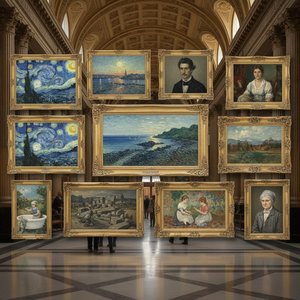
A 19. század festészete: 10 ikonikus műalkotás a történelemből
Fedezze fel a 19. század festészetének 10 legikonikusabb műalkotását! Monet, Manet és más mesterek remekművei romantikától az impresszionizmusig. Múzeumi minőségű reprodukciók otthonába OriginalUniqueArt.com-on. Ismerje meg a történeteket és inspirálódjon!

Frederick Childe Hassam: American Impressionism's Chronicler of Light & Modern Life
Explore the captivating world of Frederick Childe Hassam, a pioneer of American Impressionism. Discover his iconic paintings capturing light, urban life & coastal beauty. Learn about his legacy and influence on American art history.
William Herbert Allen: Capturing Atmospheric Light & the Essence of American Impressionism
Explore the evocative landscapes of William Herbert Allen, a master of American Impressionism. Discover his unique brushwork, atmospheric techniques & legacy through OriginalUniqueArt's curated collection.

William Merritt Chase: A Study in American Impressionism & Artistic Luminosity
Explore the life & work of William Merritt Chase, a leading American Impressionist painter and influential art educator. Discover his vibrant portraits, landscapes, and lasting legacy with OriginalUniqueArt.
Capturing a Nation's Light: Exploring the American Impressionist Movement
Explore the captivating world of American Impressionism! Discover key artists, techniques & its lasting impact on art history. Find museum-quality reproductions and expert guidance at OriginalUniqueArt.


