
 Előnézet
 Megosztás
 Megosztás
 Részletek
 Útmutató

 Letöltés
 Hasonló darabok
 X-ray felvétel
 Diavetítés
 Statisztika
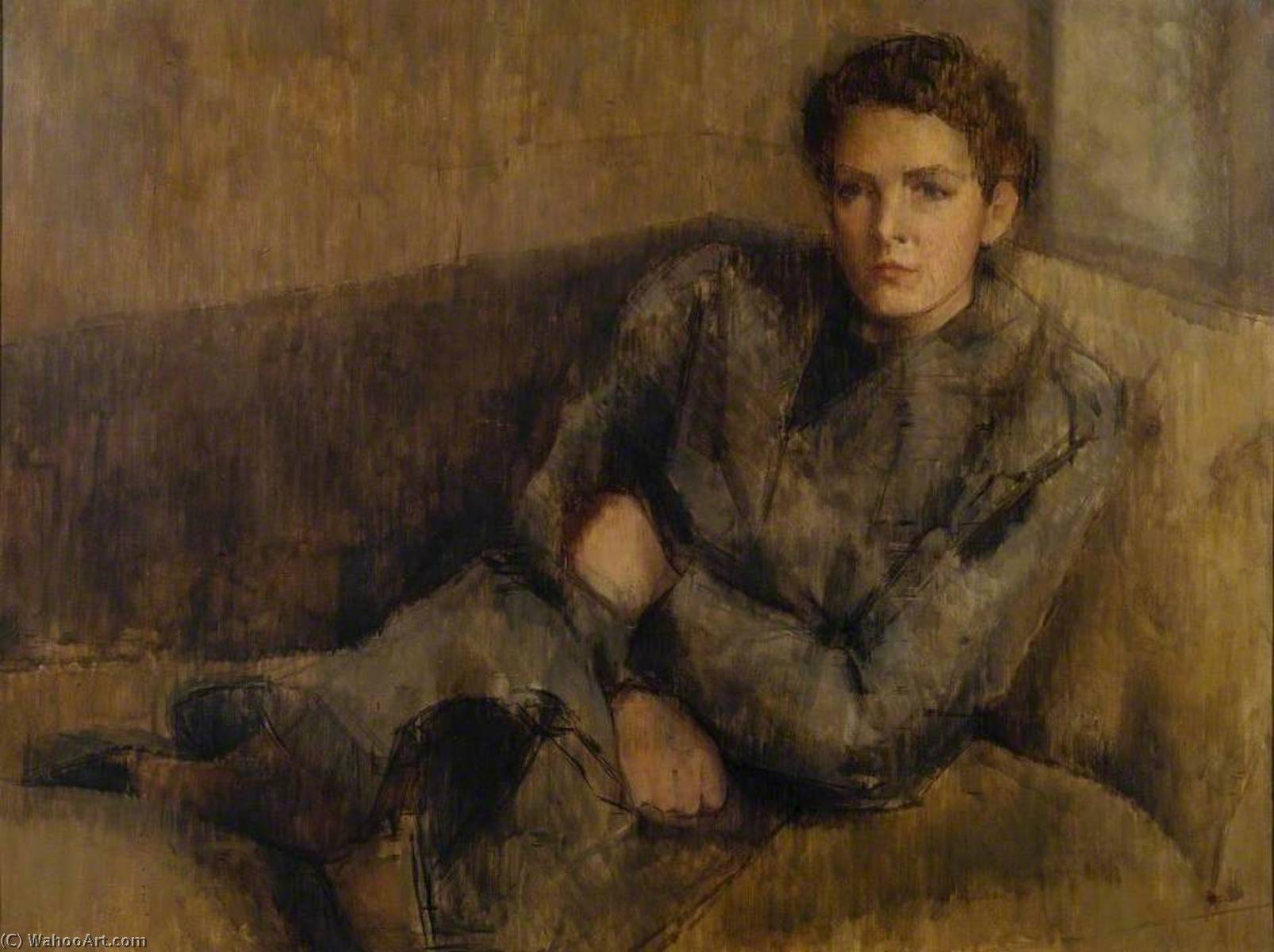
Inez Spender
 1937
1937 77.0 x 102.0 cm
 Tovább olvasom
Az ezen az oldalon megjelenített műalkotások szerzői jogi védelem alatt állnak, ami azt jelenti, hogy törvényileg nem készíthetünk és nem adhatunk el belőlük pontos másolatokat. Ez a védelem olyan nemzetközi megállapodások alapján érvényesül, mint például a Berni Egyezmény és a nemzeti törvények által, beleértve azokat is, amelyeket meghatározott Az USA szerzői jogi törvénye – 17. cím.
Mint tiszteletes és törvényes alternatívát, olyan egyedi, kézzel festett alkotásokat kínálunk, amelyek az eredetiből merítnek inspirációt. Tapasztalt és professzionális művészeink alaposan tanulmányozzák az eredeti stílusát, hangulatát és művészeti esszenciáját, hogy egy olyan új, egyedi alkotást hozzunk létre, amely ugyanazt az érzést kelti – miközben önálló, eredeti alkotásként létezik.
Ez a módszer teljes mértékben megfelel a szerzői jogi szabályozásnak, mivel nem tartalmazza a védett műalkotás másolását vagy duplikálását. Ehelyett ez egy kreatív újinterpretáció – egy új festmény, amely az eredetivel való összefüggései miatt hatással van rá, de nem az az.
Kézzel készített olajfestmény reprodukció
Kézzel festett olajvastú vászon, az Ön által választott méretben és keretben, művészeink készítik meglévőre. ( Váltás nyomtatványra Áttérés digitális képre)




































Válasszon előre meghatározott méreteink közül, amelyek megfelelnek a műalkotás eredeti arányainak.

Írja be a kívánt szélességet és magasságot, hogy illeszkedjen a keretéhez vagy a falához. Mivel ez kézzel festett alkotás, egy eltérő formájú méret esetén a művész akár festhet is valamivel többet a kép körül, vagy korolathat is belőle — az Ön döntésének megfelelően. A festés megkezdése előtt küldünk egy digitális tervezetet jóváhagyásra. Az oldalon látható kép nem tartalmazza a végeredményt — csak a tervezet mutatja meg a valódi eredményt.
A rendelést követően a OriginalUniqueArt.com csapata e-mailt küld az ügyfélnek az instrukciókért, és biztosít egy előnézeti képet (mockup).
Világszerte elérhető szállítás () 3-4 hét alatt a szokásos 5 hét helyett. (21 október). A minőség nem kérdőjelezhető.

Ingyenes globális expressz szállítás

Prémium minőségű len vászon

Teljes körű szállítási biztosítás

Vámvisszatérítési Garancia

Tökéletes színarányosság garancia

100 napos visszaküldési garancia (csak gyártási hibás termékek esetén)

100% pénzvisszatérítési garancia

Több darab vásárlásakor kedvezmény
 Az üvegkeretes opció csak 110 cm alatti méretben érhető el

Inez Spender
Reprodukciós technika
Reprodukció méretei
-


Összesített ár
Ft 94790
A művész életrajza
A Life Dedicated to Observation: The World of William Menzies Coldstream
Sir William Menzies Coldstream, a pivotal figure in 20th-century British art, wasn’t merely a painter; he was an advocate for seeing—for a rigorous, analytical approach to representing the world around us. Born in the quiet Northumberland village of Belford in 1908, his early life shifted towards the bustling energy of London, where he received a private education before embarking on formal artistic training at the Slade School of Fine Art from 1926 to 1929. This foundational period instilled within him not just technical skill, but a commitment to direct observation that would define his entire career. Coldstream’s path wasn't confined to the easel; it was interwoven with documentary filmmaking, progressive social movements, wartime service, and ultimately, a profound influence on art education in Britain. He embodied a rare combination of artistic dedication and institutional leadership, leaving an indelible mark on the landscape of British art.From Documentary Film to Euston Road Realism
The 1930s proved to be a period of intense exploration for Coldstream. After his time at the Slade, he became involved with various artistic circles, joining both the London Artists' Association in 1931 and the London Group two years later—demonstrating an eagerness to engage with contemporary art discourse. A brief but significant stint with the GPO Film Unit (1934-1937), working alongside luminaries like John Grierson, W. H. Auden, Benjamin Britten, and Barnett Freedman, exposed him to the power of visual storytelling and a broader cultural landscape. This experience undoubtedly informed his later artistic practice, sharpening his eye for detail and composition. However, it was the co-founding of the Euston Road School in 1937 with Graham Bell, Victor Pasmore, and Claude Rogers that truly solidified Coldstream’s artistic direction. Initially flirting with objective abstraction, the school quickly pivoted towards a renewed emphasis on realism—a return to painting directly from life, rejecting the prevailing abstract trends. This commitment is powerfully exemplified in his portrait of Inez Spender (later Inez Pearn), a work requiring an astonishing forty sittings. The resulting canvas isn’t simply a likeness; it's a meticulous study of form and character, lauded as a “masterpiece of analytical realism” for its precision and unwavering dedication to capturing the subject with unflinching honesty. Coldstream’s socialist ideals also played a role during this period, supporting the Mass Observation social survey of Britain and participating in their 1938 painting trip to Bolton—a testament to his desire for art that engaged with and represented everyday life.Wartime Service and the Analytical Eye
The outbreak of World War II dramatically altered Coldstream’s trajectory, as it did for so many artists of his generation. He enlisted in the Royal Artillery before transferring to the Royal Engineers, finding himself employed as a camouflage officer from 1940-1943. This role, while practical, proved surprisingly relevant to his artistic practice. The need for precise observation and representation of form—skills honed through years of dedicated study—were directly applicable to the task of deceiving the enemy. In 1943, he accepted a full-time commission from the War Artists' Advisory Committee (WAAC), taking him to Cairo and Italy. There, he produced portraits of individuals within an Indian transport unit and documented architectural subjects in Capua, Rimini, and Florence. However, Coldstream’s methodical approach meant that his wartime output was relatively small—only nine pictures were completed during this period. This wasn't a matter of lack of effort, but rather a reflection of his unwavering commitment to quality over quantity, to ensuring each work possessed the analytical rigor he demanded of himself.Shaping Future Generations: A Legacy in Art Education
Following the war, Coldstream transitioned into a prominent role in art education, becoming a transformative force in shaping future generations of artists. He served as a visiting teacher at Camberwell School of Arts and Crafts before ascending to the position of Professor there, and then, in 1949, he became Principal and Professor of Fine Art at the Slade School—the very institution that had nurtured his own talent decades earlier. His leadership was marked by an unwavering belief in the importance of direct observation and rigorous training. Perhaps his most significant contribution to art education came as Chairman of the National Advisory Council on Art Education (1958-1971), where he spearheaded the creation of the “Coldstream Report” (1960). This landmark document outlined requirements for a new Diploma in Art and Design (Dip.A.D.), leading to increased recognition and degree status for art school courses—a pivotal moment in elevating the standing of artistic education within Britain. Beyond this, he held significant administrative positions, including Vice Chairman of the Arts Council, director of the Royal Opera House, Covent Garden, and trustee of the National Gallery, further solidifying his influence on the cultural landscape.The Enduring Power of Direct Observation
William Menzies Coldstream’s artistic style was characterized by a relentless pursuit of accuracy and an unwavering commitment to painting directly from life. He famously stated, “I lose interest unless I let myself be ruled by what I see.” His technique involved precise measurement—using a brush held at arm's length to record proportions and spatial relationships—and the meticulous application of paint. The surfaces of his paintings are often marked with small horizontal and vertical markings—coordinates used for verification against reality, demonstrating the scientific rigor underpinning his artistic process. His subjects ranged from still-life and landscapes (often featuring architectural elements) to portraits and the female nude, all approached with a dedication to analytical representation. Coldstream’s legacy rests not only on his own body of work but also on his profound influence as an educator and administrator. He championed a method of seeing—a way of engaging with the world through careful observation and precise rendering—that continues to resonate with artists today. He remains an essential figure for understanding the evolution of both realist painting and art pedagogy in Britain, a testament to the enduring power of dedication, discipline, and a commitment to truthfulness in art.
William Menzies Coldstream
1908 - 1987 , Egyesült Királyföld
Gyors információk
- Artistic Movement Or Style: Realista
- Artists Or Movements Influenced By This Artist: ['Modernizmus']
- Artists Who Influenced This Artist: ['Euston Rd. School']
- Date Of Birth: 1908
- Date Of Death: 1987
- Full Name: William Menzies Coldstream
- Nationality: Nagy-britanniai
- Notable Artworks:
- Portrék
- Tájképek
- Place Of Birth: Belford, Nagy-Britannia
